Basketworks

niue basket  

After stating recently that I prefer small souvenirs, here is my admission that I'm still subject to the lure of buying distinctive baskets every once in awhile AND when I buy them, I seldom actually use them. They're too beautiful. Whew … glad to get that off my chest!

The thing is, good quality baskets are unique and usually representative of a substantial piece of a woman's individual work and time. I like to buy baskets directly from their makers because I think I benefit from the good vibes that come with them and the weaver gets to keep all the profits from her labors.


darien jungle


We've purchased baskets from the Wounaan in Panama and the Embera in the Darien Jungle. We've watched women use natural dyes to color the reeds they're using and weave intricate patterns in baskets with weaves so tight and fine, the baskets could actually hold water.
 

niue market basket


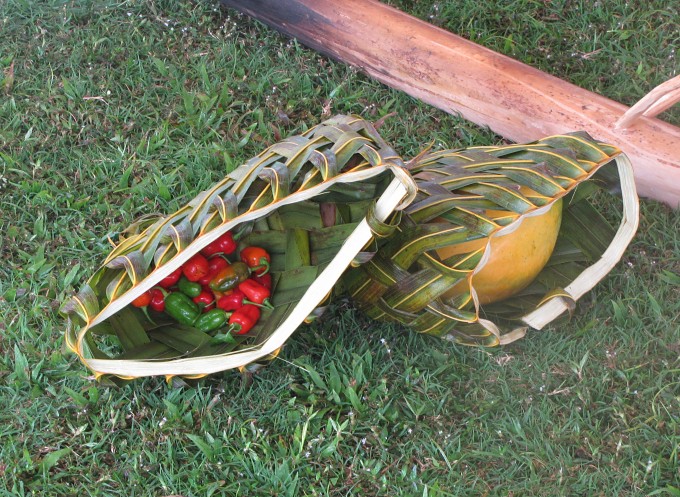
Basket weavers use whatever reeds or grasses are available in their area. Palms and reeds are used in the Carib and Panama. In Peru, it was totora reeds. In the South Pacific, they utilize pandanus palm fronds ripped into thin strips and then dried. Though some weavers make baskets and woven goods for sale to tourists, more simple ones are used locally for carrying produce to and from market.


caribbean baskets


One Caribbean weaver told us that she “collects reeds for baskets only at the dark side of the moon and at low tide, otherwise they'll be bug-infested.” We asked where she'd heard that and she said, “That's something everybody knows!”. Interestingly enough, when I consulted the Old Farmer's Almanac, it stated “From full Moon through the last quarter, or the dark of the Moon, is the best time for killing weeds, thinning, pruning, mowing, cutting timber, and planting below-ground crops.” I guess cutting reeds and grasses for baskets fall into that category. More interesting is that this “old wives' tale” is known by weavers everywhere we've visited. Must be some truth to it.


pitcairn basket


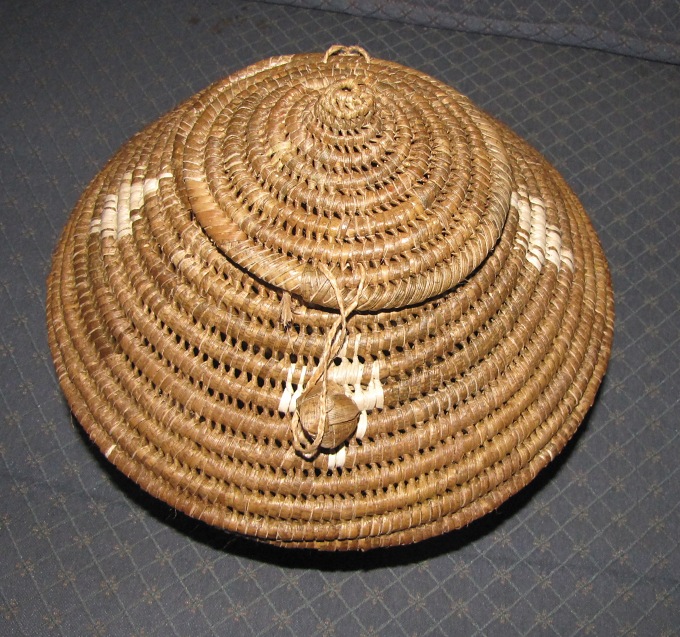
We received two beautiful covered pandanus baskets from Brenda on Pitcairn Island as parting gifts, made by her mum, Mag Christian, the oldest person on Pitcairn. Talk about rare treasure!

Sometimes, you just can't resist having something beautiful and non-functional on board. Okay … okay ... and we've bought some carvings, too. Not many, but a few. Man, it's good to get all this out in the open.

Flip Flops

flip flop fabric  

Depending on where you're from in the world, flip-flops are also known as thongs, pluggers, slaps, slippers, havaianas, and go-aheads. Just to name a few! The term “flip-flop”has been used by both Americans and Brits since about 1972 to describe a rubber-type thong sandal. It got its name from the sound it makes when its worn … flip … flop. A very poetic name … I think that's onomatopoeia.

When we visited the tiny island nation of Niue in the South Pacific, our friend Keith took us for an island tour. He mentioned the jandal cemetery as we passed by a beach. We weren't sure what we were looking for… tiny dead animals, maybe? No, it was a beach that seemed a magnet for errant flip-flops that had escaped from somewhere and washed ashore. Jandal, as the New Zealanders call them, is short for Japanese sandals and the beach was covered with them.


jandal cemetary


Some folks live in them in favor of other shoes or sandals. I personally don't like them for regular wear, but use them when I'm showering in “iffy” showers. The Aussies call them thongs and when we first arrived, we experienced some language issues when folks told us a party was informal, just wear shorts and thongs. Hmmm... for me thongs are dental-floss underwear with the floss in your butt crack. No matter how informal the party was, there was no way I was wearing a thong to it. Then, of course, I saw everyone in flip-flops. What a relief. I didn't have to wear a thong after all; nor did I have to watch anyone else wear one.

Baseball

baseball field

I see great things in baseball. It's our game – the American game. - Walt Whitman

It's baseball season! I don't ever remember not knowing about baseball. My Dad, who seldom ventured into the big city of Boston from our home 50 miles away, took me to see the Boston Red Sox play at Fenway Park at least once every year. Dad was a busy, hard-working blue-collar guy who still managed to get house chores done. No matter what needed to be done, however, when the Boston Red Sox played a televised game, he'd grab a beer and sit and watch it. Mom would join him. She loved the Red Sox, too. At 86, she still does.

It's a pretty easy game. A guy from one team pitches a ball to a guy on the other team who's holding a bat. The batter tries to hit the ball. He's got three chances, with some accommodation for foul balls and such. If he's successful, he runs and touches as many bases as he can (up to four), while the other team tries to catch the ball and touch him or the base before he gets there. If he's unsuccessful, he strikes out. Or if the pitcher doesn't throw strikes or hits the batter … hmm ... it's really sounding a bit more complicated than I imagined. We took a South African friend to a game once and tried explaining the rules as the game progressed. He gave up after awhile in frustration.


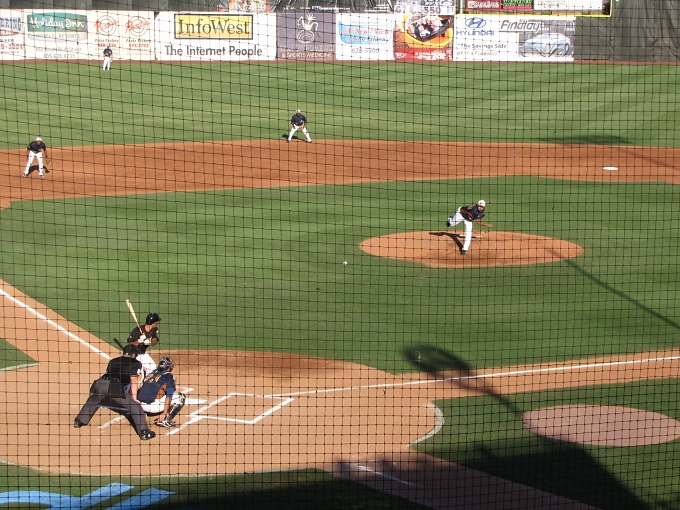
the pitch


Some think it's a boring game. Nine innings can seem interminable sitting in the stands if you don't like the game or understand it. According to Ray Fitzgerald in the Boston Globe, a critic once characterized baseball as six minutes of action crammed into two-and-one-half hours. According to others, however, baseball is life.

Baseball has its own terminology. Bunts, stolen bases, designated hitters, curve balls, screwballs and knuckle balls, the bullpen and the 7th inning stretch. It's also got lots of colloquial expressions associated with it like the Bronx cheer, deuces and dingers. It's even got its own song and you'd be hard pressed to find a kid in America that doesn't know “Take Me Out to the Ballgame”. There are lots of movies about baseball. My favorites are “Bull Durham” and “Field of Dreams”, but that may have something to do with Kevin Costner. I remember making a family pilgrimage to Cooperstown, New York in the early 1960's to visit the National Baseball Hall of Fame and Museum. It was quite the trip.


baseball players


Abner Doubleday is credited with the invention of the game. The earliest known mention of baseball in the United States was a 1791 Pittsfield, Massachusetts ordinance banning the playing of the game within 80 yards (73m) of the town meeting house. Nowadays, from April through September, 30 teams including one from Canada, play 162 games culminating in the World Series. In the summertime, it's truly the American pasttime.

I did a little research about baseball, mostly because I really like trivia. I learned things like

  • The average life of a baseball in the major leagues is 6 pitches.
  • Rawlings Sporting Goods produces 20,000 baseballs for the professional major leagues per year in their Costa Rica plant. Minor league balls are produced in China.
  • Each ball must weigh between 5 to 5.25 ounces, is covered in cowhide (used to be horsehide, but that's hard to come by these days) and must be handsewn with 108 stitches.


baseball mud


Not familiar with baseball? From another country or planet? Try watching Abbott and Costello's “Who's on First” for a better explanation.