En Route to Trinidad - Day 3

Day 3 Miles to go: 61

In the early morning hours, we threaded the needle through Galleons Passage between the islands of Trinidad and Tobago. It was still dark, and the horizon was lit up like a sprawling city … oil platforms, tankers, cargo ships, bulk carriers, car carriers, fishing boats, tugs … an endless stream coming and going through the channel. On watch, our eyes were glued to the AIS. We radioed at least a half dozen ships that seemed to be either bearing down on us or heading straight at us. All answered their hails promptly, found us on radar and managed to avoid colliding with us or running us down. It made for a high stress, less than peaceful night, but overall, we were pleased to remain unscathed.
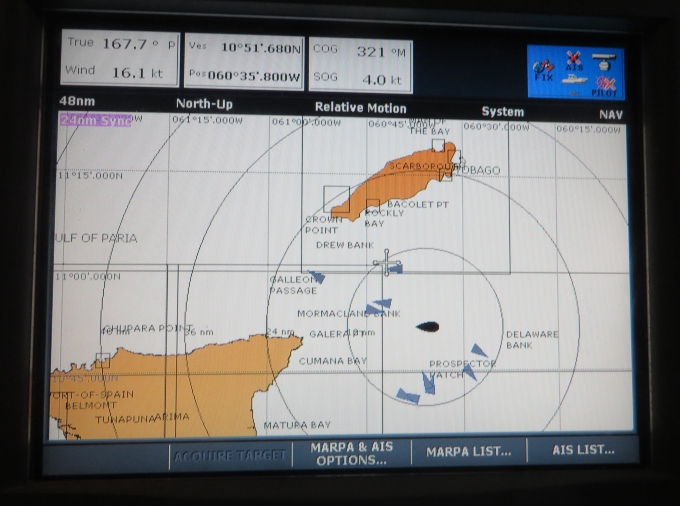
chartplotter with ships all around

As we rounded the northwest corner of Trinidad, we left the North Atlantic Ocean and entered the Caribbean Sea. Hallelujah! Unfortunately, when we turned the corner, we also lost our good angle on the wind. We slowed to 4 knots … too slow for a “business hours arrival”. We couldn't make it by 4 pm, and we were reluctant to pay an extra $100 for arriving outside business hours. The only other alternative was to slow down even more, spend another night enroute, and try to arrive after 8 am tomorrow. We reduced sail to the staysail only. Through the morning mist, Trinidad came into view. By 10 am, with 61 nm to go, with little wind, we were moving along at 2.5- 3 knots with the help of a favorable current.
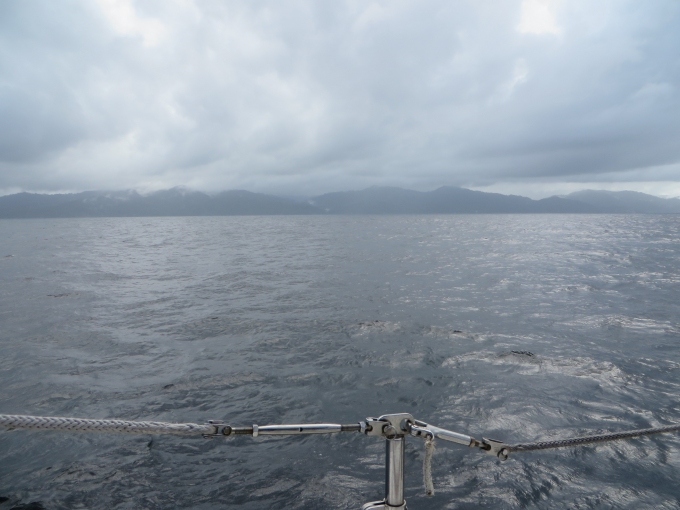
mistry trinidad

It rained and remained misty for most of the day with alternating squalls and calms. We dawdled along, resigned to spending another night at sea in order to arrive at the Customs dock at the proper time. As if to provide entertainment as we plodded along, a pod of dolphins appeared out of nowhere.
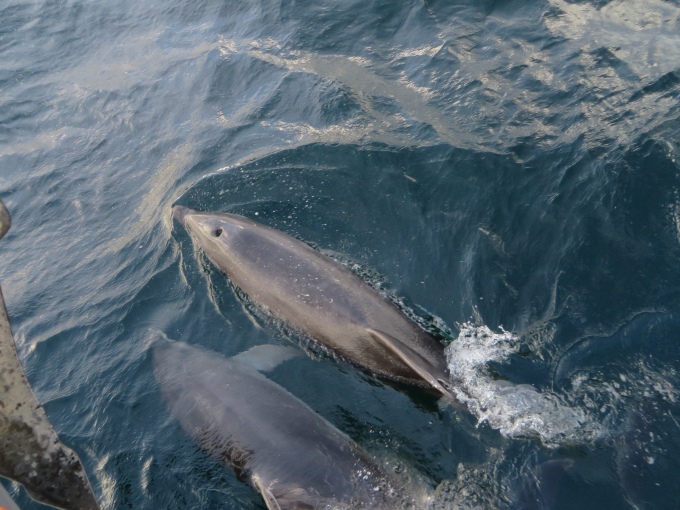
dolphin escort to trinidad

I heard the familiar dolphin breath sounds and ducked below quickly for my camera and the dolphin ID book.

These were big guys … 8 feet or more (2.5m+), with distinctively tall dorsal fins, blotchy coloring and lots of scars. We identified them as rough-toothed dolphins. This was a playful lot and in no particular hurry, it seemed. They played with us for nearly two hours, diving under the boat and riding the bow wake. When I stood at the bow to take pictures, the dolphins turned on their sides to look directly up at me. I thought it was my imagination at first, but the eye to eye contact was repeated several times.
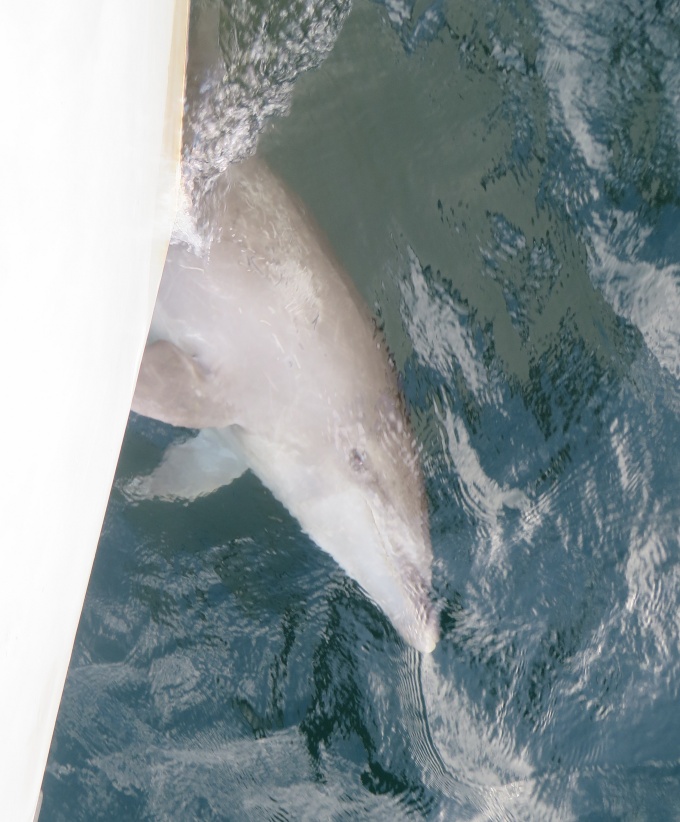
dolphin giving me the eye on the way to trinidad

I sat at the bow for nearly an hour, my feet hanging over the rail, the dolphins nearly close enough to touch. Though entertained, I finally returned to the cockpit. I heard a sharp slap sound, then a thud and then another slap, and another thud. David watched as one dolphin slapped his tail on the water, another slapped against the hull, and yet another jumped into the air. He walked to the bow and the dolphins followed. He returned to the cockpit and the slap/thud began again. These guys liked an audience. No matter how many times we've seen dolphins, they never cease to amaze us. Not to mention, dolphins are good luck for sailors and we considered their visit an auspicious welcome to Trinidad.
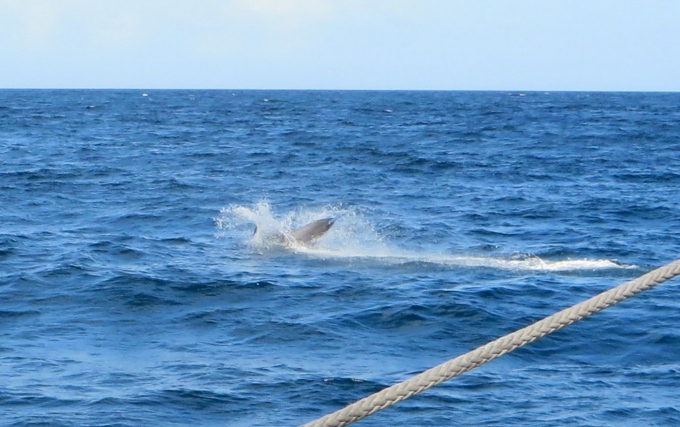
dolphin jumping and slapping

Night came and with it a calm and loss of current. We were two miles offshore and bobbed and rolled gently. For all intents and purposes, we were hove-to and remained so till 0630. We estimated two hours to the Customs dock, cranked up the engine and headed for Boca de Monos (Monkey's Mouth), a narrow channel between mainland Trinidad and Monos Island.
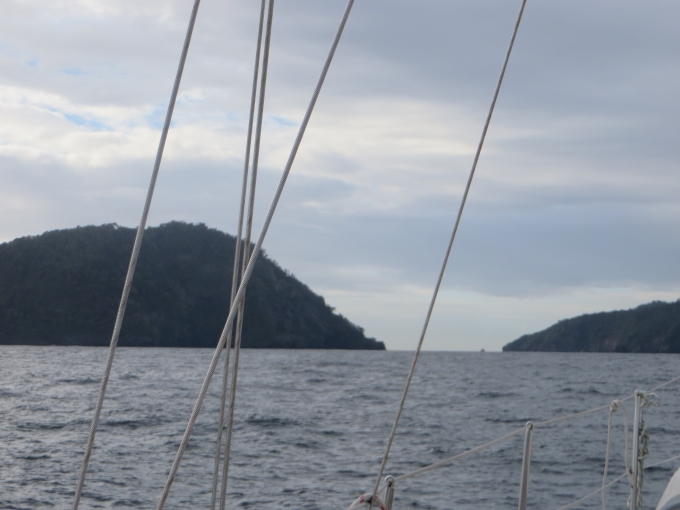
boca de monos in trinidad

We altered course to allow the fast ferry between Trinidad and Tobago, T&T Spirit, to pass and then entered the channel.
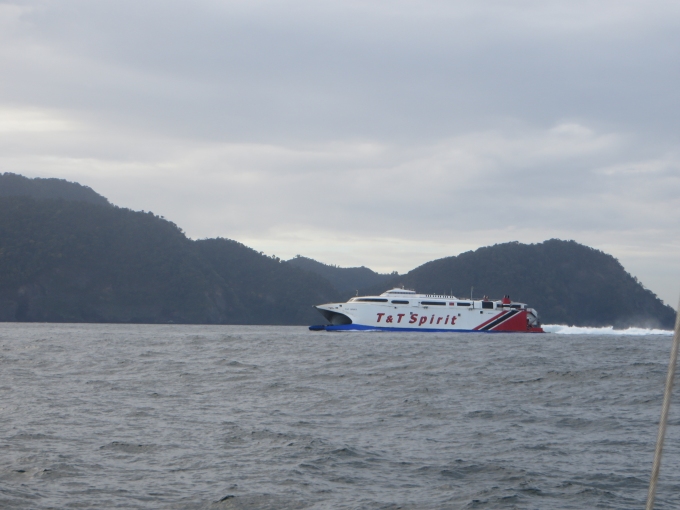
t and t spirit in trinidad

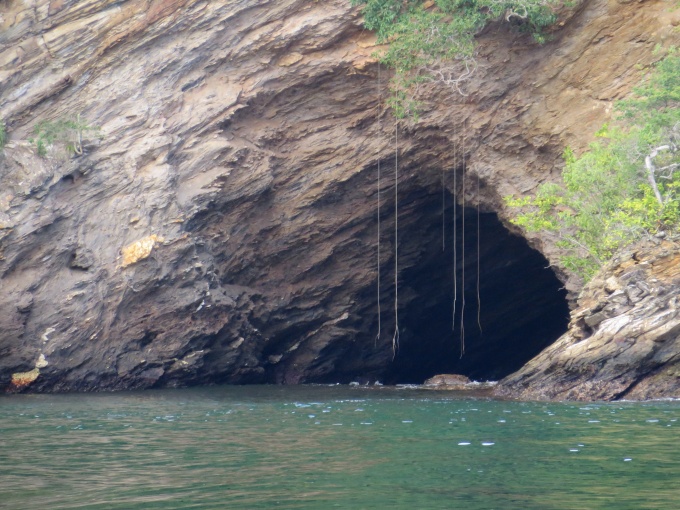
The channel was picturesque with interesting caves carved into Monos Island and large, craggy offshore rocks covered in greenery. Scotland Bay, on the opposite side of the channel, looked serene and inviting with two sailboats peacefully at anchor.
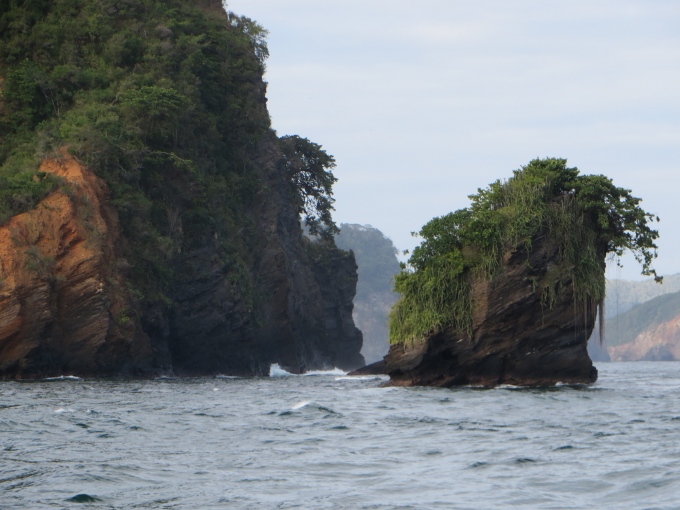
boca de monos trinidad


caves at boca de monos trinidad

We turned the corner heading into Chaguaramas Bay. Gasparillo Island came into view and beyond it, the congestion and frenzy we associate with this port.
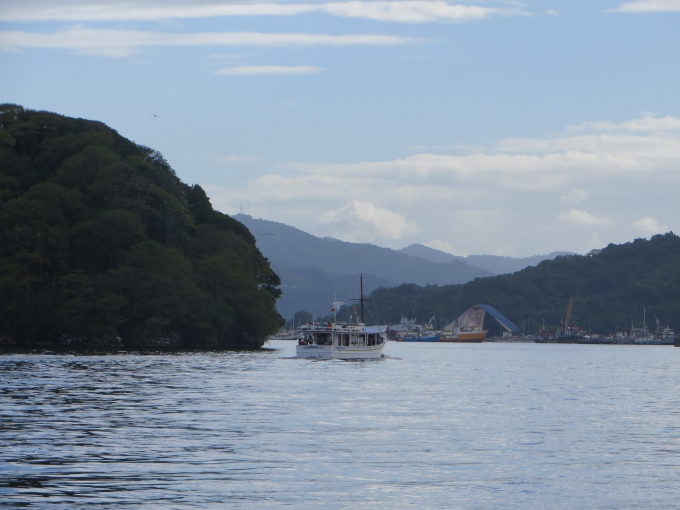
entering chaguaramas trinidad

Freighters, fishing boats and ferries, tankers, tenders and tugs … all competing for space. David threaded his way carefully past anchored ships, fast boats and through the mooring field of sailboats. We passed Power Boats and noted the location of the haul-out pen for future reference. We finally found a fairway to the Customs dock, tied up and sighed ... 0830 … perfect timing. Whew … we're in Trinidad.
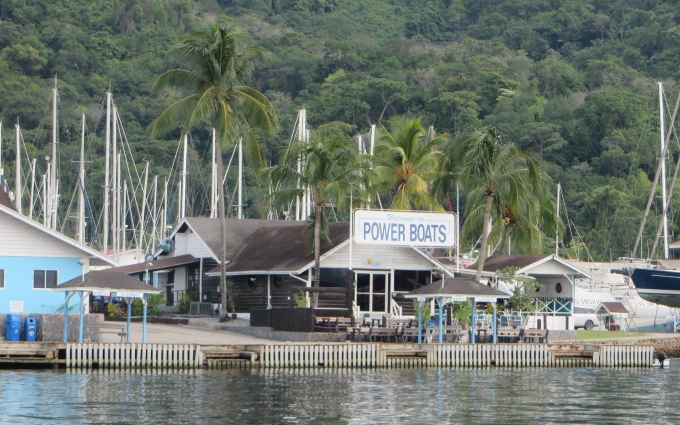
power boats in trinidad

En Route to Trinidad - Days 1 & 2

Day 1 Miles to go: 349 

We  maneuvered past the lines of fishing stakes at the mouth of the river to the GPS waypoint that marked the location of the missing Essequibo sea buoy, then raised the sails and pointed Nine of Cups towards Trinidad. We skirted around numerous fishing boats with their mile-long nets. The depths remained in the 3-5 fathom (18-30 feet) (2-10m) range for miles and miles. It took hours before the brown of the Essequibo finally gave way to the blue-green of the Atlantic.

to trinidad

Our route would take us northwest off the Guyana coast and then well off the Venezuelan coast. Piracy off Venezuela has been an issue for yachties in the past few years, so our course kept us further east and offshore to avoid any unpleasant encounters, as well as avoiding the mass of oil platforms off Trinidad's western shores.

The blazing sun, scattered-cloud sky and fine breeze stayed with us. We beam-reached the day away and the night, too. Fishing boats were out in great numbers through the night, but none closer than bright pinpoints of light on the horizon. One ship passed … miles away. Had it not been for the AIS, we might not have noticed it at all.

We took turns napping. The first couple of days at sea are always the worst for fatigue. No seasickness (thank all the sea gods!) despite constant 6-10 (2-3m), short-period waves knocking us on the aft starboard quarter.  Solar, wind and the prop generator kept the batteries topped up. A fine first day for the last leg of our Cape Town to Trinidad passage and the last sail of 2015.

Day 2

Miles to go: 200 

The ENE tradewinds held true and we coasted along in the 6s and 7s with all sails full all day long. We saw a few ships and a few fishing boats, but nothing very close. We idled away the day with chat about the to-do list for Trinidad, the to-buy list for the USA and all the activities we had planned once we were back in the States. We'd be flying home in a week's time and there were considerable chores to accomplish, including getting Cups hauled and settled in Chaguaramas before we left.

The weather was beautiful until nightfall. It always seems the night is the time Neptune chooses for squalls and challenges. We had determined that we were going too fast to arrive at a decent hour in Chaguaramas. Trinidad Customs and Immigration is notorious for charging overtime rates when a yacht arrives outside of business hours (8am-4pm). We wanted to arrive mid-morning. At our current speed, we'd arrive around 11pm. We chose to double-reef the main and the jib … that only slowed us down to 7 knots. It rained off and on with gusts to 30 knots.

Beyond squalls, a harried night was punctuated with heavy ship traffic, oil rigs/platforms, Venezuelan fishing boats constantly yacking on Channel 16 and flying fish landing on the deck including two in the cockpit. Ralph and Joe were distant relatives of Bob the Stink, it seems, and stopped by quickly to say hello. David promptly chucked them overboard. A small bird perched on the lifelines and bummed a ride for about an hour, then took off without a peep.

Not so far to go now. One more night and we'll be in Trinidad.

Back to Bartica and On to Trinidad

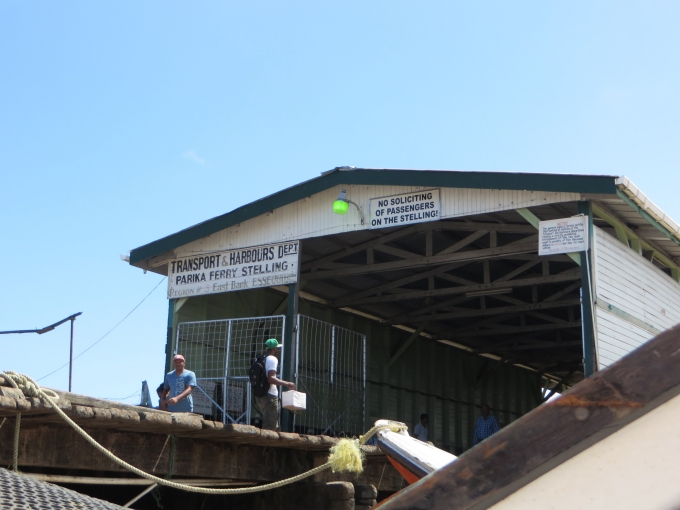
We splurged and took a taxi for the hour-plus long ride from Georgetown to the Parika Stelling where we caught a river taxi back to Bartica. We had thought we'd take a much cheaper mini-bus, but with luggage, full backpacks and some provisions, the thought of cramming into the mini-bus on a sweltering, muggy day was not appealing. When we arrived at the stelling, we were quickly ushered to a Bartica-bound river taxi … a marine version of the mini-bus with 30 people, their luggage and freight aboard. It was stifling. partika stelling

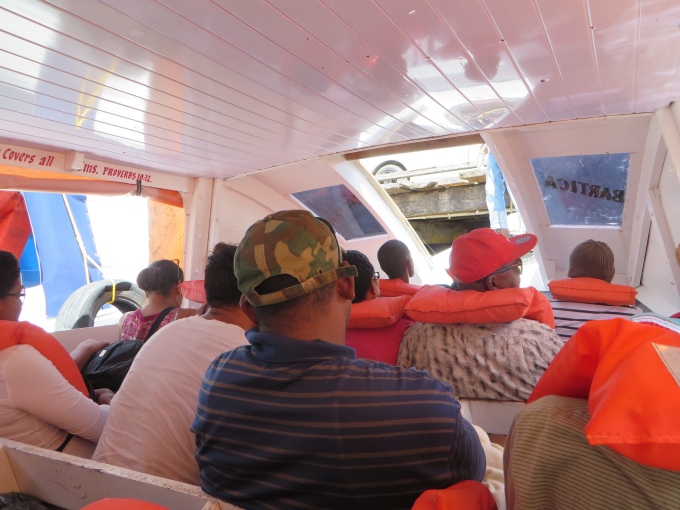
Getting aboard, which included stepping from the old wharf onto the edge of a plank and then steeply down onto the bow of the rocking boat while negotiating luggage and backpacks, was no easy feat. The river taxis have no set schedule; they leave when they're full. We waited nearly an hour in our cramped quarters with backpacks on our laps and a suitcase wedged between our legs. I remembered I should have peed before I climbed aboard.

cramped quarters in bartica

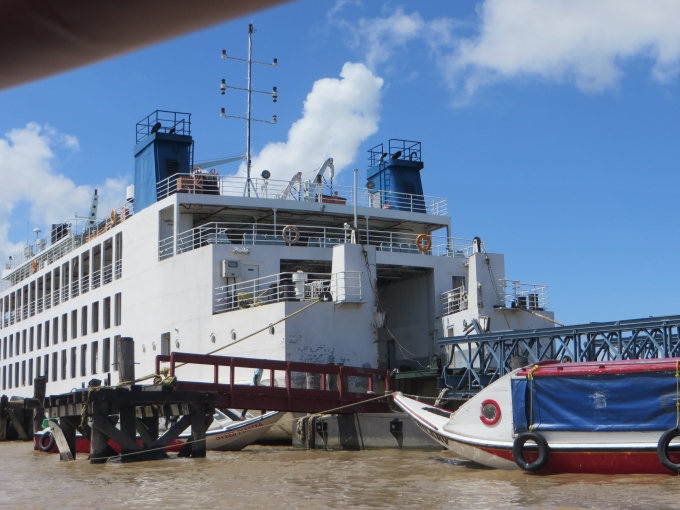
The boat finally left for Bartica. The ride was fast and bumpy. Wide, low windows provided relief from the stuffiness and heat, but offered no protection from being splashed.

leaving parika

An hour later, Mike from Hurakabra was waiting for us and helped us ferry our gear from the river taxi to the resort launch. Mike waited while we checked out with Customs and Immigration and got a few last minute provisions to use up the balance of our Guyanese dollars. Then we were back at Hurakabra aboard Cups and making plans for our next day's departure.

Despite what seemed a rush, we were getting antsy to leave. We really enjoyed Guyana, but the clock was ticking to get Cups to Trinidad. In the morning, we did last minute internet ashore, said our farewells to Mike and crew, hoisted the dinghy and we were off with the noonday ebbing tide, following our track back down the long and winding Essequibo River.

A short-lived 30-knot headwind and a torrential downpour was our send-off within minutes of our departure from Hurakabra, but it soon calmed and cleared. The ebbing tide did not afford us a long enough window to negotiate the entire 50nm downriver run. We stopped for the night just off Fort Island, thinking we'd visit the island in the morning. Our plans were thwarted by heavy morning rains. We caught the early afternoon tide once again, but made it only 15 miles before the afternoon headwinds beat us back. Getting down the Essequibo was proving more difficult than getting upriver. We had 20 knot head winds and with the wind against the current, the waves were short and choppy, making it slow going. Despite the help of the ebbing current, it took us two days to get down the river.

We anchored off Leguan Island in order to minimize our morning run to the Essequibo's mouth.   Not to worry …  the winds were predicted to be better and we preferred to negotiate the endless fishing nets in the daylight. Early on the third day, we hauled anchor with a bright crescent moon and a twinkling morning star looking down on us. It's good we started early. A Keystone Cops drama unfolded as I worked at removing sticky, thick, brown mud and clay from the chain and anchor. I had mud spattered everywhere...on me, on the deck and still some residual on the chain.  It took nearly 45 minutes to wash down and finally get underway.

Three hours later, we broke away from the brown Essequibo and we were back in  Atlantic, en route to Trinidad. The sky was blue, the wind was ENE at 15 knots and the current favored us. Once again, we're on our way. Come sail with us!