
Afternoon Tea at Mount St. Benedict

It was a Brazilian Benedictine monk, Dom de Caigny, who originally purchased 240 acres in 1912 to establish the Mount Saint Benedict Abbey. Located 700' above sea level, overlooking the town of Tunapuna, the Abbey looked rather majestic with its tower and red roofs as we drove the tortuous, narrow, steep road below which leads up to it. benedictine abbey trinidad
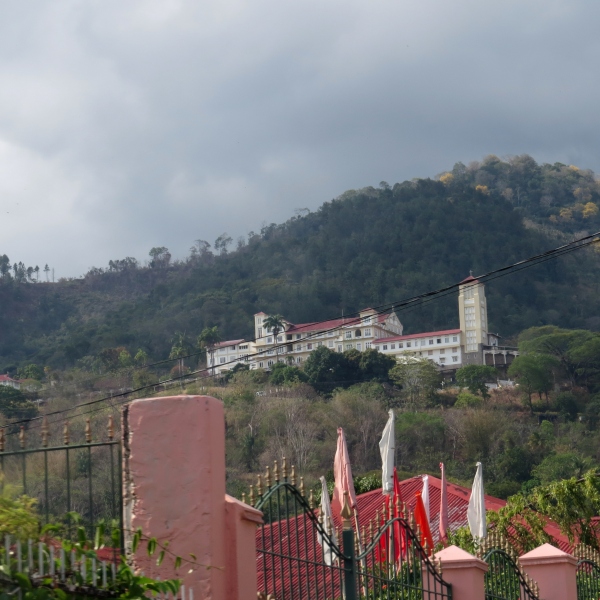
The motto of the Benedictine order is “ora et labor” (pray and work), but with only 10 monks left, they get some help from the locals to maintain the church, monastery, seminary, a drug rehab center, a yogurt factory and the Pax House. The Pax House, a guest house and lodge on the Abbey grounds, is quite well known for serving a traditional afternoon tea in serene surroundings. I'd made reservations on-line to take tea one afternoon and a breather from our whirlwind tour of Trinidad.
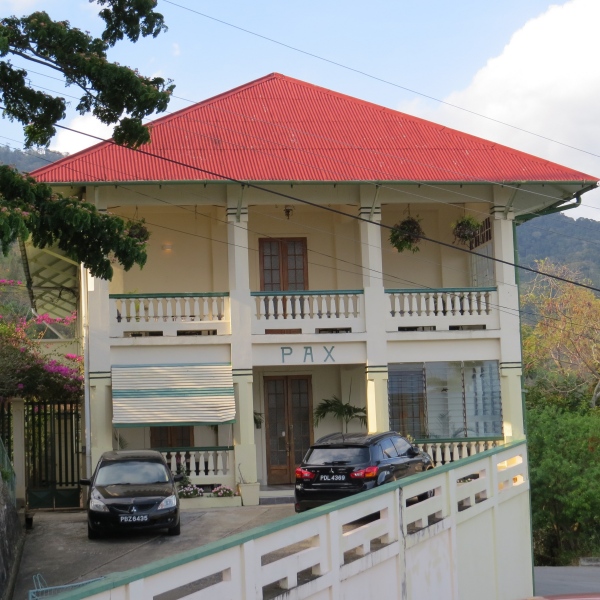
pax house trinidad

The Pax House (pax = peace in Latin) was built in 1916 and offers views of the sprawling city below. It's plain, as you might expect. From the front, it looked lovely, but on closer inspection, like so many other sites we visited in Trinidad, it is also regrettably in sad disrepair. We arrived a bit late due to traffic and our welcome was less than warm. We were left to wait on the porch for 10 minutes before being shown to a table in the tea room, though there were only two other young women taking tea.
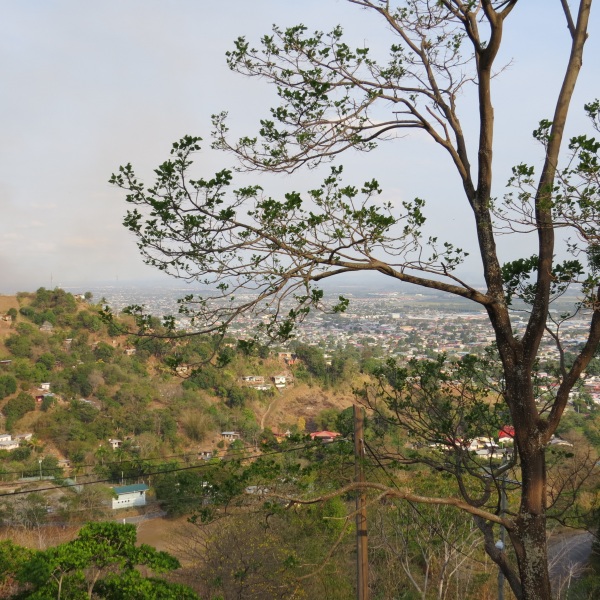
view from pax house trinidad

The xeroxed menus offered three tea services … the Presidential, the Traditional and the British. We ordered one of each. What had enticed us to come to the tea room was this description: “A famous room at the Pax House is the Tea Room. The Tea Room was constructed during World War II and it is the oldest Tea House in the country. The Tea Room serves a variety of teas from different countries.” They were out of two of the three teas offered, so we settled on one big pot of Earl Grey (which I have every morning for breakfast, by the way...nothing too exotic there). After a short wait, the tea and accompaniments were served.
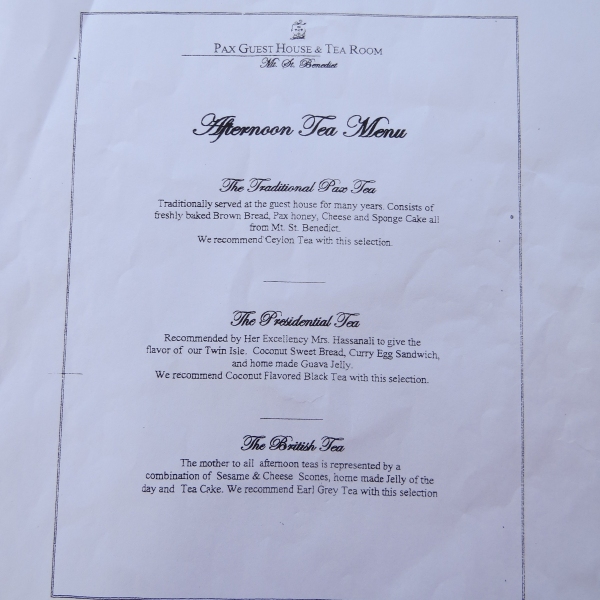
pax house menu trinidad

Lin poured. We drank and nibbled, unimpressed by the tea, the food and the tea room. It was, indeed, very quiet, almost too quiet. Our voices echoed in the near empty room. After delivering the tea, the server never appeared again. We had hoped to learn more of the history of the Pax House or perhaps which areas of the grounds were open for further explanation, but alas we found no information available, nor anyone to provide any insight.
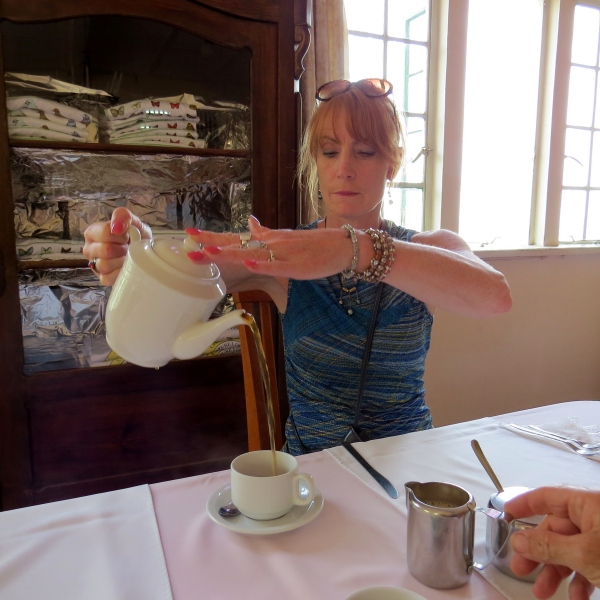
lin pours tea at pax house trinidad

We took a peek out the back porch overlooking the hillside where hummingbird feeders attracted the local birds. The adjacent porch was falling away from the house and we wondered about the one upon which we were standing.
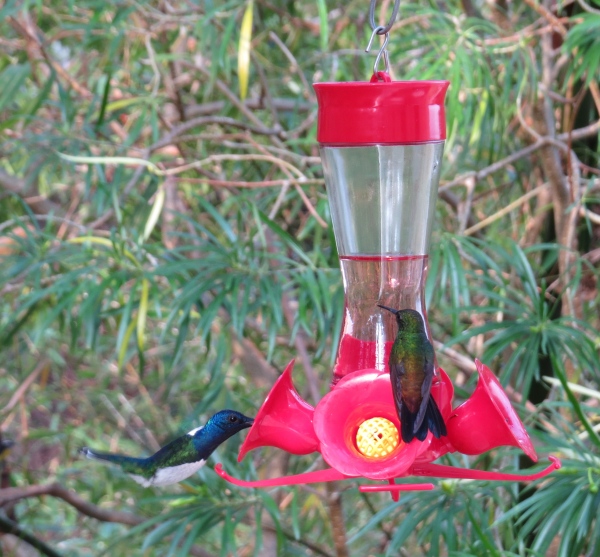
hummingbirds at pax house trinidad

David left cash on the table for our tea. We wandered through the small parlor, seeking more information about the house and the Abbey, but could find none. We left without another word to or from the staff, quite disappointed.

We spotted a small graveyard, overlooking the city below, and walked through.
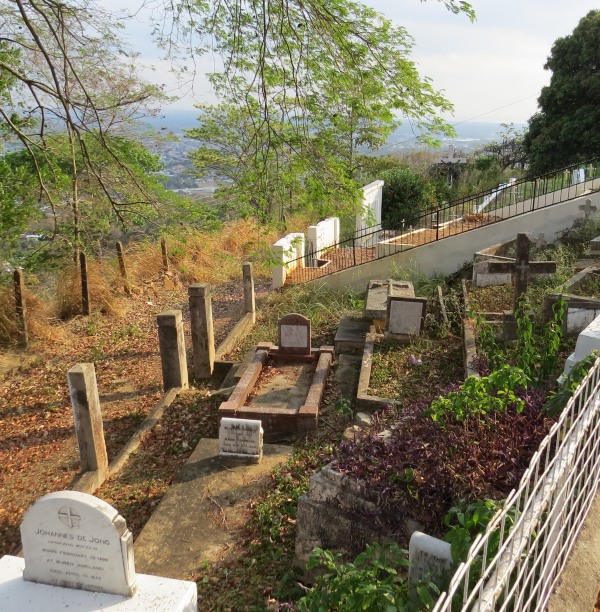
graveyard at benedictine abbey trinidad

We climbed the steep hill to see what we could see, but were reluctant to trespass in areas in which we might not have been welcome. We saw a monk in the window of the abbey above and waved, but he closed his window and walked away without a sign of acknowledgment. Otherwise, we saw no place nor anybody to query.
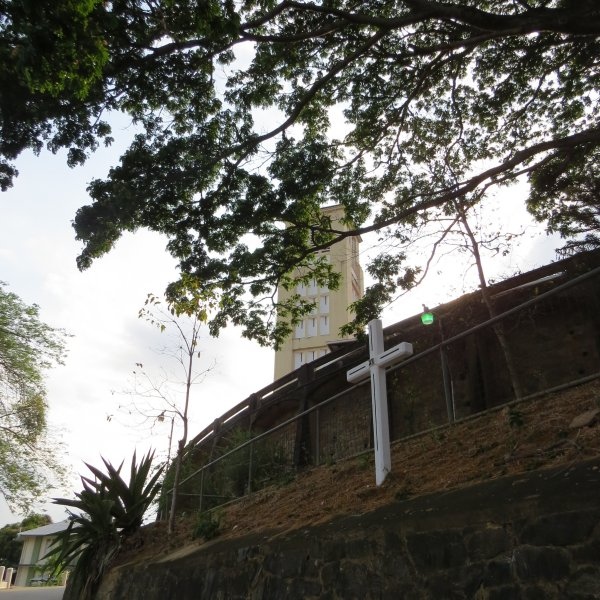
abbey view from pax house trinidad

After the 1-1/2 hour trip in traffic to get there, it was a disappointing afternoon. It might well have just been the particular day we visited, but it was a letdown after having read so much about it. I guess I was expecting tiny watercress sandwiches on crust-less bread and clotted cream and fresh fruit on scones and a wonderful story about the Pax House and Abbey. I remembered having tea in England years ago and more recently the tea house we visited in Mauritius. Perhaps that's more of what I had in mind.

Ah, well … we survived our disappointment and moved on. Tomorrow we're heading into Port of Spain for a self-guided walking tour and look around. Put on some comfy shoes and come along.


Caroni Swamp and Scarlet Ibis

According to Wikipedia, the Caroni Swamp is the second largest mangrove wetland in Trinidad located where the Caroni River meets the Gulf of Paria. The swamp is an estuarine system with extensive mangrove forests, numerous brackish channels, salt lagoons and mudflats. It's not far from Port of Spain and it's a major habitat and viewing area for Trinidad's national bird, the scarlet ibis. It was the next stop on our Trinidad tour after visiting the Hindu temples. I'd made a reservation with Darren at Mandoo Tours because they were noted for smaller, more personalized tours. We were pleased when we showed up and there were only two other passengers. We took a look at the “visitor center”, which like most other public facilities in Trinidad, is quite run-down and decrepit. Old, faded pictures of fauna and flora of the Caroni were on display and that was about it.

caroni swamp visitor center trinidad

The boat dock was as rundown as the visitor center, but the boat and engine seemed in good enough shape. The tide was low and the shore was muddy. Scampering down into the boat was a bit of a challenge, but we managed without mishap and off we went. Darren provided an ongoing introduction to the swamplands and what we might expect to see.

caroni swamp boat dock trinidad

We puttered slowly through the mangrove-lined channels. We'd stop every once in awhile and just drift along noiselessy while our guide pointed out things we would have definitely missed. Like the well-camouflaged Cook's tree boa in an overhanging limb (yikes) … actually two entwined boas … it's mating season. Reptile love!

boas mating in caroni swamp trinidad

Blue herons perched warily on the mangrove roots as we slowly motored through the narrow labyrinth of waterways. They'd watch until we were too close for their comfort and then take to flight following the course of the channel.

blue herons caroni swamp trinidad

We looked for caiman, but saw none. Once again, we were confounded when our guide spotted a tropical screech owl, nestled high and deep in the mangroves, sleeping. We quietly observed him, trying not to disturb his daytime rest.

tropical screech owl caroni swamp trinidad

Darren made several bird calls and amazingly received answers from deep in the forest.

bird calling caroni swamp trinidad

We threaded our way through the thick mangroves for over an hour and then the channel opened into a wide expanse of shallow water. A great white egret stood in the midst of it. Tricolor herons worked the mud ashore and a yellow crested night heron kept his distance.

white egret tricolored herons caroni swamp trinidad

yellow crested night heron carono swamp trinidad

Darren tied the boat to two stakes and we waited. Every morning at dawn, the scarlet ibis fly off to feed in other parts of the swamp. Every evening at dusk, like clockwork, they return to roost on a nearby island of mangroves. Darren explained that it was nesting season and the number of ibis would be less than in January or February. Then, the first of the scarlet ibis appeared in the sky.

scarlet ibis caroni swamp trinidad

We didn't have to wait long before more and more ibis flew past. The setting sun gleamed off their red feathers and they almost seemed to be afire as we cruised by. It's their diet, by the way, high in carotene, that accounts for their color, much like pink flamingos.

scarlet ibis caroni swamp trinidad

Each ibis landed and settled in to its special spot for the night. They chatted with their neighbors and preened. The deep green mangroves were suddenly alive with scarlet ibis dotting the higher branches and white egrets below. From a distance, it looked like a Christmas tree decorated with bright red ornaments.

scarlet ibis caroni swamp trinidad

The sun was setting quickly as we made our way back through the maze of swampland channels. Filtered sun pierced the thick overhead growth. Blue herons swam in front of us, apparently showing us the return route.

herons guide the way out of caroni swamp trinidad

I wish we'd stayed longer. I wish we'd come earlier in the season to see more ibis. I wish we'd been closer so I could have taken better photos. I wish we'd seen caiman and maybe even a silky anteater. I wish, I wish, I wish. Sorry … I got carried away. What I meant to say was … what an awesome way to spend the afternoon.


Hindu Temple in the Sea & Lord Hanuman

When the British abolished slavery in 1833, there was a significant lack of laborers in the Caribbean. Between 1833-1920, over 143,000 Indian workers were sent to Trinidad as indentured laborers to meet the demands. Consequently, there is a high percentage of Indian population on the island and nearly a quarter million of them are Hindus. It only makes sense then that there would be some elaborate Hindu temples on the island. We find Hindu temples to be fascinating. In fact, there are two in particular of note in Waterloo, just south of Port of Spain, and we decided to pay them a visit. sign in trinidad

We knew we were getting close when we started seeing Hindu prayer flags and tiny temples in each yard. We threaded our way (read that … David maneuvered adeptly) through narrow, crowded streets towards the sea and finally came to the Hindu Temple in the Sea.

temple in the sea trinidad


This temple has an interesting history. The indentured laborer, Sewdass Sadhu, came to Trinidad in 1907. He was a devout Hindu and wished to build a temple. He built his first temple in 1947 on land owned by the sugar cane company for which he worked. The company ordered it torn down, charged Sadhu with trespassing, fined him $500 (2 year's wages) and jailed him for 14 days. A determined man, he figured if he couldn’t build his temple on the land, then he would build it in the sea, and thus Sadhu's dream to rebuild his temple began to take shape.

sewdass sadhu statue trinidad

With two buckets and an old lady’s bicycle with a carrier on the back, Sadhu began the laborious task of building the temple in the sea … 500 feet into the swamp land of the Gulf of Paria. For 25 years, he worked at building his temple and with the help of local people, businesses and a government grant, it continues today to be a place of worship and serenity. A great testament to the devotion and tenacity of the human spirit.

hanuman temple entrance trinidad

A prayer ceremony was in progress when we arrived which we did not want to disturb. We quietly removed our shoes and walked around the outside of the temple, peeking in discreetly for a look at the elaborate decoration within.

temple in the sea trinidad


We headed back inland to find Lord Hanuman, the Monkey King. We were familiar with several Hindu gods, but not Hanuman. It seems that he is regarded as a perfect symbol of selflessness and loyalty. The 85' murti (statue) of Lord Hanuman is reputed to be the largest outside of India.

lord hanuman trinidad

Lord Hanuman towers over the Dattatreya Temple and Yoga Centre, “built according to the Dravidian style of architecture of South India”. It's an elaborate building, guarded by two large elephants at the entrance. Photos were not allowed inside the temple, but after removing our shoes, we walked quietly inside, admiring the intricate and colorful individual temples to various Hindu deities. Fruit and other small offerings were placed in front of each temple.

hindutemple_small hanuman temple

A small store sold souvenirs of the temple, but mostly provided incense and candles for prayer ceremonies.

incense to buy

We had a leisurely lunch in the small town of Carapichaima, then headed north to meet our guide for a late afternoon boat tour of the Caroni Swamp and a look at the scarlet ibis. Wear plenty of sunscreen, insect repellent and a hat and come on along.