Back on the Job

I'm pleased to report, the to-do list is growing shorter … at least the to-do list that has any chance of getting done. David has been working long, hard, hot days and it shows. Cups is looking great and David is looked tired. The topside repairs and painting are done … a tedious, labor-intensive project, but well worth doing. Cups' topsides are gleaming. We ordered a new vinyl decal for Nine of Cups, so she can have her name back on the stern … to be applied by a local sign company. The last decal was applied when Cups was christened in 2000. We got our money's worth. The cutlass bearing has been replaced, as well as the shaft seal. David will re-attach our carved Nine of Cups nameboards on the bow as soon as the varnish has cured.

gleaming topsides

Annual engine maintenance has been completed. The diesel and propane tanks have been topped up. David spent several days stripping the teak cap rail and trim pieces on the starboard side and then varnishing (actually Uroxsys, but I'll let him tell you about that). The varnishing, sanding, varnishing, sanding, varnishing process is also time and labor-intensive, but it was long past due and the results are stunning.

sanding the cap rail

He's now working on replacing a through-hull and seacock. Unfortunately, it's located in the engine room, difficult to access and tough to work on. It has required cutting, grinding, pushing, pulling, grunting, sweating profusely, purchasing replacement parts and hoses and a significant amount of swearing. You'll definitely hear more about this in the days to come.

replacing thru hull

In between varnishing and through-hull work, he's still trying to revive the fridge. He tries and then temporarily gives up. He usually thinks about it for a day or two and/or sleeps on it and comes up with another thing to try. If the new idea doesn't work (and so far, it hasn't), he reverts to thinking and sleeping on it. He's persistent and resourceful. I'm hoping he's successful. The next couple of days will tell. We've decided we will not postpone our departure because of an inoperative fridge. We'll make do without refrigeration if we have to.

what about the fridge

So what's left? I've just done our annual “ditch bag” and safety inspection (more on that later) and that's good to go. I've written a few extra blogs to keep you entertained while we're not in internet-land. We just purchased the bottom paint and we'll tackle that job very soon, as soon as the varnishing is complete. It's always one of those things that has to wait till the very last minute. We're hoping to splash within a day or two after the anti-fouling has been applied. Once we're back in the water, we still need a few days to get Cups put back together. We'll get used to living on the water again and get Cups ready for her first passage of the year.

David will reattach the head stay and we'll hank on the headsails which we stowed during our absence. The rig needs to be tuned. The heads need to be checked out to insure they're operating. All the instrumentation needs a thorough check. We'll launch the dink and make sure the dinghy engine is running properly. Things need to be stowed. There's last minute laundry and provisioning just before we leave. Provisioning this time will be a bit easier than it was the past few years … no oceans to cross and a few stops along the way to top up the larder.

Charting our course is always done just before we leave … mostly because we rarely decide where we're going till the last minute. We have downloaded the Carib and US east coast charts to the iPads though. Then there's the check-out procedure itself and, of course, waiting for a weather window.

Be patient … we're getting close.

Bush Fires Rage in Trinidad

We've been waking in the morning to heavy, grey skies, not because the sun isn't shining, but because bush fires are raging in the hills above the marina. The smoke is so dense, it burns your eyes within minutes. Combined with temps in the 90sF/30sC and high humidity, it's hard to breathe. It's stifling. This is all too vividly reminiscent of the fires in Tasmania while we were there. The decks are gray with soot and smoke.  

bush fires in the hills of trinidad

March is traditionally the driest month of the year here, and bush fires are nothing new in Trinidad. Officially the “bush fire season” runs from December 1 to June 30 each year. The latest Trinidad and Tobago Meteorological Service Dry Spell/Drought monitor at the end of March 2016 shows that rainfall this year was less than 50% of average in most parts of the country. They're blaming the current declining El Niño for influencing drier and hotter local conditions and it's expected to continue during April and May. Lord knows we saw plenty of bush fires burning on our recent trip around the island.

bush fire in trinidad

In the meantime, there's a severe water shortage in the area. Tobago, Trinidad's sister island, is harder hit to the point of crisis. Here in Trinidad, water conservation rules are in effect, not so different than we experience in Las Vegas or Colorado during the dry summer months.

Most of the fires are started by locals who routinely burn their fields. With so little rainfall, everything is tinder dry, but still they persist in the burning thinking that they can control it, but obviously in many cases, they cannot. There's a helicopter that makes routine runs over the marina dropping sea water on the fires, but we wonder how effective it is based on so many areas of concern.

It will be good to be back to the sea, away from cities and fires and soot and smoke, where the salt air is fresh and clean and we can breathe in deeply without coughing. All the more incentive to get our jobs done and get back into the water. Soon … very soon!


Trini Food - Hot Stuff!

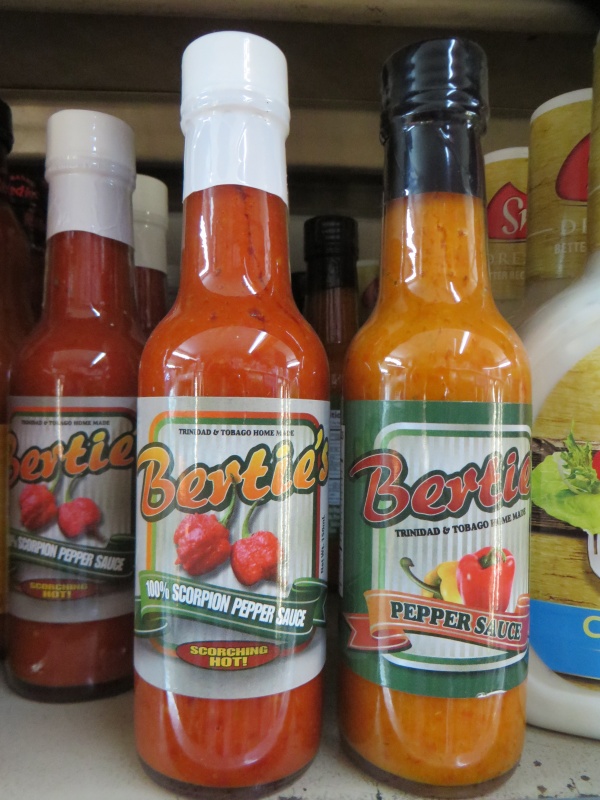
Living in Trinidad for awhile, we've had the opportunity to sample some of the local food. It's a mix of Indian and Creole and African, with a Caribbean flair. They make use of locally grown veggies and fruits mixed with the spices they're use to. They like “HOT”. In fact, one of the world's hottest peppers, the Moruga Scorpion is grown here. Hot sauce is usually available and on the table in every restaurant. scorpion pepper sauce

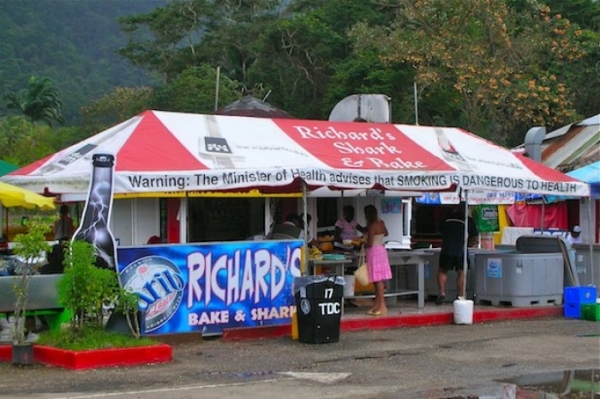
We've talked about roti before, but there are so many different foods here that we've never mentioned. Bake & Shark, for instance. First, you catch a shark, cut the meat into sandwich-size filets and deep fry it. Then you fry up some dough (aka bake) and make a sandwich. Add some lettuce and tomato and maybe some catsup or hot sauce and you've got bake & shark. Maracas Beach, on the north coast, is especially noted for this local favorite, but we saw signs advertising it throughout the island. David tried it and liked it … basically a fried fish sandwich with a bite.

bake and shark in trinidad

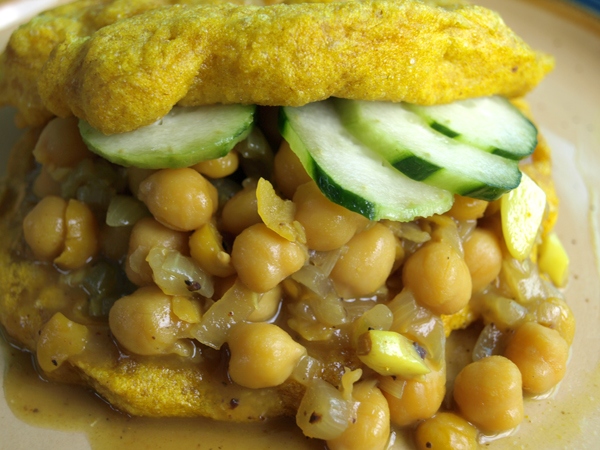
Doubles are offered daily right outside the Power Boats entrance gate. The local workers line up at little makeshift stands and the ladies dish up the doubles for breakfast and lunch. Doubles are a pretty common street food here. It's basically a flatbread sandwich filled with channa (curried chick peas) and some kind of topping like mango, tamarind or cucumbers and maybe some added hot sauce.

doubles in trinidad

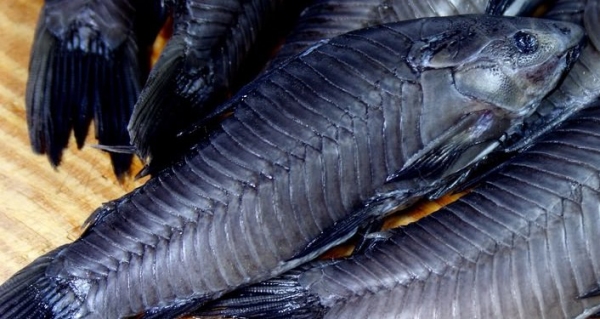
Legend has it that those who eat cascadura (aka cascadoo) will end up back in Trinidad. It's a freshwater fish covered with scales and does not look particularly appealing. It's usually served curried and we heard about it, but never got a chance to try it. I guess we're not coming back.

cascadoo in trinidad

Fruit chows, comprised of local fruit in season like mango and pineapple, are common and sold as a snack food. The fruit is mixed with lime juice, garlic, cilantro, oil and peppers.

There's souse which sounds disgusting. Pig trotters or chicken claws (i.e. pig or chicken feet) and sometimes conch, are boiled and the meat (how much meat is there on a chicken foot?) is served cold in a briny sauce seasoned with lime, cukes, peppers and onions. We passed on this one, too.

The locals also hunt during season (and probably out of season) for agouti, iguana, possum (manicou), wild hogs (quenks) and armadillo (tatoo). We saw none of these on the our menus. Just as well.

At the market, I had to do a little translation. Ochro is okra, melongene is eggplant and zaboca is the local avocado. Papaya is pawpaw. Garbanzo beans are chickpeas or channa. Dasheen is taro and its leaves are used to make the African-Caribbean callaloo soup, which is quite good.

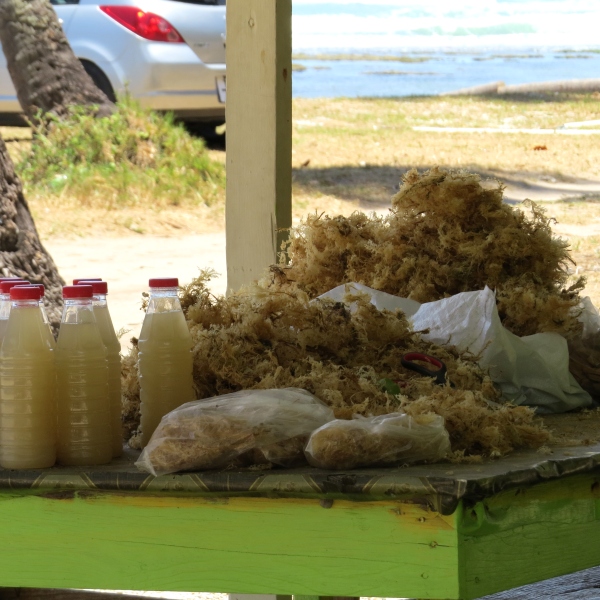
When we were at Toco Beach, we were offered sea moss (sea weed) … both dried and also as a drink. The fellow selling it claimed it was good for energy. We read that Trini men also claim it to be an aphrodisiac. If it is, it would certainly be more ecologically sound than rhino horn powder.

sea moss in trinidad

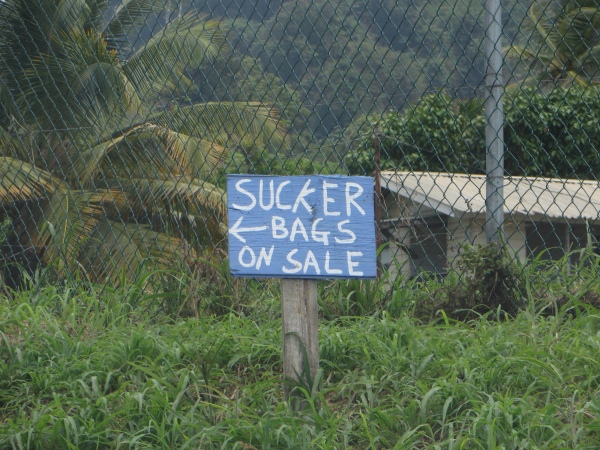
While we were driving through the countryside, we saw a small, hand-painted sign for “Sucker Bags for sale”. Turns out this is a frozen confection made from sweetened, condensed milk.

sucker bags for sale in trinidad

There's also coocoo (corn meal and ochre) and cowheel soup, pigtail and frypork and several dishes where goat is the main ingredient. There's probably dozens more dishes we've never tried or heard of. Eating in a foreign country is always interesting, but Trinidad has been an ongoing epicurean adventure.

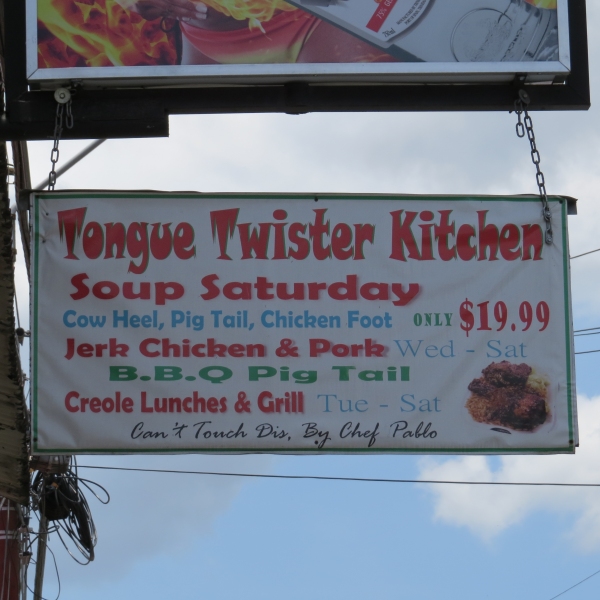
tongue twister kitchen in trinidad