Trinidad to Puerto Rico - Days 3 & 4

Day 3 - 255 nm to go Following an awesome, star-studded night, we welcomed our first sunny day. The sun wasted no time at all in rising and shining. By 0630, Old Sol was brilliant and blazing. The constant tradewind breeze keeps things cool enough, but we're slathered in sunscreen and very happy we have a bimini to keep the direct UV from frying us.

As we watch the Windward Islands to the east slip away on the charts, there's some small regret that we're not island-hopping our way north. Grenada, Bequia, Barbados, Mustique, St. Lucia, Martinique … maybe next time.

We had lots of entertainment during the day. Two flying fish were in the scuppers this morning, both quite stiff and stinky, definitely part of Bob's family. Dolphins paid us a visit in the afternoon and stayed to play for about 15-20 minutes. A brown noddy landed on the solar panels and despite efforts to chase him off, he managed to return time and time again, depositing voluminous amounts of poop with every landing. Too bad we're not in the guano business. A curious laughing gull cruised by several times, hovering close to the noddy and we wondered if they were sea mates or if the tern was thinking he'd like a rest as well. After five unsuccessful attempts at discouraging the poop fest, David finally ended the noddy's respite by flicking him with a line. He squawked a “hrumph” and took off disgruntled. So much for our hospitality at sea.

naughty noddy

We finally found the other end of that pesky adverse current that's been slowing us down and now we're enjoying a 1 knot push. The  currents in the Carib are clockwise with Atlantic waters entering through the Windwards with the North Equatorial Current. They swirl around and begin exiting in the north through the  Leewards and north of Puerto Rico and Cuba … forming the Florida Current and Gulf Stream. We're most happy to be on the positive end for a change.

Directly on our route is a tiny island, Isla Aves, not to be confused with the Islas Aves en route to Bonaire. It's really no more than “a speck of  sand in the east Caribbean Sea, barely large enough and high enough to support a small field of grass, seabirds, and endangered sea turtles, let alone people. The islet, however is a location of great international interest. For Venezuela and Dominica, in particular, control of the tiny islet represents the gateway to thousands of square miles/km of ocean-based resources. Whoever control Aves controls the resources of the ocean around it – [purportedly] about 20%  of the world’s natural gas resources.” Venezuela has set up a base there and we thought we'd stop to check it out.  Alas the charts for this “speck of sand” are not detailed and we arrived at about 10pm on a moonless night. We gave it a pass.

We are enjoying another stellar evening. It's a new moon which means no moon at all and the night's are pitch black, save the shining stars and planets. It's spectacular, but I miss the moon. She'll be back in a few days.

Day 4 - 147  nm to go

Another spectacular night followed by an eye-blinding sunrise. The clouds moved in around 0900 … big, puffy clouds that look like cotton balls suspended in a blue field.  They weren't ominous and only served to filter the blazing sun a bit and save our retinas.

Dolphins played in our bow wake throughout the day and another noddy stopped by. We love the birds, but the poop detail after they visit is pretty gross.

off in the distance

By the way, since our furler foul, all sails have been full out and we've not made a single adjustment. Talk about easy sailing for lazy sailors.

After I wrote that line above (shame on me for bragging), the wind went more southerly and we ended up poling out, wing-on-wing, and continually jibing all through the rest of the day and evening. We'll be in tomorrow morning. By mid evening, the shore lights of St. Croix came into view and that old restless feeling “we'll be in port soon” grabbed us, like a horse heading to the barn. The trip has been pleasant and it's good to be back on the sea, but heading into Culebra will be pleasant, too.

Trinidad to Puerto Rico - Days 1 & 2

Day 1 - 509 nm to go We were up with the light at 0530, bright-eyed and bushy-tailed. It was drizzling out and pretty grey as we sipped our cuppas and did all the last minute checks we'd already done the night before. Just before 0700, David cranked up the engine, I threw off the mooring lines and we were puttering through Chaguaramas Harbour. We passed by our friends on Ave del Mar to say goodbye. Betty and Luis were on deck waving, shouting that we'd reunite in Nova Scotia next summer. We slid past all the big, moored fishing boats and tugs and barges and scooted between Grand and Little Gaspar Islands. Seagulls and terns cried overhead. Pelicans were out in great numbers, swooping low over the water or floating in rafts of 10 and 12. They barely acknowledged us at we motored past, obviously well used to passing motor vessels and more intent on catching up on pelican gossip with their neighbors.

We took a hard turn to starboard and caught a big tidal push through the narrow Boca del Monos  passage (Monkeys' Mouth) which spit us into the Caribbean Sea once again. It was still misty and we could barely see the Venezuelan coastline, only 11 nm away, on the hazy horizon. David toasted Neptune with the last of our St..Helena White Lion rum. At last, we were on our way again.

toasting neptune

There have been several recorded pirate attacks as recently as January 2016 on yachts plying the waters between Trinidad and Grenada. We had filed a float plan with the Trinidadian Coast Guard and weren't feeling overly concerned, but concerned enough. Thankfully, we encountered no pirates, nor did we even see that many other vessels. An occasional ship passed by, but nothing closer than a mile or two. We could see Trinidad's oil platforms in the distance.

The morning mist burned off and the Caribbean welcomed us with 12-15 knot easterly winds and 3-4' (1m) seas. As the day wore on, the wind increased and we zipped along nicely. That uneasy seasick feeling lurked close by, but never manifest itself with more than a bit of nausea.

Our first problem occurred when we tried to furl the jib in anticipation of an approaching squall-line in the late afternoon. The furler fouled and we could not get the jib in. As it turned out, the squall missed us and David was able to make a quick fix to the furler though he reckoned it would require more attention when we arrived in Culebra. Other minor stuff went wrong, nothing critical and we considered it typical of any passage beginning. All were put on “the list” for another day.

We sat and chatted and napped frequently. Evening came and our first night watch passed without a problem. Winds alternated throughout the night between 10 kts and gusts to 25 kts with a few showers to keep us on our toes. After sweating in Chaguaramas, it was a pleasure to pull out a light blanket to take off the chill during the night.

Day 2 - 357 nm to go

Another grey day and the waters were choppier and with it came a touch of seasickness. We nursed ourselves with another dose of Stugeron, dry toast and tea and by late afternoon, we were both feeling better. Nothing broke that we were aware of.

We'd made good time yesterday and were hoping to continue, but we were thwarted by a 1 knot adverse current that kept our distance-made to a minimum, barely over 100 miles. It showered on and off, but the overcast skies and constant breeze kept the temperature very comfortable. By late afternoon, we were both feeling well again. The true test was making and eating dinner and being able to read without being nauseous. We were successful.

dolphins came to visit

Dolphins visited throughout the day and provided some welcome entertainment. We saw a large flock of noddies around dusk, raucously discussing the best fishing possibilities for the area. Flying fish are common, but none have made their way to our scuppers yet. After Bob the Stink, it would be hard to meet another flying fish as loveable.

The overcast skies dissipated and the night was incredibly clear and beautiful. What a show! More stars than you can imagine, twinkling and glittering overhead. The Milky Way was distinctive and bright, millions of stars dazzling me with brilliance cast light years ago. I wondered who else might be out there appreciating this same spectacle.

Interesting Caribbean Sea Trivia

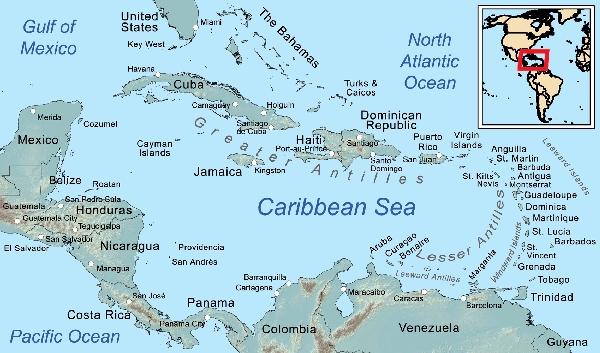
You can pronounce it Kar-IB-ean or KARIB-ean, both are correct. We're sailing in the Caribbean Sea at the moment and thought you'd enjoy some trivia about the famous sea. caribbean sea

1. The Caribbean is the second largest sea in the world (1,063,000 mi²/754,000 km² ). The South China Sea is #1 and the Mediterranean is #3.

2. The Caribbean region includes more than 7,000 islands, stretching from the Bahamas off the coast of Florida to Trinidad and Tobago off the coast of Venezuela in the south. Of these islands, 13 are independent nations, while others are overseas dependencies or territories of countries including the U.S., U.K., France and the Netherlands.

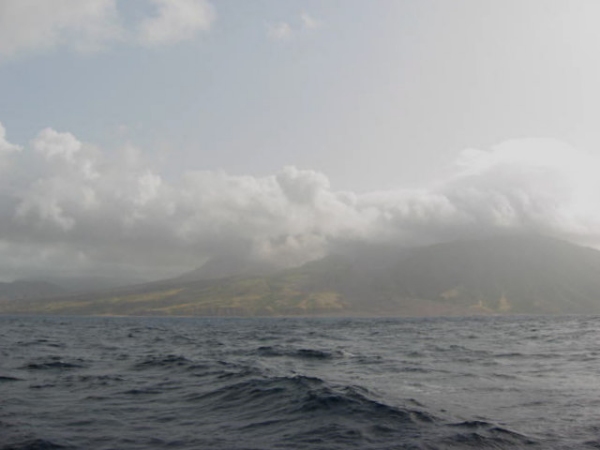
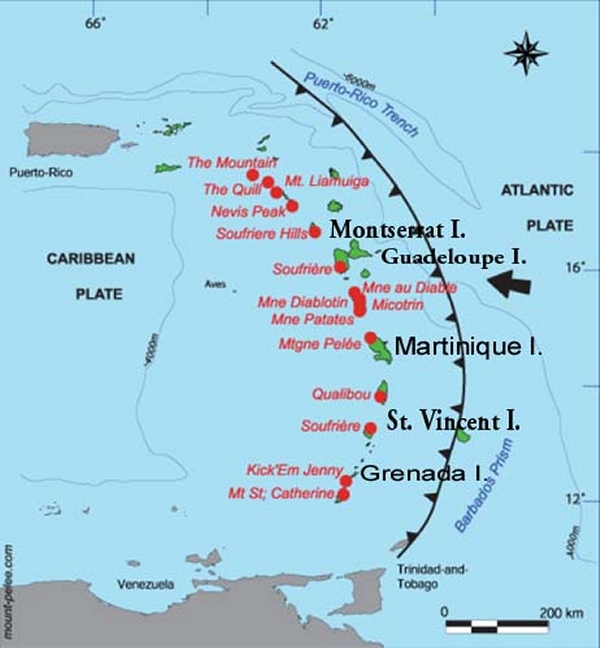
3. The Caribbean islands are of volcanic origin and there are a number of active volcanoes in the area. We remember watching Montserrat's Soufrière Hills volcano smoldering when we anchored off in 2002. Kick'em Jenny is an underwater volcano near Grenada that rumbles frequently and erupted last in 2001. It's a potential danger to vessels in the area and its location on the charts is marked with warnings.

montserrat smouldering in the caribbean sea

volcanos in the caribbean sea

4. When Christopher Columbus landed in the islands of the Caribbean in 1492, he thought he'd landed in India and he named the islands ‘the Indies’ and its inhabitants, “Indians”. When it was discovered that he wasn't in India, the name West Indies was applied to the area. The ‘Caribbean’ was named for its inhabitants, the Amerindian tribe, the Caribs.

5. The Cayman Trench, between Cuba and Jamaica, contains the Caribbean's deepest point (25,220 ft/7,686 m below sea level) making it the 4th deepest sea in the world.

6. The Caribbean Sea has a counterclockwise current. Water enters through the Lesser Antilles, is warmed, and exits via the Yucatán Channel, where it forms the Gulf Stream.

7. The Caribbean's clear waters are warm (75°F/24°C), and less salty than the Atlantic with a very low tidal range (~1 ft/.3 m).

8.Petroleum, iron ore, bauxite, sugar, coffee, and bananas are the main local products traded on the sea. Tourism contributes significantly to the economy.

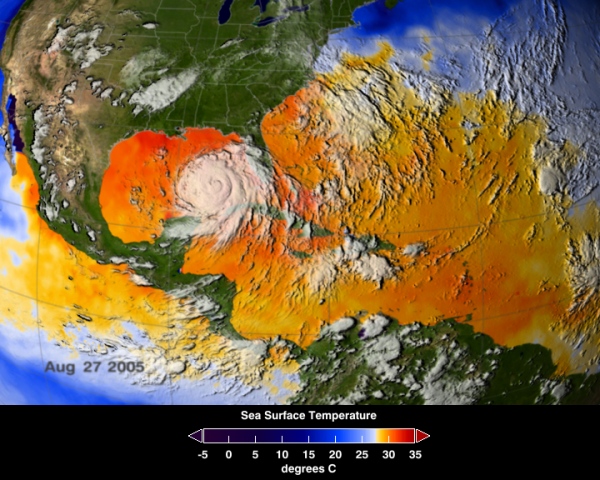
9. The hurricane season in the Caribbean extends from June 1 through November 30. Up to eleven hurricanes can form during the Caribbean hurricane season each year but normally it's around eight. September and October are the two most active months for hurricanes. The region around the Bahamas has the most frequent hurricane occurrences.

hurricanes in the caribbean sea

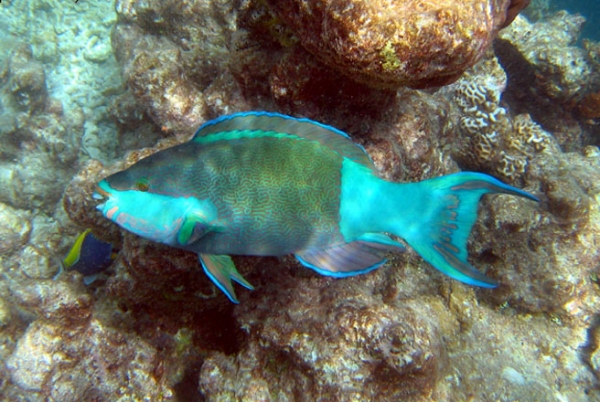
10. The Caribbean's beautiful, white sand beaches come from parrotfish. They chew up fragments of coral and poop out sand. One adult parrotfish can generate ~200 lbs/90kg of sand per year! They also help keep reefs healthy by feeding on algae, which can otherwise smother corals.

parrotfish

11. The Caribbean islands have a land area of 92,541 square miles, with an approximate population of 36 million. Their sizes range from the largest island, Cuba, which is larger than all the other islands combined, to the tiny islands of Saba and Anguilla.

12. The Caribbean's Mesoamerican Barrier Reef is the fourth longest barrier reef in the world. It runs 585mi/943 km along the coasts of Mexico, Belize, Guatemala, and Honduras.

13. Parts of all four Pirates of the Caribbean movies were filmed in the Caribbean. St. Vincent and the Grenadines was the production base in the southern Caribbean.
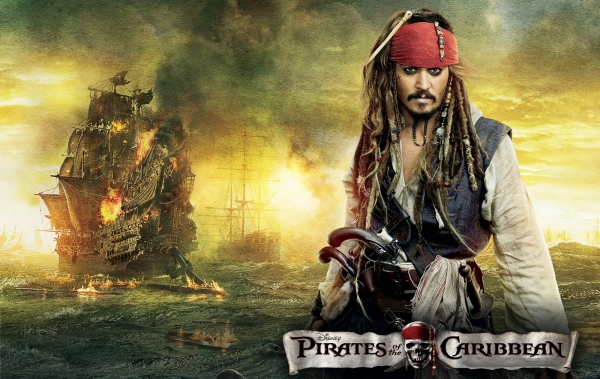
pirates of the caribbean

14. The Caribbean is a bio-deverse area with 1,000 documented species of fish, 90 species of mammals, 500 species of reptiles (94% of which are endemic), 170 species of amphibians (all endemic), and 600 species of birds (of which 163 are endemic).

Probably more info than you wanted or needed to know about the Caribbean. Now back to sailing on it.