The Blue View - Bilge Pumps

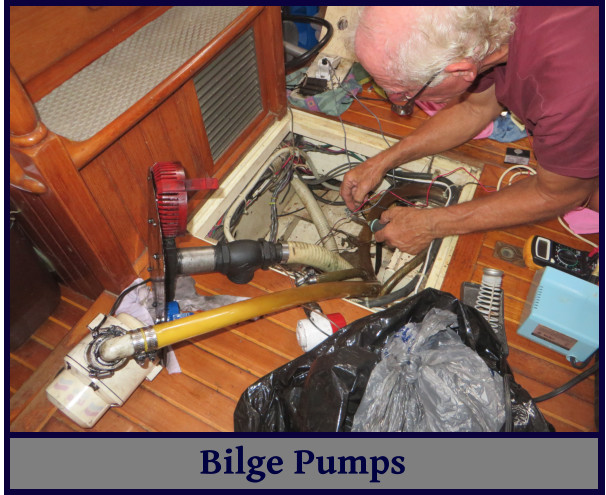
bilge pump Nine of Cups has four bilge pumps in place – one electric pump with a 3700 GPH (gallon per hour) capacity, one electric with a 500 GPH capacity and two hand operated 3600 GPH pumps. And if all else fails, we have several buckets aboard. Discounting the buckets, if both electric pumps were running and Marcie and I were giving it our all at the pumps, we should, in theory, be able to pump more than 11,000 GPH, or almost 200 gallons per minute! That should handle just about anything, right?

If you've followed our blogs over the years, you may remember a few that talked about bailing water from Nine of Cups. I can recall three occasions when we were at sea and taking on water – a most distressing situation. The leaks turned out to be relatively small and easily repaired, but what was more distressing was that the combined output from three of the four bilge pumps would barely keep up with even those small leaks (Marcie was hand pumping while I tracked down the source of the leak). Had we suffered some serious hull damage, all four of the pumps would not have even come close to handling the water ingress. The best we could have hoped for was that our pumps would buy us enough time to fix the problem, get help, run Cups aground on a beach somewhere – or, sigh, get the life raft deployed and loaded.

On the other hand, our bilge pumps are adequate for routine water ingress, minor emergencies and pumping out all the collected water once the emergency has been handled. Here are my thoughts on a reasonable bilge pump system.

bilge pumps

  • Small Automatic Pump. We have a small pump (500 GPH) with an automatic switch located in the lowest part of the bilge. This pump takes care of routine water ingress. We almost always take on some water during rainstorms or from waves over the bow or into the cockpit during rough weather. A small capacity pump is desirable for this application. When a bilge pump runs, it has to pump water out of the bottom of the bilge to a height above the waterline of the boat. When the pump shuts off, all the water in the hose will eventually run back down through the pump and back into the bilge; the bigger the pump, the bigger the hose, and the more water that will make its way back into the bilge. Thus, a smaller pump with 3/4” diameter hose is preferable. It is controlled via a switch on the breaker panel and an automatic switch – see below for a discussion on automated switches.
  • Large Capacity Electric Pump. We have a large capacity (3700 GPH) electric pump located next to the small pump. It is not automatic, and is turned on via a switch on our breaker panel. This pump is used in emergencies or when more than the usual amount of water has made its way into the bilge. For example, when it's time to clean the bilge, we first use oil absorbent pads to collect any fuel or oil, then turn off both pumps and pour several gallons of fresh water mixed with an acceptable bilge cleaner into the bilge and let it set a day or so, allowing it to slosh around. Next we turn on both pumps, quickly pumping the cleaner out and cleaning the hoses at the same time.
  • Hand Operated Pump #1. This hand operated pump is permanently mounted below the cabin sole and while primarily intended for emergencies, is used more frequently than you might think. On passages, we usually turn off the automatic pump and use the hand operated pump once or twice a day to determine whether we are taking on more than the usual amount of water. By counting and tracking the number of pumps required each morning to empty the bilge, the early signs of a pending problem, like a leaking fitting, can be identified before it becomes an emergency.
  • Hand Operated Pump #2. This pump is attached to the underside of one of the cabin sole hatches, along with 15' (4.5m) of hose. In an emergency, the hose can be fed down into the bilge and the pump taken up into to cockpit and operated there.
  • Automatic Switch. I have tried a multitude of automatic bilge switches, most of which didn't work reliably. The mechanical float switches would sometimes stick, or would run the pump dry while on a heel. The automatic bilge pumps have a tendency to cycle on and off frequently as the water is pumped out of the bilge, then drains back down into the bilge from the hose. (See the further discussion below regarding non-return check valves in the discharge hose).I do like a few of the electronic sensors that detect water level by measuring the capacitance between two sensor pads. The capacitance will be different depending on whether there is air, water or fuel between the sensors, and since it can detect the difference between oil/fuel and water, the switch has been programmed to turn the pump on only when water is present. Since oil and fuel float on water, the switch will then turn the pump on only until all or most of the water is pumped out, and turn the pump off before any oil or fuel gets pumped overboard. The switch I use is the Water Witch Model 101*. One of its features is that it keeps the pump switched on for several seconds after the level of the water drops below the sensor. If the switch is mounted above the bilge pump, the pump will continue running until the water level drops well below the sensor height, so when the water left in the hose drains back into the bilge, the water level will still be well below the sensor, preventing it from cycling on and off.

water witch

  • Check Valves. A non-return check valve will prevent the water in the hose from draining back into the bilge. The ABYC allows the use of a check valve in the discharge hose of an automated bilge pump for just this purpose - to prevent the pump from cycling on and off. I'm not a big fan of check valves in bilge discharge lines. Since the bilge water often has debris in it, the check valve often becomes fouled, causing it to leak and rendering it useless.
  • Operational Feedback. Having some sort of feedback to let me know the automatic bilge pump is running is important. We have an indicator light on the alarm panel that illuminates when the pump is running. On my wish list is the addition of a cycle counter – a device that keeps track of how many times and for how long the bilge pump has turned on. An increase in the amount of time the automatic bilge pump has come on may well be an indicator of a problem that is simple to fix now, but which could be catastrophic if allowed to get worse.

alarm panel

  • High Water Alarm. We have a water activated switch located well above the normal level of water in the bilge. If the water ever rises to the level of the switch, it sets off audible and visual alarms both below deck and in the cockpit. I use a different model Water Witch switch for this application – the Model 10, which is identical to the Model 101 but without the shut-off delay. We installed it after our passage from Easter Island to Ecuador when we began taking on water and were blissfully unaware of the problem until the floorboards were almost awash with water.

So that, in a nutshell, is our bilge pump system.

BTW, I want to thank our JALF blog reader, Tony in California, for suggesting this blog. I thought I had covered the topic long ago, but neither Tony nor I could find an older Blue View on the subject. So, thanks Tony.

This is a link to the Water Witch bilge switch on Amazon. If you buy anything from Amazon using this link, it costs you no more, but we make a tiny percentage on your purchases.


Slaying Dragons - Revisited

Whenever we talk with people about our travels or give presentations about living aboard, we always talk about slaying dragons. It's definitely a recurring theme. We explain that we are not the Cornells, nor the Pardys, nor the Hiscocks. We weren't brought up sailing. We took sailing lessons in our 40s, read lots of books and did lots of charters. In 2000, we finally bought Nine of Cups, sold up and sailed off. Sounds easy when we think about it now, but it wasn't. There were lots of obstacles and challenges along the way to overcome … dragons. We've been meeting lots of folks recently who are thinking about sailing and living aboard or who have just made the plunge (pun intended), so we thought it might be worthwhile sharing this blog post from January 2013 again. A good reminder that on land or or at sea, there are always dragons with which to contend.

It's the Captain's birthday today, by the way. Not a milestone birthday, but another year older and hopefully wiser and certainly more loved than ever. We're out celebrating … no dragon slaying today.

dragon anatomy

“Do one thing everyday that scares you” said Eleanor Roosevelt. I'm not quite sure I agree. I need a break every once in awhile from things that scare me, but maybe once a week would be okay. Really what she means is to keep yourself challenged, not necessarily with life-threatening activities, just traveling into new and uncharted territory once in awhile. Don't be afraid to try new things.

Dragons chart

Old nautical charts frequently used the expression “Here Be Dragons” for uncharted, unknown territories. When we first moved aboard, everything was new and uncharted … our lifestyle, the boat, living on the water instead of land. Heck, even the terminology was different. It wasn't the toilet any more; it was the head. Dreaming the dream of heading off into the sunset on a sailboat is one thing, but actually doing it ... well, that was downright daunting.

golden dragon

Enter the dragons. We define dragons as anything that causes angst. Fears and anticipation that get your heart pounding, adrenaline pumping and/or stomach churning. There were dragons lurking about the first time we took our new boat out into the Gulf of Mexico; the first time we were out of sight of land; the first time anchoring; the first time waiting for a bridge to open; the first overnight passage which included our first overnight watches alone. It was a world of firsts. Each day was a new dragon to face, a fear to overcome, a dragon to slay.

dragon welsh

Dragons come in all sizes and shapes. It doesn't have to be a heart pounding experience. I'm not a seamstress, so when we determined in Ecuador that the cost of replacing the dodger and bimini was too expensive, we decided that I'd make new ones. The dread was palpable. I'd never done this type of a major sewing project before. What if I screwed it up? What if I wrecked all that expensive fabric? What if I failed? Take a deep breath. Think it through. Do some research. Talk out the plan with David. Start the project … then just a little further. Not right? Tear it out and do it again. Be patient. Just a little further. We ended up with a new dodger, bimini, sail cover, winch covers, hatch covers and more. Because once you slay a dragon, you get a new burst of energy and confidence.

Have we had any heart pounding experiences? Oh, sure. I can't imagine anyone living on a boat crossing an ocean that hasn't had at least one or two hairy times. Squalls come up unexpectedly and the first few times, you wonder what the hell you're doing out in this miserable weather with waves breaking over the bow. We've hit rocks and reefs, dragged at anchor, almost had a dragging ship hit us at anchor. The good thing about experiences like this is that they teach you.

chinatown sydney

We've been told “Oh, you're so brave. I could never do what you're doing.” Wrong! You could, if you wanted to. It might not be your cup of tea, but you could do it. I firmly believe, you can do most anything you want, if you want it enough and are willing to slay a few dragons along the way. Give it try. Do something that scares you today. Slay a dragon.


Having a Yard Sale - Exhausting Work

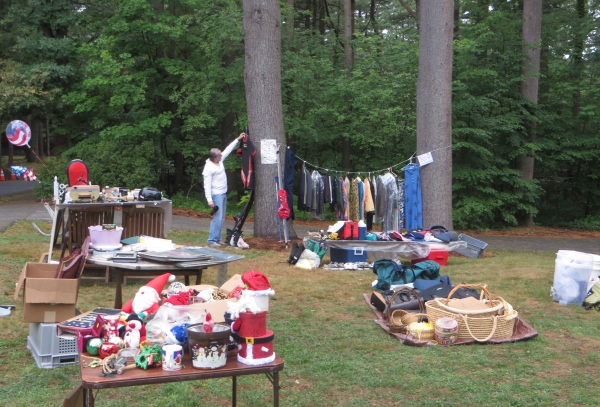
I love going to yard sales, but being on the other end, preparing for a yard sale and then having it is exhausting work. We started by offloading about ~500 pounds of “stuff” from Nine of Cups and transporting it to my sister Lin's. It turns out that was the easy part. How ever did we ever accumulate so much? Once we got all the crap … I mean good stuff ... to Lin's and unloaded, we had to sort it and price it, plan and market the yard sale “event” and then actually participate for two days while people showed up, looked and hopefully bought all the treasures we had for sale. We've done this many times before and we've been reasonably successful at it. We measure success by 1) how much $$ we've made and 2) how much stuff is left at the end of the sale that needs to be carted off to a thrift shop or to the dump. Here's what we've learned …

1. Marketing your yard sale event. If you tell them ... they will come.

Marketing and advertising is important. You've got to let people know that you're having a sale and advance notice is important. We listed our yard sale in the local community newspaper, on craigslist and several local websites that are designed specifically to advertise yard sale/garage sale. Most are free and well worth the effort.

Additionally, signage is critical.

Catching someone's attention when they're driving is difficult, but someone who spots your signs and heads to your yard sale might be a potential buyer. Use brightly colored signs, with consistent colors (some folks might miss the verbiage on one sign, but follow the color), with clear, concise information: Yard Sale, location and date(s) are the key and necessary elements.

good signage

Make sure to place signs in strategic places to insure you draw as many potential buyers to your sale as possible. If you put them out a day or so early, people might make sure to put it on their agenda for the weekend. Also, be a responsible citizen. Remove your signs when your sale is over. We keep track of the number we put out, so we're sure to retrieve them all at the sale's end.

2. Price your stuff to sell

I know you paid $100 for that dress or lots for those skis, but if you want to sell them for anywhere close to what paid, you might consider a consignment shop that specializes in designer clothing or used sports equipment. Otherwise, be happy to get $10-$15 if you're lucky. People go to yard sales for bargains. Things are only worth what someone is willing to pay for them. If you want to move your “merchandise”, you don't have to give it away, but price it reasonably low so it will sell. OR be prepared to donate it or pack it away till the next yard sale.

3. Preparation is important.

Pre-pricing and pre-sorting are two tools to success. We usually use colored adhesive dots with associated published prices on signs scattered around the sale area, e.g. red dot = 50¢, green dot=$1, etc. There's nothing worse than having to ask someone for the price of each item and the only person who knows the prices is with another “customer”.

yardsale_browsing

We try to sort items in advance and put them into the same area ... electronics, antiques, clothing, glassware, kitchen, books, toys/games. If something is particularly distinctive, we put an extra little tag on it with some info … “vintage teapot made in England”. Some folks like to root around in boxes full of junk. You can certainly leave a few boxes of miscellany for this purpose, but usually some sense of order is appreciated. Don't leave good items stuck in their boxes. Take them out so folks can see what they're buying.

Also, make sure you have change ready … lots of dollar bills, quarters, etc. If you're selling higher priced items like furniture, have larger bills available. What's worse than making a sale, but not being able to make change?

change

5. Be ready on time

If your sale is scheduled to start at 8am, have everything out and ready by 8am. People expect that you'll be ready to go when you say you will. Be prepared for early birds and either embrace them or turn them away. Though sometimes frustrating, we prefer embracing.

6. One man's trash is another man's treasure.

Things we don't think will sell, usually do … and vice versa. It's an amazing phenomenon. We put out everything there is to sell and at the end of the sale, we decide if what's left is worth keeping. We usually donate to a locate charity … preferably one that's willing to pick up.

So … how well did we do?

Unless you plan to have your sale inside, one thing you can't control is the weather … especially in New England. The weather forecast vacillated between thunder & lightning, hail and heavy rains to overcast. We took our chances and as luck would have it, we were the only ones who didn't cancel our yard sale on Saturday AND there was no rain. It sprinkled a bit, but we were ready with tarps and never needed them. People showed up steadily and bought lots. Sunday was a bust with off/on showers and few customers. Still, we felt the whole ordeal was successful and worthwhile.

In total, the family netted just under $800 for stuff we didn't need and/or want any longer. We've called a local charity to pick up the rest and Lin's basement is pretty empty … lots of room for more stuff. We plan to celebrate with a New England lobster feast at home … then Lin and I plan to go to yard sales next weekend.

By the way, I logged over 10,000+ steps on my FitBit each day … the best kind of exercise … I didn't have to think about it.