Off the Dock and into Chesapeake Bay

Paul arrived in the late afternoon, exhausted, but exuberant. He'd driven 2,040 miles from Loma, CO to Chesapeake, VA in three days and finally he was here and aboard Nine of Cups. He was able to park and leave his car securely at the Atlantic Yacht Basin and after a day to recoup and provision (did I say he has a car?), we were off the dock around 11:45 just in time for the Noon opening of the Great Bridge Bridge. heading towards great bridge chesapeake bay

Only a half mile beyond the Great Bridge are the Great Bridge Locks and they work in sync with the bridge. There were four other boats transiting the bridge with us … more than we had seen since we'd arrived. The transit of the bridge was no drama, but the locks ended up being a bit of an adrenaline rush when a sailboat, two boats in front of us couldn't get lines ashore and swung out broadside into the locks. There are no brakes on a boat, so several boats swerved every which way to avoid any catastrophes. The lock tender was patient and capable and had everything handled within a few minutes, despite some cursing on the forward sailboat. We ended up facing the wrong way in the locks, but David did a torque turn with no problems and we were on our way.

great bridge locks

What we didn't realize until the lock tender mentioned it was that the Gilmerton Lift Bridge, just six miles up the river, had a restricted schedule and only opened four times per day. The next opening was scheduled at 3pm, so we puttered along at 1-2 knots.

As we neared the bridge with only 10 minutes to wait, David decided to check the transmission fluid. As you'll remember, we had transmission problems last June and David had addressed the issues before we left Cups at AYB. We had not, however, motored since that time and he was anxious to make sure the problem was resolved. Well, the transmission fluid was fine, however while checking he smelled coolant and sure enough there was a coolant leak. The culprit was a split coolant hose.

split coolant hose

We watched the temperature rise, but he found if he kept the RPMs low, though the temperature was considerably higher than normal, it remained stable. We made it through the bridge and anchored just off the channel on the other side. David did, of course, have a spare. He and Paul hightailed it below to change out the hose. Within 30 minutes, we were back in business. Anchor up, we made our way along the Elizabeth River towards Norfolk.

david replaces the coolant hose

We passed by the Norfolk Naval Shipyards and looked with interest at the battleships, destroyers and aircraft carriers, all in varying stages of production and/or repair. We saw an old light ship on display. Small Navy patrol boats whizzed back and forth along the shoreline, making sure no one strayed off the channel and into the restricted areas.

norfolk naval shipyard

We were hoping to reach Willoughby Bay for our night's anchorage, but with all the day's delays, we started looking for alternatives. As the sun waned and the day grew cooler and darker, we opted to anchor the night in a general anchorage just off the channel which proved to be just fine. Our first night on the hook since June. It's good to be back aboard!
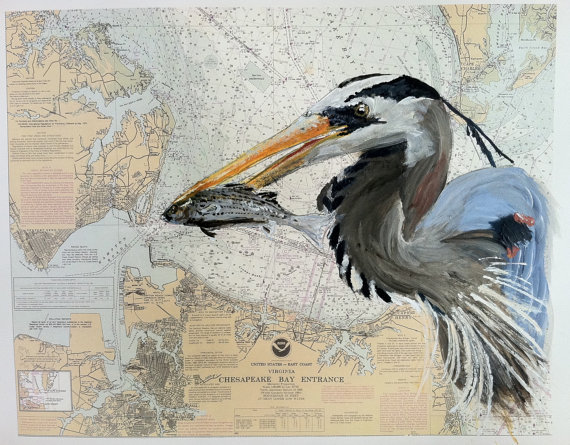
Hunting for Herons - Chesapeake, VA

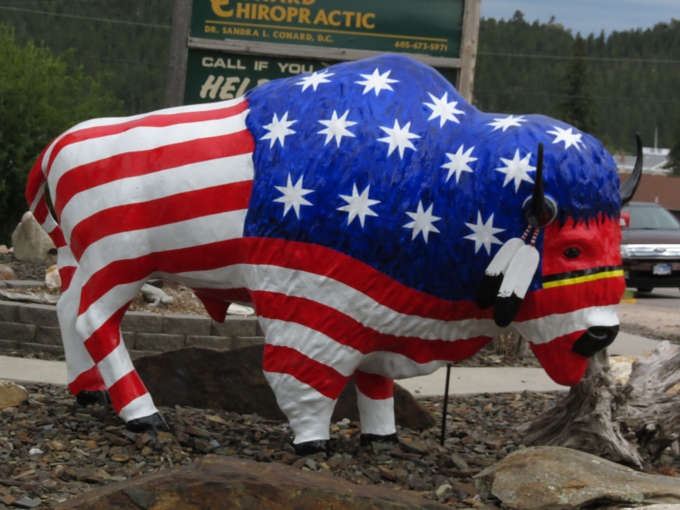
We originally saw the decorated, much celebrated Chicago cows in … well, Chicago, of course. That was eons ago and I never snapped a photo. In fact, there weren't digital cameras available then now that I think about it, nor phones that took photos. We thought the painted cows were cool, but hey, it was Chicago, what would you expect? Then we found painted lobster statues in Rockland, Maine. Well over a decade ago, we found a school of mermaids in Norfolk, Virginia. There were much adorned giant-sized boots in Wyoming, colorful buffalos in South Dakota and classy catamounts in Vermont. The list went on and in each place, we appreciated the local color. buffalo in custer south dakota

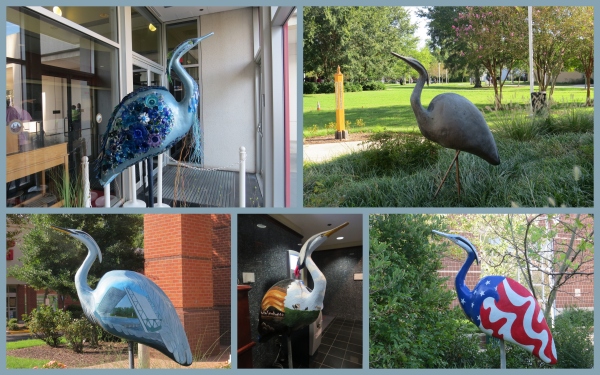
Well, now we're in Chesapeake, VA and it's blue herons that have stolen the show and are popping up all over town. The work of local artists makes each blue heron sculpture unique. Each proud-looking, cold-cast bronze sculpture stands 6' tall. The Blue Heron Project is a Chesapeake City community initiative that adorns the city with public art in the form of its icon, the blue heron. It not only beautifies the city, but its ambitious goal is to raise $1 million for education.

blue heron poster in chesapeake

We're limited by where our feet will take us, but we've found at least a half dozen within a few miles of the marina and it's been well worth the walk.

blue heron statues

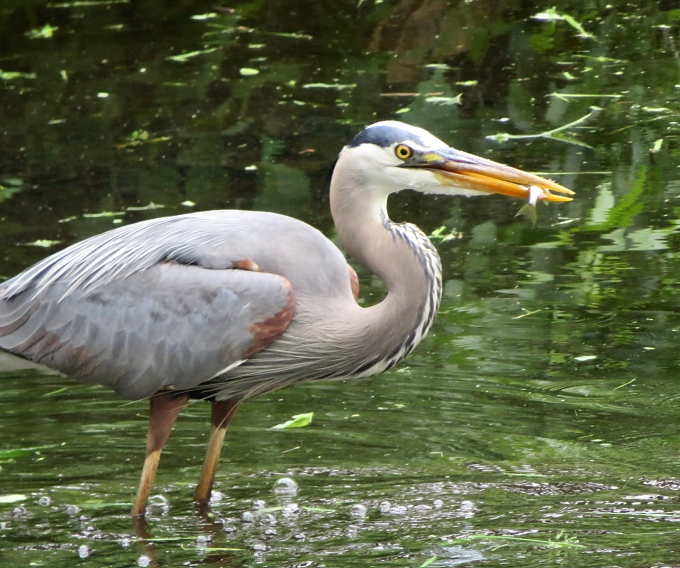
The blue heron seems to be an appropriate icon choice for Chesapeake City. We've seen blue herons a-plenty on our morning walks along the Elizabeth River.

blue heron with fish in chesapeake virginia

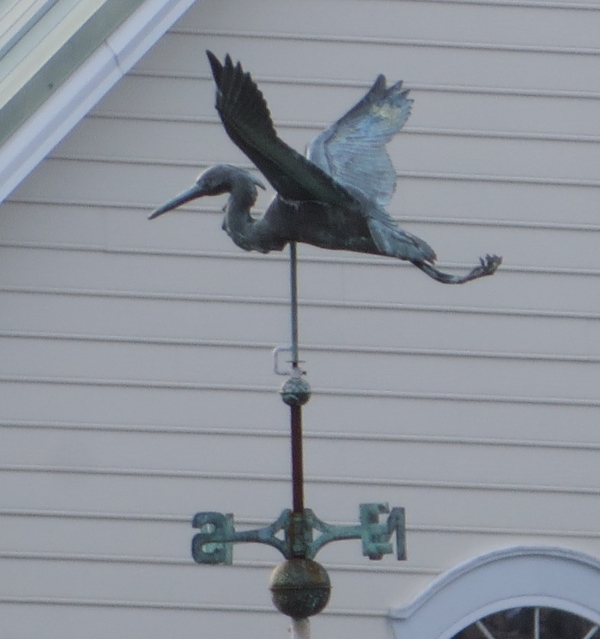
Even the local weather vanes tout this celebrated avian fellow.

blue heron weather vane in chesapeake virginia

Evidently there are many more locally decorated icons in the Chesapeake Bay area … the mermaids we spoke of in Norfolk, but also pigs in Smithfield, horses in the Outer Banks and dolphins in Virginia Beach, to name a few. We'll be on the look-out for more celebrated icons in our travels.


The Blue View - Flares, and More Flares

flares Marcie was doing her annual ditch bag inspection not too long ago, and noted that our flares were due to be replaced. Flares have a shelf life of 3.5 years, which seems like a long time, but it also seems like we are always buying them.

smoke flare

There are a host of different flares available, ranging from handheld flares, to orange smoke flares to signal rocket flares with parachutes. We’ve got quite an assortment. The prices vary accordingly, from expensive to really expensive.

flare gun

We also have a 12-gauge flare pistol. Just like in the movies, a shotgun shell sized flare is loaded into the pistol, which is then fired into the sky, sending a bright red flare 500 feet or so high. Unfortunately, this type flare gun is considered a weapon in some countries, and must be declared and held in bond until the vessel leaves the country.

The U.S. Coast Guard requires us to carry at least three flares for daylight use and three flares for night use as a minimum. (Some types of flares are approved for both day and night use, in which case only three flares in total are needed.) In addition, because we sail offshore, we felt we should follow the International Sailing Federation (ISF) guidelines for offshore vessels, which requires 6 red parachute, 6 red handheld and 2 orange smoke flares. That’s a lot of flares, and did I mention that they ain’t cheap? It’s about $600 for the complete set – ouch!

Our approach was to carry the ISF flares in our sealed life raft, which has to be opened and inspected every three years. If we ever had to abandon ship, we’d be sure to have a good set of flares in the life raft, even if we lost our ditch bag. The coast guard is authorized to board any vessel in U.S. waters (or any U.S. flagged vessel anywhere in the world for that matter) to do a safety check. Since it isn’t practical to open the sealed life raft, we also keep an in-date set of the USCG required flares in our ditch bag to ensure we meet their requirements – and to have on hand if we have an emergency that doesn’t require abandoning ship.

collection of flares

Once the flares pass their “Best if Used By” date, they are most likely still usable and can still be kept aboard, as long as we have sufficient in-date flares to meet the USCG requirements. Thus, we have kept the majority of our outdated flares over the years to use as backups, and we’ve accumulated quite the collection.

Disposing of used flares is difficult. They can’t be tossed in the trash. They can’t be set off without the possibility of creating a false distress alarm. The coast guard won’t take them, nor will most local fire or police departments, and the manufacturers won’t take them back. In some places, the local coast guard auxiliary or sea scouts may take them for use in training. When we decide to start thinning our inventory of old flares, we’ll do what everyone else does - ask around and make lots of calls until we find a solution.

electronic flare

This year, we decided to use a different approach. The coast guard allows an alternative to the usual pyrotechnic flares. It’s now possible to buy an LED electronic flare that is USCG approved and which never expires, as long as the batteries are replaced each year. It is waterproof and floats, and once turned on, it flashes a very bright S.O.S. signal.

electronic flare with flag

Since this is only a night time signal device, it is also necessary to have flares for day use. The coast guard also allows the use of a large orange flag with a black circle and black square printed on it, in lieu of the usual daylight flares. Weems & Plath, the company that manufactures the electronic flares, very cleverly sells a package that includes both the light and the flag.

We ordered the electronic flare package on Amazon, installed four C-cell alkaline batteries and tried it out. The light, which has a visibility of 10 miles, was as bright as expected. We stowed it and the orange flag in the ditch bag, and Marcie has changed her annual safety checklist to include changing the batteries.

Our life raft will be due for inspection this January, and the ISF flare set that is stowed inside will be near its expiration date. Should we invest $600 or so on the replacements or should we scale down a bit? We aren’t planning to cross any more oceans in the next three years, so maybe it’s okay to cut back.

This post contains affiliate links to Amazon for your convenience. If you shop Amazon through any Amazon links on our site, we get a small commission at no extra cost to you. Thank You!