Chesapeake - Reedville to Smith Creek

Day 5 – 31 nm (passage total: 147 nm) It rained during the night and the forecast called for more … and more. We heard flood warnings for the local inland areas. The sun rose, but the dark, heavy sky dampened its enthusiasm … and ours. Still, we were up and out of the Cockrell Creek anchorage by 0700. It was chilly and raw and we donned our rain gear. David and Paul raised the anchor while I was at the helm. They seemed to be taking an inordinate amount of time on the bow and I wondered if there was a problem. It appears a very large spider had taken up residence in the furler and was rather obstinate about vacating his home. The hose used to wash down the muddy anchor was also used to convince the arachnid to give it up.
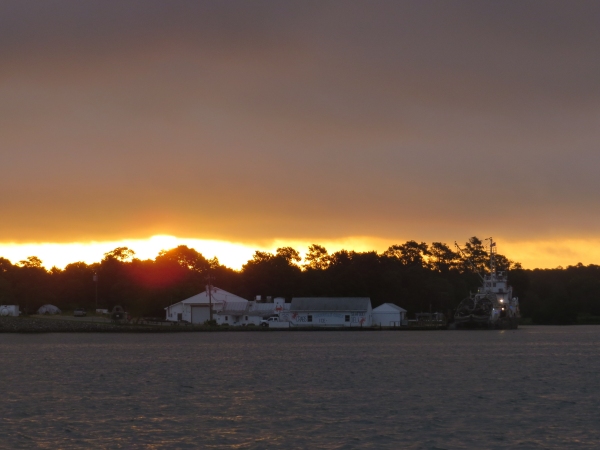
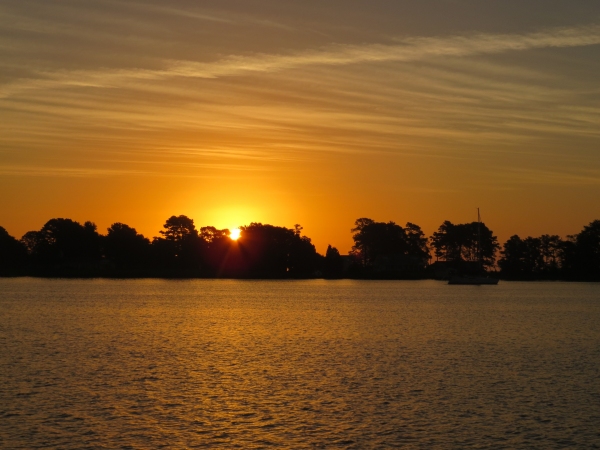
sunrise over reedville virginia

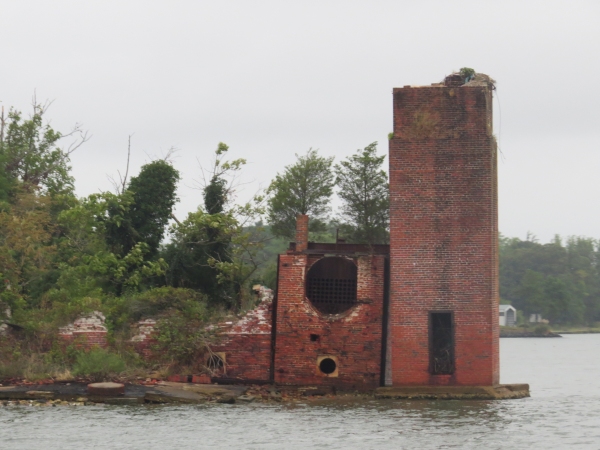
Now that we knew some of the history associated with the Cockrell Creek fish factory ruins and the solitary chimney stack, we paid more attention as we passed by. The Morris-Fisher stack “proudly stands over 130 feet from base to crown and is affectionately known by locals and visitors alike, as Reedville’s own “Statue of Liberty”. Evidently, the stack was in bad shape and falling down up until a few years ago when a huge community effort, “Save the Stack”, raised enough funds to have it repaired. “The stack is an iconic landmark of Reedville and the Northern Neck’s menhaden factories.[...] This is the last stack like this of any factory that operated in the Northern Neck. Through the years, this statuesque landmark has served as a visual aid to the watermen and sailors of the past. “When they saw the stack, they knew they were home.” Awesome!
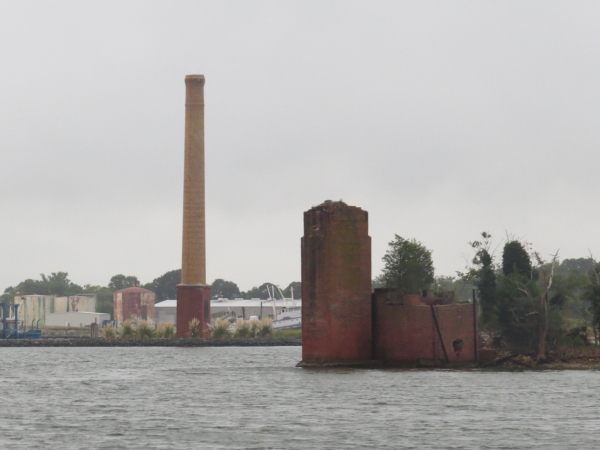
morris fisher stack and ruins

We rounded the bend and headed back out into the Chesapeake. We passed Smith Point Light and then crossed the state line from Virginia into Maryland just as the rain began in earnest. This was a very, very wet day, but we needed showers anyway.
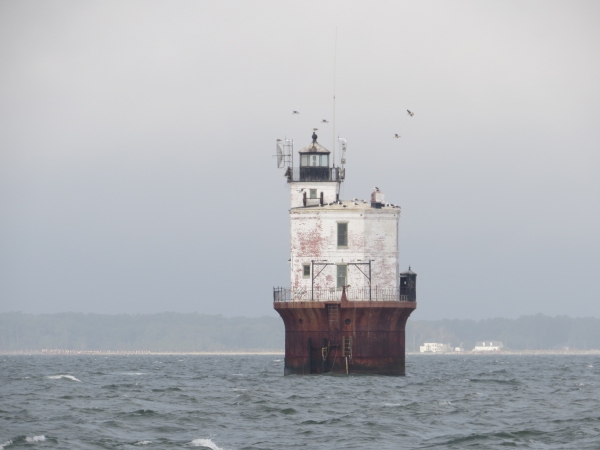
smithcreek point light chesapeake

We ran with just the jib and hung a left out of the bay and into the historic Potomac River. The ride was bumpy with wind against current. Our plan had been to head five miles up the St. Mary's River to St. Mary's City, the site of Maryland's first capital. After further investigation, we found the colonial site was closed on this day and since it was pouring we wouldn't go ashore anyway. Instead, we found an alternative anchorage in Smith Creek. Maybe we'd visit St. Mary's City on our return trip.
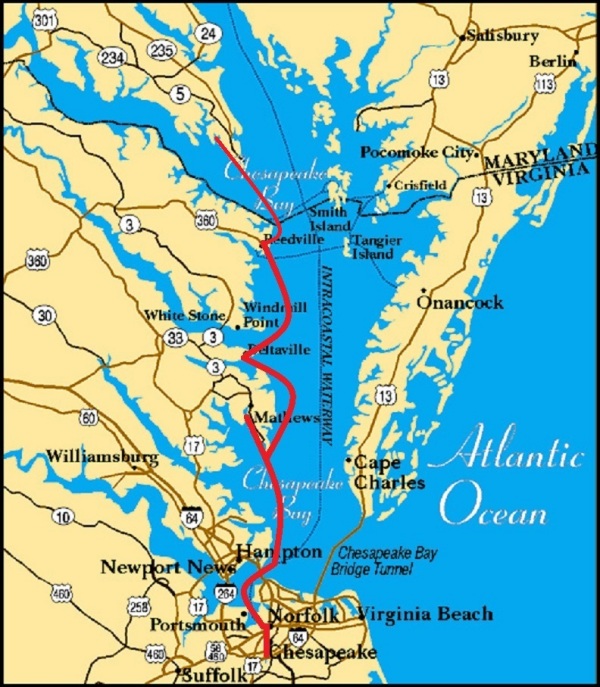
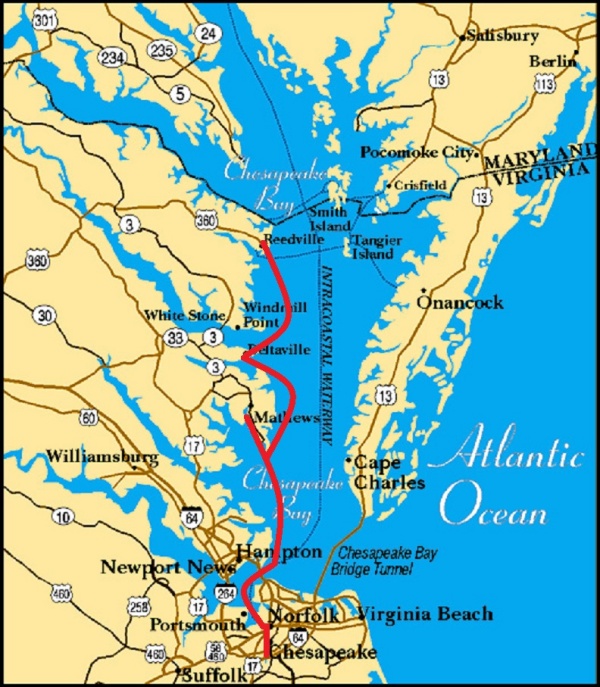
reedville to smith creek

The entrance to Smith Creek was a tricky dog-leg around shoals which was well-marked and wouldn't have been half so tricky if it wasn't cluttered with crab pots. Why the crabbers have to place the pots in the middle of the channel escapes us, but they do and negotiating around them in a sailboat is not all that easy. We muddled through and then encountered several fish traps. That said, David managed admirably and we had no crab pots nor fish traps on our prop when we finally found a place a to anchor for the night.
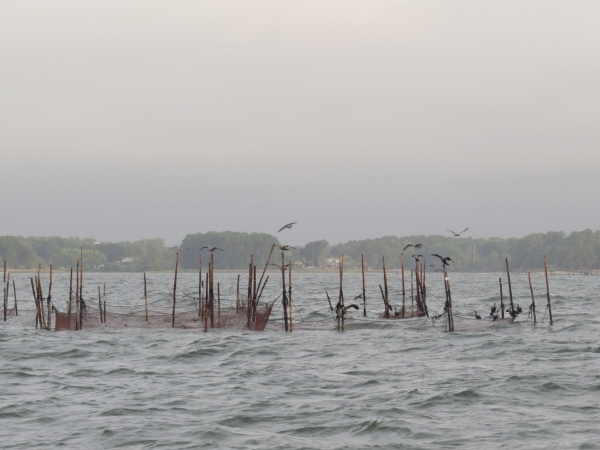
fish traps

Soaked and chilled, we went below to dry off only to discover the head was leaking, as was the forward faucet (new problem) and two of the hatches. Grrrr! A cursory check indicated there was nothing to be done in the midst of the downpour and there was no danger of sinking, so we did the only thing we could think of to do … have lunch and take a nap.

The leaks hadn't disappeared when we rose in time for dinner, but we ignored them while we ate and watched a movie. We'll figure it all out tomorrow.

Menhaden? Who knew?

Reedville, Virginia

Have you ever even heard of menhaden? We certainly hadn't until we visited the Reedville Fishermen's Museum in Reedville, Virginia the other day. Menhaden, also known as mossbunker, and bunker, are small, smelly, oily, bony forage fish that swim in great schools and made millionaires of Reedville's 19th century sea captains.

menhaden fish reedville virginia

When we sailed up Cockrell Creek a few days ago, we passed by several large fishing boats and wondered what kind of fishing they did.

menhaden fishing boats reedville virginia

Further up the creek, we saw what appeared to be a large, solitary chimney and on the opposite shore, the ruins of several brick buildings. We had no idea about their history, but after a visit to the Reedville Fishermen's Museum, we became enlightened.

processing plant ruins reedville virginia

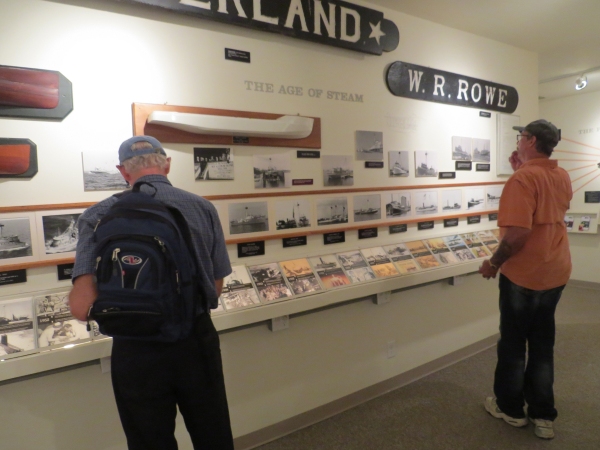
Though the museum offers lots of interesting displays and information about the area's history, the biggest revelation for us was its video, displays and exhibits specific to the menhaden industry. According to The House and Home magazine, “At one time in Reedville’s history, fifteen different fish factories lined the shores of Cockrell’s Creek [those ruins we saw], which earned Reedville the grand distinction as one of the most affluent towns, per capita, in the entire United States.” Evidence is Elijah Reed's house still standing grandly and proudly on Main St.

reedhouse reedville virginia

A quote from noted conservationist, Rachel Carson, states “ … almost every person in the United States has at some time eaten, used or worn something made from menhaden.” Really? Like what, for instance? Well … fish oil, pet foods, chicken feed and fertilizer for a start. Because it's high in Omega-3, it is used in dietary supplements. It's also a raw material in the cosmetics industry for making lipstick. Even Reedville's water tower reminds us that menhaden was the backbone of this once-thriving community.

reedville virginia water tower

I found an interesting website “Six reasons why Menhaden are the greatest fish ever fished”. It opened our eyes to even more menhaden facts. “Menhaden, Brevoortia tyrannus, is, without a doubt, the single most important fish in the western Atlantic. This oily filter-feeder swims in schools so large that they block the sun from penetrating the water’s surface as it regulates ocean health.”

menhaden-school-8-30-2014a-don-riepe-575w

More interesting trivia from the same internet article ... “Native Americans (Narragansetts) in precolonial America called the fish ‘munnawhatteaug,' which translates to ‘fertilizer.' In a legend about the Plymouth Colony, a local tribe taught the first settlers to plant a fish with their corn to make it grow stronger.” Yup, that fish was a menhaden. Menhaden were also known as poghaden, bony-fish, whitefish, pogy, fat-bat, and bugheads. Who knew?

Okay … enough fish stories. We're slowly heading up the Potomac River towards Washington, DC. Come share the ride!

Port of Call: Reedville, Virginia

Fishing Bay to Reedville - Day 4 - 36 nm (passage total: 116 nm) A splendid sunrise had us anchor up at 0730 and on our way from Fishing Bay to our next port of call, Reedville, Virginia. Out the Piankatank River, back into Chesapeake Bay and then up the Great Wicomico River to a fine little anchorage in Cockrell Creek.

sunrise over fishing bay

We were looking forward to Reedville for several reasons. First, we had planned a late afternoon meet-up with Jeremy McGeary, Senior Editor of Good Old Boat. We'd worked with him for the past couple of years, but never had the chance to meet him. He had also told us a bit about Reedville and we were looking forward to visiting the little Reedville Fishermen's Museum and having a chance to stretch our legs after two days without shore time. Second, and just as importantly, we were meeting Jeremy at Chitterchats (“ice cream and gossip parlor”). Need we say more?

reedville map

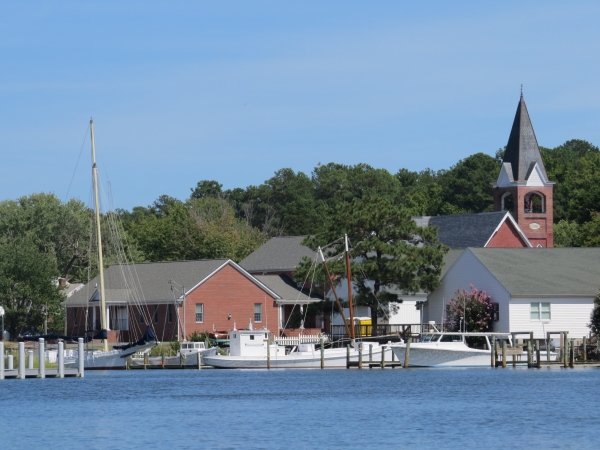
Once Cups was comfortably set in the creek, we dinghied into the small museum dock and tied up. The approach to the dock was a picture-perfect postcard.

approach to museum dock

We weren't ashore more than a couple of minutes when we were approached by Tom Miller, an off-duty docent for the museum who just happened to be at the museum. He welcomed us and chatted a bit before pointing us in the direction of the museum entrance.

fishermans museum entrance

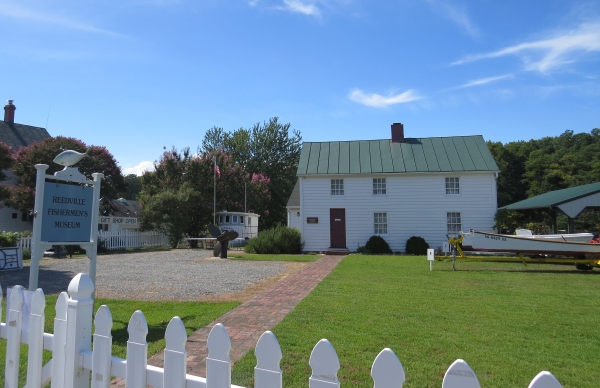
For such a small museum in such an out-of-the-way place, the Reedville Fishermen's Museum is a gem. After a very informative video, we spent an hour or more viewing the well-displayed exhibits. We learned about the history of Reedville, from Elijah Reed's arrival c.1874 to the present day. The history of Reedville is tied intrinsically to menhaden fishing. Menhaden, you ask? Stay tuned. I'll explain more tomorrow.

fishermens museum

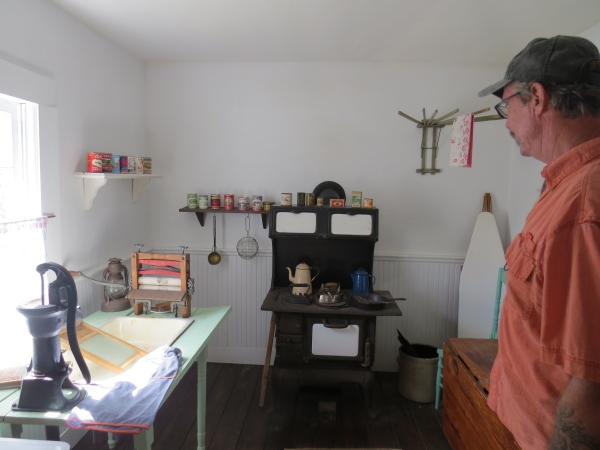
After touring the museum, we were allowed to tour the Walker House, the oldest home in the community. Built in 1875 by William Walker, the museum restored, refurbished and refurnished the house and it now represents a 19th century waterman’s home.

inside the walker house

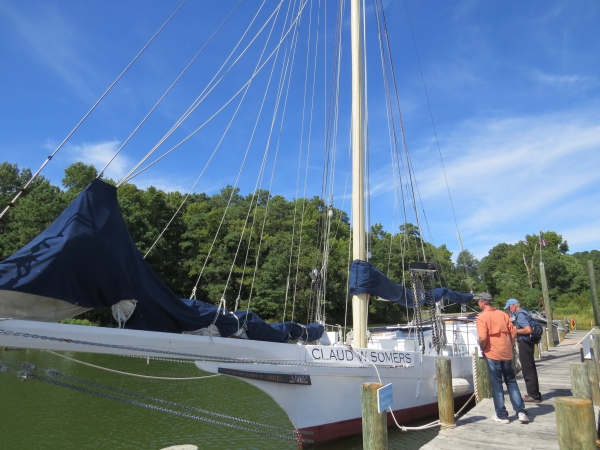
Along the dock where we'd tied up the dinghy, there were several boats owned by the museum, representative of the vessels that plied the Chesapeake waters and environs. The Claud W. Somers is a classic Chesapeake Bay skipjack, built in 1911 in Young's Creek, Virginia. Sadly, in 1977 Claude W. Somers was struck by a squall near Hooper Strait Light, leaving six drowned, including her owner-captain.

claud w somers

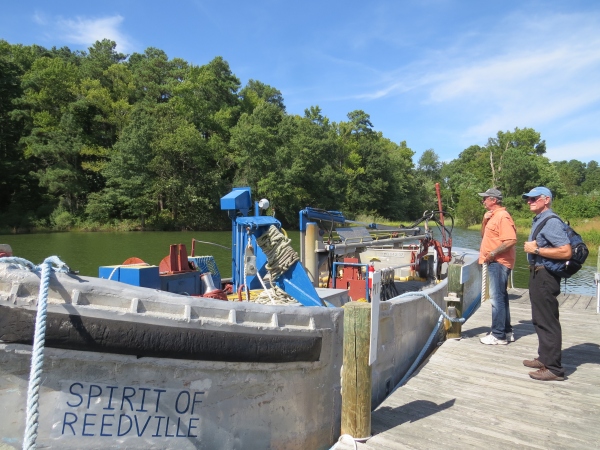
The Spirit of Reedville was of particular interest. Used as the working boat for corralling and netting menhaden (that mysterious fish I mentioned above), this vessel is known as a purse boat.

spirit of reedville purse boat

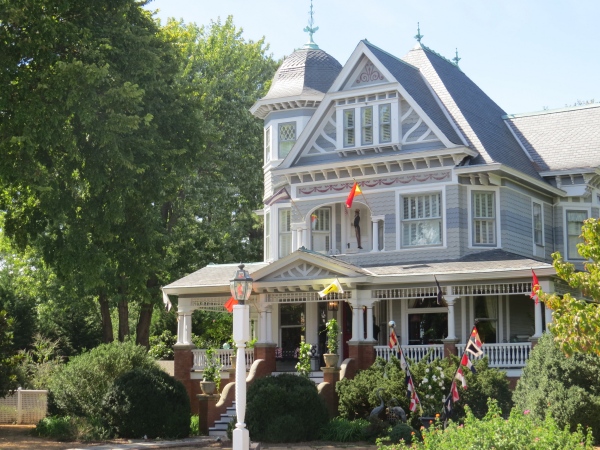
After the museum, we headed down the town's main street, oddly named Main Street. Reedville is a tiny, sleepy little town – population ~2,341. There are very few shops, no supermarkets, no 7-11s nor Ace Hardwares, but it's quite pleasant and the people are friendly. Lined with stately Victorian mansions, this street was once considered  a Millionaire's Row during the height of the menhaden fishing days. The Morris House was a good example, particularly grand and ornate.

morris house

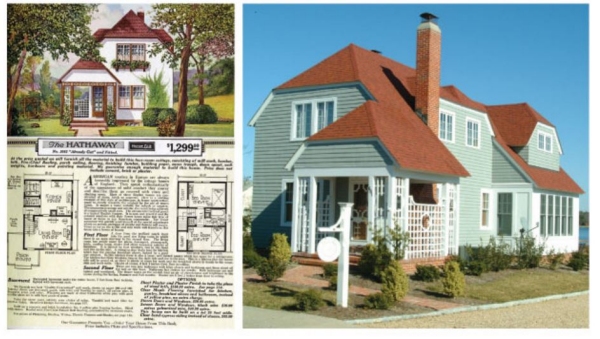
One of the museum ladies told us to be on the look-out for the “Sears-Roebuck” house. We found the Dey Cottage and did a little research into its history. According to The House and Home Magazine, “the  Russell Dey Cottage is a Sears and Roebuck Modern Home — a home that was mail ordered from a catalog and then built upon delivery, using a 75 page instruction manual, from a kit containing between 10,000 and 30,000 pieces. Sears and Roebucks Modern Homes were built between 1908 and 1940 and it has been estimated that over 70,000 of these homes were sold during this time. It was suggested by Sears that “A man of average abilities could assemble a Sears kit home in about 90 Days.” Russell Dey Cottage or ‘The Hathaway,’ a two bedroom house, was ordered from a Sears catalogue in 1926, for a modest $1,299 and was then barged via steamboat into Reedville, via Baltimore, where it was assembled by local carpenter at the time, Mr. Dotson. The fact that it was barged into Reedville was an oddity at the time, because most Sears Roebuck homes were transported via railroad boxcars because of the weight of the materials being shipped.”

sears mail order house

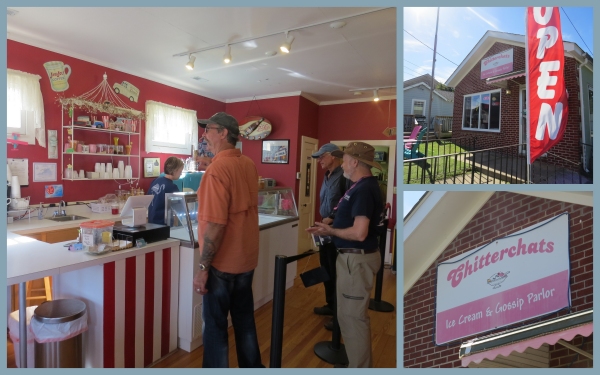
After the museum tour and walk, we were ready to meet Jeremy … and get an ice cream! Chitterchats is a wonderful little ice cream parlor with great flavors of rich, creamy ice cream. Jennifer, the owner, welcomed us warmly, then set about scooping our choices. Yum.

chitterchats icecream

We managed to waddle our way out of the ice cream shop to Jeremy's car. He offered to take us to the closest supermarket which ended up being about a thousand miles away. We returned to Nine of Cups in the late afternoon to give Jeremy a nickel-tour of the boat and share a glass of wine. Then he was off and we spent a lovely, calm night in the Cockrell Creek anchorage, all geared up for more adventures in the days to come.

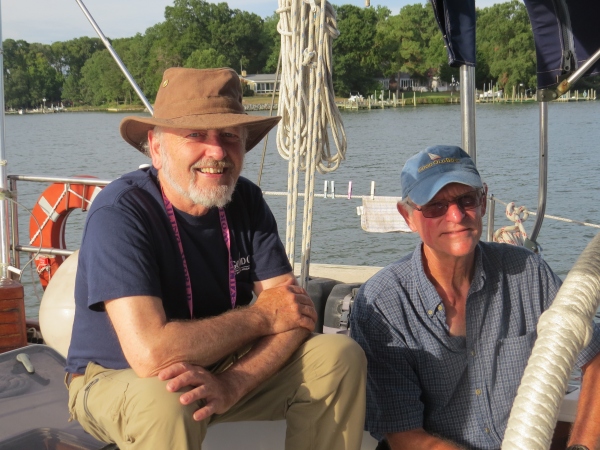
jeremy and david

Stay tuned tomorrow for all you ever needed or wanted to know about menhaden. Yup … you're gonna be overwhelmed!