Random Thoughts - Washington, DC

Day 13 – Moored, Washington, DC Each day in Washington, DC convinced us that we'd only be able to see a small part of what was offered, but still, we were determined to see as much as we could. Here are a few random pics of things we saw and a summary of what impressed us the most.

No tour of Washington, DC is complete without at least a peek at the White House. Tours must be booked months in advance, but just a walk by 1600 Pennsylvania Avenue was good enough for us. Security was pretty tight. No one waved or invited us in for tea, so we kept on moving.

the white house

Not far from the White House, opposite the modern Reagan International Trade Building is the old Post Office Building which is pretty impressive. The old and new seem to blend well.

post office building in washington dc

We were out and about for lunch each day and enjoyed varied ethnic dishes from the lunch wagons that line the streets along the National Mall. One day we tried sandwiches and salads at Potbelly Sandwich Shop (good food/good prices) and another sunny day we sat at outside at umbrella'ed tables with our lunches from Paul (good, but pricey). Our thrifty, tired selves had us drinking wine and eating dinner aboard Nine of Cups each night.

paul at paul in washington dc

The Neoclassic architectural style of the city is grand, but the classic embellishments always catch my attention … griffins,gargoyles, gods, goddesses and other mythical creatures, all sitting sentry on rooftops and hanging out on corners and above windows.

building embellishments in washington dc

One evening at the end of our DC adventure, I asked David and Paul for the three things they liked most about Washington. David's response was the Smithsonian Air & Space Museum, Museum of American History and Museum of Natural History. Paul's favorites were the Hirshhorn Museum, the Museum of American History and the National Gallery. Mine was the Library of Congress, the National Gallery and the Sculpture gardens at both the National Gallery and the Hirshhorn. Despite our diverse tastes, we agreed we enjoyed it all, but would have loved more time to better absorb all we saw. I guess that means we need to return to Washington again. There still so much to see … but now it's time to go.

The Money Factory and Fine Art

Day 12 – Moored, Washington, DC Our time in DC was coming to an end all too soon, but there was still so much left to see. We talked about our options and ended up arranging a free tour at the BEP … Bureau of Engraving & Printing, aka The Money Factory. We showed up early and waited in line until it was our turn for a tour. The BEP building itself is grand ...

bep building

… but the entrance for the tour was unremarkable and easy to miss.

bep tour entrance

An introductory exhibit gave some history as well as displaying a million dollars in 10s. Quite the stash, we thought.

1 million dollars in 10s

The 40-minute tour started with a video and then we were led through the various steps in currency production with sidebars about the paper, ink, security measures, etc. No photos were allowed for obvious reasons. They had lots of clever posters on the walls … “The buck STARTS here.” “We make money the old-fashioned way … we print it.” The final stop was the gift shop where we had the opportunity to buy shredded dollars and all things greenback-oriented and dollar oriented. We were most impressed with Woodrow Wilson on the $100,000 bill. We were told, however, that the largest bill printed and in circulation these days is the $100. All in all, compared to what we'd seen and experienced thus far in DC, this tour was pretty lackluster.

1000000 dollar bill

Enough money … it was time for some fine art. We headed to the National Gallery of Art, America's national art museum, not part of the Smithsonian. This is not a place to whiz through, but with limited time available, we cheated and sought out some highlights brochures from the the Visitor's Desk. We wanted to take in everything we could. Only the West Building was open … grand and elegant … candy for the eye.

national gallery of art

The Neoclassic architectural style, so prevalent in most of DC's 1930-40s buildings, is impressive inside and out. We entered through the Rotunda, all polished marble columns and floors and worked our way first to the West Garden Court. We wandered through the centuries of artists, gazing and pondering. The early artwork from 14th century was primarily religious in nature.

giotto madanna and child

“The Gallery's collection of paintings, drawings, prints, photographs, sculpture, medals, and decorative arts traces the development of Western Art from the Middle Ages to the present, including the only painting by Leonardo da Vinci in the Americas.” Worthy of our ooohs and aaahs.

leonardi da vinci portrait

My art history knowledge is admittedly limited and rusty, but names like Giotto, Raphael, Rembrandt, Toulouse-Lautrec, Gauguin, Renoir, Vermeer, Monet and Manet rang a distinct bell. Here they all were, assembled and beautifully displayed for the world to see and share. Awesome!

rembrandt self portrait

We were enthralled with an artist who was at work copying Mary Cassatt's “Girl Arranging Her Hair”. She was doing quite a credible job.

artist at work

Once again, digesting it all became an issue for us. We lapsed into fine art overload. So much to see and absorb as we breezed through, ticking off the world's master artists as we went. We stopped ourselves and decided we'd rather take a miss on some pieces and more fully appreciate what we did have time to see.

We moved outside to the Sculpture Garden for a look. Lovely! Graceful, curving walking paths led us to wondrous artwork around each corner and tucked into nooks and crannies waiting to be discovered. Fanciful, modern, contemporary, realistic, trompe l'oeil … it was great.

sculpture garden collage

As the day ebbed, we made our way back to Nine of Cups. It was nearing our time to leave Washington, DC and prepare for our passage back to Chesapeake. So much to see and always, always, always so little time.

The Blue View - A Review of the Boss

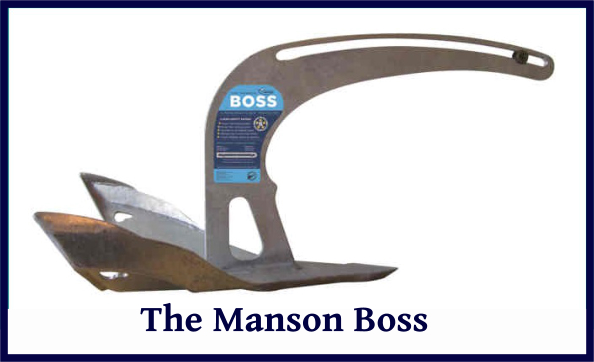
No, this isn’t a review of Marcie... this is an update on our Manson Boss anchor. We purchased our Boss anchor a few years ago when we were cruising the south coast of Australia. Until then, we had been using a 110# (50kg) Bruce anchor, and although it had a few shortcomings, we had been reasonably happy with it. The south Australian coast is known for its hard sand bottoms with very thick, dense grass, however, and our Bruce claw was having difficulty digging in. I went in search of the perfect anchor – one that would serve us well there and also perform well in most other bottom types. I wrote a blog on the topic, and ended up choosing a Manson Boss anchor. manson boss anchor

I was recently asked to do a talk on anchors and anchoring techniques at the SSCA Gam in Melbourne, FL in November. As I started preparing for it, I thought this would be a good opportunity to update my thoughts on our Boss, now that we’ve used it for a few years in a variety of bottoms. So, here’s my review of our Boss anchor:

  • General. The Manson Boss is a scoop type anchor like a Bruce, except it has a very sharp, reinforced point, giving it the ability to dig into the bottom. It also has huge, up-turned flukes that ensure it is self-righting and which give it tremendous holding power once it digs in. It comes in a range of sizes from 5 lb. (2kg) to 400 lb. (182kg). We bought the biggest size that would fit our bow roller, the 80 lb. model, which was a size or two larger than the recommended size for Nine of Cups. We’ve used it in a variety of bottoms, from the hard, grassy bottoms of southern Australia, to soft sand, hard and soft mud, rocky bottoms and shell beds.


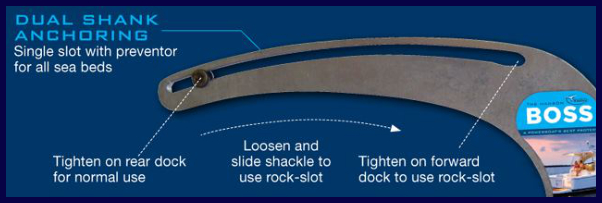
  • Strength. The Boss is made of a high tensile steel. The only issue we had with the strength and construction was the upper part of the shank. The anchor has a slot along the shank that allows the anchor shackle to slide up the shank, making it easier to free the anchor if it becomes wedged in place in a rocky bottom. Manson includes a “shackle preventer”, essentially a nut and bolt that will prevent the shackle from sliding along the slot if the owner feels uncomfortable with the feature or won’t be anchoring in a rocky bottom. Our “shackle preventer” didn’t last long, and we bent the upper part of the shank trying to get it loose from one particularly rocky seabed. We removed the preventer, straightened the shank, and have had no further problems.

bvboss-shank

  • Mud Bottoms. This anchor grabs and holds extremely well in the muddy bottoms we’ve encountered. Only once did we drag. This was in the Albemarle Sound in North Carolina a few months ago. We backed down hard on the anchor and thought we were stuck well on one windy night, but woke up a few hours later and found we had dragged a significant distance. My feeling is that we had fouled the anchor somehow when setting it, because it seems to have been an isolated incident - it is usually stuck so well we have to work it free from the bottom.,
  • Hard Grassy Bottoms. This is the type bottom we bought it for, as our venerable Bruce was having difficulty holding in those thick, grassy, hard sand bottoms, and were happy with it for the most part. We had a few occasions when it took several attempts to get it to dig in, but we eventually got it to hold. On one occasion, we tried unsuccessfully for more than an hour to get it to set, and had resigned ourselves to leaving the anchorage and heaving-to for the night when it finally grabbed and held. We did drag a couple of times, but both times, the anchor reset and held after only dragging a boat length or so. In all honesty, we never slept all that well when the wind picked up in southern Australia. On the other hand, many of the Aussies we spoke to didn’t fare any better.
  • Sand Bottoms. The Boss grabbed quickly and held well in other sand bottoms.
  • Rocky bottoms. Our experience in rocky bottoms isn’t getting the anchor to set, but getting it free once it gets wedged in place. Except as noted above in the “Strength” paragraph, the Boss did well.
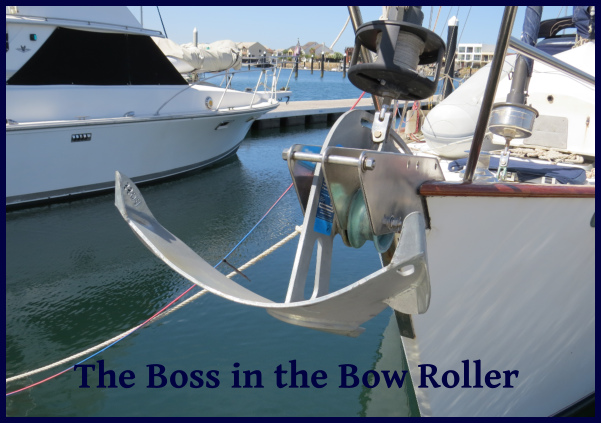
  • Stowage and Deployment. The shank of the Boss is curved, making it fit well in our bow roller. It deploys well and we rarely have problems bringing it back into the bow roller (unlike our big Bruce, which had to be coaxed out of the bow roller and usually smacked the bottom of the roller furler on its way out). The only issue with stowage has to do with the large flukes. When we are in heavy seas, the waves hitting the flukes cause the anchor to bang into the bow roller and roller furler, and I had to go to great lengths to secure it well enough to prevent the anchor causing damage. In storm conditions, I would want to stow it on deck – somewhat of a hassle given its size and weight.

bvboss-stowed

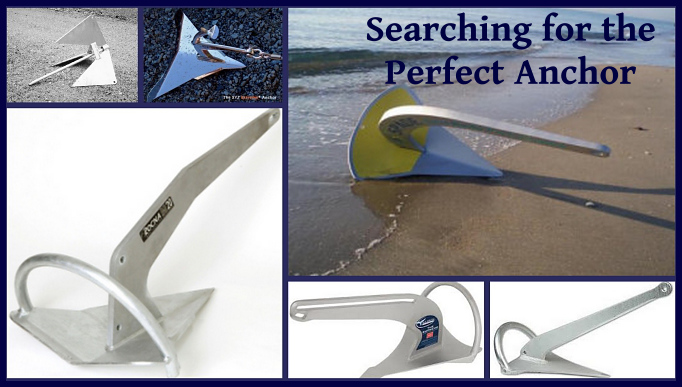
Overall, I would rate the Manson Boss as a B+ to A-. It set and held quite well in most of the bottoms we encountered, especially in mud and sand. In southern Australia, it was better than our Bruce, but was less than perfect. The anchor, as well as the bow roller and roller furler take a beating in heavy seas. It is a good all-around anchor and I don’t regret buying it. On the other hand, I don’t consider it the perfect anchor - if there is such a thing.

bvboss-collage

If only I had unlimited time and money, I’d make a short list of half a dozen or so anchors and try them out in the worst anchorages we’ve encountered around the world - to see whether the perfect anchor really does exist.