
A Farm in Waroona (repost)

Today we are looking back to a visit to a farm in Waroona, Australia.  We met Laurie and John at our Just A Little Further presentation the other night at the Club and sat next to them at dinner that same evening. Laurie is an American who fell in love with Australia when she visited during her university years more than 50 years ago and subsequently emigrated, married John and raised her family here. John is a native South Australian whose family has farmed and raised cattle for export for generations. When they invited us out to their farm in Waroona, we couldn't believe our luck and jumped at the chance.
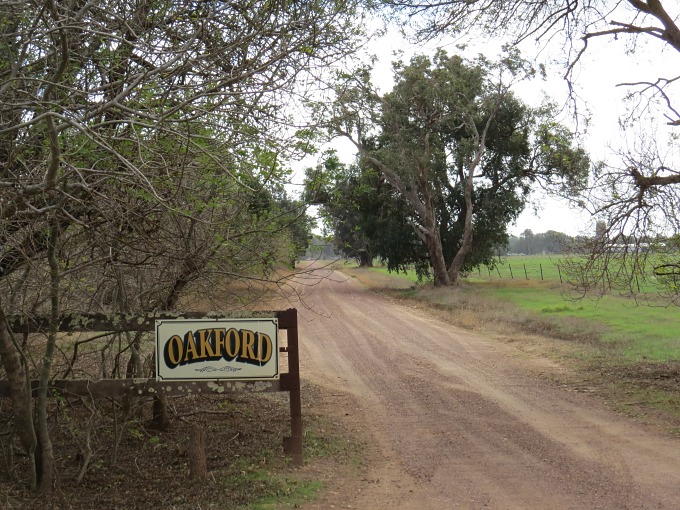
oakford farm, waroona australia

We took the 35-minute scenic route to the pleasant little town of Waroona (population ~2,000). Laurie remembers a time when the roads were all dirt and hand-dug irrigation ditches for watering the fields were the norm. She took us to the top of the Waroona Dam which supplies water for the farm, which now uses huge pieces of irrigation equipment. Laurie's knowledge of the area made all the difference. She's authored a book about the area, in fact, entitled Drakesbrook Days and Waroona Years: An Illustrated History of Waroona Shire.
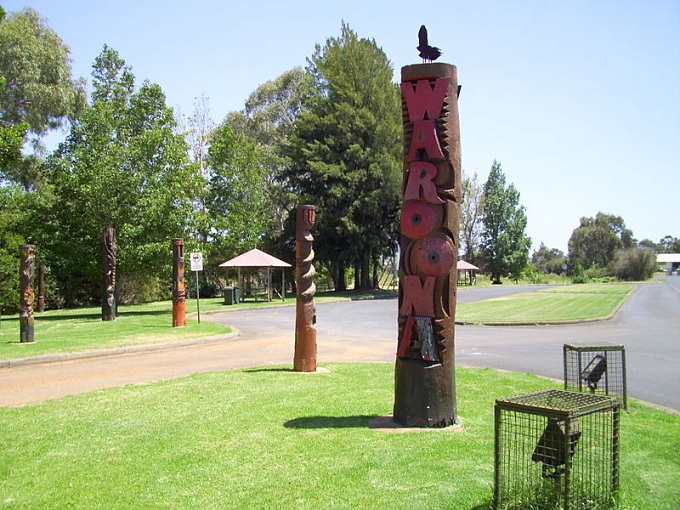
entering waroona australia

Their 2,000 acre farm is only one of three family farms in the area. Additionally, they lease over 3 million acres of government grazing lands in the Western Australia outback as cattle stations. The trek out to their stations, where the bulk of their beef cattle are kept, is an arduous 16+ hours over rough 4-wheel drive roads. Laurie showed us a panoramic picture taken from a few years back. John explained that the horses and camels originally used to muster (round-up) the cattle have been replaced by 4-wheel drive vehicles and helicopters.
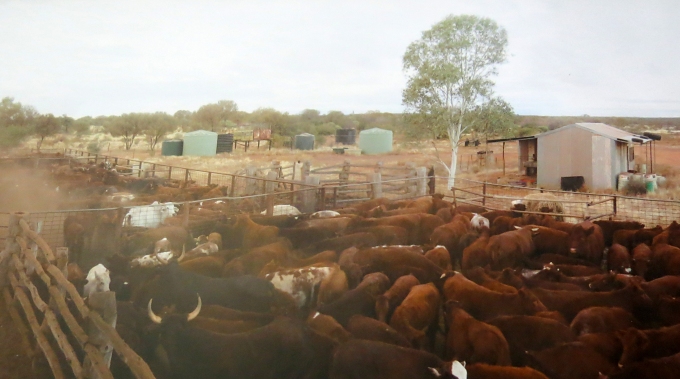
cattle station in waroona australia

Laurie and John still live in the family homestead which has been added onto over the years. The first section of wooden clapboard was built in the late 1890's with a brick addition added in the 1920's. An enclosed breezeway connects the two and serves as a place for morning tea. A picket fence encloses the front yard where roses were still in bloom. A stately old Moreton Bay fig tree shades the yard. A major renovation is planned soon which will upgrade the house using modern materials including the addition of central heating.
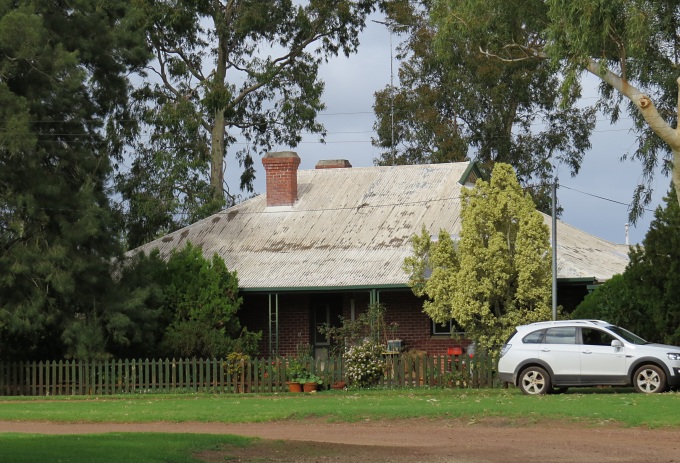
waroona australia farm house

When we arrived, all hands were involved in “drafting”, the process of weighing and sorting the cattle, in this case heifers, which were bound for Israel as live export. The cattle are primarily Shorthorns with an occasional cream-colored Australian Droughtmaster in the mix.
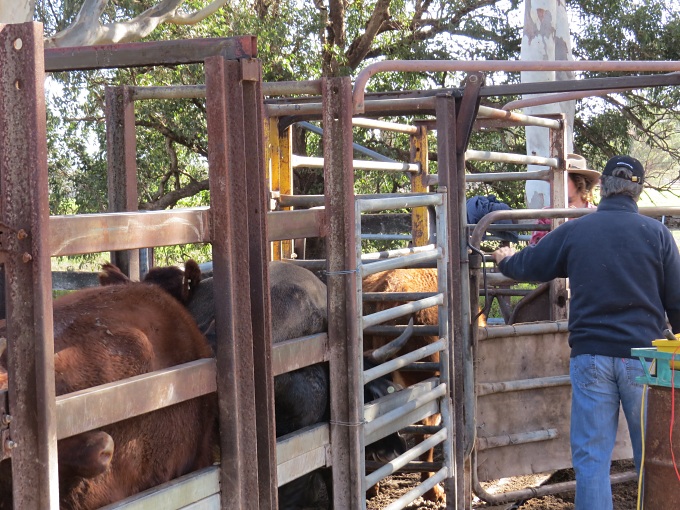
drafting cattle in waroona australia

Closer to the house, we spotted four little calves frolicking around in a corral. These little guys were orphans and being raised by hand. I asked about feeding them and Laurie said it was done by a Calf-eteria, a system of feeding the calves when the mother was not around. Clever name, huh? There was also a lone alpaca in the corral, recently shorn … not sure how he got on with the calves, but it didn't seem to be a problem.
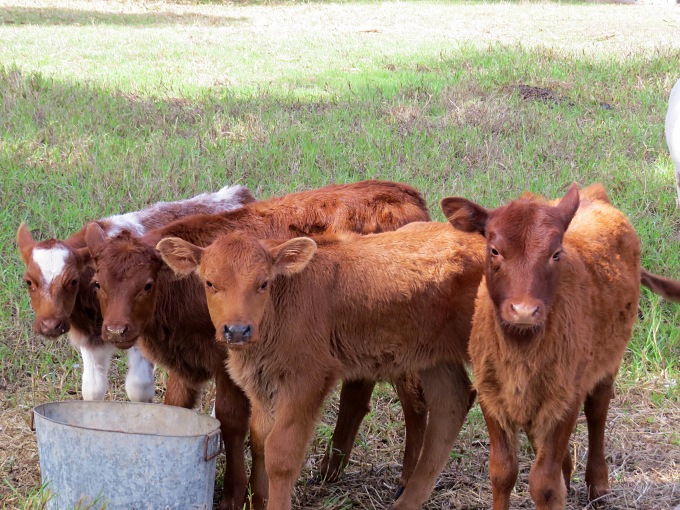
orphaned calves in waroona australia

It's not that David and I have never been on farms before. My aunt and uncle owned a huge poultry farm and I spent many weeks every summer as a kid feeding chickens and collecting eggs. Another aunt and uncle owned milking cows and we spent lots of time in the barn and worked hard during haying season bringing in the harvest. David participated in a couple of trail drives on horseback in Colorado bringing cattle from the summer to winter grazing grounds. Certainly, however, visiting a farm in another country is a novelty and seeing how things are done and what things are called made for an interesting day and a significant change from being on Nine of Cups.
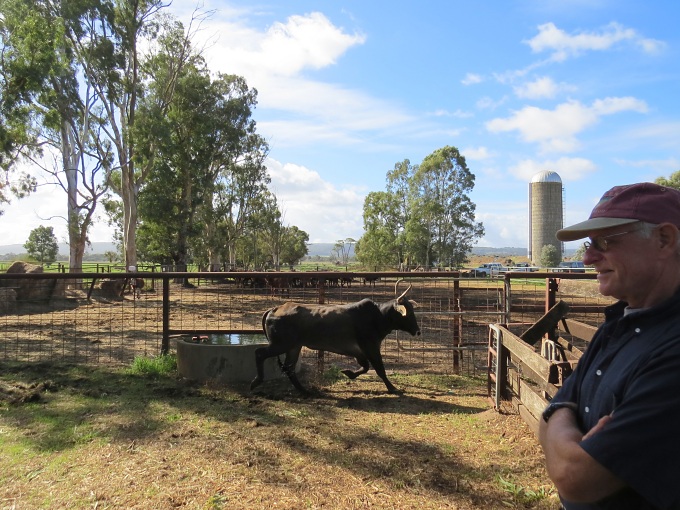
stockyard in waroona australia

Our Daily Bread (repost)

This is a repost of a blog from David about making fresh bread on passage. One of the first things we run out of when on a long passage is fresh bread. It is also one of the easiest problems to remedy. My night watches are the perfect time for making bread. It helps pass the time, and I can still pop my head up and take a look around every five minutes or so.

I make the dough during my 9 PM to midnight watch...

kneading the dough

let it rise while I'm sleeping...

rising dough

then try to time it so that it is hot and just out of the oven at the end of my 3 AM to 6 AM watch.

done

The smell of the freshly baked bread greets Marcie when she gets up, and we enjoy a slice or two over our morning cuppas while discussing whatever happened (or broke) during the night.

Kalamata olive bread is one of our favorites. This recipe makes one large loaf.

Kalamata Bread

Ingredients

Starter

  • ½ cup (100 ml) warm water
  • 1 tsp (3g) dry yeast
  • ½ cup (75g) flour

Dough

  • 1/3 cup (66 ml) warm water
  • 1 Tbs (20ml) honey or ½ Tbs (6g) brown sugar
  • 2 tsp (6g) dry yeast
  • 1 Tbs (5g) rosemary
  • 1 Tbs (5g) oregano
  • 1/8 cup (30ml) olive oil
  • 2-1/2 cup (375g) flour
  • 1 cup (200g) kalamata olives, pitted and sliced lengthwise
  • 1 tsp (15g) salt
  • optional: ½ cup (125g) sunflower and/or pumpkin seeds
  • cornmeal as needed

Starter:

Water should be just warm to the touch. If it is too hot, it will kill the yeast. Dissolve the yeast in the warm water, then add the flour and stir until thoroughly mixed. Cover and let it stand 30 minutes.

Dough:

Combine water, honey or sugar, and yeast, and mix until yeast is dissolved. Add herbs, oil, flour, the starter, olives, and seeds, and mix well. Move to a floured surface, and sprinkle salt over dough. Knead for 5 minutes, adding flour as needed. Put the dough in a greased bowl, cover and let rise until doubled, about 1 hour. Transfer to a floured surface, punch it down to get rid of air bubbles, and shape (don't knead again). Grease a cookie sheet and dust with cornmeal, then transfer the dough to the cookie sheet. Let rise in a warm place for two hours. (On my night watch, I let it rise for 3 hours during my off-watch).

Preheat oven to 450F (230C). Raise the upper oven rack to the second level above the flame and slide an oven proof pan onto the lower rack. About 5 minutes before putting the bread in the oven, add about 1 cup (250ml) of water to the pan. This produces steam for the first 5-10 minutes of baking. The steam keeps the outer layer of dough soft and flexible for a few more minutes, allowing the yeast to continue rising. The result will be a slightly lighter loaf with a brown crust. Score the top of the loaf with a sharp knife or razor and slide the bread into the oven. Bake at 450 (230C) for 10 minutes, then reduce heat to 400F (200C) and continue baking for another 20-30 minutes. Bread is done when you get a slightly hollow sound when the loaf is rapped with a knuckle.

Destination Cape Town (repost)

This is a blog post from May, 2015. Cape Town is such a great town, I thought it was worth another look.

Top Things to Do in Cape Town, South Africa

It's known as the Mother City, the oldest city in South Africa. It's been called the Tavern of the Seas, a crossroads on the clipper ship route, famous as a place for meeting and “refreshing”. In 2014, it was named the best place in the world to visit by both The New York Times and London's Daily Telegraph. Lonely Planet placed it as #2 for best value destination in 2015. Cradled snugly in the lush bowl formed where the Atlantic and Table Mountain meet, Cape Town is, without a doubt, one of the most vibrant, beautiful cities we've ever visited.

destination cape town

There's so much to do and so much to see, you really need some time to take it all in. We're so fortunate to have visited twice for a month each time. There's much, much more, but we're happy to share with you our picks for the top things to see and do in Cape Town.

1. Table Mountain

It's the backdrop for the whole city. You can hike up or take the cable car. Take a look at the mountain before you head there. Pick a clear, calm day. The views are spectacular and the walks on the plateau at the top are easy and interesting with unparalleled vistas in every direction. Consider purchasing tickets on-line in advance to cut down some of the waiting time. Early morning has shorter lines. You can also hike to the top of Lions Head for outstanding views and drive to the top of Signal Hill for views and the firing of the Noon Gun.

table mountain cape town south africa


2. Robben Island

You cannot leave Cape Town without having visited Robben Island, Nelson Mandela's prison for 18 of his 27 years of incarceration. The museum is interesting, but it is the tour of the island, seeing Mandela's cell, observing the conditions under which the prisoners lived, the stone quarries in which they worked and listening to the accounts of former prisoners that all hit you emotionally. A 9-mile (~15km) ferry ride brings you to the island where you board a bus for the guided tour.

madelas cell cape town south africa

3. Cape Point and Boulders Beach

Part of the Table Mountain National Park, visit Cape Point for spectacular views and up close encounters with local wildlife. Stand on the Cape of Good Hope, see the lighthouse at the tip of the Cape, take a look at the Dias Cross, but watch out for the Chacma baboons. They're cheeky. Not far away is Simon's Town and Boulders Beach where you can swim with African penguins that call the beach home. There's a national parks fee to enter Boulders Beach, but further up the beach closer to Simon's Town, there are penguins and no admission fees.


cape point cape town south africa

4. V&A Waterfront

It's busy and frenetic and definitely a don't-miss part of Cape Town. Shops, restaurants, a high-end mall, hotels, diamonds, museums, pubs, an aquarium, free movies, souvenirs galore, the Cape Wheel, buskers, the iconic Clock Tower, Cape Wheel, a swing bridge, souvenirs ... did I mention diamonds? It's all there. Walking around and enjoying the atmosphere is absolutely free. Diamonds? Well, there's a slight charge for those.

va cape town south africa

5. Kirstenbosch Botanical Garden

Bequeathed to the country by mining magnate and politician, Cecil John Rhodes, Kirstenbosch lies at the foot of Table Mountain and offers a wonderful respite from the busy city. Bring a picnic lunch and plan your visit when there's an evening concert.

kistenbosch statue cape town south africa

6. Company's Garden and Downtown Museums

There are lots of museums in Cape Town and we certainly didn't get a chance to visit them all. We can recommend these four, for sure.

  • Company's Garden is a 15-acre park in the center of the city originally planted by the Dutch East India Company in 1652 to supply fresh vegs and fruits to passing ships that plied the spice route to the East. It's wonderful for a stroll and along its periphery are several landmarks and museums to visit.

    companys garden

  • Iziko South Africa Museums – Located near the historic Company's Garden, this group of museums offers so much, it's nearly overwhelming. The South African Museum is the country's national museum and it's chock full of interesting exhibits and also has a planetarium; the South African National Gallery (of art) is nearby, as well as the Slave Lodge.
  • District 6 Museum – a solemn reminder of the apartheid era and its influence on the country and its people.

    district 6 museum cape town south africa

  • Castle of Good Hope is a fort in the middle of the city, originally built by the Dutch East India Company for its “replenishment” station. It's the oldest colonial building in South Africa and it's fun to cross the moat and walk on the ramparts and explore.

    castle of good hope

7. Winelands Touring

South Africa has the second oldest wine-producing industry in the world, second only to Europe. Constantia is the oldest winery in the country and there are officially 17 wine routes, mostly concentrated in the Western Cape. The longest wine route in the world is said to be Route 62, a lovely route with vineyards and tasting rooms galore.

vineyard in cape town south africa

8. Downtown Walk

There's lots to be said for just walking around downtown and taking it all in. There's Greenmarket Square for cafes, antiques and Africana. Browse along St. George's Pedestrian Mall. Try the PanAfrican Market for locally produced, high quality crafts. Bo Kaap is the Malay Quarter and its brightly colored houses and cobblestone streets are interesting to wander. Try Atlas Trading for a spices, candles and incense. There are all sorts of nooks and crannies to explore. Be streetwise and enjoy yourself.

cape town south africa

A couple of notes …


  • Though Cape Town is a beautiful, dynamic city, it's only a small part of what South Africa has to offer. Game parks, scenery, wild animals along the roadside … get out of the city if you can.

  • Visit the Nine of Cups South Africa page for more insight, ideas and photos