

Staying Hydrated in the Desert
/When we first moved to Las Vegas, there was a considerable amount to learn about living in the desert environment. Not so different, I guess, than learning to live on the ocean in a sailboat, but definitely different and sometimes counterintuitive to what we thought we knew. Living in the desert has made us much more aware of a lot of things… water conservation, the difficulties of growing a garden in arid climates, the effects of the sun on everything from our house paint, the paint finish on our cars, and the accelerated deterioration of car batteries in the heat, and especially the effects on our bodies.
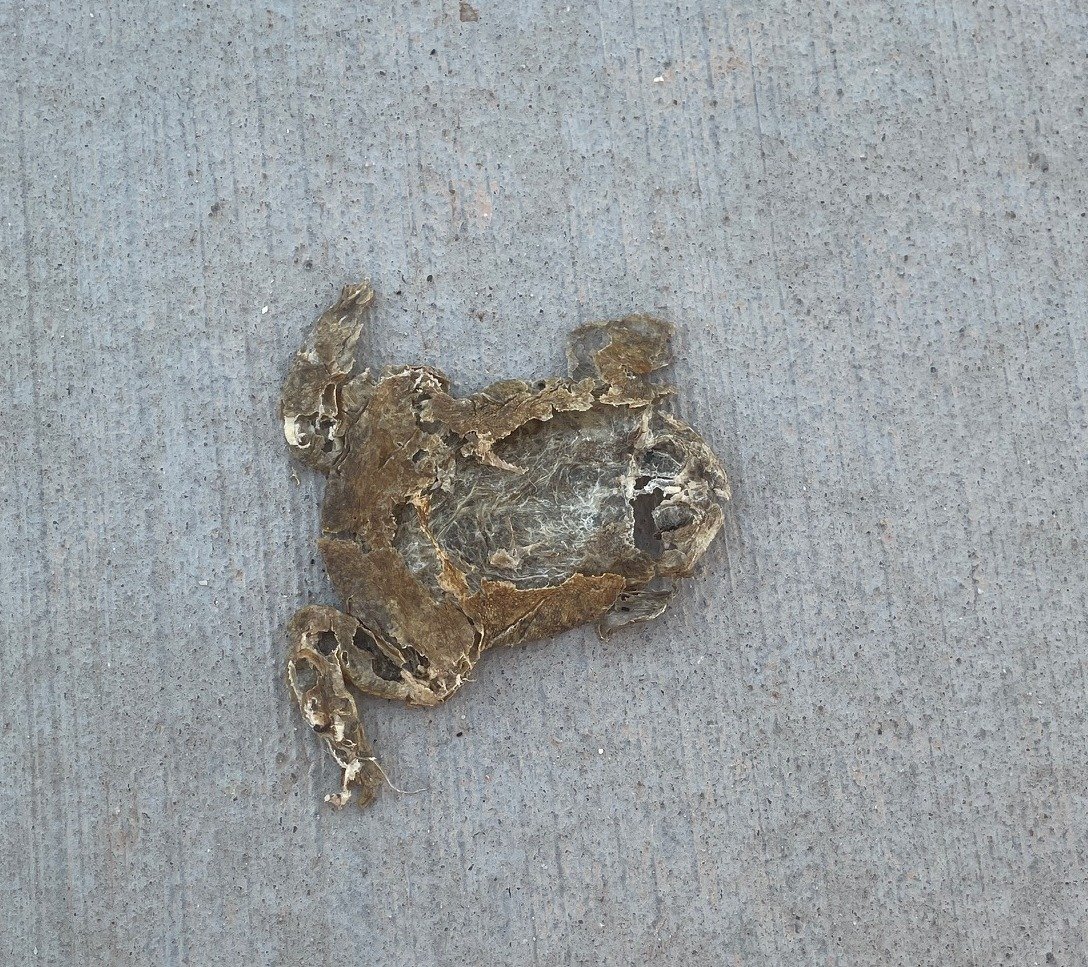
Hydrating has become an essential concern for us year-round, but especially in the summertime when the heat bakes us, and temperatures regularly soar into the triple digits for days on end. Even now in September, we’re still getting high 90s and low triple digits and low, low humidity. Some days the humidity is as low as 4%. Easy to shrivel up and look like a desiccated frog.
Staying hydrated is essential for regulating body temperature, maintaining physical and cognitive capabilities, and preventing heat-related illnesses. Water also aids in digestion, nutrient transport, and maintaining skin health, while preventing fatigue, dizziness, and headaches caused by dehydration.
The average adult human body is comprised of about 60% water. When we sweat, our bodies lose water rapidly. According to Civitas Senior Living, it’s even more important for older adults because water “composition in the body decreases with age, which means aging bodies have less fluid reserve to draw from during heat exposure or illness. Also, as we age, our sense of thirst diminishes, making it harder for older adults to recognize when they need fluids. About 40% of older adults may be chronically dehydrated without realizing it.”
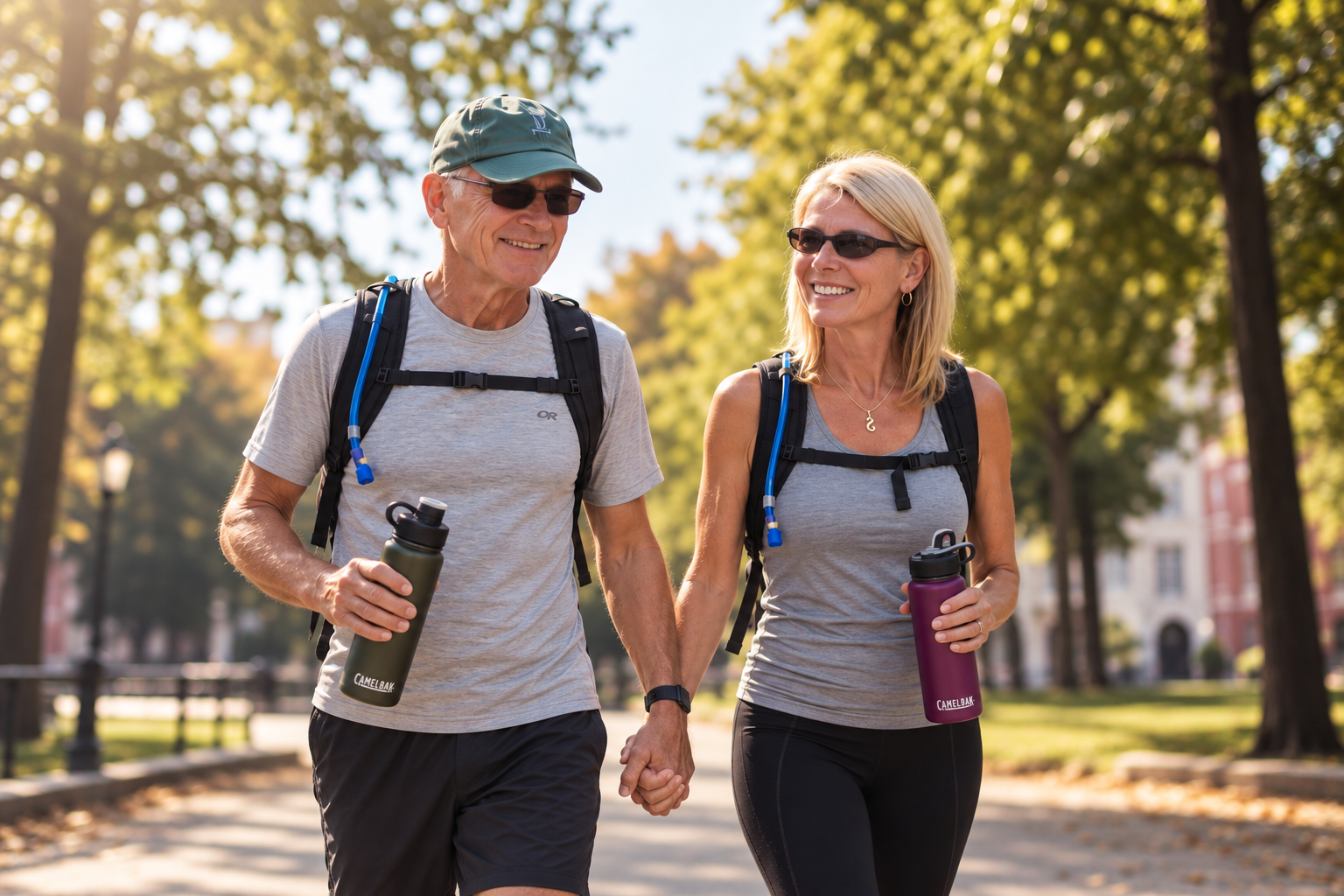
We’ve had guests who insist they don’t need hats or water when taking short hikes with us. We insist; they defer. Only a short time after getting on the trail, we end up sharing a bit of our water. For us, carrying water is a habit. When we head out on our daily morning walks, we never leave without our 1-liter water bottles. It’s only a 3-4 mile walk, yet by the time we get home, we’ve nearly emptied our bottles. Heading out for errands? Yup, we take full water bottles with us. Going on a longer trip? We take our water bottles, plus there’s always a jug or two of water in the back of the Ioniq… just in case. Humans can typically survive 30+ days without food as long as water is available. But survival without water? Only 3–5 days maximum.
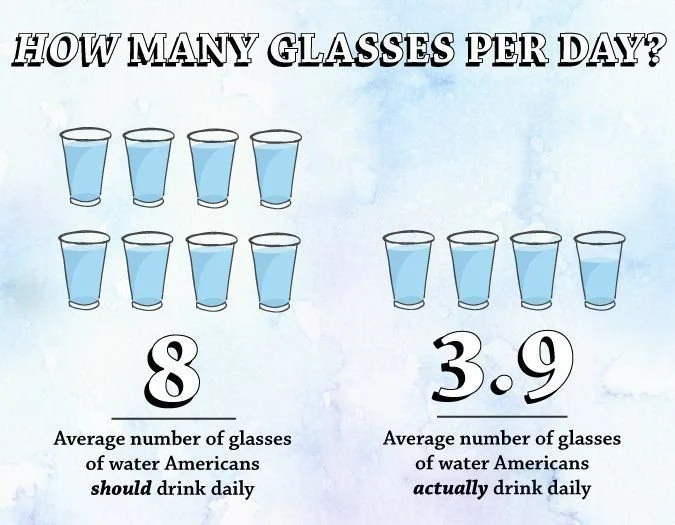
Image credit: Pure Life Water
I tend to drink only when I’m thirsty, but conventional medical wisdom suggests sipping throughout the day is the best way to stay hydrated. A widely accepted guideline is to aim for about 8–10 glasses (8–10 cups) of water per day, which is roughly 2–2.5 liters for most adults, including all beverages, foods, etc., ~80% from drinks and ~20% from moisture in food. High-water-content foods include cucumbers, celery, strawberries, grapefruit, spinach, and watermelon. Soups, broths, and stews also help to guard against dehydration. Americans, as a whole, don’t drink nearly enough water each day.
Thirsty and hot after yardwork, or playing pickleball, or taking a hike? Don’t count on a cold beer to help hydrate you. Alcohol, though it causes more frequent urine output, actually suppresses a hormone that causes your kidneys to absorb less water. Drinking too much alcohol when you’re hot, risks dehydration rather than preventing it, especially since you’ve been sweating and already losing water.
The best way to tell if you’re drinking enough fluid is to check the color of your urine. If it’s pale in color and clear, you are likely well-hydrated. If it’s dark-colored, you may be dehydrated. Drink some water!