The Blue View - Fueling Up in Geraldton

Nine of Cups has been in Australia for nearly three years. We have fueled up innumerable times in those three years in every Australian state except for the Northern Territory. Our last fuel-up was in Fremantle, Western Australia. Most larger marine fueling stations are run by Bailey's Marine Fuel, “Australia's largest independent marine fuel supplier.” It's sometimes a challenge buying fuel because you can't just use your credit card or debit card to pay. You have to have a Bailey's fuel card PLUS a credit card or debit card to buy fuel and we, of course, with no permanent Australian address, do not have a Bailey's fuel card … nor did we think we wanted or needed one. Bailey's thought differently.  
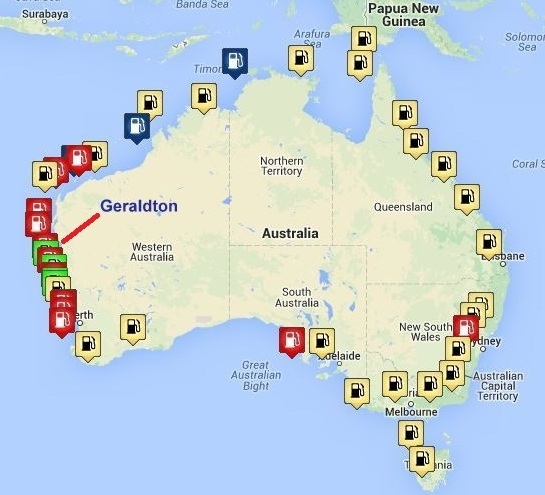
baileys fuel locations


In some ports, there was a gas station close enough to haul a few jerry jugs worth of diesel back to the boat. Sometimes we had the loan of a car to make things easier. Once in awhile we could just buy fuel cards in $100 or $200 denominations in a “pay as you go” fashion and take on fuel that way. A couple of times we used someone else's fuel card, which seems to be legitimate, and paid them cash for the fuel we bought. All of these methods, although tending towards being a pain in the ass, were satisfactory. I'm an easy guy to get along with.

In Port Denison, we were on the service jetty right next to the fuel bunkers and thought we'd fuel up there most conveniently for our Indian Ocean transit. We called the Department of Transport, to whom we paid our jetty fees, but alas, they couldn't figure out a way to allow us to buy fuel unless we had a fuel card. Perhaps we could find a willing fisherman to let us use his card? No worries … we'd fill up in Geraldton.
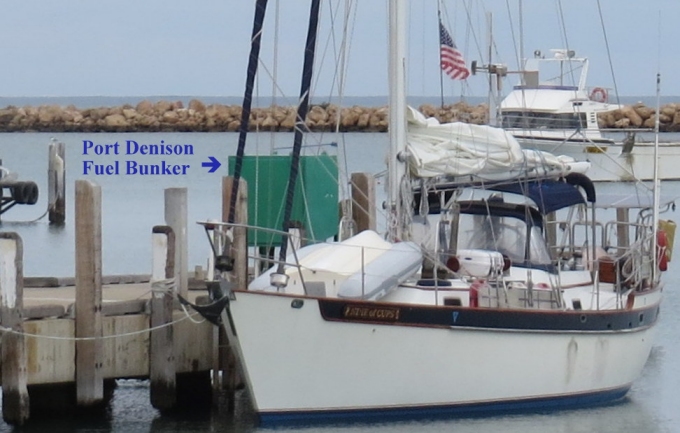
 

cups in port denison


Geraldton, our very last fueling stop in Australia, has posed a new challenge. There are no gas stations close by. We have no car at our disposal. The fuel dock is at the fishing port, not the marina, but heck, we only need 50 gallons to top up. I telephoned the Department of Transport once again. They seem to have good information, albeit not always what I wanted to hear. It seems Bailey's runs the fueling operation here in Geraldton and I'd need to call them. No, they didn't have a number, but they were sure it would be easy enough to find. Marcie found it on-line and I called. I explained we only needed 50 gallons or so.

“Right-o,” said the helpful fellow on the phone who happened to be in Fremantle. “You'll need to get a fuel card.”.

“How do I do that? How long will it take?”

“Just fill out the app on-line and you can probably get an account set up by tomorrow morning, latest.”

Okay … Marcie was listening and had already found the website, the fuel card app and was beginning to fill it out. “Oops … they want an Australian address.” I called Bailey's again.

“Just fill in the address where you are … no worries”, said the fellow, so very pleased I had called back within five minutes of the last call.

I left Marcie to complete the app while I did some deckwork. She filled in the Geraldton marina address, the credit card stuff and various other pieces of information and sure enough, within minutes, we had an approved application. They sent a welcoming e-mail and explained that they'd be sending out the fuel card in the next 3-5 business days. Not quite what we'd hoped for. I called back the fellow in Fremantle. He was now aware that we were Yanks and obviously not fuel or computer savvy.

“No worries, mate. Just get on line, get back on the Bailey's website. You'll need to do the induction and then you'll be good to go. I'll tell you where to pick up a temporary fuel card at the unmanned fuel dock. Be sure to bring your phone.”

Well, that was an ordeal, but we'd be able to get fuel tomorrow. Wait a minute … “induction” … did he say “induction”? Sounds like entering the military. Marcie got back on line to investigate and I went back to my chores. When I returned 20 minutes later, she continued the saga. In order to be “inducted”, Marcie had to download a new program (Microsoft Silverlight) and then we needed to watch several videos and take a test. I needed to complete the Induction Course successfully before I could buy fuel. It would only take 15-20 minutes (and $15 of our internet time) to complete. Marcie made dinner while I watched the videos. We both took the test. Not hard … four questions at the end of each video segment. I realize how important safe fueling procedures are and how environmentally aware of fuel spills we need to be, but really …
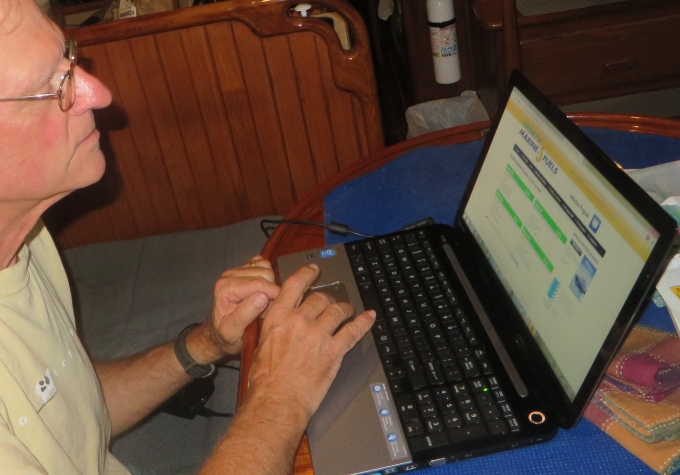
 

taking the test


Ah … new day. Greeting us this morning on e-mail, my Induction Certificate from Bailey's … suitable for framing. Now I can buy fuel. I loaded six jerry jugs into the dinghy, rather than moving the boat (seems we have a windlass problem … more on that later) and headed over to the fuel dock in the Fisherman's Marina. I did a careful check before leaving … fuel jugs, rag, line, phone, phone numbers, Induction Certificate #, Reference #, camera (Marcie wants pictures, of course), wallet, credit cards. The Fremantle bloke also mentioned I'd need to take a picture and e-mail him some of the forms I would be signing. Since our phone is not “smart”, I also took the Optus dongle and the iPad for good measure.


induction certificate


A 20-minute ride with our 5HP dinghy engine and I was at the fisherman's fuel dock ready to go … and feeling pretty confident with my new Induction Certificate number that I'd be doing everything correctly. I called Fremantle, but the fellow I spoke with yesterday so many times, was off today. The new fellow outlined all the reasons I could NOT buy fuel.

#1 – I did not have a permanent Australian address.

#2 – Though they had my credit card number, I could cancel it after buying fuel and they'd be out the money and we'd be long gone.

#3 – They couldn't issue me a temporary card because they've discontinued that option. Our “yesterday” fellow was misinformed.

They did offer one option. If I wanted to stay for an hour, they could get a fellow who does have a card to come down to the fuel dock. I could buy fuel on his card and they'd charge our credit card … for a mere $90 fee.

“Why is this different than me buying the fuel and you charging my card directly?”

“It just is ... because of our billing system.” he informed me.

“Okay, can I pay cash?”

“Well, no. There's no one there to take cash.”

“So … I can't buy fuel here?”

“Right-o, mate! I can't see any way to work around the system without paying someone to go down there”, he said most apologetically.

Marcie could tell by my face (and I'm sure the sea lion could as well) and the fact that the dinghy was riding too high on the water, that I hadn't purchased any fuel. We plan to rent a car tomorrow at a far less cost than $90.
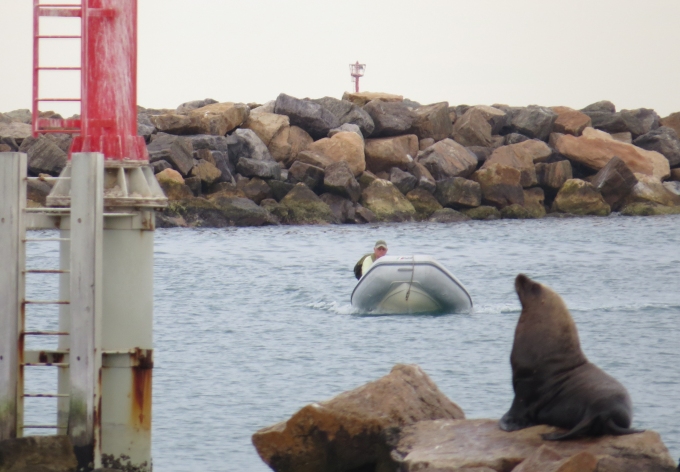
 

sea lion and the dinghy

The Blue View - In Appreciation of our AIS

On many of our early passages, we were surprised at how few ships there were outside the shipping channels. We would go for days, weeks or even a month or more without seeing any other vessels. Then, a few years ago, we added a modern radar set and an Automatic Identification System (AIS) and were absolutely gobsmacked at how many more ships were suddenly sailing the high seas...  

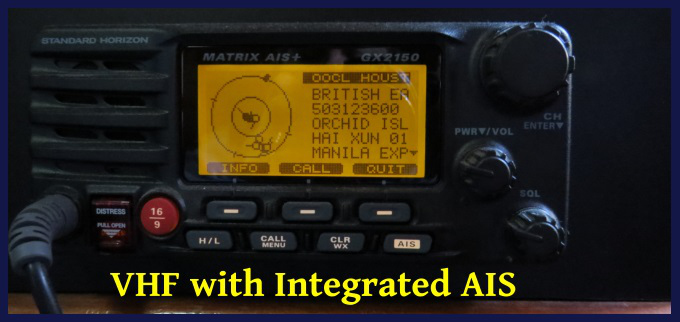
ais screen


The AIS was developed to help prevent collisions at sea. Most ships plying international waters and all passenger ships are required to have an AIS. The ship's AIS has a transponder that sends out a digital packet of data via VHF radio every few seconds, providing the ship's position, heading, speed and other pertinent information. In addition, every few minutes, it transmits a larger packet of information containing more detailed information about the ship, such as the ship's name, destination, type and size. Each AIS transponder also receives all those transmitted packets of information being sent by every other ship within VHF radio range.

If that was all an AIS did, it would not be very useful. But the magic is in what a modern AIS does with all the data. The sophisticated algorithms in the AIS calculate the speed and heading of all the vessels in the vicinity and whether any are on a collision course with us. We can set a safety radius around Nine of Cups, typically one nautical mile, and if any other vessel's predicted Closest Point of Approach (CPA) is within that radius, the AIS will sound the alarm. Each vessel's position is shown on our chart plotter, and it is an easy matter to see which vessel may be headed for us.


seems a lot closer than a mile


Our AIS is a passive, or receive only, system. We do not transmit the AIS data for Nine of Cups, but are able to receive the data being sent by the ships around us. That, of course, makes us invisible to everyone else's AIS. If we do get an AIS alarm, since we have the vessel's name and position, we can radio the vessel to determine whether or not they see us or have us on radar, or whether we should begin taking evasive action.

If we are at sea and out of the shipping channels, we usually set our CPA alarm to 15 nm. We aren't worried about a ship approaching closer than 15 miles, but are curious about how many ships are in our vicinity. It is truly amazing how many ships pass by us 10-15 miles away that we wouldn't have spotted had it not been for the AIS, even though we keep a pretty good watch. We often hear the alarm, determine the distance and bearing to the ship using the chart plotter, then try to spot it. If the waves are big and the ship is more than ten miles away, we might only see it every few minutes as we are both on the top of a wave at the same time. At night, it might take several minutes to spot the ship's running lights at that distance.

When we do spot a ship when we are far out at sea, we almost always try to contact it, especially on night watch. If we hail the ship by name, the officer on watch usually responds – especially if it is Marcie calling – she gives great radio. We ask whether we are visible on their radar, and often end up chatting for several minutes. We think that it gives both them and us something interesting to do to help pass a long night watch.


ais system


An AIS only helps avoid getting run over by a big ship, however. The other vessels we often spot at sea – fishing vessels, tugs, and other pleasure craft – usually don't have AIS, and if they do, their systems are often passive like ours. The radar is a big help, and will be the topic of another blog, but there is still no substitute for being vigilant and using our eyes to take a good look around.

The Blue View - Charging Two Battery Banks

Nine of Cups has the usual two battery banks – one for supplying power to the “house” and one dedicated to the starter battery. It's not easy keeping them both charged. The house batteries consist of four 210 amp-hour (ah) batteries for a total of 840 ah, while the starter circuit consists of a single 210 ah battery. Both have switches so that in an emergency, we can use either or both banks to start the engine or provide power to the house circuits.


schematic 1


When we are on shore power, we have a smart battery charger that monitors both battery banks and charges each as needed. The charger is only a 30 amp charger, so it takes several hours of charging to fully charge the house battery bank, but this isn't normally a problem.

The real challenge is when we are away from shore power – which is most of the time. When we don't have shore power, we rely on solar panels and a wind generator to produce most of our power, and when they aren't enough, we start the engine and use our 200 amp alternator to charge the batteries.

If I were designing the perfect charge controller, first, it would totally isolate each battery bank from the other, and would monitor the battery levels. If the engine was not running, it would direct the charge current from the solar panels and wind gen to whichever bank most needed the charge. In the rare event both battery banks were fully charged, the charge controller would redirect most of the incoming current to the water heater, and provide a trickle charge to both battery banks. If the engine was running, the charge controller would combine all three charge sources to maximize the charging current and provide an intelligent three-stage charge to both banks.

To my knowledge, there is no such charge controller. There are alternator regulators that can charge two battery banks, but they are quite expensive and don't deal with alternative charge sources. Some vessels have two engine-mounted alternators, one for each battery bank, each with its own regulator. This approach has a number of advantages, but it is expensive, adds complexity, and also doesn't handle alternative charge sources. There are battery isolators and battery combiners that help charge two battery banks, but none is ideal, and they're usually large and expensive.


BVCharge Photo1


So what do we do? We have our own method of keeping both banks charged. It doesn't come close to the 'perfect' charge controller, but it's inexpensive and works reasonably well. We use a diverter type controller for the solar and wind gen currents. As long as the house batteries need charging, the output from the wind gen and solar panels are fed into the house battery. Once it reaches full charge, the current is diverted into the water heater. This current is not enough to make the water hot, but does warm it a bit, and doesn't waste any energy. The output of the alternator is also fed into the house batteries.

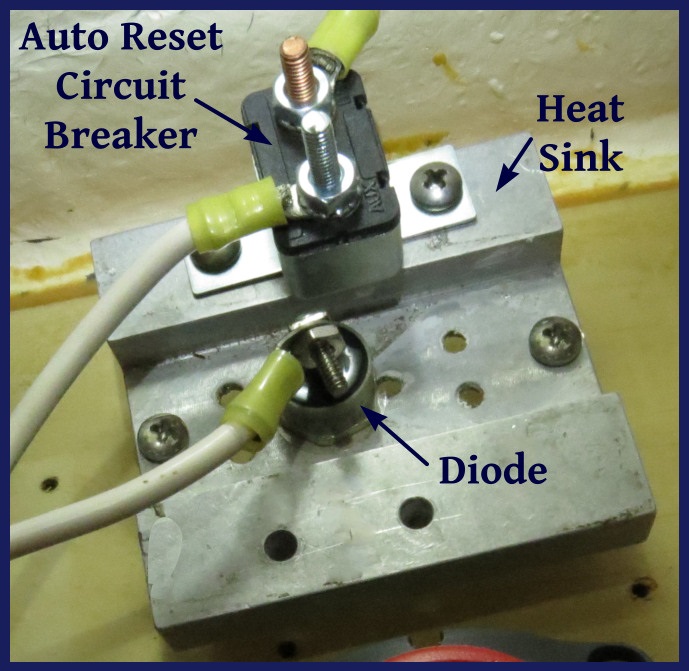
We use a diode and an automatic reset circuit breaker to connect the two battery banks. When there is solar and wind and the house battery bank begins to charge, once the voltage rises to about 0.4 volts above the starter battery voltage, the starter battery is trickle charged to keep it about 0.4 volts below the house batteries. When the sun goes down and/or the wind calms, the house battery voltage drops and the diode prevents the starter battery from discharging. Thus, it is always kept topped up.

When the starter motor begins cranking the engine, a huge load is applied to the starter battery, and its voltage drops to 10.5 volts or less. As the starter battery voltage drops, a large current flows through the diode connecting the two banks, but this quickly trips the circuit breaker, and the circuit is opened. Once the engine stops cranking, the starter battery voltage returns to near normal. After a few minutes, the circuit breaker automatically resets, and a charge current begins flowing from the house batteries to the starter batteries.

The auto reset circuit breaker is rated for 20 amps, eliminating the possibility of charging the starter battery at too high a charge rate – a problem we had with the battery isolator that we had originally. The diode I used is rated for 95 amps continuous, which is overkill for this circuit, but is one I had on hand. A 60 amp diode would be quite adequate for this circuit.


schematic 2


We have used this circuit for a few years now, and it has worked well for us. I plan to continue using it until we find (or I find time to design and build) the ideal charge controller.