We recently received a nice email from Norris and Marina who live in Newfoundland. They've cruised in the past and are planning to sail off into the sunset again in the next year or two. They asked, given what we know now, what we would do differently. What boat would we choose, and how would we equip her? Great questions! Here is how we responded.
What boat would we choose?
Firstly, when we started out, we really didn't imagine sailing to Patagonia and the nether regions of the high latitudes, so we didn't look for a boat built for it. Nine of Cups is a well found boat – she sails well, is sea kindly, and has shown her mettle in storms and the occasional hard grounding. On the other hand, there is lots to be said for a steel or aluminum hull.
Many of our friends have made the switch from monohulls to catamarans, but they have also decided to stick around in the lower latitudes. We met a very seasoned offshore catamaran sailor in Ecuador who told us that he wouldn't consider anything under 65 feet for the high latitudes, and was particularly fond of the gunboat - but now we're talking real dollars. We certainly aren't qualified to talk about the pros and cons of catamarans, but can say that while we see hundreds in the warmer climes, we see far fewer sailing the high latitudes. So even if we were inclined to buy a catamaran, unless it was old or in poor shape, we couldn't have afforded one large enough to go to the places we've been.
Something we would like is a pilot house. An open cockpit is wonderful on those balmy, tropical passages, but not so pleasant when we are freezing our tushes off on a wet and cold passage. We totally enclosed our cockpit in canvas on our first venture to Patagonia, but that wasn't an ideal solution - we were continually afraid that the winds or waves would destroy it, and it was awkward getting into and out of it in a hurry when something on deck needed attention.
So, while we are happy with our Liberty 458, if we were starting again, I think we would take a closer look at the used steel or aluminum pilot house monohulls on the market. There are a number of well built aluminum boats, the Ovni and the Boreal, for example, as well as some great steel boats, but the newer ones are expensive and well above our price range. If we found a good used one in our price range, we might have considered it instead of Cups.

How would we equip her?
Heater. We definitely would have added a heater. Both the stand-alone diesel stoves and the compact forced air diesel heaters have their pros and cons, and we would probably would have gone with one of the compact, engine room types for Cups, despite the extra power requirements. Aesthetically, I like the looks of the standalone stoves, but we could never figure out a way of installing one that would have fit well in our interior without a major reconstruction project.
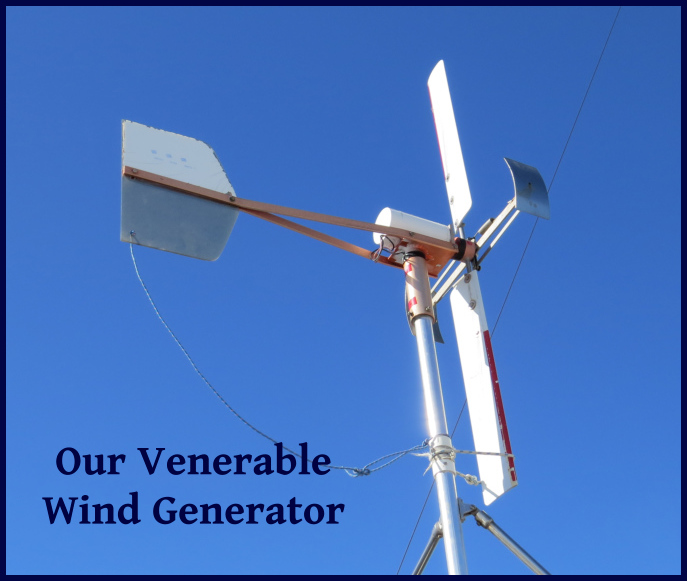
Generator vs. Alternative Energy. We have gone back and forth on this one. When we bought Cups, it had no method of charging the batteries other than starting the engine. We decided we would add either a generator or a wind generator and solar panels. We decided on solar and wind generators, and for the most part, we have been happy with the decision. There are better versions of both now available than there were 15 years ago. On the other hand, on those cloudy, calm days when we have to start the engine for an hour or two, or on a passage when the solar/wind gen doesn't keep up with the autopilot and instruments, we think about having a generator. I like the idea of a DC generator, and Ample and Whispergen were on our list if we had gone that route. (Whispergen's entire facilities were wiped out by the earthquakes in New Zealand, and I don't think they recovered, BTW.) The arguments against were the cost, the noise, the added complexity and the space it would have taken up in the engine room - making the engine itself that much harder to work on. Were we to do it again, I think we would have made the same decision.
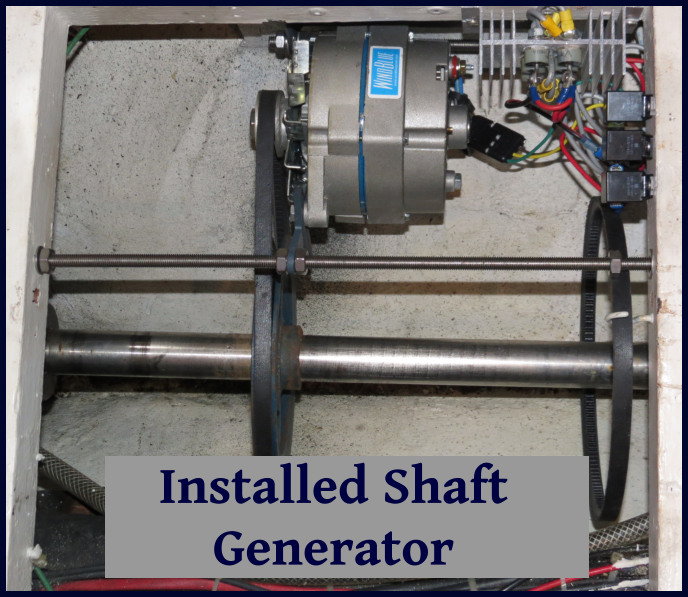
Prop Generator. Adding a generator to the prop shaft is something that has been on my todo list for years, and I just got around to it a few months ago. This is something I now wish I had done much sooner.
Geriatric considerations. With each passing year, we look for ways to make handling Cups easier. We both agree Cups is the right size for us, and have no desire for a bigger boat. We've made changes to the sail handling and reefing systems to make it easier for us; added a line and fairleads so that we can use the windlass for hoisting the dinghy. (Marcie used to get stuck with grinding duty, while I kept it off the brightwork and from getting away when the wind picked up.) I'm sure I can think of a dozen other things we've done to make life aboard less physically demanding.

HF radio/Sailmail vs Sat communications. The hardware costs for Sat phones are now probably less expensive than buying and installing a Pactor and HF radio. On the other hand, Sailmail is less expensive to operate. Winlink is free, but requires a ham license and doesn't work as well as Sailmail in many places. An HF radio allows us to participate in radio nets, but a Sat phone may be better in emergency situations... there are many pros and cons to both approaches. When we started out, the choice was definitely easier to make, and we went with an HF radio. Now the decision is not so clear-cut with so many Sat options, both in hardware and operating costs. I think we would still go with an HF radio, but if the Sat phone operating costs continue to drop, we might change our minds.
Autopilot vs Windvane - We went the autopilot route, and eventually added a totally redundant autopilot as a backup, after a very long passage that required handsteering when our original A/P crapped out. Many of our cruising friends have a serious windvane system and an autopilot as backup. Some of them rarely have problems, while others seem to be constantly making repairs. For bigger, heavier boats, the windvane has to be substantial, and for Cups, with her hydraulic steering, it would have required a system with its own rudder. The cost would have been more than the backup autopilot, but it would have greatly reduced our power requirements on a passage. I think we would have made the same decision now, but it is a close call.
Dinghy. We initially started with a Port-a-Bote, one of those folding boats that can be stowed on the rail. This turned out to be one of our less than optimal decisions. While the boat itself can be folded up rather compactly and stowed on the rail, we discovered that the seats were large and bulky, and probably took up more space than the boat. In addition, the seats deteriorated in the sun in only a couple of years, and we had a continual slow leak of water through the bottom seam. It didn't tow well at all, and was tricky to unfold on deck. It didn't take long to see why there are 100,000 inflatables and only 100 Port-a-Botes out there. Our preference now is a 9' (2.8m) rigid inflatable. It is big and sturdy enough to haul an amazing amount of fuel, provisions and/or people, and stows nicely on our foredeck.

All in all, with hindsight being 20/20, we feel we did okay (except for that darned Port-a-Bote). We learned as we went and could have probably saved some money, time and aggravation along the way, but that's all part of the sailing experience. Looking back, the only real change we would have made is starting our cruising lives sooner!