The Blue View - Essential Ship's Library

top ten list of useful books blue view

When we began our cruising life, we had precious little experience. We had taken a few classes on sailing and had bare boat chartered several times in Florida and the Caribbean. We did, however, have a number of very experienced friends to rely upon as we gained experience. These good friends, the Dashews, the Pardeys, Nigel Calder, Don Casey, Brion Toss and Jimmy Cornell to mention a few, also helped us out of more than a few ticklish situations.

In reality, we have only met a few of these fine people, but we have read their books cover to cover. We started collecting their books when the cruising life was still a far off dream. Then, when it did become a reality, hardly a day went by that I didn't consult with Nigel to get his input on servicing a winch or bleeding the diesel engine, or with Don to improve my fiberglassing technique, or Jimmy to plan our next voyage.

I no longer check with my mentors quite as frequently as the early days, but they remain on-board as cherished old friends. And while I have begun to embrace e-books on my Kindle, I can't fathom ever parting with my hard copies.

I painfully reduced this list to my ten most used technical books – my essential ship's library. I'll be the first to admit that my list is very dated. I haven't been keeping track of the latest and greatest new generation of authors and books. If you have suggestions for books that should be added to the list, please let me know.

General Reference

Pocket Ref by Thomas Glover

The hands down winner of the most used book aboard Nine of Cups, this book is a compendium of a zillion useful pieces of information. Want to know the tap drill bit size for a 6mm bolt? How to convert from horsepower to kilowatts, or from hogsheads to gallons? The safe working load of wire rope? How about wire size vs amperage? It's all there.

General Cruising and Passage Planning

World Cruising Routes by Jimmy Cornell

This is a great book for planning passages – everything from a trip to the Bahamas to a circumnavigation. It provides winds and currents throughout the world, as well as the best times and routes for passages.

Maintenance and Repair

In addition to the specific repair manuals for the equipment aboard, we recommend the following:

Boatowners Mechanical and Electrical Manual and Marine Diesel Engines, both by Nigel Calder – or any other book by Nigel for that matter.

(Okay – so I cheated just a little and only counted these as one book). If you plan to leave the marina, you need to know the basics about repairing the mechanical and electrical systems aboard. After Pocket Ref above, these books are probably the two most used books aboard Nine of Cups. (You can tell by the greasy fingerprints all over them.) They not only describe how most of these systems work, but how to repair them.

This Old Boat by Don Casey

While it is basically intended as a book for restoring an older boat, it is also a great collection of tutorials on a variety of boat projects such as upgrading, repair and maintenance of fiberglass, paint, varnish, canvas, electrical, refrigeration and much more. In addition, his writing style makes it an enjoyable read.

Sail and Rig Tuning by Ivar Dedekam

A short concise book that does exactly what its title says.

Seamanship

The Annapolis Book of Seamanship by John Rousmaniere

This book, a classic, covers the basics of sailing, navigation, boat handling and seamanship.

Marlinspike Seamanship

While most of us probably won’t ever learn how to caulk the seams of a wooden boat or to tar a hemp lanyard, ropes still require knots, splices and hitches, and a sailmaker’s needle and palm are still necessary gear aboard a modern cruising sailboat. Beyond the basic essentials, however, it is quite satisfying to learn some of the traditional sailors’ arts. A fine canvas bucket or rope mat are far superior to the modern plastic or “astroturf” equivalents. We recommend and frequently refer to the following books:

The Ashley Book of Knots by Clifford Ashley

A compendium of almost 4,000 knots of every type imaginable, from occupational to decorative, along with a lot of interesting nautical lore and history. It is such a valuable book, I devoted a whole blog to it.

The Marlinspike Sailor by Hervey Garrett Smith

A great book on the traditional arts of the sailor, from basic knots to decorative ropework and canvaswork.

Riggers Apprentice by Brion Toss

A good source of information on repair and maintenance of your rigging, a good section on the basic knots and splices needed aboard and a chapter devoted to decorative knots.

Brightwork: The Art of Finishing Wood by Rebecca Wittman

Nine of Cups has a lot of teak brightwork, and I must have spent a few man-years in what often seems like a never-ending and futile attempt at trying to keep it beautiful. This book is my bible on the subject.

I've only covered technical reference books in this blog. I'll leave it up to Marcie to cover the books which she considers to be part of an Essential Ship's library on the non-technical side.

The Blue View: What broke on the Atlantic?

Our South Atlantic crossing is officially over, and it's time for me to go back through all the passage log sheets and compile the list of everything that broke on this passage. We make an entry once an hour on our passages, logging our current position, speed, course and sea and weather conditions. We also use our log sheets to note any unusual occurrences like lunar eclipses, green flashes or Flying Dutchman sightings. What constitutes an 'unusual occurrence' is somewhat subjective and arbitrary, however. It often depends on how long we've been at sea - what seems ordinary at the beginning of a long passage sometimes seems pretty remarkable 30 days later. The initial sheets have entries like “Spotted several southern right whales at 0930”, while the latter sheets have things like “Saw an anvil shaped cloud” or “Thought I saw a dolphin at 1015, but it was just a stick”. We also use the log sheets to keep track of problems and breakages that occur. If I fix a problem, it still gets logged and then checked off, so that I can keep track of recurring problems (and also so I can feel like I did something en route). log sheet for nine of cups

When we complete a passage, I use the log sheets to compile part of the 'to-do' list, then go back to the prior 'to-do' lists and add anything that wasn't completed previously. Any mission critical items – things that must be completed before we sail away again - are highlighted. If we are going to be in a place for a few weeks, I prioritize the remaining items on the list and make my best guess as to the time required for each. (Then I double the time estimates, which Marcie doubles once again, making them fairly close to reality), and use these as the basis for negotiating boat chore time versus time for those frivolous things Marcie likes to do, like seeing the local sights.

to do list on nine of cups

This passage, once we got away from the stormy Cape Town weather, was quite benign, and the list of things that broke isn't too bad. The biggest item was the whisker pole, which broke early on. If you've followed the Blue Views over the years, you may remember that this is the third time it has broken – twice before during the Indian Ocean crossing. Each time, it was the telescoping inner pole that broke, and each time I cut it off a little shorter to make it functional again. It's now about half of its original length ( we now refer to it as 'stubby'), but as long as we partially reef the headsail, it is still usable. It will have to wait until we are back in the U.S. to either refurb or replace it. Beyond that, there are a couple of corroded connectors to replace, there's a small issue with the HF antenna and a loose wire that needs to be secured. All in all, a good passage.

broken whisker pole on nine of cups

That's not to say there aren't a great many things to do. The varnish is way overdue for attention, the stainless all needs polishing, the winches and blocks need cleaning and lubing after all that Namibia dust … the list for routine maintenance is quite long. In addition, now that we are in the steamy tropics again, we need to dig out and mount a few more fans, find our hatch screens and stow all our cold weather gear, clothes and blankets.

But we are in French Guiana, another exotic place, and quite honestly, I can't think of a better place to make some repairs.

The Blue View - What we'd do differently

We recently received a nice email from Norris and Marina who live in Newfoundland. They've cruised in the past and are planning to sail off into the sunset again in the next year or two. They asked, given what we know now, what we would do differently. What boat would we choose, and how would we equip her? Great questions! Here is how we responded. What boat would we choose?

Firstly, when we started out, we really didn't imagine sailing to Patagonia and the nether regions of the high latitudes, so we didn't look for a boat built for it. Nine of Cups is a well found boat – she sails well, is sea kindly, and has shown her mettle in storms and the occasional hard grounding. On the other hand, there is lots to be said for a steel or aluminum hull.

Many of our friends have made the switch from monohulls to catamarans, but they have also decided to stick around in the lower latitudes. We met a very seasoned offshore catamaran sailor in Ecuador who told us that he wouldn't consider anything under 65 feet for the high latitudes, and was particularly fond of the gunboat - but now we're talking real dollars. We certainly aren't qualified to talk about the pros and cons of catamarans, but can say that while we see hundreds in the warmer climes, we see far fewer sailing the high latitudes. So even if we were inclined to buy a catamaran, unless it was old or in poor shape, we couldn't have afforded one large enough to go to the places we've been.

Something we would like is a pilot house. An open cockpit is wonderful on those balmy, tropical passages, but not so pleasant when we are freezing our tushes off on a wet and cold passage. We totally enclosed our cockpit in canvas on our first venture to Patagonia, but that wasn't an ideal solution - we were continually afraid that the winds or waves would destroy it, and it was awkward getting into and out of it in a hurry when something on deck needed attention.

So, while we are happy with our Liberty 458, if we were starting again, I think we would take a closer look at the used steel or aluminum pilot house monohulls on the market. There are a number of well built aluminum boats, the Ovni and the Boreal, for example, as well as some great steel boats, but the newer ones are expensive and well above our price range. If we found a good used one in our price range, we might have considered it instead of Cups.

boreal another boat option

How would we equip her?

Heater. We definitely would have added a heater. Both the stand-alone diesel stoves and the compact forced air diesel heaters have their pros and cons, and we would probably would have gone with one of the compact, engine room types for Cups, despite the extra power requirements. Aesthetically, I like the looks of the standalone stoves, but we could never figure out a way of installing one that would have fit well in our interior without a major reconstruction project.

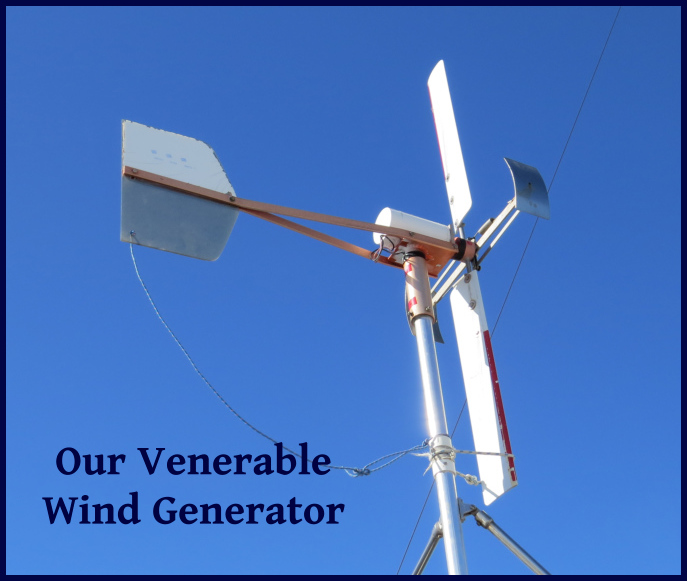
Generator vs. Alternative Energy. We have gone back and forth on this one. When we bought Cups, it had no method of charging the batteries other than starting the engine. We decided we would add either a generator or a wind generator and solar panels. We decided on solar and wind generators, and for the most part, we have been happy with the decision. There are better versions of both now available than there were 15 years ago. On the other hand, on those cloudy, calm days when we have to start the engine for an hour or two, or on a passage when the solar/wind gen doesn't keep up with the autopilot and instruments, we think about having a generator. I like the idea of a DC generator, and Ample and Whispergen were on our list if we had gone that route. (Whispergen's entire facilities were wiped out by the earthquakes in New Zealand, and I don't think they recovered, BTW.) The arguments against were the cost, the noise, the added complexity and the space it would have taken up in the engine room - making the engine itself that much harder to work on. Were we to do it again, I think we would have made the same decision.

windgen

Prop Generator. Adding a generator to the prop shaft is something that has been on my todo list for years, and I just got around to it a few months ago. This is something I now wish I had done much sooner.

propgen

Geriatric considerations. With each passing year, we look for ways to make handling Cups easier. We both agree Cups is the right size for us, and have no desire for a bigger boat. We've made changes to the sail handling and reefing systems to make it easier for us; added a line and fairleads so that we can use the windlass for hoisting the dinghy. (Marcie used to get stuck with grinding duty, while I kept it off the brightwork and from getting away when the wind picked up.) I'm sure I can think of a dozen other things we've done to make life aboard less physically demanding.


lazy jacks

HF radio/Sailmail vs Sat communications. The hardware costs for Sat phones are now probably less expensive than buying and installing a Pactor and HF radio. On the other hand, Sailmail is less expensive to operate. Winlink is free, but requires a ham license and doesn't work as well as Sailmail in many places. An HF radio allows us to participate in radio nets, but a Sat phone may be better in emergency situations... there are many pros and cons to both approaches. When we started out, the choice was definitely easier to make, and we went with an HF radio. Now the decision is not so clear-cut with so many Sat options, both in hardware and operating costs. I think we would still go with an HF radio, but if the Sat phone operating costs continue to drop, we might change our minds.

Autopilot vs Windvane - We went the autopilot route, and eventually added a totally redundant autopilot as a backup, after a very long passage that required handsteering when our original A/P crapped out. Many of our cruising friends have a serious windvane system and an autopilot as backup. Some of them rarely have problems, while others seem to be constantly making repairs. For bigger, heavier boats, the windvane has to be substantial, and for Cups, with her hydraulic steering, it would have required a system with its own rudder. The cost would have been more than the backup autopilot, but it would have greatly reduced our power requirements on a passage. I think we would have made the same decision now, but it is a close call.

Dinghy. We initially started with a Port-a-Bote, one of those folding boats that can be stowed on the rail. This turned out to be one of our less than optimal decisions. While the boat itself can be folded up rather compactly and stowed on the rail, we discovered that the seats were large and bulky, and probably took up more space than the boat. In addition, the seats deteriorated in the sun in only a couple of years, and we had a continual slow leak of water through the bottom seam. It didn't tow well at all, and was tricky to unfold on deck. It didn't take long to see why there are 100,000 inflatables and only 100 Port-a-Botes out there. Our preference now is a 9' (2.8m) rigid inflatable. It is big and sturdy enough to haul an amazing amount of fuel, provisions and/or people, and stows nicely on our foredeck.

portabote

All in all, with hindsight being 20/20, we feel we did okay (except for that darned Port-a-Bote). We learned as we went and could have probably saved some money, time and aggravation along the way, but that's all part of the sailing experience. Looking back, the only real change we would have made is starting our cruising lives sooner!