The Blue View - Electric Winch Handle

A frequent theme of my blogs is making Nine of Cups more geriatric friendly. As Marcie and I get older, we keep thinking of ways to make her (Cups, not Marcie) easier to handle. One thing we've contemplated is an electric winch. It often takes a lot of stamina and a fair amount of upper body strength to hoist the dinghy onto and off the foredeck, reef down the headsail, or hoist the main the last few feet, and having an electric winch that requires only a push of a button to do the job makes a lot of sense. winch

On the other hand, there are several negatives to an electric winch. One is that they are expensive – could we get by replacing only one winch or would we need to replace several? They are also power hogs, if only for a short time – running an electric winch might make the difference between having to run the engine to recharge the batteries on a given day or not. The biggest problem in my mind, however, is that there is no feedback with an electric winch. For example, when we are manually winching the main up and it seems more difficult than usual, there is usually a problem – the halyard is fouled, we forgot to release the vang, I forgot to remove a reefing pendant … Perhaps I'm particularly inept, but these things seem to happen frequently, and if we were using an electric winch, we probably wouldn't notice there was a problem until something broke.

One compromise that may make sense is an electric winch handle. These are handheld motors that plug into a winch in lieu of the normal winch handle, and rotate the winch electrically. I have seen several versions of these, ranging from a homebrew, do-it yourself type to an off-the-shelf purpose made device. The pros are that they are far less expensive than the cheapest electric winch; they are portable, and so can be used with any winch; and they provide a little more feedback than a standard electric winch. On the downside, they are large, clunky things, requiring a secure place to keep them stowed when not in use; and they are either battery operated and need to be kept charged or require a cable and electrical connections.

I looked into the alternatives, and here is what I found:

Home-Brew 1 - I found a clever design online by a sailor who dismantled a 12 VDC automotive winch and had an adapter machined for it that allowed it to be connected to the winch handle socket on a standard winch. He attached a couple of handles, complete with rocker switches to operate the motor. Power is provided via a heavy-duty cable and fuse. The winch motor is geared down, making it low RPMs and high torque. It looks kludgy, but it probably works. Its portability is limited by the cable. I think the cost would be around $200.

homebrew winch

Home-Brew 2 - Another do-it yourself option uses a right-angle, battery powered drill and a purchased bit. The drill of choice is a Milwaukee 28v, as the more common 18v models don't provide enough torque or battery life. If it is used frequently, an extra battery may be needed. A weakness is the chuck screw, which has a tendency to shear off, especially when the drill is reversed. The total cost is about $400. It is also available with a reinforced chuck screw and a neoprene or hard cover from a couple of sources for between $700 and $1200.

better homebrew winch

WinchRite - WinchRite makes a self contained, battery powered winch handle that is a little less industrial looking. Friends I've talked to who have one have mixed reviews. One said that although they had several problems, the customer service was good, while the other had no problems. WinchRite has recently introduced a new model that is more robust and uses a lithium-ion battery. The cost from Defender is about $800. The battery is not removable, so there is no spare battery option.

winchrite

So, what have we done? We are keeping the electric winch handle as a future possibility. In the meantime, we've made the two hardest winching tasks easier. I routed the dinghy hoist up to the windlass so Marcie, Cups' winch wench, can hoist it with a foot press. I also now climb the mast using ascenders, so she no longer needs to grind a winch to hoist me up. And, although there is still a little grumbling as one of us reefs down the genoa when the wind picks up, we can still manage to get it done. Plus, you ought to see Marcie's biceps after a long passage!

The Blue View - Clam Shell Patch for Inflatables

We were on our way to the local Lowes to pick up parts for a house project a few days ago, when the subject of repairing things in remote parts of the world came up. What a difference it makes having a car and just about any conceivable part available only minutes away. Marcie reminded me of a few years ago, when we were exploring the hundreds of tiny anchorages in Tierra del Fuego and Patagonia. We were anchored in a snug little cove for the evening with the anchor in deep water and two lines ashore, and after we were all settled in, we put the dinghy up on the davits. It wasn't unusual to experience large katabatic winds there, usually late at night. Right on schedule, at about 3am, a “racha”, or katabatic wind (also known as a “williwaw”), came blasting down the mountain behind us, and the 135 lb. (60kg) dinghy became more of a kite than a boat. The wind lifted the dinghy up against the solar panels with such force that a corner of one of the panels tore a 3-inch hole in the starboard pontoon of the inflatable. rowing the inflatable

Most of the anchorages in this area require lines ashore, so having a dinghy is quite important. Knowing we would be hundreds of miles between chandleries and being aware of how important the dinghy was, we came prepared. I had a couple of square feet of hypalon patch material, and a fairly fresh kit of two part adhesive. The next morning I pulled out our patching materials and adhesive, only to discover that the accelerator, one part of the two part adhesive, in our unopened, six month old kit had totally evaporated.

Not to worry – it was only the 'accelerator', which would imply that given enough time, the adhesive itself should still cure. I tried a small amount on a scrap piece of material, but even after 24 hours, the adhesive still remained tacky and wouldn't hold. I tried heating the adhesive – no luck. When I was a boy, patching a bicycle inner tube involved lighting the adhesive with a match and letting it burn a few seconds. This didn't work on the hypalon adhesive, however.

Maybe we could get by with one pontoon deflated... it had three chambers after all, and two were still inflated. I put the dinghy in the water, and the bow and port side pontoons kept the dinghy afloat, even with my weight. Rowing it was rather comical, however. It quickly swamped, so I couldn't sit down and row. I stood up and paddled it, but it was slow going and only wanted to go in circles. Trying to tow 300 foot (90m) lines ashore in a half submerged dinghy that only went in circles would have made a great Mr. Bean video.

I pondered our dilemma for awhile, then remembered I had once seen a product called a 'clam shell patch', a mechanical patch that could be used for patching an inflatable. I rounded up a few scrap pieces of aluminum, plastic panels and rubber gasket material and set to work.

anatomy of a patch


patch in place

The illustrations above show my first version of the concept. It still leaked air rather copiously, so I added a rubber gasket on both sides of the tear.

patch parts

The second attempt worked quite well. The patch held well enough to keep the pontoon inflated for about 24 hours. As long as I pumped it up each day before it was needed, it would stay inflated long enough to get our lines ashore in the evening and retrieved in the mornings. The patch served us quite well until we reached Ushuaia and could get a new kit of adhesive shipped in. It now resides with our patch supplies as an emergency repair kit.

The Blue View - Godzilla El Niño?

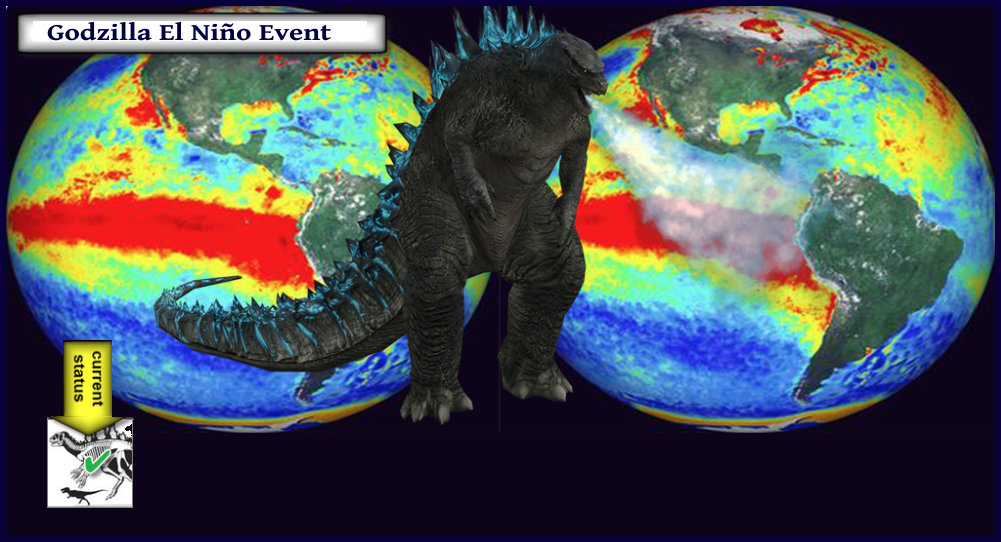
This year looks like it is not only going to be an El Niño event, it's being referred to as a Godzilla El Niño – perhaps the strongest El Niño in recorded history. According to Scripps Oceanographic Institute, “an El Niño is a temporary change in the climate of the Pacific Ocean, in the region around the equator. You can see its effects in both the ocean and atmosphere, generally in the Northern Hemisphere winter. Typically, the ocean surface warms up by a few degrees Celsius. At the same time, the place where hefty thunderstorms occur on the equator move eastward. Although those might seem like small differences, it nevertheless can have big effects on the world's climate.” godzilla el nino

According to PBS Online, “The name El Niño (referring to the Christ child) was originally given by Peruvian fishermen to a warm current that appeared every year around Christmas. What we now call El Niño seemed to them like a stronger version of the same event, and the usage of the term evolved over time until it only referred to the irregular strong events. It wasn't until the 1960s that people started realizing this was not just a local Peruvian occurrence, but was associated with changes over the entire tropical Pacific and beyond. In effect, El Niño was too big to be seen as the mega-event it is; it just seemed like a lot of unconnected unusual weather events around the world. “ And Godzilla? We all know where that came from, although I didn't know until today that it is an Anglicized version of the fusion of the Japanese words for gorilla and whale.

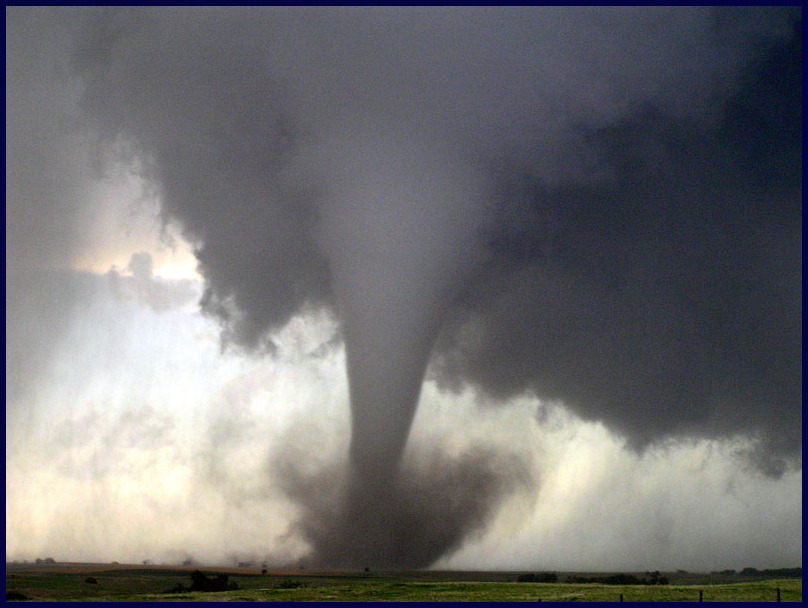
As most of us recognize, the weather around the world has been even weirder than usual. In the U.S., December was the warmest and wettest in the country's history, and according to NOAA, an amazing 6372 (!) record high temperatures were registered during the month; there were a multitude of absolutely devastating winter tornadoes in the midwest and south - even San Diego was hit; and record rainfall and flooding have occurred in a number of states. Mother Nature seems especially ticked off.

el nino tornado

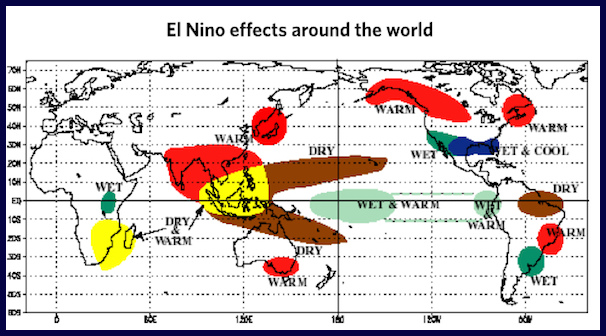
For sailors, a strong El Niño year is a mixed blessing. Depending on where they'll be sailing, the weather patterns may be better or worse, but will very likely be different than in a non-El Niño year. In the Atlantic, if the El Niño is still strong next summer, the number and strength of hurricanes will be less. On the other hand, there are likely to be more storms in the Gulf of Mexico and southeast U.S. coastal areas this winter.

el nino effects

In the North Pacific, there may be stronger storms and heavier seas in the central and eastern areas. California and northern Mexico will probably see more stormy weather and heavy rains this winter. The South Pacific will likely experience more cyclones. Often during an El Niño event, the cyclones persist later than usual and tend to make their way further east. The usually strong and dependable easterly trade winds may be lighter than usual as well. They may become light and variable, and even reverse direction on occasions. That'll make those long Pacific passages even longer.

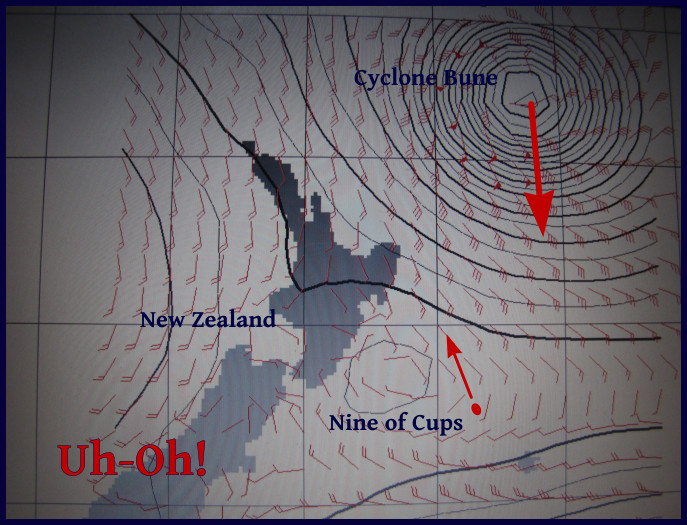
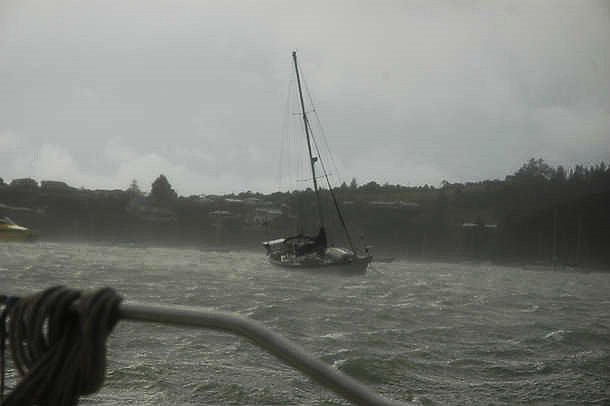
We pay attention to big global weather patterns like El Niño events, but in actuality, we don't make or change our plans based on them. We avoid cyclone, hurricane and typhoon regions in the appropriate seasons. Even so, we've had a few close calls, like Cyclone Bune that made our passage from the Chatham Islands to the north island of New Zealand less than fun – and that was in 2011, a La Niña year.

cyclone brune

Whether we're on a passage or anchored, we watch for storms or nasty weather approaching and try to be prepared. And we pay attention to the day-to-day weather heading our way. But we didn't postpone our 2009 Pacific crossing because it was an El Niño year, and while we did have our share of bad weather, it wasn't so bad that we regretted not waiting another year. On the other hand, our El Nino event in 2009-10 was considered moderate. There hasn't been a strong El Nino event since 1997-98, but if this really does turn out to be the “Godzilla El Niño” meteorologists are predicting, watch out this year.

cups in a storm

The world's weather seems to be getting more abnormal every year. Our trek north from Trinidad in a couple of months shouldn't be greatly affected, but all the Puddle-Jumpers planning to head from Panama to New Zealand this spring will need to be extra careful.