Elephant Appreciation Day

elephant appreciation day  

I know, talk like a pirate one day, then appreciate elephants another. It's a never-ending succession of celebrations though I guess it could be worse … like what if there was nothing at all to celebrate? We usually remind you of crazy holidays to celebrate in our sidebar, but sometimes it's just not enough. I never really appreciated elephants all that much until we went to Africa. It's not that I didn't like them; it's more that I just never got up close and personal to any. Seeing them in zoos and circuses just never did it for me. Then we sailed to Africa and visited some parks where the elephants roam free.

First, some interesting elephant facts:

1. There were only two species (Asian and African) until 2010 when a third species was recognized. Now there are three. The Asian species plus two African species: African bush elephants and African forest elephants. Some scientists believe there may be more.
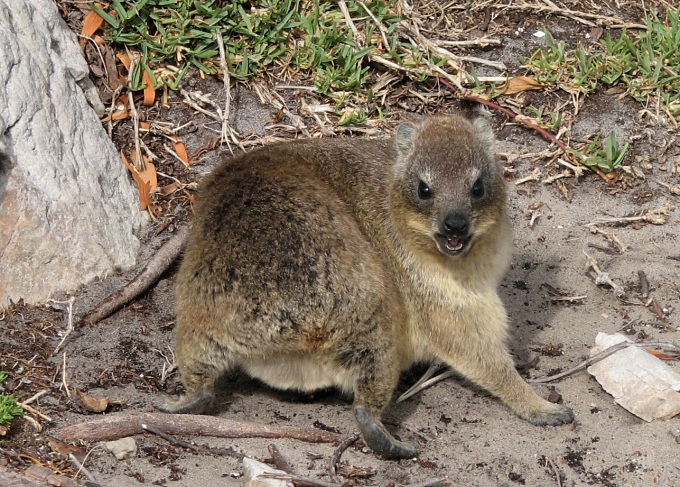
 

rock hyrax


2. The closest living relative to the African elephant is the rock hyrax aka dassie. Looking at these little furry creatures, you'd never know it, but they evidently share many elephantine characteristics.

3. Baby elephants (calves) are born blind. Some babies suck on their trunks the way human babies suck their thumbs.

4. Elephants, humans and Neanderthals are the only animals known to have death rituals.
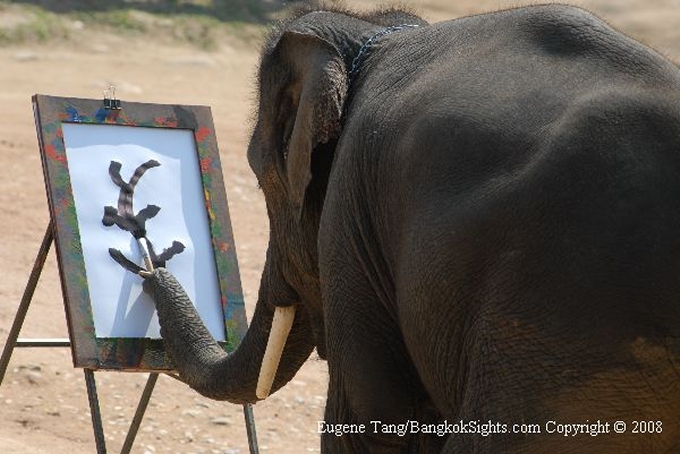
 

thai painters


5. Some elephants in Thailand paint (not really according to Desmond Morris).

6. Swimming elephants are found in the Andaman Islands off India. They use their trunks like snorkels.

7. African elephants are the largest land animal, have the largest brains of all land animals and endure the longest gestation period (22 months … ouch!).

8. Still exploited for their ivory tusks, all world elephants are on the WWF's vulnerable, endangered or critically endangered species list.
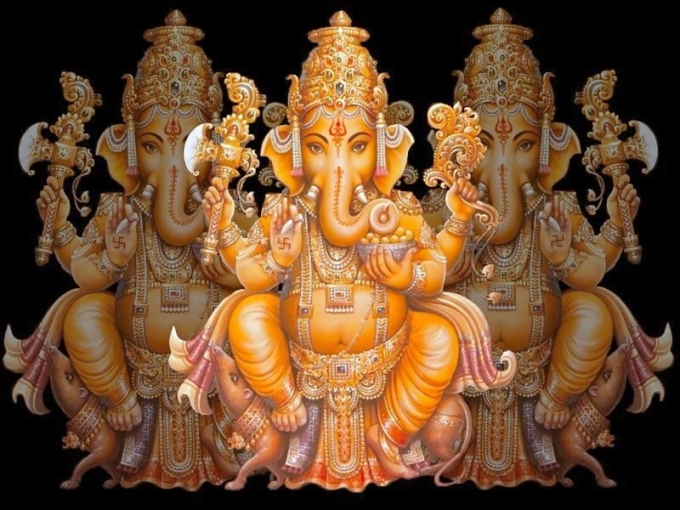
 

ganesh


9. Ganesh, the Hindu god of wisdom and learning and the remover of obstacles, has the head of an elephant and the body of a human.

10. Elephants (like white men) can't jump.

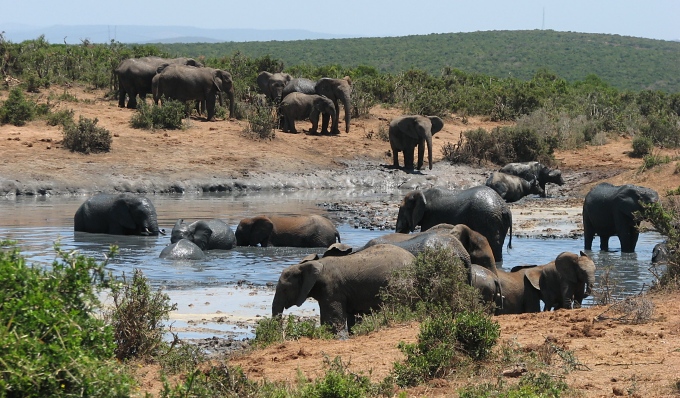
Here's a close-up of some of the elephants we met in our travels:


nothing like a crowd


elephants saying hi


Family walk.


Namibia - Etosha National Park


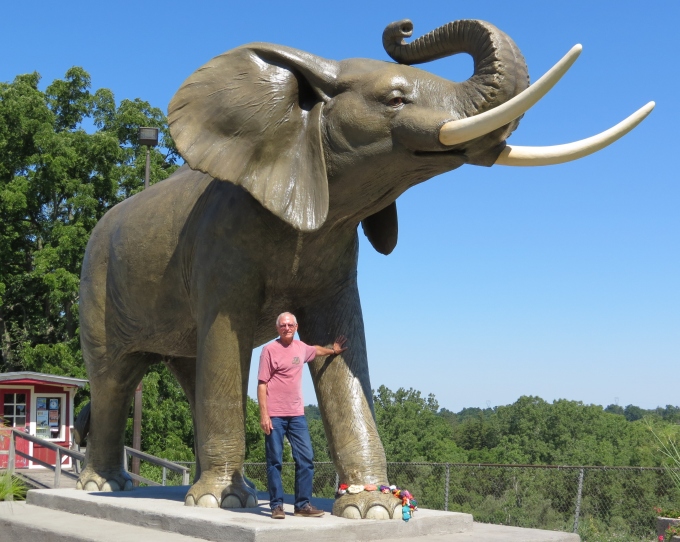
jumbo elephant in canada


addo np south africa


mudbath

Pachydermophobia – Google it, there are ~6,000 results for fear of elephants … really?

Piggin' Out

pig collage

“I like pigs. Dogs look up to us. Cats look down on us. Pigs treat us as equals”

Sir Winston Churchill

Pigs, hogs, porkers, swine … whatever you call them, they're curious creatures. I've read that they're pretty intelligent, but I can't vouch for that since I've never been friendly enough with a pig for verification purposes. There are some pig characters I really enjoy …. the inimitable Muppets' Miss Piggy and Pigs in Space, the crafty Three Little Pigs (at least the brick house pig). I'm not a pork eater, although we did try the obligatory cuy (roast guinea pig), in Peru. First we saw them running around the yard and the next thing you knew they were on our plate served with rice and veggies.

There are truffle-finding pigs in France and Angry Bird pigs. Human eating pigs in Hannibal were not the benign “piggy, piggy, piggy” type that I've seen around . Remember Dorothy falling into the pig sty in Wizard of Oz? It wasn't pretty. Folks now keep pot-bellied pigs as pets (not on a boat though). There are piggy banks, of course, and pigs in a blanket. In the ancient Norse culture, the pig (wild boar) was revered. We anchored in the Pigsties anchorage in southeast Tasmania once … no pigs though.


pigs for all occasions


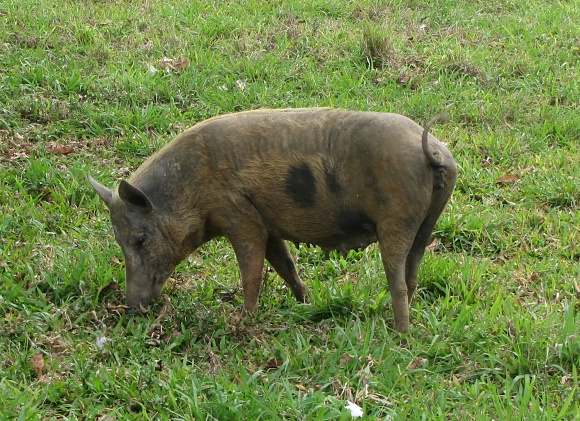
In the South Pacific, pigs are omnipresent and a long-standing, important part of their culture. You can determine a man's worth by the number of pigs he has and is willing to sacrifice for a celebration. The pigs run free and happy like dogs or chickens, until it's feast time. Celebrations, mind you, might be for a birth, wedding, funeral, circumcision, school graduation or a ritual hair-cutting somewhere in the village. Captain Cook let pigs loose on several of the South Pacific islands with the thought that they'd multiply and provide food for marooned sailors. To this day, wild pigs on many of the islands are still referred to as Captain Cookers.


tongan sow


With all the pigs and piglets running around, I asked my Tongan friend, Fa'aki, just how she knew which pigs were hers and how she rounded them up. “Oh, I just whistle”, she said and she did and sure enough all her pigs came immediately to her. No “suey, suey” required. Every pig knew his owner's particular whistle, or call, or bell ring and came a'running for meal time when they heard it. Unfortunately, sometime they were “meal time”.


feast in vanuatu


In Vanuatu, the slaughtering and preparation of a pig for a ritual feast was not a pleasant experience for us or the pigs. We could hear the pigs squealing from our anchored boat. The words inhumane and barbaric come to mind, but as guests we can choose to either participate or not in traditional feasts, but we don't comment on others customs or cultural traditions. Certainly, in first world countries, we tend to forget the slaughter of the animals that provide our meat. Seeing a thick pork chop all neatly packaged in the Meat Department cooler is a far cry from seeing a pig on the hoof being slaughtered.


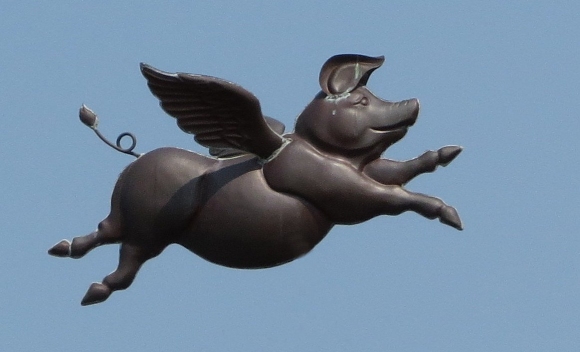
when pigs fly


There are some pig phrases that come to mind like a “pig in lipstick”, a term used particularly when referring to political “spin”. Then there's "You can't make a silk purse from a sow's ear" which seems to have been in use by the middle of the 16th century or even earlier. My favorite though is “when pigs fly” which is an idiom apparently derived from an old Scottish proverb, but more recently used by Lewis Carroll in Alice's Adventures in Wonderland.

"Thinking again?" the Duchess asked, with another dig of her sharp little chin.

"I've a right to think," said Alice sharply, for she was beginning to feel a little worried.

"Just about as much right," said the Duchess, "as pigs have to fly...."

Some piggy trivia:

Pigs are called using the word “Suey”. When I checked out why, the best answer was ”that's the noise they make”. Hmmm....doesn't sound like that to me. I'm thinking it's because they're part of the suidae family, and that sounds like suey. Anyhow, give a listen to some pig calls.

Pigs are good swimmers.

Pigs are intelligent … #4 on the animal intelligence list just below chimps, dolphins and elephants. They learn tricks faster than dogs!


carls oxford diner


Okay … so why the pig post? We drove by Carl's Oxford Diner Pig bus the other day and well, one thought just lead to another.

And as Porky Pig would say:


Going Coconuts

coconut face  

Put de lime in de coconut? I've got a loverly bunch of coconuts? Loco in the coco! “You drive me coconuts!”. The word coconut was brought to us compliments of 16th-century Spanish explorers, who saw them for the first time and thought they resembled human heads and faces and appropriately named them “coco” (head). Somewhere along the line, “nut” was added.


coconut truck


There have been times when looking at one more coconut would have put us over the edge. On some islands in the South Pacific, coconuts are the sole choice for a drink selection. Don't get me wrong, I love the smell of coconut in my shampoo and bath soap. Pina coladas rate right up there as my favorite “frou-frou” drink. But when the iced tea, beer and lemonade are gone and you haven't seen a Coke in months and tap water just doesn't cut it, sometimes coconut water is all there is and it gets old fast.


david shelling coconuts in vanuatu


What you see in the grocery stores in the USA is not what you get in the South Pacific islands from the coconut palms. Getting to the coconut meat is a labor-intensive, three-layered process. First of all, a coconut is a drupe, not a nut. I was not all that familiar with “drupes”, mind you, but it seems it's the botanical term for stone fruit like peaches, plums and … coconuts. What you see in the grocery store is just the drupe or inner “stone” itself. In actuality, the outer thick green skin has to be scored and sliced off … usually with a machete. The locals make it look easy, but after much practice, David still had a hard time with this process though he did manage to keep all of his fingers intact and, for that, there is much to be said.


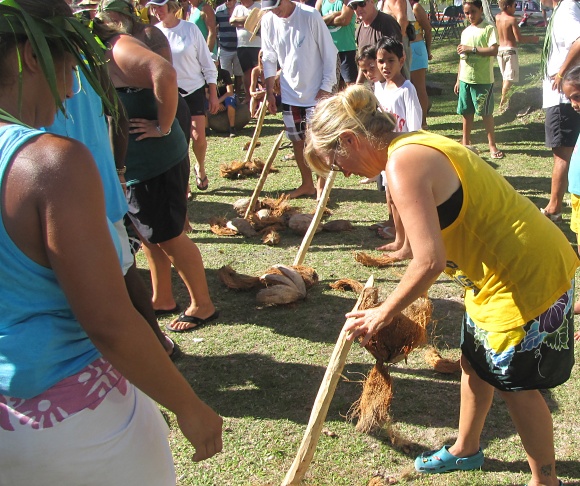
coconut husking


After the thick green skin, comes the husk. We participated in a coconut husking contest in Polynesia and quite honestly, we were not very good at it. This, too, takes practice and some elbow grease. The locals have a specialized tool for coconut husking … a sharp pointed stick protruding from the ground.


coconut water


If you're just after the coconut water, you can just slice a chunk of the green skin off and punch a hole and sip away. If you want the white meat to eat or to make coconut milk, it definitely takes some effort.


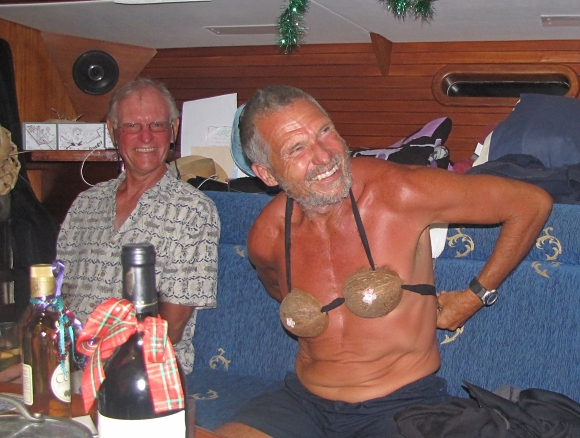
coconut bra


Unlike us and most cruisers who drink the water and perhaps eat the white, sweet, chewy flesh, the islanders use the entire coconut. When dried, the flesh is called copra and it's a major industry on some islands. The oil and milk are used most commonly for cooking. The oil is also used in making soaps and cosmetics. They use the husk and leaves for utensils, jewelry, decoration and fuel. It's typical to drink kava from a half of a coconut shell. And let's not forget coconut bras!


coconut collectibles


Our son, Brennan, was fascinated with those coconut head figures that you see in seedy souvenir shops and he had quite the collection of them. Wonder what ever happened to them? Truth be told, we still have a pirate head aboard!