Winter Moths

moth peeking  

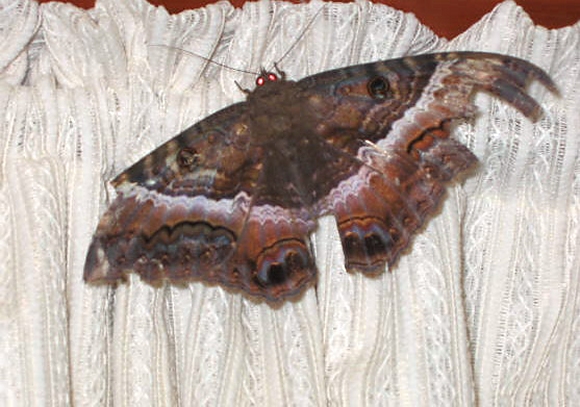
Winter moths? Really? I'm sorry, I've never heard of winter moths. Moths are nighttime butterflies in my book, but these guys have inundated the area … in December, no less … in the daytime and they're all over everything ... including Lin's house, doors, windows, everywhere. They're freaky, if you know what I mean. They don't belong here … especially so late in the season, in the cold, and in such great numbers. There's actually a National Moth Week celebrated in July. In July, moths are okay. December … definitely not.


inundating the house


We've seen lots of moths in our travels. The largest were called Money Bats in the Bahamas, aka cicadas. Jelly relished catching them at night and bringing them into the galley. They were a novelty at the time and certainly not in great numbers.


money bat


We've observed other moths, but usually at night and usually fluttering around the lights. These are normal moth things to do and very acceptable.


moth in the light


These drab winter moths, however, just lay around all day long, clinging to the windows and clapboards of the house, right out there in the open and do nothing. They don't even move when you get near them. There are flocks of them … herds... clouds … what the heck is the collective noun for too many moths anyway?


a couple of moths


According to Wiki, this “abundant” species is native to Europe and the Near East and one of few moths that is active even in the dead of winter. They found their way to North America, more specifically Nova Scotia, in the 1930's. They're in several coastal provinces and states now in “infestation” numbers. They're not particularly good critters … they're defoliators causing significant damage to trees and orchards. I know everything has its place on this earth and I apologize to all the moth lovers out there, but geez...

Prairie Dogs

cute prairie dog  

Okay, so I'm on an animal kick lately. Colorado does that to me. Among other animals, we saw coyote, deer and marmots on our trip there a couple of weeks ago. And, of course, we saw prairie dogs. When Lewis and Clark first explored the area in 1806, they described them as barking squirrels. The French trappers, however, had already named them chien de prairie and that name stuck. If you're from Colorado or that part of the country, prairie dogs aren't a big deal. They sometimes call them sod poodles or chiselers. If you're not from the area, however, they're fascinating, industrious little critters. Rodents … but cute … in a hamster, bunny sort of way.

It's hard to miss them. The ones we saw were black-tailed … one of the five known species. They set up their towns with elaborate burrow systems in almost any free, open space that sports a little grassy vegetation. Though humans constantly encroach on their turf, prairie dogs are very resilient and forgiving. They just move on and find new digs … literally. Dog towns are found even in urban areas … mostly vacant lots.
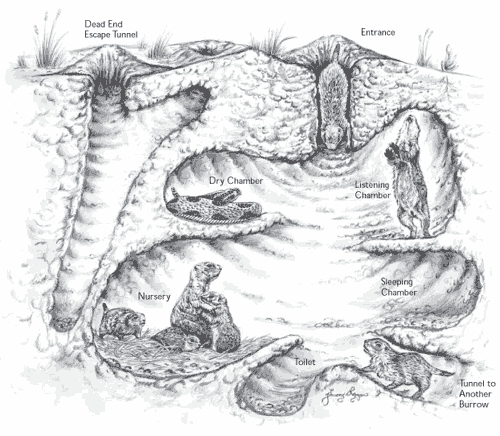
 

prairie dog town burrow system


They kind of remind us of the meerkats we saw in Africa. They stand guard at the entrance to their burrows and then bark and whistle to alert the rest of family and town when a predator approaches or onlookers get a little too close. They all pop their heads out of their burrows when there's an unexpected noise or event.


prairie dog peeking


In actuality, the whistles and barks have been found to be a rather sophisticated system of communication describing specific predators... not only what they are are, but how big, how close and the perceived level of threat.


prairie dog language


We used to use the term “prairie dogging” at our company when we all worked in cubicles. Whenever there was a noise or distraction, everyone would poke up their heads to see what was going on.


prairie dogging


We've seen the world's biggest prairie dog in Cactus Flats, South Dakota.
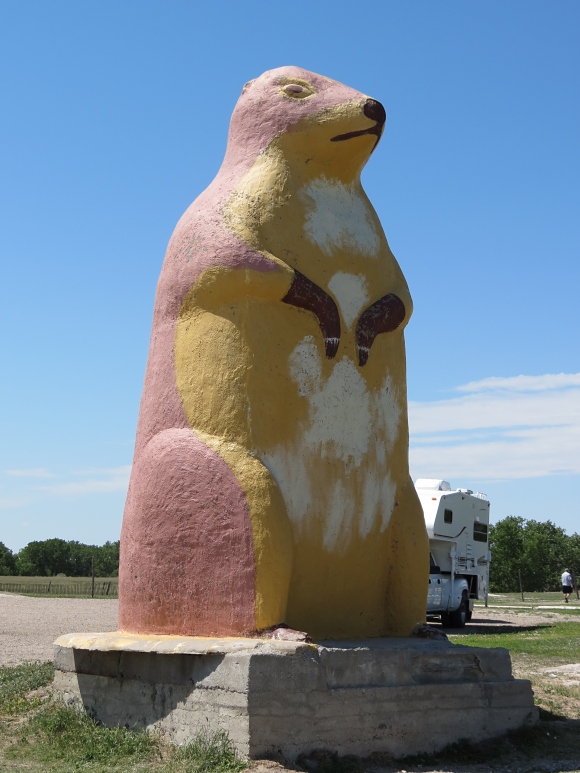
 

world's biggest prairie dog


And a coterie of white prairie dogs in South Dakota, too.
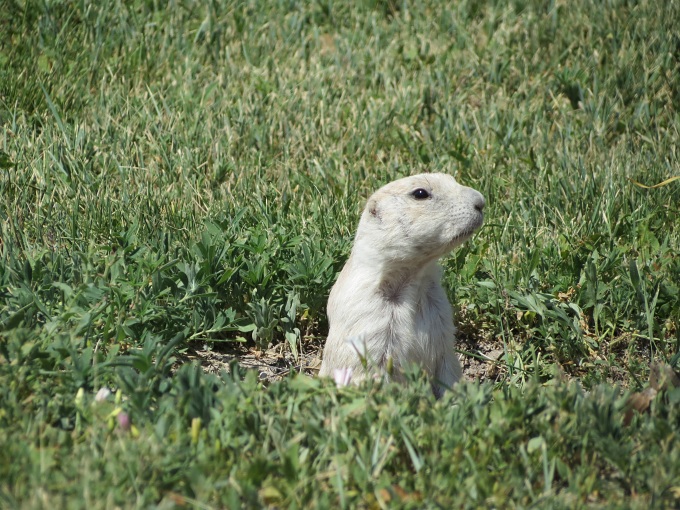
 

white prairie dog


If you're a rancher, these guys are considered pests. They make so many burrow holes that your cattle and horses trip on them or get their feet stuck. If you're a farmer, they can damage your crops. They don't usually eat the crops, they just clear all the vegetation around their burrows which tends to include your lettuce. They're varmints and considered not only expendable, but provide target shooting entertainment … like rats at the dump. They schedule prairie dog shoots as local events in some areas. There are actually recipes on line for prairie dog. I guarantee they won't be included in the Nine of Cups Cookbook. There's even a prairie dog video game you can download which seems much more fun to me than killing a live one.

Unfortunately, these guys are also susceptible to the bubonic plague aka the Black Death (from fleas) and tularemia aka rabbit fever (from ticks and deer flies), bacterial diseases which can spread to humans if they handle diseased animals or get bitten. My reading indicates that the chances of getting either disease from a prairie dog are about as likely as getting struck by lightning. According to the Mayo Clinic, the risk of contracting the bubonic plague worldwide is 1 in 3 million. The CDC indicates an average of only seven human plague cases are reported in the US each year.


prairie dog flea


Prairie dog numbers have declined significantly since the days of Lewis & Clark. What a surprise, huh? Ecologists consider them to be a keystone species. That is, they're the primary diet for ferrets, fox and eagles among others. They make tasty snacks for some snakes as well. Additionally, their burrows are borrowed by some birds like plovers and burrowing owls for nesting. An additional 117 wildlife species likely benefit from prairie dog colonies to meet their biological needs.


prairie dog buddies


There's even a Prairie Dog Coalition that, in conjunction with the American Humane Society, has stepped up to provide some protection for these guys. I'm more inclined to writing blogs and taking photos than standing on a soapbox, but you gotta wonder about us humans sometimes ...

 

prairie dog coalition

Elusive Mooses

moose crossing the road  

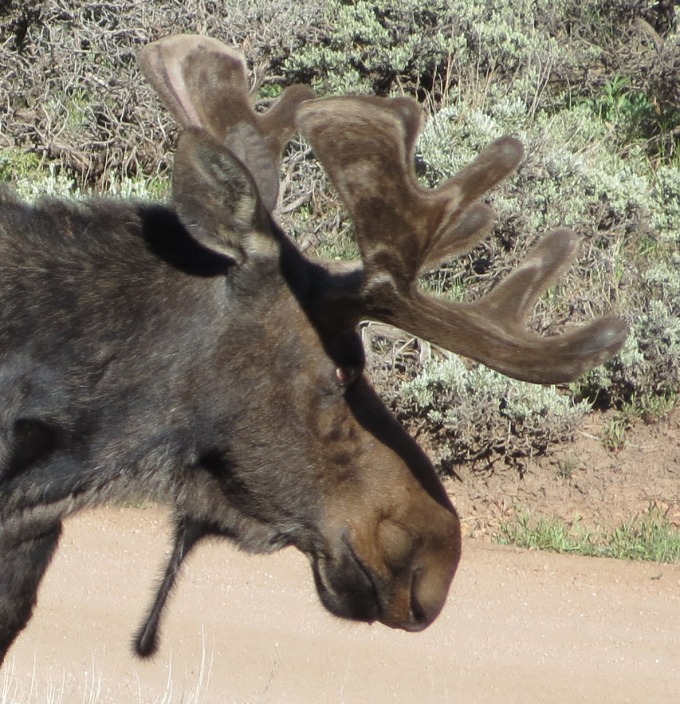
Only because we've just been to Colorado and drove through tiny Walden, the self-proclaimed Moose Viewing Capital of Colorado, did I start thinking about moose. We didn't see any moose there except on the wall at the Moose Creek Cafe, nor did we see any in Kremmling when we ate breakfast at The Moose. And you'll remember we currently live near Moose Hill Sanctuary here in Massachusetts where we also have seen no moose. Elusive mooses.


moose head at moose creek cafe


As the largest member of the deer family, we call them moose in North America, but they're called elk in Northern Europe. Confusing because we have elk in North America (wapiti), but they're a totally different animal. Another one of those “two nations divided by the same language” situations.


moose sign


We've seen them several times in our travels particularly in Alaska, Wyoming and Colorado. They're diurnal and huge, so they're easy to spot. Ungainly looking, tall and shaggy, they can run at about 35mph. That's pretty fast for such a klutzy looking animal. And they're good swimmers as well. These shy herbivores browse in deciduous forests and we've often seen them in streams and ponds, knee-high in water, passively eating pondweed. Sometimes they've surprised us (and vice versa) when we've been hiking in the woods or taking early morning walks.


moose cow and calf crossing a stream


They estimate there are roughly 300,000 moose in the US and maybe a million in Canada. I recently read an article in the New York Times describing unprecedented high death tolls among moose recently. That's a worrisome thought.


moose browsing


moose bell


Here's a little moose trivia for you...

  • The flap under their chin is called a bell. (I dare you to ring it).
  • Moose have 32 teeth like humans, but no upper front teeth (akin to some humans), hence the reason they cannot whistle.
  • Their upper lip is prehensile to help them grasp food.
  • They're usually loners and do not form herds.
  • Moose have 27 chromosomes. Humans have 23.
  • The word moose was borrowed from the Native American Algonquian vocabulary and means “twig eater”. It's been used in the English language since 1606.
  • There's the fraternal organization, Loyal Order of the Moose. Teddy Roosevelt belonged to the Bull Moose Party. And don't be confused with mousse for either hair care or dessert. David's favorite moose/mousse is chocolate. Mine is Bullwinkle J … with or without the squirrel.


rocky and bullwinkle moose crossing sign