Springtime in New England

flowers  

Flying home from Australia ... where it's winter down under ... to Boston where spring has sprung and summer's ever so close ... has been quite a pleasant contrast. While David has dug out the heavy wool blanket and has a heater on to take off the early morning chill, in New England we've got the doors and windows open in the afternoon and we even sip a glass of wine on the deck some evenings in perfect comfort. The days are so much longer and it's easy to wake with the morning sun just after 5am, rather than drag ourselves from bed at 7:30 when it's still quite dark.

I hear a chorus of bird song first thing when I awaken. Songs I've heard my whole life growing up in this area … robins, chickadees, sparrows and bluejays. The turkeys, though certainly not melodic, gobble past the house at dawn and dusk and I look forward to hearing them.


american robin


This is a beautiful time of year in New England. The trees are thick and lush, concealing the damage and bareness caused by a rough, long winter. Birch, oak, maple, pine ... all blend in varying shades of green and denseness to form a barrier between the house and the road.


green leaves


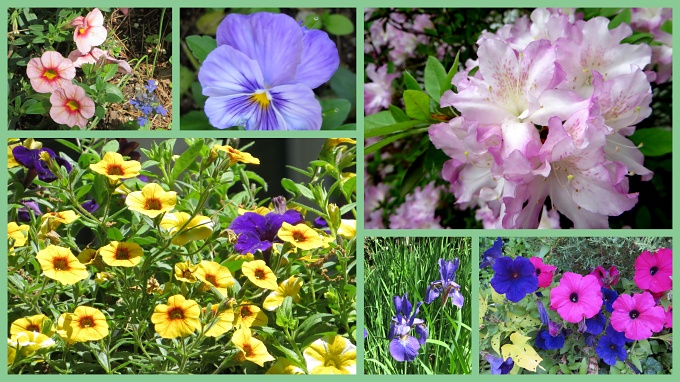
Flowers are bursting, blooming and blossoming in a big way. Shrubs and trees are showy now. How could the local rhododendrons produce any more delicate blossoms than they do? Lin's windowboxes, planted with annuals, are flourishing. The perennials are showing their colors. Purple iris are thick and regal.
 

flower collage


I love watching the squirrels and chipmunks race around, clucking constantly as they scurry. With all this new growth comes good eating. No leftover winter stores any more. There's plenty of good things to collect for dinner. I know just how they feel when we get to port after a long voyage and there's fresh, green, crunchy stuff to eat. There are no squirrels in Australia, by the way, but the population of small, unusual marsupials certainly makes up for it.


squirrels


Though my reason for returning to America was a sad one, the rebirth of life is evident all around me. It's a reassuring cycle and good for the soul.
Great White Sharks

great white wow  

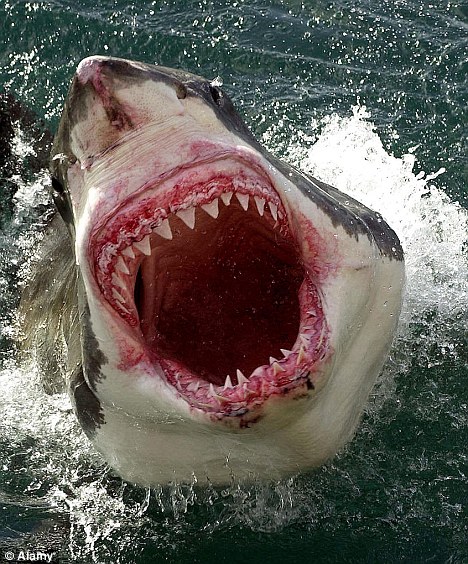
They call them white pointers here in Australia and there are lots of them around, we're told, Ever since I saw “Jaws”, I hear that duh-duh, duh-duh, duh-duh in my mind whenever I'm swimming or diving in the ocean (sometimes even in the deep end of the pool). We've seen many sharks in our travels and truth be told, once you become accustomed to them being around, you keep out a wary eye, but they usually don't bother you. I've been known to walk on water if one gives me the “I'm hungry for lunch look” once too often. These were not, however, great whites, one of the largest predators on earth.

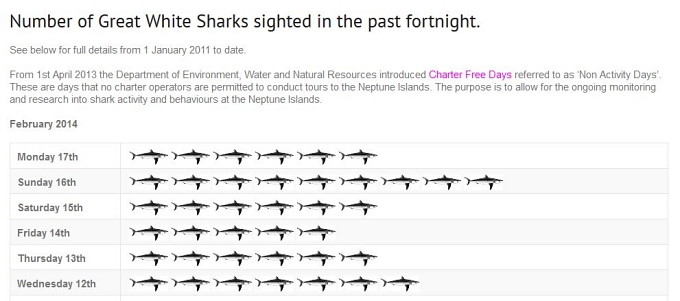
It didn't take reading the guide book nor the cautions of locals advising us not to swim off the boat when anchored off tiny islands, to give us warning that great whites were in the area. All we really needed to see were all the ads for “Swim with the Great White Sharks … Cage Dive With Great Whites”, to alert us there were quite a few big guys in the neighborhood. A recent shark attack and resulting death of a South Australia man certainly got everyone's attention.


great white shark sightings


In Port Lincoln, we had the opportunity to do a shark cage dive. We thought about it … for less than a nanosecond. I read the FAQs on the website page. We're PADI-certified divers, but you don't need to be. I mean, what could go wrong? The cost? ~$500AUD/pp, but this includes breakfast/lunch and snacks (for us or the sharks?). None of the FAQs addressed my particular question regarding messing my pants underwater … very tacky, I know, but still, I wondered.


calypso star shark cage


It seems that though great whites account for the most unprovoked shark attacks on humans, we are definitely not their preferred diet. Talks with the locals in Port Lincoln indicated that staying away from sea lion colonies is prudent. Evidently, sea lions are right up there on the top of their preferred dining, especially the pups. Swimming in the open ocean is not advised and, if you remember, Port Lincoln had a caged-in protected area near the jetty for safe swimming.

Because their numbers were dwindling, Australia added the great white shark to its list of protected “vulnerable” species. Great whites have no natural predators (other than man)and it seems the population is slowly increasing since “sports harvesting” is no longer legal although their numbers are not yet where they should be.


shark cage diving


A few Great White Shark facts for you …

  • Known for their size, average adult great whites range grow to about 21 feet (6.4m) … about half the length of Nine of Cups. Some have been recorded as big as 26' (8m). Lot of fish!
  • They mature at about 15 years and it's now thought their lifespan is ~70 years.
  • Great white sharks can accelerate to speeds that exceed 35 mph (56 km/h).

More shark facts, try this link.

Talking on Skype with David's sister recently, we mentioned great white sharks in the area and she suggested we move farther west to avoid them …

“Well, they're are lots of them in Western Australia, too”, we told her.

“Well, go further north then”, she countered.

“Then there are salt water crocs. And if you go inland, there are poisonous snakes and spiders and ...” Seems there's always a lot to keep your mind busy and alert in Australia.

David has had no urge to check the hull lately or the prop. We haven't seen any great whites circling the boat yet, waiting to attack. Rest assured, if we do, you'll be the first to know.

Talking Smack

smack of jelly fish  

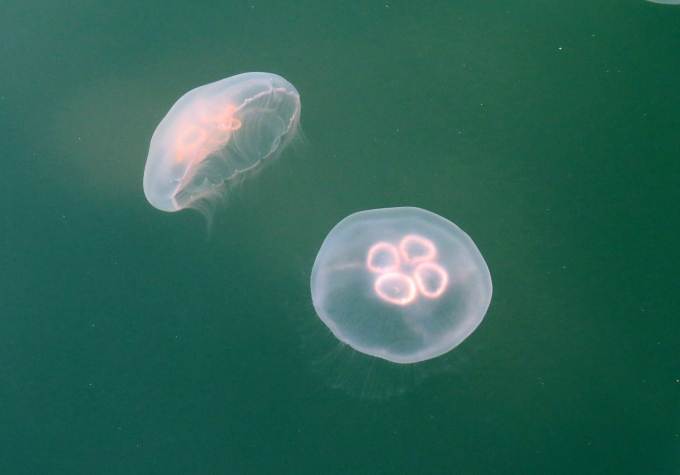
Yeah, yeah ... I read the Urban Dictionary and I know that smack talk is dissing someone, but at the marina currently, there's another meaning to smack talk. We're inundated with jellyfish … moon jellies to be exact (aurelia aurita), and the warm water around the boat is thick with them. The collective noun for jellyfish is smack, so we're definitely talking smack here.

We were a little concerned that these are the stinging variety of jellyfish as there are several very poisonous jellyfish that inhabit Australian waters including the irukandji and the box jellyfish. The moon jellies are indeed poisonous, but their stingers evidently cannot penetrate tough human skin, so there are no worries. Doesn't matter, I don't like them much as swimming companions, so I've stayed out of the water. We've seen signs warning against jellyfish at some beaches in the past and we definitely take heed.


marine stingers


I am, however, fascinated with photographing them. Moon jellies, in particular, are quite pretty, especially when their gelatinous bodies contrast sharply against the green water of the marina. Evidently, they're pretty ubiquitous in temperate waters in all the world's oceans. I appreciate the intricacy of the four-leaf clover shaped organ in the center. I found out that it's actually their reproduction organs. Hmmm.


close-up of a jelly fish


They locomote by pulsation and watching them slowly wend their way through the water and around the boat has kept me amused and occupied just observing and photographing them. Doesn't take much to keep me away from boat chores, huh?


A little jelly smack trivia … In 1991, over 2000 moon jellies were sent into space on the space shuttle

Columbia to study the effects of weightlessness on the development of jellies. Your tax dollars at work.