Bugs...Yuck

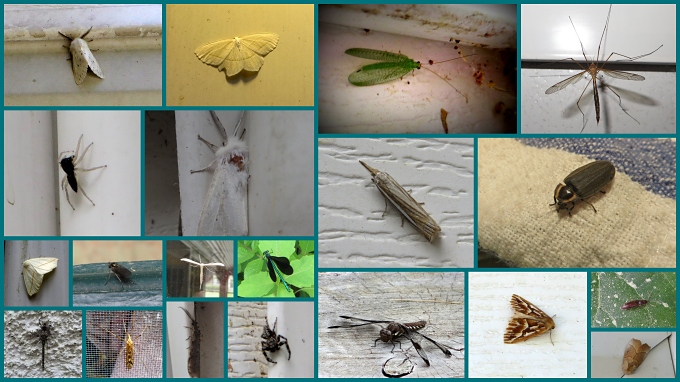
collage  

I'm not a lover of bugs … any kind. Insects, spiders, multi or milli-footed critters … they're just not my cup of tea. They make my skin crawl … literally. I wonder about entymologists ... the folks who enjoy making a living at studying bugs.

Granted, if they wanted to, insects could take over the world (and probably have). They do outnumber us despite the fact we have Raid and Deet and cut down all the rain forests. There are more than one million different identified species of insects throughout the world (all the bad ones probably live in Australia), but some experts believe that there may be as many as 30 million insect species in the world that have yet to be discovered and identified. This represents approximately 80 percent of the world's species. Here's the kicker though … at any given time, it is estimated that there are some 10 quintillion individual insects alive (10,000,000,000,000,000,000). That's a lot of bugs!

What brings this topic to mind is that I'm here at Lin's house in Walpole, Massachusetts, USA with time on my hands and it's springtime. I'm enjoying all the birdsong and the blooming flowers, shrubs and trees. I appreciate all the varied shades of new-growth green and taking in all those fresh earthy smells as I walk through a copse of park trees. I'm not enjoying, however, the plethora of bugs that have hatched and are flying and crawling and generally sneaking around. Though they're bothersome, I can handle ants and common houseflies without alarm. I'm gun-shy of ticks, having had Lyme disease on a previous visit here. Some of these creepy crawlies freak me out though. What's amazing is that just walking around the outside of the house, I'm discovering all these new insects I don't think I've ever noticed before. My identification-itis disease has kicked in and though my flesh is crawling, I've got to photograph and identify them. Fishflies with those long plume-like antennae, for instance. Who knew?


fishfly


There are several good “name that bug” websites. I don't have my good camera with me and thus I'm forced to get closer than I normally would in order to snap a pic that's crisp enough to use for identification and to share with you. What about black fireflies? I've certainly seen lots of fireflies in my life, but I'd never heard of black ones. There seem to be a plethora of them at the moment and they look like they're bug mating which means more in the future. Ick!
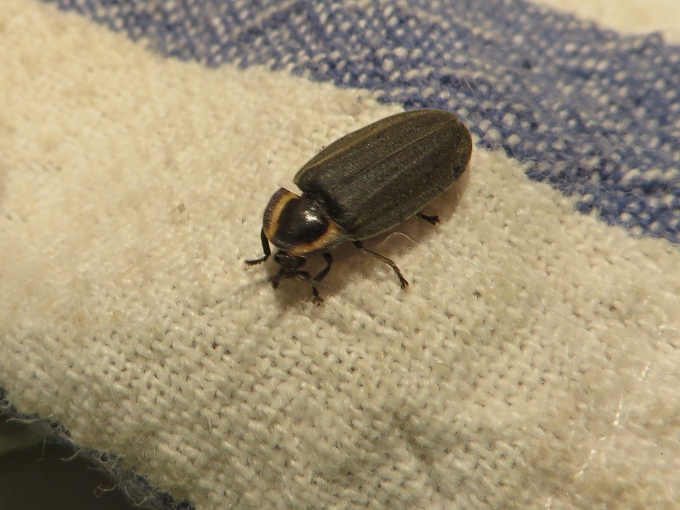
 

black firefly


Contrary to urban myth, Harvestmen or Daddy-long-legs are not poisonous and not because “their fangs are too short to bite humans” as legend would have us believe. I still don't like them. They're creepy. Other spiders … well, really, let's not go there. In this household, we kill more spiders than we photograph. Apologies (not necessarily sincere ones) to all the arachnid lovers out there and the Association for the Protection of 8-Legged Species. I've got gooseflesh just editing the pics.


daddy long legs


Now that I think of it, butterflies and dragonflies are actually a favorite of mine … I try to forget they're insects. I've even got a whole page on my website for butterflies we've photographed and identified. Even moths are nice … in moderation. I don't like them in clouds, swirling around my head though. I found a “Moths By Porch Light” website that I thought was particularly good. And dragonflies and damselflies are beautiful and fascinating. In fact, they might just warrant their own blog post in the near future. In the meantime, enough bugs for now. They're freaking me out.

 

diana fritillary

Canada Geese... Takeover is Imminent

Known as “honkers” and sometimes “sky carp”, Canada geese (Branta canadensis ) are the most widely distributed and well known of all waterfowl and they are, according to a TIME Magazine article (12/9/2013), one of several wildlife species that are in need of population reduction. Mind you, that's Canada geese, not Canadian geese (thank you very much, Miks), just in case you were tempted to use it incorrectly (as I have done in the past).  

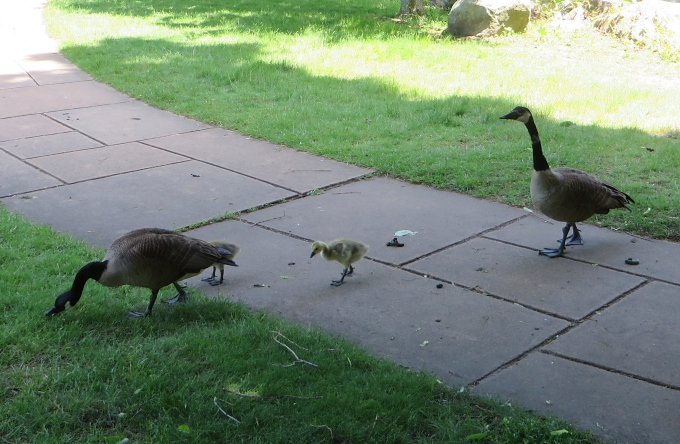
goose family out for a walk


I've been enjoying the Canada geese at Bird Park, but there are certainly lots of them. It's impossible to avoid stepping in goose poo as you walk through the park. Uncyclopedia advises that “Canada geese … are the major and only biological weapon developed by the Canadian military. The geese were invented in 1523 for the Canadian Revolution, which never occurred due to a hockey game being on TV. Out of frustration of his team losing, the head military scientist set the geese free to wreak havoc on the city. Instead, the birds migrated to Minnesota and now enjoy crapping on soccer fields.”

Evidently, they made their way from Minnesota to Bird Park among other places.


chasing geese encouraged


Native to arctic and temperate regions of North America, they also occasionally migrate to northern Europe. They've also been introduced to several areas (big mistake) like Britain and New Zealand where their numbers have become nearly overwhelming. At one time, they were considered endangered but in recent years, Canada goose populations in some areas have grown substantially, so much so that some consider them pests for their droppings, bacteria in their droppings, noise, and confrontational behavior. This problem is partially due to the removal of natural predators and an abundance of safe, man-made bodies of water near food sources, such as those found on golf courses, in public parks (like Bird Park, for instance) and beaches, and in planned communities.


goose family


Speaking of confrontational behavior, one website provided a chart of goose behavior interpretation. I've seen all of these signs. Believe me, when a goose starts hissing at you and pumping up and down, you pay attention.


goose behavior chart

(a) Alert, wary of danger (b) Conflict, accompanied with hiss (c) Increased threat, accompanied by a call (d) Conflict situation, pumping display, precedes direct attack (yowza!)

The average life span of a Canada goose is 10-25 years. There are reports of geese living to be 30+ years in the wild. They mate for life. One captive pair is known to have been together for 42 years. That's better than most humans! The estimated population in North America is somewhere around five million birds. That's a lot of geese and I'm sure there are some groups that feel we should leave them alone while others that feel the population should rightfully be culled.


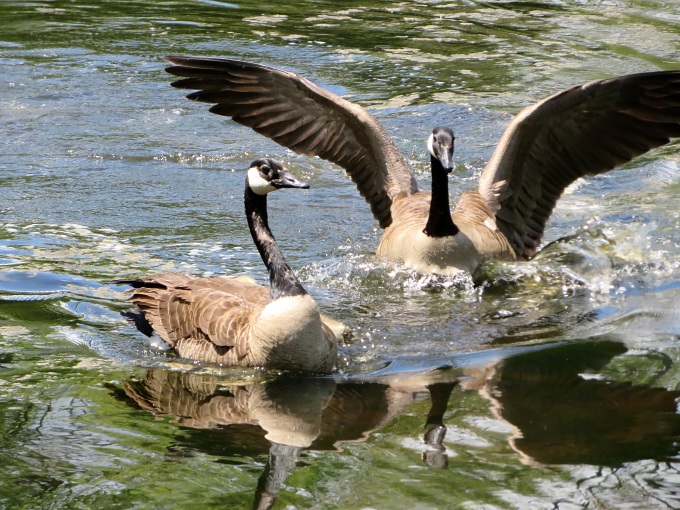
goose couple


Me? I just like watching the Canada geese and their goslings at Bird Park. I try to avoid the poo.


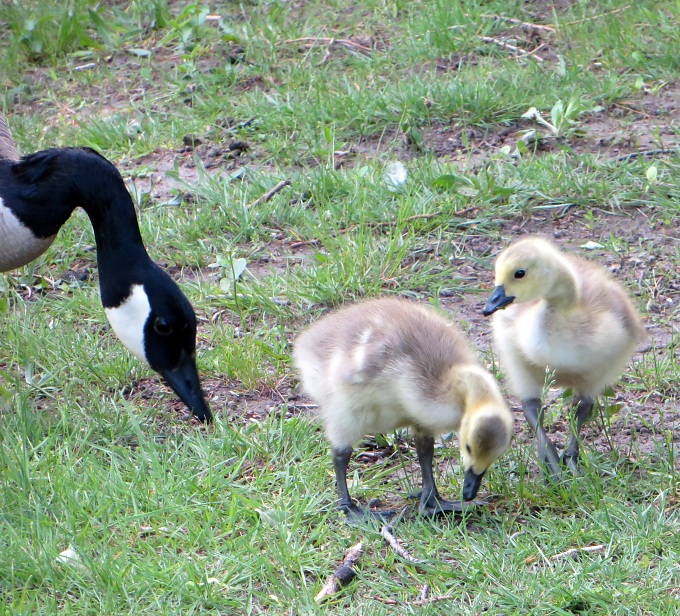
goslings

Mandurah VMRS - Seabird Rescuers

officers  

Sunday morning, the weather bureau was predicting light winds, partly cloudy skies and 4-6 foot (1.5m-2m) waves offshore. I was scheduled to join the Volunteer Marine Rescue Service (VMRS) boat at 0830 as an observer as they went a few miles offshore to release some rehabilitated seabirds, and conditions looked good.

I arrived a few minutes early and introduced myself to the captain, John Blay, and the VMRS Public Relations Officer, Ray Rudland. John has been with the VMRS for 28+ years while Ray was a newbie with only 10 years under his belt. Ray showed me around the 43' (13m) search and rescue vessel, Spirit of Mandurah, while the crew and captain prepped the boat and did the pre-departure checks.


volunteers


A few minutes later, four members of the Western Australian Seabird Rescue (WASR) group arrived with the birds. This organization was started in 2003 and since then has rescued thousands of birds. This past year alone, they were able to rescue 460 birds. The majority of birds they help are shore- based seabirds like gulls, terns, cormorants and pelicans that have had bad encounters with fishing gear. Often, these birds can be unhooked or untangled from the fishing tackle and released. Sometimes, the injuries are more serious, and the bird must be sheltered, fed and treated while it regains its health.

Frequently, migratory seabirds like albatross and giant petrels are washed ashore after a storm. It seems to happen more often to the younger, more inexperienced birds. These guys are weak, dehydrated and disoriented, and unless they receive help, they will most likely die. The WASR volunteers capture and attempt to rehabilitate these birds. Each bird is temporarily adopted while it is fed and re-hydrated. Several of the volunteers have constructed habitats at their homes to shelter the birds, including one aviary that is 45 feet (14m) in diameter and has a pool and two sandy 'beaches'. Some types of birds thrive on chicken carcasses while others must be force fed small fish and squid several times daily. These dedicated volunteers devote a lot of time rehabilitating each bird. If and when one of these migratory birds regains its strength, it is taken offshore and released.


releasing


Today, we would be heading 5-10 nm offshore to release three giant petrels and a sooty shearwater. Each bird was carried aboard in its own carrier and stowed on the aft deck. None of the birds looked all that enthusiastic about taking a boat ride.

Everyone was required to don a PFD and a small radio beacon in the event any of us fell overboard. Once the crew had instructed us on safety precautions and the method of inflating our PFD's, we were ready to cast off. Within a few minutes, we were heading out of the estuary and into the Indian Ocean.


released


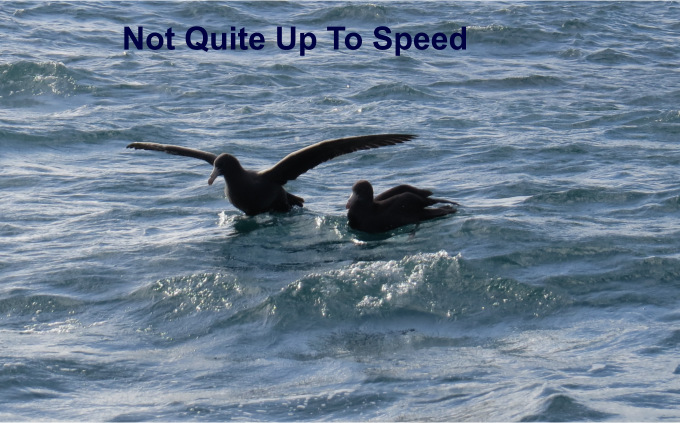
The ride was a little lumpy, but not all that bad. We went about 5nm offshore, then John stopped the boat and each bird was released. The shearwater sat on the surface for a minute or two, then began flying – to the applause of all the volunteers. The giant petrels paddled around, dipping their heads into the water and preening.


not quite up to speed


Large seabirds like albatross and giant petrels are truly wonderful to see when they are flying. We have watched them for hours – days in fact - as they glide over the water with their wingtips only millimeters above the waves. The giant petrels are very large birds with a wingspan of almost 7 feet (210cm), yet they appear to expend almost no effort as they fly. Taking off is a different matter. They beat their huge wings furiously and run along the surface of the water for 50 feet (15m) or so until they gain enough speed to launch themselves into the air. Our petrels seemed in no hurry to fly anywhere. Occasionally, one would make a half-hearted attempt to take off, but then would settle back in the water. Linda, the senior volunteer, explained that the birds began losing strength after only a few days away from the sea. It might take a day or two before they would fly again. In the meantime, they would continue to preen to restore the oils in their feathers, keep hydrated by continually dipping their heads in the water, and building their strength up. They certainly looked happy enough and everyone was optimistic that they would do fine.

We circled our petrels for almost 15 minutes, then reluctantly headed back to Mandurah.

For more information on these two terrific groups of volunteers, visit their websites at:

http://www.waseabirdrescue.com/index.php

https://www.facebook.com/Mandurahwaterrescue