Experiences, Not Things

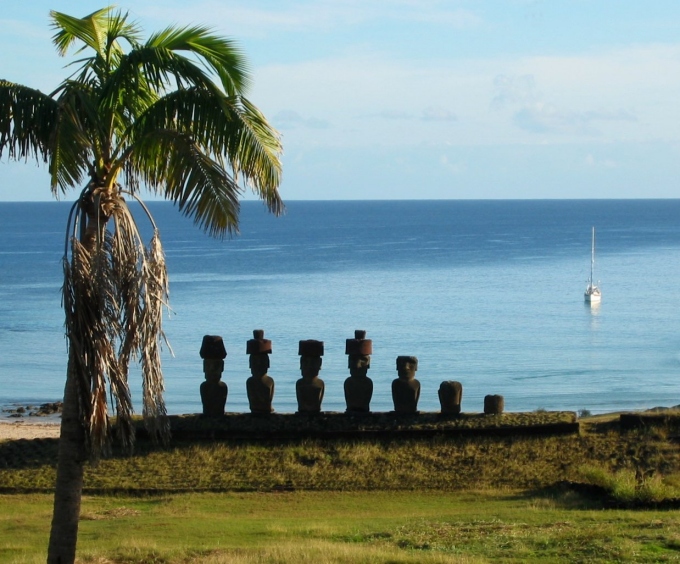
I got sidetracked this morning by one of those list challenges … a list of 100 Places to Visit Before You Die.  Though it was America-centric, as someone else had already pointed out, we'd seen 43 of the 100 places listed. Table Mountain did not make the list, nor did Antarctica though it's probably as accessible nowadays as the Galapagos. I was a bit disconcerted that Walt Disney World Resort was on it, but nevertheless I was pleased  we'd visited as many places as we had. Then, of course, I started wondering how we'd get to the places we hadn't seen yet. easter island
Before departing the USA on Nine of Cups, we agreed that we wanted to visit every one of the 50 US states first. We called it “50 by 50” … 50 states before we were 50 years old. A visit couldn't be just landing in an airport passing through. Preferably, we had to travel in the state and have a meal before we could classify it as a visit. We did it, and though I'm sure we missed more than we saw, we've at least experienced, albeit sometimes in a cursory way, every American state plus Puerto Rico and the American Virgin Islands. We've since done several cross-country trips when heading back to the USA and we look forward to our road trips as much as our ocean passages. I mean how could you not be thrilled by the world's biggest jackalope or the Spam museum … neither of which were on the 100 Places to Visit Before You Die list, by the way.

grand tetons

So often, for many people, visiting a place is no more than ticking off a “been there, done that” list. Traveling by boat does allow us the opportunity and privilege of doing more than saying “Yeah, we stopped there for a day en route to somewhere else.” That said, I'd still rather visit a place, even briefly, than never visit at all, which relates to the topic of this blog post: Experiences, Not Things. After taking the travel challenge, I followed an associated link to a Fast Company article which showed that in the personal happiness department, spending money on experiences trumped buying stuff.

Basically, money can buy happiness to a certain extent. It depends what you choose to spend it on. When you buy stuff … whether it be a new diamond ring, a fancy car or the latest computer gadget, the novelty wears off after having it around awhile … once it's there and familiar, you hardly notice it. Experiences, whether they be an exotic adventure or travel to the city or a visit to the local art museum, stay with you and become part of you. You are the sum of all your experiences … not your stuff. In the long run, experiences increase the happiness quotient longer and more fully than material purchases do. That said, there are certain purchases, like my Canon camera for instance, that help to preserve each memorable experience, and as such, continue to provide happiness.

When we were in Tierra del Fuego, we had the chance to go to Antarctica for 12 days aboard a small research vessel. Though the trip cost was deeply discounted because it was a last minute thing, it was still over $2,000 apiece. We hemmed and hawed at this huge expenditure. This would really put a dent in the budget. In the end, we decided to go for it and though later we gave up some restaurant meals and “stuff”  to mend the  budget deficit, we've never regretted it for a moment. It was other-worldly … a trip of a lifetime and the memories are still vivid in our minds.
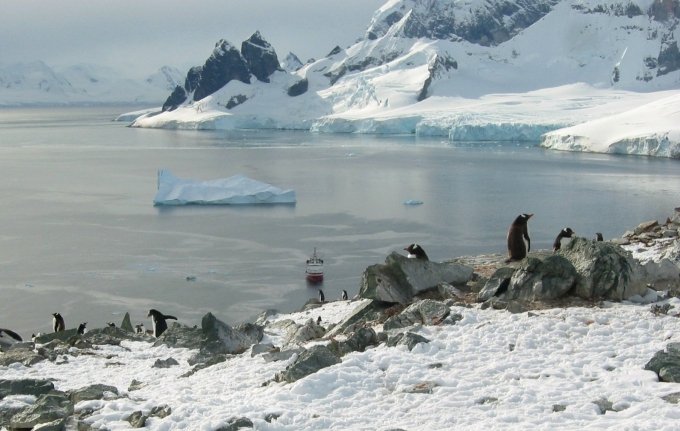
antarctica

So by default, I guess we've made the right decision ... at least for us. We cruise and travel around by sailboat with minimal room for stuff, but lots of capacity and opportunity for unforgettable experiences. Sometimes when we're disappointed or frustrated with boat life or repairs, it's good to remember what this life has given us … and then plan a road trip.
TIA - This is Africa

We've not complained much since we've been in South Africa, mostly because 1) we really love the country and the people and 2) we're visitors and are mindful of that. I guess I did spout out about load shedding once, but overall we've been pretty good. There's an expression here that we've heard time and again … TIA … This is Africa … usually used to explain to non-Africans why things don't always work out as planned or simply don't work at all. Lately, it's been more and more applicable. africa map

At the end of March, David ordered a part from the USA that he was unable to locate in South Africa. He paid for expedited service and the part arrived in Johannesburg within three days. Since that time, we have been waiting for the parcel to be sorted, clear Customs, put on a plane/truck to Cape Town and be delivered to us. Folks at the yacht club have been extremely helpful making calls, trying to locate the package, trying to expedite the processing … all to no avail. One day we hear the package is in Johannesburg, the next day we're told it's already in Cape Town and the day after that … it's in Johannesburg and hasn't cleared Customs yet. Subsequently, we went on a wild goose chase one day when we were told it had been sitting at the local post office for over a week. We spent an hour in the post office, only to be told it was still in Customs up in Johannesburg.

Phone calls to appropriate numbers go unanswered. E-mails are rarely acknowledged and when they are, there is no information available. The on-line tracking program doesn't have the package in the system yet, though it arrived three weeks ago. One woman indicated it was locked in a container at the Cape Town distribution center, but the postal workers were on a work slow-down and she wasn't sure when they'd get around to opening the container. To date, we're really not sure where it is or when or if we'll see it. Frustrating … you bet! But This is Africa.

In Search of Shweshwe

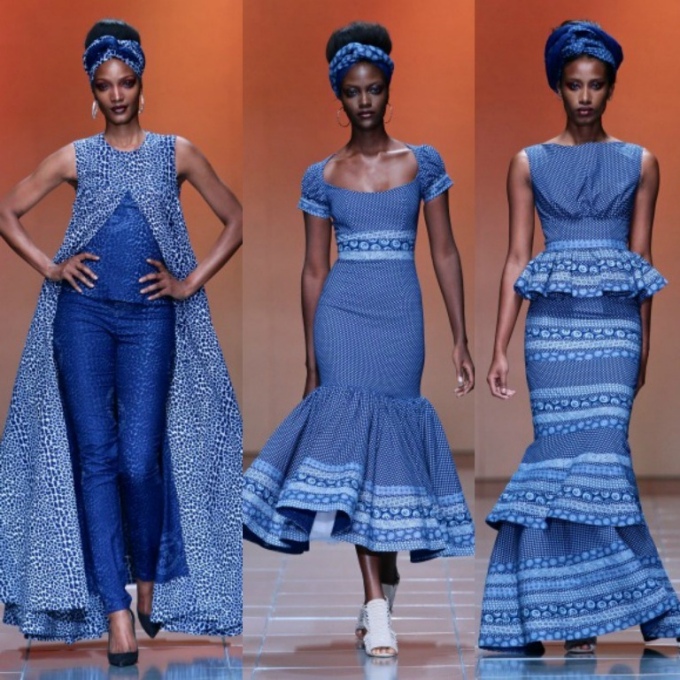
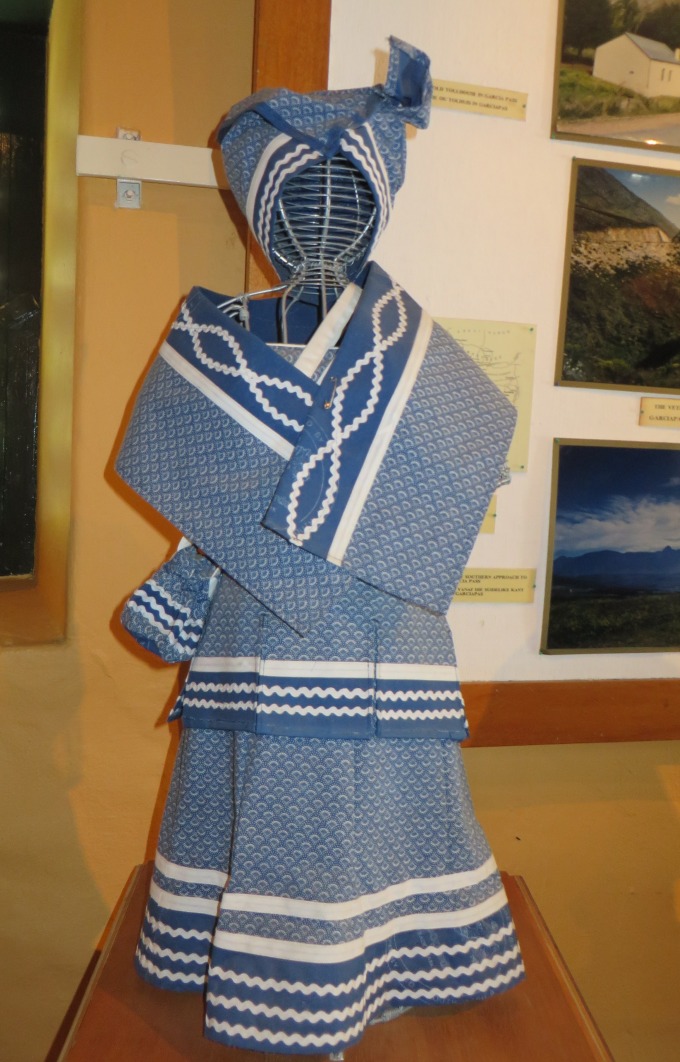
Sometimes I get sidetracked by some trivial thing I see or read about. While at the Dias Museum the other day, I was interested in an exhibit about a unique fabric known as “shweshwe” (shway-shway). It's considered the “denim or tartan of South Africa”, incorporating intricate geometric designs in a range of colors, but more traditionally indigo blue, and manufactured using an acid discharge and roller printing technique on pure 100% cotton calico. dias museum shweshwe display

Evidently, the early German, Dutch and eastern European settlers in South Africa were familiar with “blaudruck” (blue print) fabric, used by peasants and farmers, and brought it to South Africa with them when they emigrated here. The story goes that French missionaries gave Lesotho's King Moshoeshoe I (pronounced Mu-shway-shway) a gift of the blue print fabric in the 1840s. He liked it and it became popular with the locals as well as the immigrants. The name of the fabric was referred to thereafter as shweshwe or isi-shweshwe. Today, the same fabric is even used in high fashion.

high fashion shweshwe

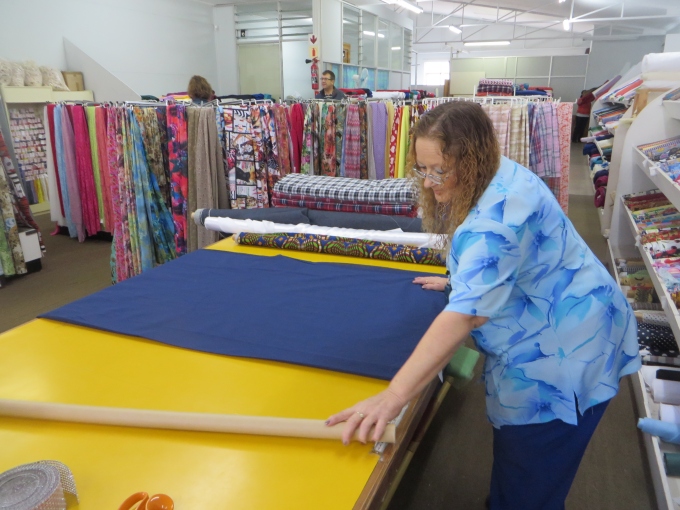
I asked Brigita, a pleasant docent at the Dias Museum, about the current availability of shweshwe. She actually took the time to call around and found a shop right in Mosselbaai that sold it. We visited Lekker Lap Materiale the other day and sure enough, there were several shweshwe colors and prints available.

shweshwe assortment

Corne (Cor-nay) was happy to help. I chose a more traditional blue print and purchased some.

corne cutting fabric

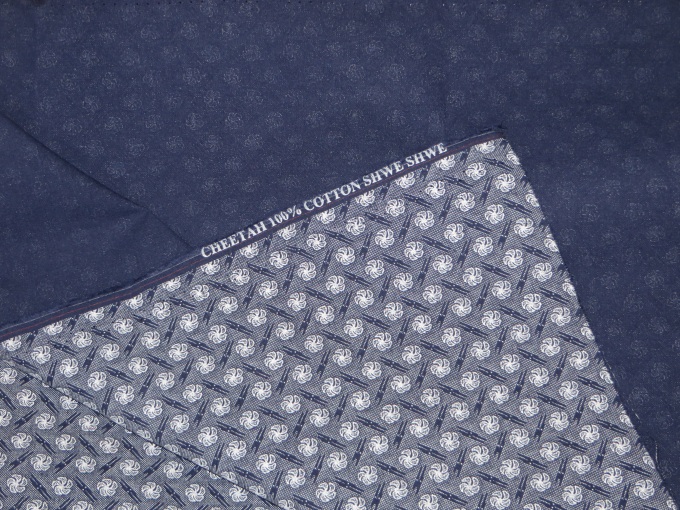
It had the official shweshwe mark on the selvage. I noted that it was printed on one side and solid on the other, one of the characteristics of shweshwe fabric.

officially shweshwe

Used for dresses, skirts, aprons and more, shweshwe is traditionally worn by newly married Xhosa women (makoti) and married Sotho women. After I knew what it was, I reviewed some of the pictures I'd taken of women in traditional dress in Durban and there it was … shweshwe fashion right before my eyes. By the way, evidently it is available in the USA and used primarily as a quilting fabric.

durban women wearing shweshwe

In Eastern Europe, the traditional blaudruck fabric was worn by women as a sign of solidarity during the socialist movement. Here in South Africa, shweshwe was worn as a political statement by white women opposed to Apartheid.

While at the fabric shop, Corne also pointed out a bright, colorful African pattern on a Dutch waxprint fabric (like batik) that was called Mama Africa. How could I resist?

mama africa fabric

So, what will I do with the fabric. Well, I've covered pillows with fabric showing local designs before and made aprons and placemats … Panama, Fiji, New Zealand. This time, however, I haven't given it much thought. It's a souvenir of Mosselbaai and South Africa and I'm sure I'll put it to good use … and it stows more easily than that 8' tall carved giraffe I wanted to buy.