
Hindu Temple in the Sea & Lord Hanuman

When the British abolished slavery in 1833, there was a significant lack of laborers in the Caribbean. Between 1833-1920, over 143,000 Indian workers were sent to Trinidad as indentured laborers to meet the demands. Consequently, there is a high percentage of Indian population on the island and nearly a quarter million of them are Hindus. It only makes sense then that there would be some elaborate Hindu temples on the island. We find Hindu temples to be fascinating. In fact, there are two in particular of note in Waterloo, just south of Port of Spain, and we decided to pay them a visit. sign in trinidad

We knew we were getting close when we started seeing Hindu prayer flags and tiny temples in each yard. We threaded our way (read that … David maneuvered adeptly) through narrow, crowded streets towards the sea and finally came to the Hindu Temple in the Sea.

temple in the sea trinidad


This temple has an interesting history. The indentured laborer, Sewdass Sadhu, came to Trinidad in 1907. He was a devout Hindu and wished to build a temple. He built his first temple in 1947 on land owned by the sugar cane company for which he worked. The company ordered it torn down, charged Sadhu with trespassing, fined him $500 (2 year's wages) and jailed him for 14 days. A determined man, he figured if he couldn’t build his temple on the land, then he would build it in the sea, and thus Sadhu's dream to rebuild his temple began to take shape.

sewdass sadhu statue trinidad

With two buckets and an old lady’s bicycle with a carrier on the back, Sadhu began the laborious task of building the temple in the sea … 500 feet into the swamp land of the Gulf of Paria. For 25 years, he worked at building his temple and with the help of local people, businesses and a government grant, it continues today to be a place of worship and serenity. A great testament to the devotion and tenacity of the human spirit.

hanuman temple entrance trinidad

A prayer ceremony was in progress when we arrived which we did not want to disturb. We quietly removed our shoes and walked around the outside of the temple, peeking in discreetly for a look at the elaborate decoration within.

temple in the sea trinidad


We headed back inland to find Lord Hanuman, the Monkey King. We were familiar with several Hindu gods, but not Hanuman. It seems that he is regarded as a perfect symbol of selflessness and loyalty. The 85' murti (statue) of Lord Hanuman is reputed to be the largest outside of India.

lord hanuman trinidad

Lord Hanuman towers over the Dattatreya Temple and Yoga Centre, “built according to the Dravidian style of architecture of South India”. It's an elaborate building, guarded by two large elephants at the entrance. Photos were not allowed inside the temple, but after removing our shoes, we walked quietly inside, admiring the intricate and colorful individual temples to various Hindu deities. Fruit and other small offerings were placed in front of each temple.

hindutemple_small hanuman temple

A small store sold souvenirs of the temple, but mostly provided incense and candles for prayer ceremonies.

incense to buy

We had a leisurely lunch in the small town of Carapichaima, then headed north to meet our guide for a late afternoon boat tour of the Caroni Swamp and a look at the scarlet ibis. Wear plenty of sunscreen, insect repellent and a hat and come on along.
Working on Island Time

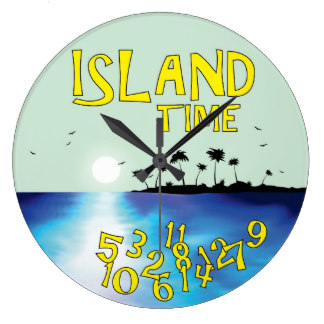
island_time_clock The Urban Dictionary defines island time as “the time vacuum created by the ocean's presence. Similar to stoner's time, everything moves nice and slow. This carefree aura even has the ability to travel with islanders and can engulf you in their presence.” Perhaps it's being surrounded by the Caribbean Sea and seeing palm trees sway lazily in the breeze or perhaps it's the hot, humid, sultry weather that sucks the energy out of you that accounts for the laid-back attitude and slow way of life here. Things don't happen quickly in Trinidad. We're definitely working on island time here.

People never rush. When they walk, they saunter or amble. There's no swift pace involved … no running. Even the traffic moves slowly … many times at a crawl for no apparent reason … but you rarely see road rage or angry faces on the drivers. So what … traffic is moving slowly … oh, well … we'll get there eventually. The cause of the traffic jam could be a huge pothole in the road or a broken-down bus or just as likely two cars heading in opposite directions stopped on the two lane road for a quick chat. Schedules and appointments are more of a suggestion than they are an actual timetable to which folks adhere.

In a country that has 17 national holidays (that's more than three business weeks of holidays – and that's not counting Carnaval), it's easy to understand the slow pace and delays, but it's especially difficult to deal with if you're relying on people to get projects completed “on time”, because “on time” has little meaning here. Things get done when they get done.

For cruisers, this is a frustrating issue. There seems to be no urgency about anything and, of course, for us everything is urgent. We want to get done and get back in the water. Case in point is David has been waiting for tradesmen to show up for estimates and project work. “I'll be there in an hour or so”, they tell him. The critical words “or so” mean perhaps sometime in the future. It's kind of like “just now” in South Africa. When they haven't shown up after a couple of hours and David calls, they promise “anytime now” which means sometime later in the day. We haven't figured out the American English equivalent for “now” which actually means “NOW!” We're not sure that word exists.

As a result, it's impossible to schedule more than one task a day and sometimes even the one doesn't get accomplished. Work on Nine of Cups is progressing more slowly than we'd hoped. Several projects, like pulling the prop shaft and removing the old sea cock from the engine through-hull, require more specialized tools than we have aboard. (I have trouble imagining a tool that David does not have). Since one task or project relies on another to be finished before starting a new one, we find ourselves getting “behinder and behinder”. The calendar days are quickly being eaten up and May 1st, our anticipated departure day, will be here before we know it.

Perhaps it's time to consider putting Plan B down on paper?

Shouter Baptist Liberation Day in Trinidad

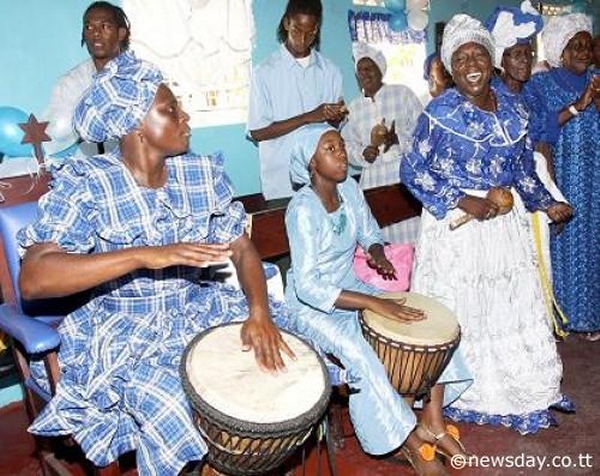
After celebrating the Easter holiday for two days at the end of last week and both Sunday and Monday of this week, the country is closed down again today for yet another religious holiday, Spiritual Shouter Baptist Liberation Day! That's a mouthful and I really had to research a bit to figure out exactly what the country was celebrating. The Spiritual Shouter Baptist religion, a melding of Protestant Christianity and old African doctrines and rituals, is a unique religion and indigenous to Trinidad and Tobago. Today's public holiday commemorates the 1951 repeal of a 1917 Trini law that prohibited the activities of the Shouter Baptist faith. shouter baptists drumming and singing

The derogatory name “Shouter” was given to the participants because of their tendency to shout, clap and sing loudly. Not so different than the reason the Quakers were named “Quakers” (they trembled at the word of the Lord) and the Shakers (shaking Quakers) were called “Shakers”, “because of their ecstatic behavior during worship services.” It doesn't sound much different than a good old evangelistic “come to Jesus” revival meeting under a tent in rural America. People live, feel and express their religion in many different ways. Some more enthusiastically than others. According to Trinidad's National Library and Info Center … “It has managed to fuse the spontaneity and rhythms of Africa with the restrained, traditional tenets of Christianity to produce a religion that is vibrant, expressive and dynamic.

shouter baptist bell ringing and singing

From 1917 to 1951 the Spiritual and Shouter Baptist faith was banned in Trinidad by the colonial government of the day. The legislation to enact this ban was called the Shouters Prohibition Ordinance and it was passed on 16 November 1917. The reason given? “Shouters made too much noise with their loud singing and bell ringing and disturbed the peace.” The real reason? Plantation owners and officials were afraid that such religious solidarity would cause unity with the laborers, as well as foster and preserve African rituals. They wanted to subdue it before it got out of hand. The Shouters persevered in spite of the ban and harsh punishment. The religion survives today, not only in Trinidad and Tobago, but on other Caribbean islands as well.

So there's lots of lively singing and bell ringing and dancing involved. Participants dress in traditional, brightly colored garb and celebrate their ability to practice their religion freely. A great way to celebrate, however we'll miss out on the activities in the boatyard. No fear, however, we've found a YouTube that shows what's going on. As for holidays in Trinidad? With 17 public holidays, not counting the days taken for Carnival, I think we'll find one to celebrate before we leave.