Reading the Travel Section

panama molas  

We read the Boston Globe everyday since we've been back in the States. I especially like the Sunday paper. It's chock full of ideas for blog posts. I always migrate to the Travel Section first since we're not traveling at the moment and I'm missing it. I have to admit, however, though the exotic places sound wonderful, the description of the offered tours make me cringe.


travel ads


“Six nights, seven days … See Peru!” Really? It's a whole country, for heaven's sake, with such diversity you'd be hard pressed to see it over a period of months. “Tahiti in 5 days!” Never! And therein lies the rub. We're spoiled. We visit a country and plan on staying awhile, maybe even a year or more. When you travel with a tour or a package deal, it's a quick look-see with lots of other people and then you're off to another destination or heading home. “If it's Tuesday, it must be Belgium.” It's all a blur.

When you travel on a boat, you arrive and you settle in for awhile. You get to know the locals. You know where the best veggies are and where the diesel fuel is the cheapest. You don't stay at resorts; you bring your home with you or you travel on the cheap to make your dollars go as far as they possibly can … and you don't mind at all. You know the shortcuts into town. You know where to catch the bus and when. You start tasting the flavor of the place. Not the commercial, spoon-fed, tourist-packaged flavor, but the real thing.


travel ad


We've often thought that the next best thing to traveling to a new country in a boat would be to rent an apartment there for a few months or maybe even a year. When we were in Panama and wandering around in Panama City, we discovered some lovely sections of the city that had reasonably priced apartments. A day visit on a cruise ship wouldn't have gotten us past the Canal and souvenir vendors. What a great adventure it would have been to live there for an extended period of time and use it as a base of operations for exploring the region. What a great way to learn the culture and meet the people. Maybe when we are too old to be hoisting sails and braving gales, we will take up this lifestyle.

All that said, if you can't travel on your own boat and if you can't manage an extended stay in a new and exotic country, tour travel beats no travel at all.

8 Reasons to Join a Cruising Club...like SSCA

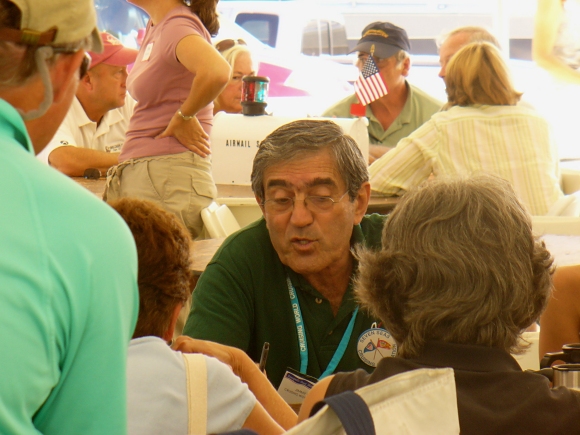
We're not usually “club” people. We're not exactly anti-social. We like to join in once in awhile, but we're not inveterate “joiners”, if you know what I mean. That said, when we first started living aboard, we joined SSCA … Seven Seas Cruising Association. Quite honestly, we didn't know such organizations existed until we started chatting with other liveaboards and cruisers and they suggested we check it out. We did, we joined and 12 years later, we're still active members. Why join a cruising club? Here are the reasons we joined. 1.  Learn from people with more and/or different experience.

learning from experienceJust starting out, there was so much to learn and we were keen to learn everything we could about sailing and “the life”. But we've found that no matter how experienced you are, there's always someone with either more or different experiences. Sometimes gleaning just one little tidbit of useful information is priceless.

2. Share lifestyle notes with folks currently doing what we are doing.

Not everyone embraces this type of alternative lifestyle. It's interesting to meet other like-minded folks and trade information … and tall tales. “How do you manage your night watches?” “How big was that wave?”

3. Receive ongoing boating/sailing educational opportunities.

A good cruising association will provide opportunities to learn new skills, as well as enhance and hone your current skills whether it be docking, sail trim or engine maintenance. With advances in the internet, many of these learning opportunities are no farther away than your computer. Check out Seven Seas U.

4. Promotes camaraderie.

Again, we're not party people, but seeing a familiar burgee flying in the anchorage when you first arrive is always a welcome sight. We usually raise our SSCA burgee as soon as we're settled. Invariably, if there are members around, they'll stop by to say hi and offer local information. We, of course, reciprocate when we can.

5. Facilitates contacts in new ports.

new portIt's great to be able to contact people in foreign ports in advance of arrival to find out what services and amenities might be available. If your cruising club is large enough, they'll have several contacts worldwide that can help you out when you arrive. SSCA has about 150+ Cruising Station Hosts in the USA and abroad and we've been in contact with a good many of them.

6. Offers discounts for services, equipment, marinas, etc.

We try to take advantage of every discount opportunity we possibly can. Each shekel saved is a penny for the cruising kitty. Most large organizations can negotiate discounts for their members. We especially like marina discounts, stuff like Sailblogs discounts (25%) and free magazine downloads.

7. Receive unbiased feedback on gear and equipment from other cruisers.

Whenever we're making a major buying decision for new equipment or gear, David does an inordinate amount of research first. One place he checks is SSCA's Equipment Survey to see what other cruisers think about we're thinking of buying. Nothing like getting the skinny from another sailor who's actually using the stuff.

8. Access to port and destination information.

destinationsCommercial cruising guides are great and we use them all the time, but again, there's nothing like having access to a fellow cruiser who's been to a port to which you're heading, especially if he's documented all the services and amenities he used while there. Using SSCA's searchable index by geographic location allows us to see what's been written about a topic or location for the past decade. Quite honestly, it's a key ingredient to researching where we might go next.

Keep in mind, you tend to get out of something, what you put into it. We've remained active with SSCA because we enjoy sharing information as well as getting information. We joined a second, somewhat more exclusive cruising club along the way, but the membership dues were way out of line with our budget. We found that though their quarterly magazines were in beautiful color and on glossy stock, we rarely got to see them because they weren't digital and we certainly had no intention of paying extra postage to have them mailed to us wherever we were. Before you join, figure out why you're joining and what you're hoping to get out of your membership and make sure the cruising organization you choose meets all of your criteria. Also consider what you might contribute to others who follow in your wake.

Thinking Ahead

Recently while chatting with a young couple who want to go cruising someday, they commented on how much advanced planning or organization was necessary to live on a boat full time. I got to thinking about that, because some things are definitely well-planned in advance and if it's important, it goes on a list.  

provisions


Fuel, food, water and propane probably top the “thinking ahead” list just before leaving for a passage. These are the basic biggies for advanced planning, but there seem to be a zillion other little things to think about. The assumption is, of course, that the boat is shipshape and ready to go before we even consider heading out.

Spare boat parts usually fall into David's bailiwick. How many spare parts are enough? (This will be a Blue View blog post on its own.) Keeping track of what we've used and what needs to be purchased is a joint effort. We keep a running list in a special notebook of ordering details and specifics on just about everything in the boat from oil filters and zinc anodes to spare starters and alternators. There are so many systems on the boat, keeping track of all the spare parts and their locations can be a challenge (another future blog post?). One fellow we met said “Why keep spare parts aboard when you can order them and have them shipped anywhere in the world?”. He obviously never spent time in the Patagonian Canals or crossed an ocean when something broke and needed replacing … immediately.


varnishing


While we're on the subject of parts, project planning requires that we have all supplies necessary in advance of beginning the project. Whether it be varnish and brushes for brightwork maintenance or epoxy, timber and paint for planned deck repairs, everything has to be aboard before the project is begun because we can't always assume what we need will be available in our ports of call. Repairing the decks and doing a yearly varnish job in Vanuatu were perfect examples of this.

There are other little things to consider in advance like making sure the laundry gets done at the last possible minute before we leave because I never know where and when I might have the chance to do it again other than by hand. Or, if we plan to use the freezer, defrosting it well enough in advance, so that it's ice-free and back down to temperature in time for everything to be frozen solid before we leave, but not so far in advance that it's frosted over again.

Thinking ahead might not have anything to do with a passage, like figuring out if something will fit in the boat before we buy it. One example was our Franken-mattress. We knew we'd have to modify it in order to get it through the companionway. What we didn't think about was whether all the sheets we currently had would fit it once it was modified. The new mattress is considerably thicker than the old one. We lucked out because the sheets we have accommodated the new mattress. Otherwise, we would have had to reluctantly purchase new bed linens (called manchesters in NZ and Australia, by the way).

Minor issues like whether a turkey will fit into our little oven or whether something will fit into the fridge can seem major if you've already bought the turkey and have no place to put it. It's important to have enough of everything, but it's a problem when there's too much. Even though we have adequate stowage space, there's only so much room available on the boat. No building an extra tool shed or renting extra storage space; it's all got to fit.


canning


Anything requiring lots of water needs to be done while we're at a dock. Whether it be washing down the boat, making a batch of brew or canning (preserving), it needs to be done while we have ample fresh water available. Same goes for power-intensive projects. When we're generating our own power, it's more difficult to get a sewing project done or for David to be drilling or using power tools. In an emergency, no problem, but using up power just to complete a casual chore, not so much.

While in larger ports where medical care is available and accessible, we usually plan our dental visits, eye exams and whatever else is required. Once we're at sea or in remote little towns or islands, we've missed our window of opportunity.

Also while in port, we make the most of internet availability, doing research on places we'll visit, downloading maps and other cruiser's notes on ports along the way, sending photos, etc. Though we have SailMail at sea, it only supports text email (not internet) and we can't send or receive attachments.


holidays


Then there's planning for holidays. Sounds frivolous, I guess, but it's really not if you'll be at sea for a holiday and you want something special on hand. We've been at sea on Thanksgiving, Easter, for birthdays and several other holidays. If I want to prepare a special meal or bake something for the occasion, making sure that I've got all the ingredients and accompaniments aboard are important.

What about thinking ahead to birthdays and holidays back in the States or bills that need to be paid. If we know we'll be out of internet range, we make sure all gifts, cards and definitely credit card payments are scheduled in advance. Having internet, by the way, has been a Godsend when it comes to ordering gifts on line, sending e-cards and sending electronic checks and payments.

Probably one of the most difficult aspects of planning ahead is where we intend go next. It seems that we rarely keep to a plan. If we did, we would have completed at least two circumnavigations by now instead of working on completion of our first. There's thinking ahead and then there's actually doing what you thought about.