The Learning Curve

learning curve  

Some folks have been sailing their whole lives. As kids, they learned basic sailing skills and the rules of boating safety and felt comfortable on sailboats. Not us … we learned most everything we know since we were in our mid-40's. That's a significant amount of information for these old minds to absorb and hopefully maintain. We're living proof that it's possible, but the learning curve is definitely steep.

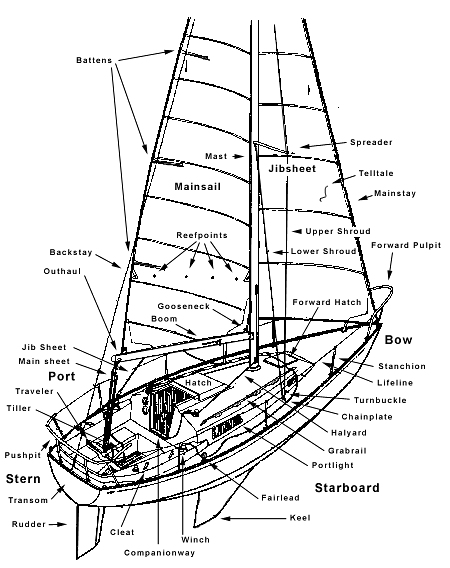
There's so much to learn. Nothing on a boat has a name even remotely similar to the same things on land. It's the galley...not the kitchen. The saloon...not the dining area. The head...not the bathroom. Closets are lockers. The couch is a settee. The floor is the sole. The ceiling is the header and the stairs are always called the ladder. A window is a portlight, unless it opens, then it's a porthole. There's rigging (standing and running) ... port and starboard...forward and aft and midships ... bow and stern. It's never-ending. That's the easy part.

There's the gear we use...VHF (very high frequency) radio for communicating with other sailors and folks on land who also have VHFs; the GPS (global positioning system) which tells us where we are and gives us a heading and bearing for where we want to go. There's the SSB (single side band) radio for long distance communication and email and the AIS (Automatic Identification System) which lets us know who's near us out there in the big ocean. The chartplotter, radar, the watermaker, the voltage monitor, depth monitor, speedometer (over land as well as through the water), anemometer, barometer, wind generators, solar panels … the list goes on and on. Learning how to use all this gear is key to safety and comfort aboard, but whew! It's exhausting if it's all new.
 

boat parts


Let's add to the mix a diesel engine; a 12V electrical system; marine plumbing, hydraulic steering, autopilot and refrigeration; varnishing, fiberglass repair and maintenance, sail configurations and maintenance. The list of required competencies just goes on and on just to maintain the boat and keep it afloat. Oh, yeah, and then there's actually sailing the boat, mooring, anchoring, weathering storms. Okay, okay … you get the picture. Take a breath!

How do aspiring sailors learn it all? It takes time, patience, perseverance and a little bit of courage. The learning never ends. We took classes on sailing, navigation, charting, weather forecasting and healthcare at sea. We chartered sailboats and got a feel for the live-aboard life, although nothing prepares you for the real thing. We learned lots of ancillary things, too. We got our HAM licenses for radio operation. We learned to SCUBA and got certified. We took refresher courses in first aid. We learned about currents, tides, stars and marine life. We bought tons of books on everything from carving to canning … electrical systems to shell identification. We read, studied, learned, tried. We joined SSCA, went to gams and seminars and started asking questions of more experienced sailors who were patiently willing to chat with “newbies” and give informative answers. Mostly, you just have to be willing to try things, be adaptable and very innovative.

The learning curve is definitely steep and we made and continue to make mistakes; we continue to learn . But, oh man, the rewards of a liveaboard, cruising life are out of this world.
Superstitious Sailors

giving neptunes his tot of rum  

We sailors are a very superstitious lot, to the point of the ridiculous sometimes. We talked about refusing to be hauled on a Friday. We've delayed trips so as not to leave on a Friday. We hove-to off Pitcairn Island for five hours one time, then set sail at 12:01 am, so we didn't leave on a Friday. It was a good trip, so who knows if waiting made sense or not?

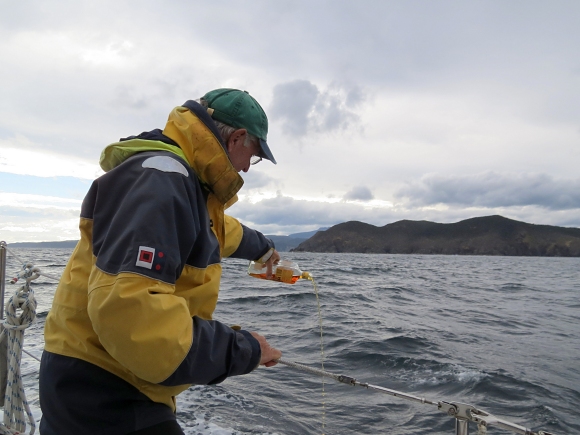
We always give Neptune a tot of rum when we leave on a passage and when we complete a passage. It doesn't hurt to ask for a little extra protection when you're out there. So far nothing fatal has occurred, so we're thinking it works. We were out of rum on a trip from Florida to Panama one time and toasted him with vodka instead. Evidently vodka is not one of his favorites because we had a rotten trip. The weather was crappy and the rudder arm broke as we were approaching the entrance to the Panama Canal zone. Though David jury-rigged it and we arrived safely, there were a few challenging moments … all because we didn't have rum.

Renaming the boat was a major undertaking because it's considered the height of bad luck. We took the risk because the old name (that which is never mentioned) was not a good one. According to some, the only way to avoid bad luck when renaming a boat is to burn the boat to the waterline. That didn't seem like a viable option, so we had to do a considerable amount of research to come up with some reasonable ways to rename our new home and still stay in Neptune's good graces. It turned out that we had to de-name the boat in one ceremony first and then re-name it in a second ceremony. The more you know, huh?


denaming ceremony


The de-naming ceremony required us to take everything off the boat (including the name on the transom) that bore the previous name except for one piece of paper. After thanking Neptune for having kept the boat safe with its old name, David burned the final piece of paper and threw the ashes into the sea. The renaming ceremony was a bit more complicated and included, but was not limited to, a lock of hair from a red-haired virgin tied around a rabbit's foot, a bucket of sea water and copious amounts of champagne. During the ceremony, David asked Neptune to accept the new name of the boat and protect her and her crew. Not sure if it was the red hair, the rabbit's foot or the champagne, but who cares? So far, it's worked. We'll talk more about these ceremonies in another blog post.


superstition no nos


We don't adhere to many of the other sailor's superstitions, and there are quite a number of them. Never cut your hair or your nails on a boat … these are considered offerings to other gods and Neptune will get jealous. No fresh flowers … funerals at sea. No whistling...it encourages the wind to blow. Rabbits are bad luck...but we're not sure why (reminds sailors that they haven't had any in awhile?). No bananas … who knows why, maybe you can slip on a banana peel?


good luck


Killing an albatross is bad luck (as if). Killing a seagull is bad luck ...they're the souls of men who have died at sea. Seeing a swallow at sea is good luck … it means you're close to land. Cats on board are good luck … they kill rodents (and potentially provide one extra meal...just kidding). Dolphins swimming beside the boat are good luck … they relay Neptune's greetings and we like this one.


keeping the captain happy


Women on board are considered bad luck. I think it's because they caused hard feelings between the crewmen who didn't have women for long months and those who were smiling more often. All I know is that on this boat, a woman (and I do mean singular woman, not women) is good luck and keeps the captain happy.

Crossing the Line - A Special Celebration at Sea

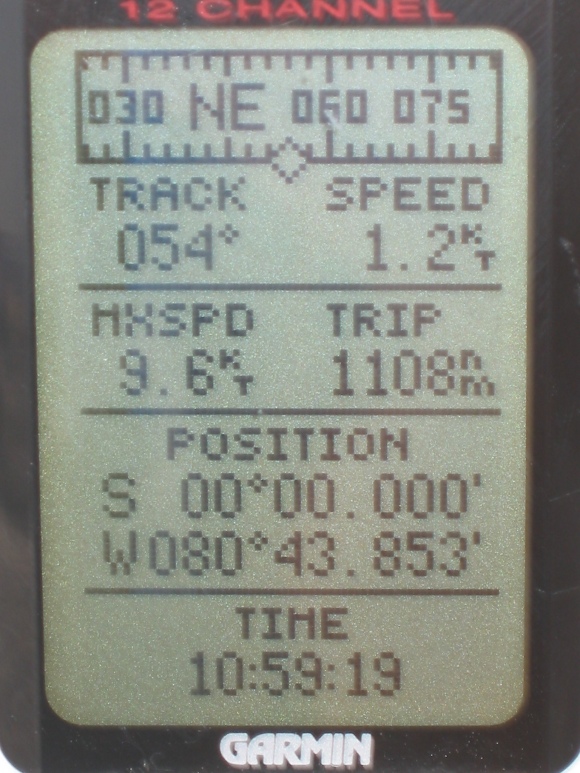
gps at the equator  

Some celebrations are very special at sea and reserved expressly for sailors. Crossing the equator, known by sailors as “crossing the line”, is one of them. That imaginary (or is it?) line encircling the world and stretching some 25,000 miles (24,901 miles/ 40,075 km to be more exact) is cause for joy when you're in a boat. You're heading into a new hemisphere. The GPS latitude changes from N to S (or vice versa) and there's a chance you'll have to begin hanging from your toes to hold on if you're heading south.


tribute to neptune


The first time we crossed the line, we celebrated in a rather lackluster manner, mostly because it was in the middle of the night. David was on watch. He woke me. He gave Neptune his token tot of rum. I snapped a photo at 0º latitude and went back to sleep. In truth, we had to cross a couple of times to get the exact 0.00º reading on the GPS. That was the extent of the excitement though. We were heading to Ecuador at the time, which in Spanish, by the way, actually translates to Equator.

When our friend, John, joined Nine of Cups as our crew mate and we sailed from Salinas, Ecuador to the Galapagos, we specifically went a few miles north out of way to cross the Equator once again. This time we celebrated in earnest. If you've never crossed the equator, you're a slimy “pollywog”. Once having crossed and gone through the initiation ceremony aboard, you become a trusty “shellback” and member of King Neptune's Court.

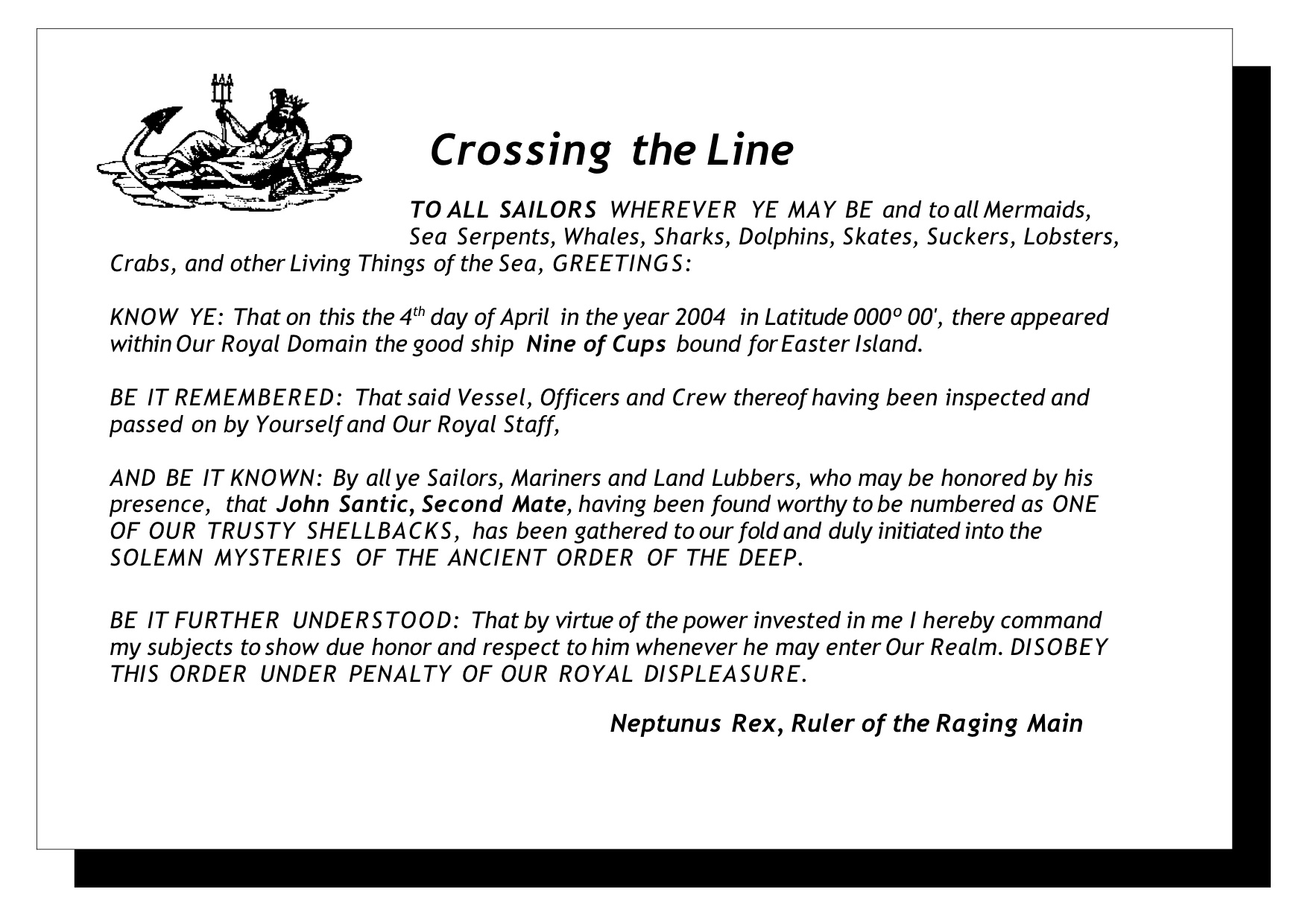
So what does the initiation ceremony entail? On naval ships, it's quite the elaborate the procedure. On Nine of Cups, we were a bit more reasonable. At least we thought so. First of all, Neptune received another tot of rum as we crossed the line. John had to make and serve us breakfast, name five “animals” on Nine of Cups (gooseneck, wildcat, etc), compose an appropriate song and sing it to us and kiss the belly (that would be Jelly's furry belly). Being the good sport he is, he complied without complaint. Good thing, because walking the plank was the alternate choice! Read more on John's website. For all his efforts, he was rewarded with an official Crossing the Line Certificate … suitable for framing.


Crossing the line certificate


Trivia: You become a Golden Shellback when you cross the Equator and International Dateline (0° Lat/180° Long) at the same time. Then there's the ultimate crossing at the so-called Golden X, the point at which the Equator and the Prime Meridian meet (0° Lat/0° Long). All those crossing at this point become initiated as an Emerald (USA) or Royal Diamond (Britain) Shellbacks. Aboard Nine of Cups, we are mere Shellbacks, but very trusty .

Have you crossed the Equator? How did you celebrate?