
Cleaning the Boat

hull cleaning  

The topic of cleaning your boat is always an interesting one when cruisers get together. Everyone has a special product they really like or really hate and there's no dearth of opinions. First of all, when it comes to cleaning Nine of Cups, it's a bit different than cleaning your land-based house (unless it's a houseboat). We originally bought every product under the sun that promised to keep the stainless from oxidizing, the topsides shining and the teak soles beautiful. Some worked; most didn't. When we left the USA, many of the products that did work were no longer available or so expensive to purchase, we had to find alternatives. We've changed our philosophy. Now we keep it simple. Simple doesn't mean we don't buy any specialty products, but it does mean we've cut back drastically on what we do buy.
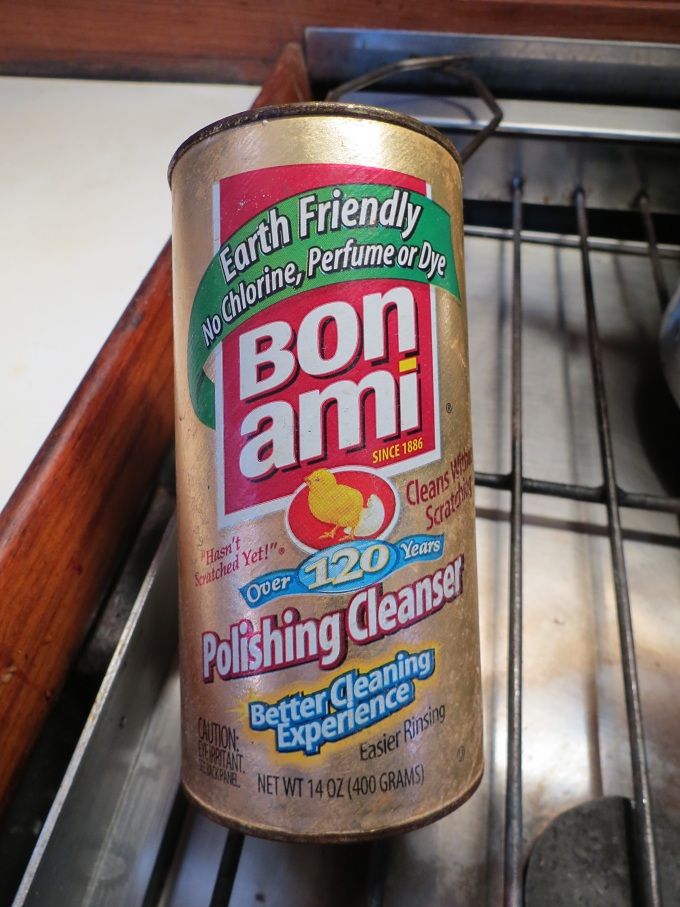
 

bon ami


Down below I use copious amounts of Bon Ami, a powdered cleanser that “hasn't scratched yet.” Bon Ami (pronounced bone-amee, I'm afraid) works well for the stainless sinks, the stovetop and oven. I use it for scrubbing pans (no rusty SOS pads for me) and apply a paste of it to clean off any baked-on gunk or grease. It's cheap and easily stowed … and most importantly, it works.

White vinegar is my primary cleaning agent of choice for wiping down the insides of lockers to get rid of and/or control mold and mildew. I also use vinegar for cleaning mirrors, port lights, washing floors, making pickles, in place of eggs when I'm running out, and rinsing my hair if I don't have conditioner. I like vinegar … it's versatile, cheap, effective and available everywhere we go.

Bleach is used aboard, primarily in laundry applications and to purify water that we haven't made ourselves and which might be suspect because of its source.
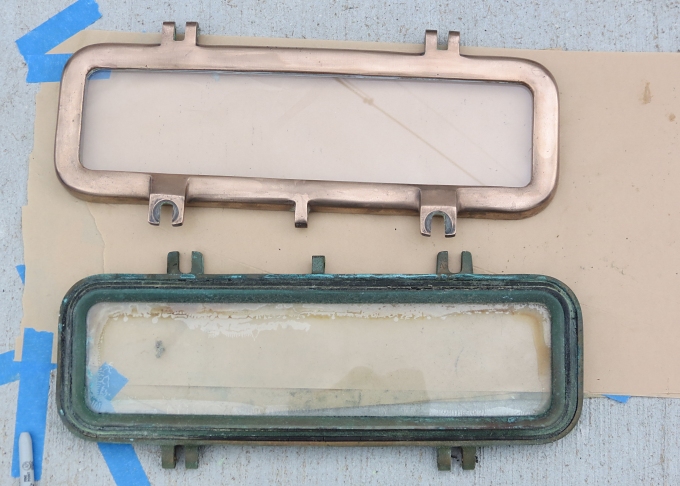
 

porlight frames


Cleaning bronze porthole frames used to be a pain (and still is) to the point I preferred verdigris to the aggravation of trying to clean them. Bar Tenders Helper didn't work. We tried malt vinegar on advice from a fellow cruiser, but that didn't work well either, nor did any of the specialty metal cleaners, waxes and polishes. When we last replaced the plexiglass in the portholes, we soaked them in muriatic acid to remove all the built-up oxidation. We now use Grunt (see below) regularly to keep the portholes more presentable. It's still a hassle, but it works.
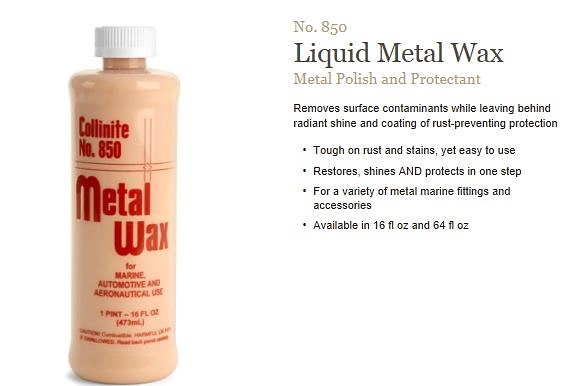
 

collinite


Keeping the stainless shiny and stain-less is a shared responsibility. We've tried all sorts of products and the one that seems to work the best for us is Collinite Liquid Metal Wax #850. It's a beige-colored cream that you smear on and wipe off. It doesn't take much elbow grease and the results are great. We've been using it for nearly a decade. A bottle lasts a long time (either it's good or we don't clean the stainless as often as we should) and I usually bring back one or two in my luggage whenever I visit the States. When the stainless is really, really bad, we sometimes clean it first with Grunt (see below) and then apply the wax after. That is usually done when it's David's turn to clean the stainless. He tends to be a bit more meticulous than I. (Go figure!)

 

mothers


For the topsides, David uses a light detergent to wash off the dirt and marks, then cleans and waxes them with Mothers California Gold Carnauba Wash and Wax. Once in awhile when we're in an area with a lot of tannin in the water, our white topsides and waterline become stained a rusty brown. David uses a commercial waterline cleaner to remove the stains from our white hull and then puts Mothers to work.

For the decks, which are now painted, we use plain old soap and water ... liquid detergent works just fine. If there are stubborn stains, we use an appropriate cleaner to remove them first … maybe a good rust remover (Grunt) or sometimes just Bon Ami, for seagull poop stains (yuck).

We found a few winners in our travels that we stocked up on at the time, but can't seem to find anywhere else. One example is Sufox from Ecuador which I believe is phosphoric acid. We use it frequently for soaking rusted, corroded or oxidized parts. Letting stainless hardware and fittings soak a few days in Sufox makes them as shiny as new. Another is GRUNT from New Zealand, a gel we use for removing heavy rust stains from stainless, fiberglass or even lines and clothing. It also works well to remove oxidation from bronze parts.

We have very little teak that isn't varnished, but we do have some. To keep it looking good, every two months or so, we use a very soft bristled brush and fresh water to give it a light scrub, then rinse it with water. We make sure to only work the brush across the grain – never with the grain.

We paint the hull below the waterline with an ablative anti-fouling paint, alternating colors each time we paint, so we can tell when the old paint is wearing off. Of course, if there's a reef growing on the bottom of the boat, that might be an indicator that the anti-fouling is not working or we've stuck around too long in one place. The only cleaner for that? a haul-out or more likely elbow grease, of which we have an ample supply.

9 Ways to Network with Other Cruisers

pot luck  

It's easy to get overwhelmed when you first start cruising. Never mind the boat and sailing, what about figuring out where to go, how to clear in, where to clear in and whether there's any fuel available where you're going? How do you figure out where the marinas are and whether it's a safe place to be? Oh, sure, you can buy or borrow a cruising guide, but they're usually outdated as soon as they're printed. The answer unequivocally is cruiser networking. If you haven't been there, someone usually has or they know someone that has. Cruisers willingly share information with each other. Once you've been there, you'll be expected to share information, too.

There are lots of avenues for cruiser networking. Some just tend to come naturally after you've been out there for any length of time and others may take some effort, but are definitely worth your while. Here's our list of the top ways for new cruisers to network and gather information for destinations they might want to visit, equipment they're considering buying or just some insight on a niggling problem.

1. Join SSCA or a cruising club

ssca websiteI know we've blogged about this before, but there's no better way to network than to meet like-minded people who share the same enthusiasm for cruising, adventure and travel and have information to share. SSCA publishes a 44-page monthly Bulletin which is full of information on just about any sailing destination in the world. The past issues are available on a searchable CD. It's pretty easy to find information on most any place or subject you want to know about. They also provide Port Guides for many places in the world.

2. Join an online group

There's lots of on-line information shared by cruisers that's readily available, especially if you're heading where several other people are heading. If you're crossing the Pacific, for instance, consider the Yahoo Puddle Jumpers group for lots of tips, ideas, and stops along the way or check out Latitude 38's Pacific crossing guide.

3. Participate in a rally or a potluck or a gam

These can be formal, costly and regimented or informal, inexpensive and fun. We tend to prefer the latter. Lots of cruising clubs like SSCA sponsor gams and potlucks throughout the year worldwide. Check them out or organize one yourself. It's a great way to meet other sailors. A “gam”, by the way, is sailor-speak for getting together. Rallies are fun and offer a chance to “sail in company” with other boats and meet at pre-determined locations. In-season, there are loads of them to choose from. Check with your local cruising club, SSCA or look for ads in cruising magazines.

4. Exchange boat cards

boat cardBoat cards are like calling cards that most cruisers print up and exchange with each other. We used to keep all the boat cards we received wrapped up with a rubber band like playing cards. It didn't work well. We found that gluing them into a small notebook with a couple of notes as to where we met and what we did together was a great way to find them again, jog our memories and keep in touch. No boat cards? … they're easy enough to make yourself. Check out our website for some ideas.

5. Find other cruiser's websites

Do an on-line search of places you want to visit, then find cruisers who have been there and documented their travel on their websites. There's usually lots of information to be gleaned as well as good photos. Got questions? Contact the folks. They'll share. By the way, if you're just starting out, a website or a daily blog is a fun way to keep in touch and share your experiences and travels with others.

6. Get to know your neighbors

Whether in a marina or in an anchorage, it's always nice to visit other boats, introduce yourself and get to know more about the people you're sharing your dock space or anchorage with. Cruisers are NOT shy. We're a transient population, so we make the most of it and get to know lots of fellow cruisers along the way.

7. Stay in touch

sail mailWith accessible internet most everywhere, on-board SailMail and nearly disposable mobile phones, it's easier than ever to stay in touch. We're still in touch with folks we met 10 years ago in the Carib and they're not even sailing any more. Visiting Seattle, driving through Arkansas, heading to Sweden, or New Zealand or Oz? Wouldn't it be great to know someone there who'd be happy to show you around?

8. Read cruising magazines and articles.

We write lots of articles and you'd be surprised at the number of e-mails we get from people who have read the articles and have questions. We're always happy to respond and provide information. If you read something of interest and want to know more, contact the author.

9. Pay it forward … give it back

Remember that if you get, you should also be willing to give. Share your information with others. You'll find you meet and stay in touch with people to greater extent if you give as well as receive.

Gamming

the gam - ashley  

Yes, that's “gamming” with two mm's, not gaming, though we've done both. There are several definitions for a gam. It can refer to a lady's legs (wrong definition) or a pod of whales which is probably where the seafaring term “gam” originated since whales are pretty social creatures. Among sailors, it's more commonly a social, friendly visit between the crews of whalers or nowadays just boats/ships in general.


gams


I hadn't ever heard the word, other than in reference to a group of whales, until we joined SSCA. They have “gams” quite frequently in different parts of world. These are big get-togethers where like-minded, sea-spirited folks exchange stories, trade goods (treasures of the bilge/flea market), experiences and sometimes tall tales, as sailors are wont to do.

What brought this to mind was our recent visit to the New Bedford Maritime Museum. There were pictures and sketches of old whaling ships at sea, drifting near each other and sending boats between them for visits between the captains and the crews. Whaling ships followed the migratory patterns of the whales they sought and many times would come in contact with other whalers in the same vicinity. The actual whaling portion of the passages was short-lived and frenzied, but the passages themselves sometimes lasted 2-3 years. Life aboard could get pretty boring. You can only do so much scrimshaw. So when another ship was spotted, the boats would hail each other and then commence gamming (and perhaps drinking).


gamming chair


I was especially interested in the gamming chairs that were used by the women aboard. The captain's wife and perhaps even the children would be lowered from the ship to a whaleboat in a gamming chair and then rowed to the other ship for a festive social occasion, visiting with the other captain's wife and family. Other times the gamming chair would be hung from a spar, and swung across as two vessels were side by side. Knowing all the paraphernalia women of those days had to wear, it must have been a wet and hairy ride, but a welcome change from the monotony of ship's life.

If you're interested in participating in a modern day gam, check out the SSCA website for a gam near you. No gamming chairs necessary to attend.