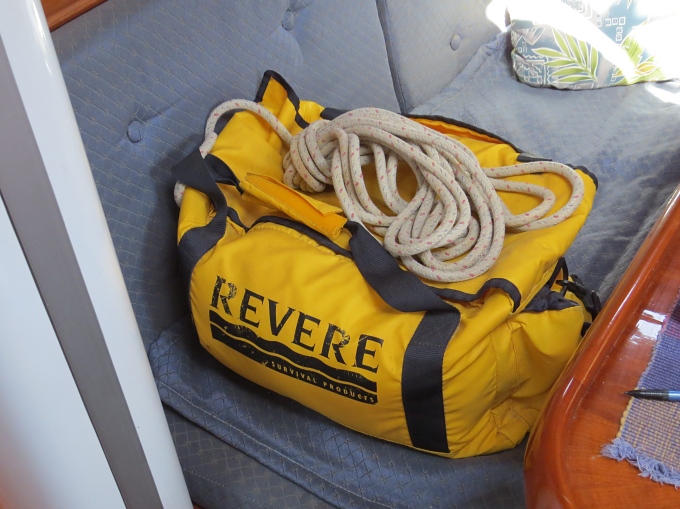
Ditch Bag Inspection

ditch bag ready to go  

Once a year, usually at the beginning of our cruising season, I inspect our “ditch bag”, the bag we'd grab if we ever had to abandon ship for any reason. We're starting the countdown till we leave Port Adelaide and so it's inspection time. Our Revere Survival Products ditch bag has been on the boat for nearly a decade and when we're at sea, it sits nestled on the saloon settee ready to be grabbed if the need occurs. Thankfully, we've never had to use it.

The ditch bag itself is made of waterproof material, the seams are waterproofed and the zipper is water resistant. Despite that, everything in it that is supposed to be kept dry is kept in a drybag or ziploc bag. Revere's newest design bag has an external pouch for an EPIRB and lots of inner net pockets for stowage of smaller items. It is buoyant to 40 lbs/18 kg loaded capacity, i.e. it will float when it's all loaded up. Though it would be nice to include everything you could possibly need if you abandoned ship in this one tidy package, it's just not possible, so the selection of contents has to be whittled down to a manageable size to fit into the bag.


ditch bag contents


My goal each year is to unpack the bag, review its contents, make sure everything works and has current dating and then repack it again, hoping we'll never have to use it. I unpack the GPS, for instance, put in fresh batteries and turn it on. It works. I remove the batteries, close it up, include a pack of fresh batteries, make sure the little screwdriver is with it (also used for the VHF for getting into the battery compartment) and repackage in its dry bag … hopefully till next year. I do the same with the VHF. I un-pickle the handheld manual watermaker, make some fresh water from sea water, re-pickle it and pack it away. I check dating on the few meds we carry in our mini-med kit. I insure that copies of our passports and boat docs are current. I make sure we haven't “borrowed” anything from the bag since the last time I inspected it and then forgotten to return it. I consult an inspection list we have, just to make sure I don't forget anything and then update it if we change anything. We try not to leave safety checks to random memory recalls … or lapses. The ditch bag inspection goes on our calendar as a to-do item every year.


vhf check


From time to time over the years, we've upgraded or replaced things in the bag. We switched to a wind-up LED flashlight, for instance, instead of a battery-operated one, to eliminate the need for carrying extra batteries. We added a mini-fishing kit at one point and a space/survival blanket that's silver on one side and orange on the other, figuring the orange would serve as a make-do distress flag in case of emergency. We attached a long rope tether to the handle of the bag, so it would be easier to tow, if needed, or we could tie it to the side of the dinghy, or boat or life raft or whatever, if we had to.
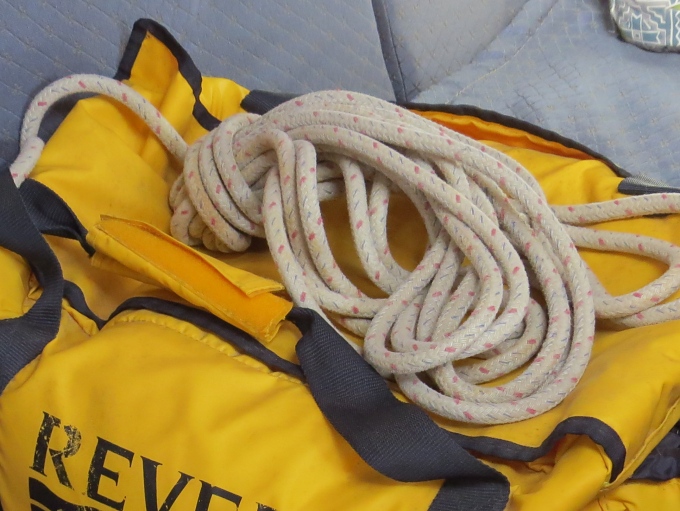
 

rope on handle


Because this is an annual safety check, we decided that whenever we do the ditch bag inspection, we'd do other safety checks as well. And so, I've just completed an inspection of our five fire extinguishers aboard to make sure they're all full and ready for action. This is also a good reminder of exactly where they are in case they're ever needed. Our PFD inflation cartridges, bobbins and strobe batteries are in date and the PFDs are hanging on hooks in the wet locker, easily accessible. The life raft has been scheduled for re-certification before we leave Port Adelaide.
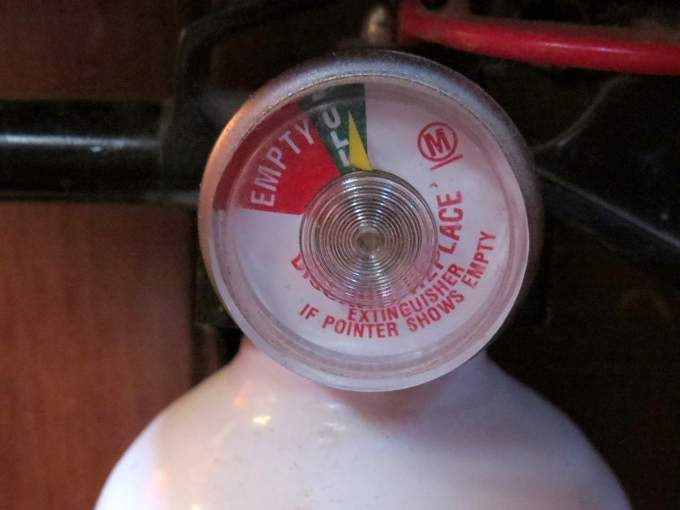
 

fire extinguisher


There have been several articles written over the years as to what individuals consider the essentials for a ditch bag. If you'd like our list of contents, leave a comment or send an email and we'll gladly send it to you.

Please note: We carry other safety equipment aboard, e.g. lots more flares, a horn, SOS strobe, etc. and there is additional safety equipment stowed inside the liferaft. This blog post provides an overview of the actual contents of the ditch bag itself.

Gamming

the gam - ashley  

Yes, that's “gamming” with two mm's, not gaming, though we've done both. There are several definitions for a gam. It can refer to a lady's legs (wrong definition) or a pod of whales which is probably where the seafaring term “gam” originated since whales are pretty social creatures. Among sailors, it's more commonly a social, friendly visit between the crews of whalers or nowadays just boats/ships in general.


gams


I hadn't ever heard the word, other than in reference to a group of whales, until we joined SSCA. They have “gams” quite frequently in different parts of world. These are big get-togethers where like-minded, sea-spirited folks exchange stories, trade goods (treasures of the bilge/flea market), experiences and sometimes tall tales, as sailors are wont to do.

What brought this to mind was our recent visit to the New Bedford Maritime Museum. There were pictures and sketches of old whaling ships at sea, drifting near each other and sending boats between them for visits between the captains and the crews. Whaling ships followed the migratory patterns of the whales they sought and many times would come in contact with other whalers in the same vicinity. The actual whaling portion of the passages was short-lived and frenzied, but the passages themselves sometimes lasted 2-3 years. Life aboard could get pretty boring. You can only do so much scrimshaw. So when another ship was spotted, the boats would hail each other and then commence gamming (and perhaps drinking).


gamming chair


I was especially interested in the gamming chairs that were used by the women aboard. The captain's wife and perhaps even the children would be lowered from the ship to a whaleboat in a gamming chair and then rowed to the other ship for a festive social occasion, visiting with the other captain's wife and family. Other times the gamming chair would be hung from a spar, and swung across as two vessels were side by side. Knowing all the paraphernalia women of those days had to wear, it must have been a wet and hairy ride, but a welcome change from the monotony of ship's life.

If you're interested in participating in a modern day gam, check out the SSCA website for a gam near you. No gamming chairs necessary to attend.

Talk Like a Pirate Day - Arrr!

David  

Ahoy, mateys, it's September 19th and this is Talk Like a Pirate Day. Though we're on land at the moment, it doesn't prevent us from reminiscing about Pirate Days past. Actually, I suppose lots of land folk dress up like pirates and say “Aye-aye” and “shiver me timbers” today. It's a good occasion for a party and the Talk Like a Pirate website can help with the activities … including lots of good pirate pick-up lines (really?). Who needs a pickup line if you're a real sailor?


blackbeard


Pirates are not, however, and never have been, fun-loving kind of people. We've romanticized them. They were usually cutthroats, reprobates or profiteers/privateers, men licensed by the Crown to pillage and sink foreign enemies' ships (in which case they were not called pirates, but actually were).


jack sparrow


During the so-called Golden Years of Piracy (1690-1730), the seas were not safe. There was Captain Kidd, Blackbeard, Black Sam, Black Caesar and Black Bart among others. Black Bart, by the way, was considered the most successful at his trade, having captured 470 vessels in his three years of active piracy. These guys were primarily British, but the rest of Europe had their representatives, like Benito Bonito and Jean Lafitte. And piracy wasn't limited to males either. Consider Irish Anne Bonny, probably the most famous (or infamous) female pirate in history who successfully teamed up with Calico Jack and Mary Read until they were captured and supposedly hung. And then, of course, there's Captain Jack Sparrow aka Johnny Depp.


charleston tall ship


We've often been asked if we've ever met any real pirates. The answer, thank goodness, is no. We were boarded while on the hard in Uruguay by a petty thief who was near apoplectic when a naked David rose out of the cockpit with a machete. He got away, but probably turned away from his life of crime after the incident. We were boarded by a band of pirates in Charleston during the 2007 Tall Ships Fest. They were quite friendly, very careful about not hurting the varnish and called in advance to schedule the boarding.

Piracy is still very real on the world oceans … some places more than others. Cruisers stay in close touch and reports of boardings and piracy spread like wildfire. We work hard to avoid known areas of piracy like the Red Sea, east coast of northern Africa, the Caribbean coast of Venezuela and Colombia, and parts of the Philippines. We've known several people who have been boarded and hurt and also some who have been murdered. The stories are horrendous. This blog post is in no way meant to minimize the dangers nor the atrocities committed nor make light of a serious world problem on the high seas.