
Come Stand Night Watch with Me

pegasus  

I've talked lots about night watch and lots of people have asked what it's like to stand night watch alone. Quite honestly, it can be glorious or it can be miserable. Why not join me for one night and see for yourself? It will definitely disturb your usual sleep pattern, but it's only for one night. You've got the advantage of bailing at any point if you don't like it. Set your alarm for midnight and meet me in the cockpit. Dress warmly … it gets chilly out there, even in the tropics.

Midnight … I was sleeping oh so soundly when David woke me. He climbed into the sea berth rather quickly after briefing me (very briefly) on what was happening … nothing. Good news … perhaps it'll be an easy watch for us. Most of them are when we're this far out to sea. Are you awake? First, we'll check the AIS … no ships around. Let's make a cup of tea and head topside. Prepare yourself … the tradewinds are really blowing tonight.

David has logged for the past three hours and I'm always interested in how well we did and how much progress we've made. We've been averaging over 6 knots, it looks like. Check the iPad … you can see our course and our position. We're right on the course line and there's nothing in the way for a thousand miles. We're not anticipating any sea monsters at all, so nothing to fear in that category.

Mostly night watch is just that … “watching” - staying awake and alert and making sure we're on course, the sails are trimmed and there are no other vessels aimed at running us over. Stand up and take a good look around … all around, even behind us. Nothing out there, but blackness, although now that your eyes are adjusting to the dark, you can make out the horizon. I check the AIS every 15 minutes or so … ships travel fast. Nothing going on. Look up … have you ever, ever seen so many stars?


southern cross


Take a look at this app on the iPad. It's the southern sky constellations. Just hold it up and it names and outlines the constellations for you. The Southern Cross is easy to pick out and so is the upside down Orion. It's all the others that I wasn't familiar with, like the Pegasus.

No, that's not a ship to the east nor anything to be alarmed about. I've been fooled many times by that very thing. It's the moon rising and it's pretty dramatic, isn't it?


moon path


Well, we've been chatting and it's already log time. It's probably not really necessary to log hourly. Some folks we know only log at the end of each watch or once a day even, but we've always done it this way and prefer to have an hourly record of our progress. Go ahead … you can log. Take a look at the instruments. The GPS will give you our position, course, and speed. You can get the apparent wind direction and wind speed off the other instruments. I also check and log the voltage each hour to make sure we've still got plenty of power. The voltage is 12.58 … plenty to last till morning. Logging is pretty easy and it's a mental tick mark … one hour of the watch has been completed.


cockpit instruments


How about a snack? I'm always hungry during my second watch hour. Granola bar? Some water? The snacks are in the swinging hammock over the port settee. I'll check the AIS while you get us something to munch on. The AIS shows a ship about 15 miles away with a CPA of 2 miles. We'll keep checking on him. In the meantime, I've got some books loaded on the iPad as well as some games. You're welcome to read or play a game as long as you don't get too distracted. Remember, we're keeping track of that ship out there.

So, do you know any show tunes? The reason I'm asking is that I usually sing on my watch. David can't hear me below (or at least he doesn't complain) and I can sing to my heart's content without bothering the neighbors. Singing is good for the soul. Ah, you're not a singer. No worries. You can play on the iPad again if you'd like. I'm going to read for awhile. Go ahead and check the AIS again and make sure our friend is still far enough away. Hey, take a look at the moon. It's waxing and will be full soon. Isn't she a beauty?


log time


Time to log again … time flies, huh? Same info, different line. One hour to go. We did nearly 7 knots last hour … good progress. The sails are fine. The voltage is good. The wind gen is keeping the power topped up. I just checked the barometer and it's steady … looks like more of the same weather ahead.

Can you see that light in the distance? That's the ship we've been tracking … he's about 7 miles away now. The AIS indicates that his CPA is just under 2 miles … a good safe distance away, but we'll still keep an eye on him. If he gets any closer, we can hail him and ask his intentions.
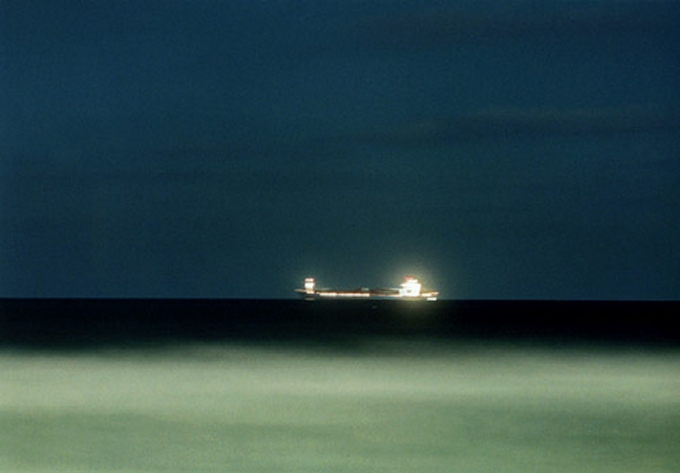
 

ship on horizon


During my last watch hour, I usually tick off the minutes in my head, especially if I'm really tired. Only 28 minutes left. Check out the ship. Looks like that's the closest he's going to come. Good view, not too close. We'll make sure to tell David that he's already passed us and heading east.

I've really enjoyed having company on watch. Hope you're not too tired. You get used to the different sleep pattern after a few nights and it's really not too bad. Rainy, cold nights aren't very pleasant. I usually sit at the nav station then and watch the radar and just pop my head up a few times each hour to see what I can see … usually not much. Tonight, though, was just beautiful. Time for the final log. 0259 … time to wake David and get some sleep. Join me again some other time?

Crossing the Indian Ocean - Cocos to Rodrigues Days 7 & 8

days 7-9 cocos to rod

days 7-9 cocos to rod

Day 7 Miles run last 24 hours:  148             

Miles to go: 1095

The day started out beautifully. Blue sky, fluffy white clouds, reasonable winds and seas ...an enjoyable day to be sailing on the Indian Ocean. Just before dinner time, dark clouds appeared on the southeast horizon ...huge ,black, ominous-looking clouds. Maybe just a squall. We saw a rainbow...a full rainbow, arcing across the sky. Rain on its way. The wind  piped up. We reefed down as we watched the rain moving in heavy, dark sheets towards us. We gathered all of our gear from the cockpit and stowed it below. We were in for a soaker.

The wind increased ... 25, 30, 35 knots. The seas kicked up quickly. We hunkered down below. Making dinner was a challenge. We cozied up on the starboard settee ...stuck in place by gravity. Nine of Cups jerked and bucked violently, reacting to the collusion of winds and seas. It became uncomfortably hot below while outside a cool wind kept screaming. Waves crashed loudly ...thud....splash.

Sleeping was wishful thinking. The ride was too rough. By my 0300 off watch, however, I was exhausted enough to finally doze off. I awoke to the sound of a freight train colliding with Cups. One "big mutha wave"  delivered a huge hit and the boat rolled like a boxer taking a wicked left cross to the jaw. CRASH ... In the following seconds,  things went flying through the saloon and a huge deluge of water forced its way through the secured companionway hatch boards and the dorades.

David, on watch at the nav station, was thrown out of his seat against the breaker panel. Marcie asleep on the starboard sea berth was the recipient of gallons of sea water over her head. Everything was soaked ..clothes, sheets, pillows. Water on the galley counters stood two inches deep and worked its way inside lockers. An iPad went sailing across the saloon, ricocheted off the  galley wall, and finally settled in a puddle on the galley floor. The  saloon table, the bookcases, the sole ...everything was completely doused and dripping. Stuff was strewn about everywhere.

It took a second or two to figure out what had happened. The wind continued to shriek, the boat shuddered and bucked. We were both momentarily flustered. We pulled ourselves together quickly, assessed the damage, grabbed towels and rags and began mopping up. We heard an alarm sounding on deck.

Evidently, the cockpit had been totally pooped ... all lines and sheets were hanging over the starboard side trailing in the water. It was the ignition switch that was shrieking so loudly and it wouldn't shut off. The switch had gotten submerged, and so much salt water had gotten inside the switch, it had caused it to short, turning on the ignition. Other alarms were sounding ...the bilge pump was on, the high water alarm added to the bedlam; the autopilot was complaining that it was off course.

This crew is exhausted. Stay tuned for more...

Deck count:  Who knows, who cares? Morale: Somewhat less than usual.

Day 8 - Cocos to Rodrigues Miles run last 24 hours:  160         

Miles to go:  941

David temporarily disconnected the ignition switch, knowing he'd have to do something if we were to turn on the engine later to top the batteries. The other alarms were handled in turn and the chaos was in check. Our back-up cockpit GPS was not working.

It took well over an hour to mop up. Where to put even more waterlogged towels, rags, clothes? By 0515, Marcie was back in the sea berth with dry linen, but up again at 0600 for the change of watch.

The day finally dawned ...dark, dreary, and boisterous. There would be no respite short term. David slept soundly through his off-watch, and a very exhausted first mate collapsed into the sea berth seconds after he vacated it.

Now that it was light, David conducted a general triage of apparent damage and began fixing. He re-wired the ignition and replaced the switch. The GPS was an easy fix. When he was thrown against the breaker panel, he hit the outlet switch and unknowingly turned it off by accident. A flip of the switch and the GPS came alive, found its fix and started ticking off the miles again.

Long, uneventful naps during the day despite the continued rough sea, and the crew recovered a bit. We've been at sea a week now with another week to go. Let's hope Neptune considers our dues paid for this passage.

Deck count:  8, plus a small fry waiting for us in the cockpit Morale: Improving

Continue with us on our Indian Ocean crossing.

It's Not Easy Being Green - Mal de Mer

Here's an older post from 2013 which is most appropriate for our Indian Ocean Passage. We've made a few minor modifications, but in general, all the info still holds.  

marcie is seasick


Call it what you will … mal de mer, mareado, seasickness, it's very real and it's a problem for many sailors. We've heard from many folks who say “I'd love to do what you're doing, but I get seasick.” Well, join the club … after 14 years aboard, so do we... still! Our recent passage from Geraldton to Cocos Keeling Islands confirmed that we haven't “outgrown” it. It certainly doesn't prevent us from sailing, but we do what we can to minimize the problem.

We've read that there are three states of seasickness:

1. You're afraid you'll get sick

2. You're afraid you're going to die

3. You're afraid you won't die

I get a kick out of people who don't ever get seasick and who assume that people who do have a choice in the matter. If you will it to go away, it will. Trust me, it doesn't. I'd certainly prefer not to deal with it, but as determined as I am about not getting sick, it still happens sometime.

Early on, we thought we'd just grin and bear it. After one particularly bad trip, however, when we not only thought we'd die, but we were hoping we'd die, we decided that perhaps we should investigate and come up with some relief. We started with crystallized ginger. I loved it, but it really didn't do anything to calm my queasy stomach and subsequent heaving. David hated it and now associates all ginger products with seasickness.


remedies collage


We've tried wrist bands and patches which don't seem to have much of an effect at all on us. We've tried over-the-counter pharmaceuticals, but they leave us very drowsy (even the non-drowsy formulae) and still sick. So far, the best we've come up with is Stugeron (generic: cinnarizine) which is a prescription drug. Last we checked, it was not available in the USA or Canada. It's an anti-histamine, anti-vertigo drug which is used regularly in the treatment of nausea. We were able to purchase it in the Caribbean and in South America and South Africa without a prescription and a friend in Uruguay has supplied us ever since. We take a small dosage (15-20mg) the night before we leave on a passage and then twice a day after that until we feel the seasickness has passed. It works. There is some drowsiness, but definitely not enough to impair our ability to stand watch or do whatever is necessary to handle the boat. The best thing about it is that we can take it even after we're seasick (assuming we can hold it down) and it starts taking effect rather quickly.


stugeron


In our particular cases, we usually recover from the symptoms in 1-2 days and once we have our sea legs, we're fine. With the experience of knowing that we'll get better eventually, it's easier to handle the seasickness at the time. I'd hate to think of what I would have missed in our years aboard Nine of Cups, if I'd let seasickness get the better of me.

All this said, different drugs work differently for different people. We are not taking any other meds at all. There may be contraindications taking Stugeron with other medications or in certain medical conditions, e.g. pregnancy. We sail dry, ie we do not drink any alcohol while on passage. Definitely read up and consult a physician if you have any questions.

What are your experiences with seasickness? What works for you? Share!