Listening to the Locals

Local knowledge is always the way to go when you're sailing in unknown waters, especially when those waters are notorious for wretched weather and gobbling up boats and sailors. You can read all you want and study the charts and check out the weather, but getting firsthand knowledge from folks that know the waters and have done it before, perhaps many times, is priceless. They know what to look for and what to avoid. Two-time circumnavigator, Tony Herrick, has welcomed our fellow SSCA members and foreign cruisers to Durban for years. He's a little slower since he broke his ankle recently, but when we stopped in at his shop, we received a warm welcome. He's a bit older than we are and he's brimming with local knowledge and sailing tales.

tony and david looking at charts

Tony owns and operates "Cruising Connections" just a block from the Durban Marina and Point Yacht Club. His tiny shop is chock-a-block full of nautical charts, cruising guides and miscellaneous boat parts. His own book, Sailing the South African Coast, is a must for sailing down the Wild Coast from Richards Bay or Durban to Cape Town. We bought his guide and he was only too happy to review it with us, share his local knowledge and point out good anchorages along the way.

tonys shop

Tony's advice to us was substantiated as we talked to Rob Bowman, a knowledgeable local who spends lots of time at the marina. He sells boats, provides maintenance and repair services, offers sage advice when asked and is particularly helpful to visiting sailors. His advice? "Wait until the barometer plateaus at the end of a southwesterly. Head out to the 200 meter contour to catch the best of the current. You'll be in East London in 33 hours or so. If the weather's good, head for PE (Port Elizabeth). Otherwise, stay put in East London and wait for the next weather window."
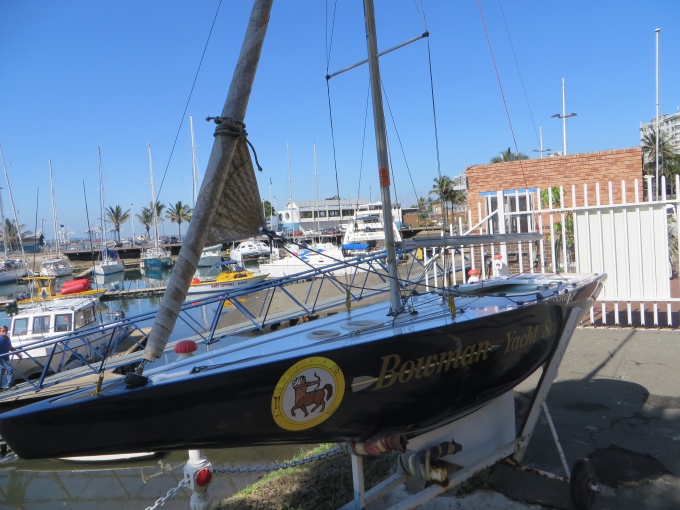
bowman yachts

Then there's Gilbert Goor aboard Zazu, an ex-pat Belgian, author of And The Wind Carried Us. His advice concurred with Rob's and Tony's. He added "The best you're going to see is 3-4 knots from the Agulhas current. You'll be fine. Once you get past the Kei River in East London, the going gets easier."

gilberts book

With all this local advice plus cruising guide references and weather reports, we're feeling a bit easier about the upcoming passage down the Wild Coast. Now … if only a weather window would appear.



Sailor Savvy - Streetwise Ashore

There's some getting used to being in a city, especially a new city when you first arrive. We've been in Durban for some time now, but our return to the USA had us a bit relaxed in the security department ... a little less aware of our immediate surroundings. Heading out to do some grocery shopping, we had to readjust to being back in the city. Unlike Las Vegas where we drove everywhere we wanted to go, being on foot makes you a bit more vulnerable to petty theft and potentially more violent crimes. South Africa is considered a high-risk country for crime. It's the rape capital of the world. The murder rate is high. Car jackings are commonplace. Durban, in particular, is notorious for street crime. We really need to be on alert when we're out and watch each other's back. That said, any city presents a good opportunity for thieves to work. David was pickpocketed on a bus in Guayaquil, Ecuador. I had a camera stolen (but I recovered it) in Peru. In general, though, we've been very lucky. We're personally aware of at least four cruisers who have been mugged here in Durban. Though it's impossible to stop crime, we can do our best to be streetwise and avoid being a target. Here are our suggestions for being streetwise.

Don't dress to the nines. You can be neat and clean without being showy.

no jewelry

Wear no jewelry nor expensive watches … plastic watches do the trick.

Don't flash cash. Be discrete if you need to buy something. Have small bills available without having to dig through your wallet.

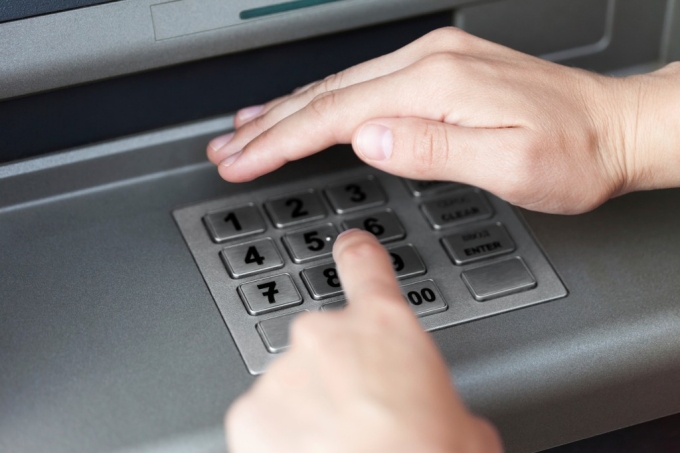
Choose your ATM carefully and don't make a show of putting away your cash. Be suspicious of "helpful" people near an ATM. Be suspicious of anything that doesn't look right about an ATM. We once visited an ATM that had a second card reader attached just above the usual one. If we had swiped our card through it, it would have stored our debit card info, and the little camera mounted above would have recorded our pin number.

atm security

Distribute cash in different pockets and between each other.

Don't carry extra credit cards, just carry what you need. The same goes for anything else that isn't necessary and would be expensive or difficult to replace– driver's license, insurance cards, etc.

Keep your wallet in a front, preferably buttoned-pocket. David sometimes carries an extra "dummy" wallet in his back pocket.

Don't carry your passport with you unless absolutely necessary. We carry copies of ours when we go out. The copies are almost always acceptable in lieu of the originals.

Wear your backpack or your purse on your front. Don't hang it over your shoulder.

durban streets

Be sensible where you wander. All cities have bad areas. Some worse than others. Don't tempt fate. Stay in the central business and tourist areas. If you see something or someone that looks suspicious, cross the street. Don't put yourself in harm's way.

Be wary after dark. Splurge … take a cab.

Watch each other's back. Rather than walking side by side, we take turns trailing each other, watching for people who bump into or brush against us.

You are especially vulnerable when stopping to take a photo. Pay attention to who is nearby or approaching.


11 Adjustments to Living Ashore

No matter how many times we've made the transition from life aboard to life ashore, it's always a major change, if only for a few days. I wonder if other cruisers have similar transition issues? Here's our top 11 list of the major adjustments to shore life. Motion. Houses and hotel rooms do not rock or roll nor does water gently (or otherwise) lap the walls outside our window.

Space. Though Cups is a relatively large boat and well laid-out, even small rooms ashore have so much more space (and moveable furniture) than Nine of Cups.

nine of cups interior

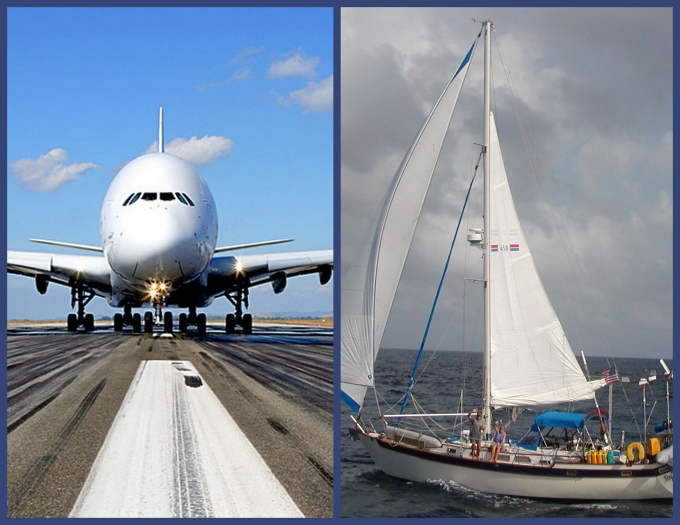
Speed. We think we're really tooling along when we're doing 8 knots (9.2 mph/15kph) on the boat. Compare that to 500+ mph on a plane or, more noticeably, 70 mph on a highway, and it takes some getting used to.

noc vs a380

Weather. Though we watch the weatherman every evening, we're definitely less attuned to weather and wind issues than when we are aboard. Unless there's some major storm heading our way or we might need to take an umbrella, we're kind of oblivious to the weather in our everyday lives ashore. Quite honestly, it's a relief.

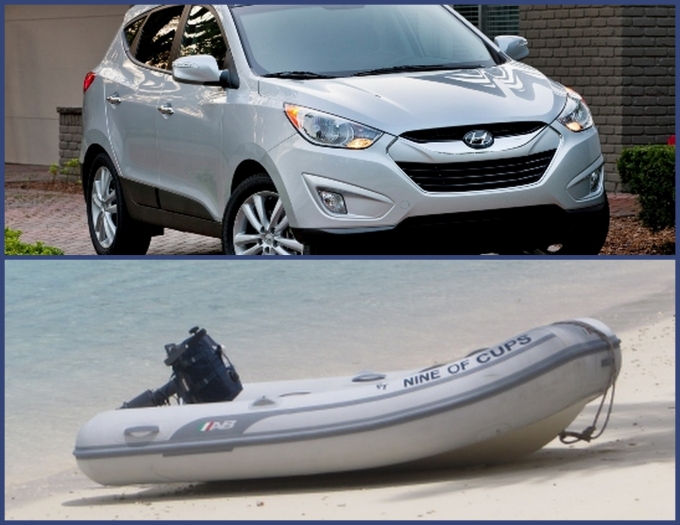
Transport. Getting somewhere is so easy and fast when you have a vehicle at your disposal. You don't need to launch the car from the foredeck before using it. Need to pick something up at the store? There's a well-stocked supermarket on every corner and specialty shops are just a few miles away. Just jump in the car and go. No need to call a taxi, take a bus or walk several miles lugging your purchases. Need a boat part? Oh, I forgot … we're on land. We don't need boat parts (except to bring back with us, of course), but if we did? Everything's pretty close by.

car vs dinghy

Permanent address. Cruising around the world, we've had lots of temporary addresses. This limits our ability to have things mailed and shipped to us. Our address changes constantly. If we want to wait for a shipment, it may or may not arrive on time, depending on several variables (ship time, Customs, delivery scheds). Shippers are always a bit leery of shipping overseas to non-billing addresses. On land, we have an address that's been in the system for years (even though it's my sister's address). Easy, peasy for all those Amazon Prime shipments.

Unlimited utilities. Leave the water running while brushing our teeth? Keep the computers plugged in and on all the time? Leave extra lights on? We still try not to waste water and power, but we aren't quite as diligent about it as when we have to carry or generate our own.

running water

Fast internet. We send large files and photos in a flash versus spotty internet connections which sometimes require a long and tedious process to send even simple text e-mails.

Television. We haven't owned a TV for the past 15 years and we're so out of touch with the technology (Cable, Amazon Prime, Netflix, Hulu). Flat screens are huge comparative to watching DVDs on our little laptop screen. In most households, watching TV is a relaxing evening ritual that we're just not used to. On the other hand, how can you have 500+ options and not find anything of interest to watch?

cable tv

Appliances. Refrigerators, freezers, toasters, coffee makers, irons, grills, griddles, hairdryers, can openers, blenders, microwave ovens … all at our fingertips and we don't even have to be in a marina with access to shore power. And we have ICE!

small appliances

Convenience. This is a biggie. Living ashore is so much more convenient than living on the boat. Just a few examples? Cups is currently in the marina in Durban where we usually take showers and do most of our bathroom activities ashore at the yacht club. This requires getting dressed and toting all our shower gear down a very long dock and getting through a security gate before actually arriving at the showers. How convenient it is to just jump in the shower with shampoo and soap handy and no need to bring it with you. Need a gas or diesel fill-up? Just stop at one of the hundred gas stations around and fill 'er up. There's no necessity to tote jerry jugs. Dirty laundry? No need to tote it two miles to the nearest laundromat and then hang it out on the lines. Instead, just throw it into the washer, then the dryer and voila … clean laundry in an hour.

All this said … we'd rather live aboard and be sailing. Convenience is highly overrated.