Waiting with Friends

There's Dinner with Friends and Words with Friends. We are Waiting with Friends. Waiting for a weather window is a lesson in patience, as we've reiterated so often, but it isn't quite so bad when you're doing it with friends. We met Vic and Sandy aboard Wind Wanderer way back in the Cocos Keeling Islands. We saw them again in Mauritius and both boats ended up at the Durban Marina at the end of last year. We enjoyed some pre-Christmas activities together and then, like us, they had repairs to do, headed home for a bit and did some inland traveling. Now we are waiting together for that elusive weather window to leave Durban and head to Cape Town. Though each boat makes its own decision when to leave, if the weather window is good, most boats leave around the same time and, by default, travel in loose company. That's Vic and Sandy to the right. fun with wind wanderer
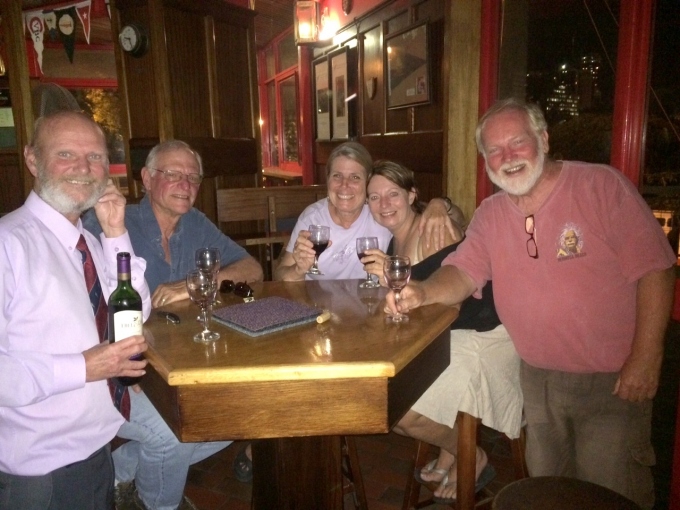
We've shared several evening meals at the yacht club with the Wind Wanderer crew. Mid-day coffee on one boat or the other isn't unusual nor is a quick stop to chat about this or that. Sandy and I shared a cab to nearby Davenport Square to take advantage of a larger, better-stocked Checkers supermarket and Dirk's, a good meat/poultry market. We've exchanged info on weather resources and commiserated about repair issues and bad passages. We've talked about sewing machines and pressure canners and canvas work and heat exchangers and a myriad of other topics we have in common over sundowners. It's a pleasant way to play the waiting game.

We'd been watching the weather religiously twice each day and listening to the PeriPeri Net each morning. At 72 hours, we were finally looking good for a weather window. At 48 hours, all was still good. We checked out 36 hours in advance of departure with the same reasonable weather window forecast although the window had shortened from 2-1/2 days to 2 days. The tedious check-out procedure was the same as last time, but it seemed easier since we knew the routine and where to go. We topped up the provisions and loaded more freshies aboard. An early check-out allowed us a leisurely day before departure. At 24 hours, the weather window was shrinking a little more. We needed about 36 hours to make it the 265nm to East London. 12 hours prior to departure, the forecast was iffy and our weather sources disagreed as to when the wind would shift from northeast to southwest. We left the decision till morning.
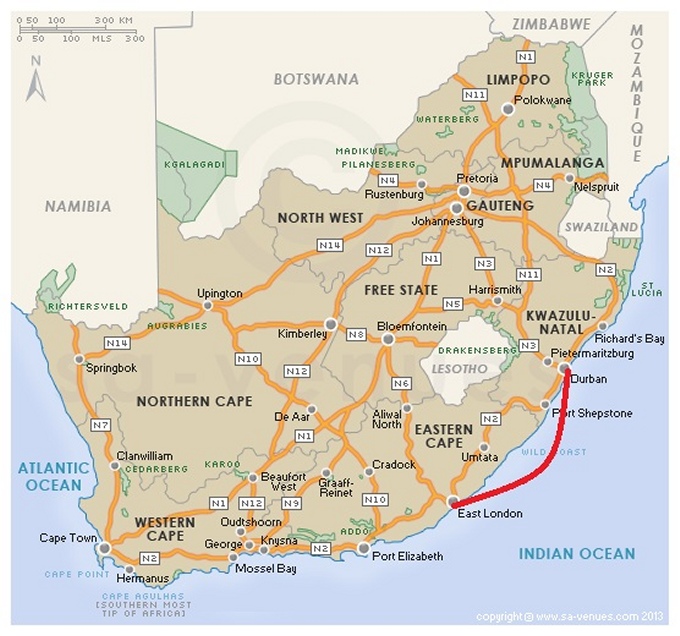
map durban to east london

We use several weather sources, but weather forecasting is obviously not an exact science. At 0500 on the morning of departure, it was calm and showed signs of being a nice day on the Durban end. The GRIBS, Buoy Weather, one of the Predict Wind models, Passage weather and Wind Guru all agreed that the wind would change to 25 knots SW (on the nose) by early the next morning. One of the Predict Wind models called for a mid-afternoon change … still too short, even if we believed it. The local AcuWeather was calling for heavy rains and a southwesterly wind by mid-morning in East London. Prudence prevailed. The PeriPeri net agreed. Our weather window had disappeared. Passage canceled. This is how it goes sometimes.

Sigh! Back to the waiting game ... with friends.

Listening to the Locals

Local knowledge is always the way to go when you're sailing in unknown waters, especially when those waters are notorious for wretched weather and gobbling up boats and sailors. You can read all you want and study the charts and check out the weather, but getting firsthand knowledge from folks that know the waters and have done it before, perhaps many times, is priceless. They know what to look for and what to avoid. Two-time circumnavigator, Tony Herrick, has welcomed our fellow SSCA members and foreign cruisers to Durban for years. He's a little slower since he broke his ankle recently, but when we stopped in at his shop, we received a warm welcome. He's a bit older than we are and he's brimming with local knowledge and sailing tales.

tony and david looking at charts

Tony owns and operates "Cruising Connections" just a block from the Durban Marina and Point Yacht Club. His tiny shop is chock-a-block full of nautical charts, cruising guides and miscellaneous boat parts. His own book, Sailing the South African Coast, is a must for sailing down the Wild Coast from Richards Bay or Durban to Cape Town. We bought his guide and he was only too happy to review it with us, share his local knowledge and point out good anchorages along the way.

tonys shop

Tony's advice to us was substantiated as we talked to Rob Bowman, a knowledgeable local who spends lots of time at the marina. He sells boats, provides maintenance and repair services, offers sage advice when asked and is particularly helpful to visiting sailors. His advice? "Wait until the barometer plateaus at the end of a southwesterly. Head out to the 200 meter contour to catch the best of the current. You'll be in East London in 33 hours or so. If the weather's good, head for PE (Port Elizabeth). Otherwise, stay put in East London and wait for the next weather window."

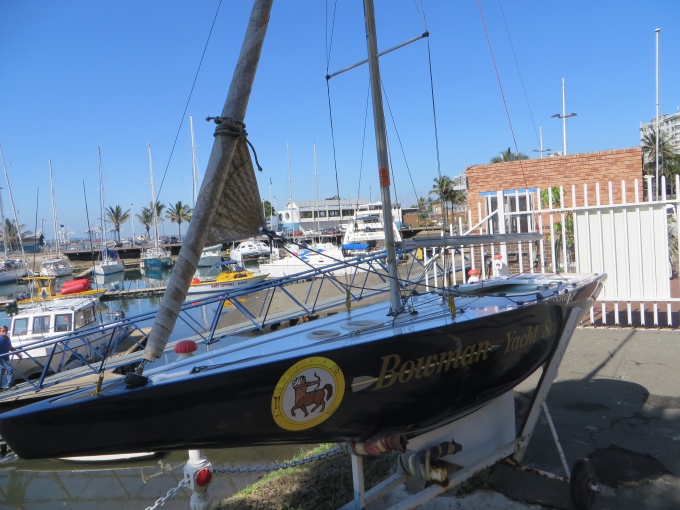
bowman yachts

Then there's Gilbert Goor aboard Zazu, an ex-pat Belgian, author of And The Wind Carried Us. His advice concurred with Rob's and Tony's. He added "The best you're going to see is 3-4 knots from the Agulhas current. You'll be fine. Once you get past the Kei River in East London, the going gets easier."

gilberts book

With all this local advice plus cruising guide references and weather reports, we're feeling a bit easier about the upcoming passage down the Wild Coast. Now … if only a weather window would appear.


Sailor Savvy - Streetwise Ashore

There's some getting used to being in a city, especially a new city when you first arrive. We've been in Durban for some time now, but our return to the USA had us a bit relaxed in the security department ... a little less aware of our immediate surroundings. Heading out to do some grocery shopping, we had to readjust to being back in the city. Unlike Las Vegas where we drove everywhere we wanted to go, being on foot makes you a bit more vulnerable to petty theft and potentially more violent crimes. South Africa is considered a high-risk country for crime. It's the rape capital of the world. The murder rate is high. Car jackings are commonplace. Durban, in particular, is notorious for street crime. We really need to be on alert when we're out and watch each other's back. That said, any city presents a good opportunity for thieves to work. David was pickpocketed on a bus in Guayaquil, Ecuador. I had a camera stolen (but I recovered it) in Peru. In general, though, we've been very lucky. We're personally aware of at least four cruisers who have been mugged here in Durban. Though it's impossible to stop crime, we can do our best to be streetwise and avoid being a target. Here are our suggestions for being streetwise.

Don't dress to the nines. You can be neat and clean without being showy.

no jewelry

Wear no jewelry nor expensive watches … plastic watches do the trick.

Don't flash cash. Be discrete if you need to buy something. Have small bills available without having to dig through your wallet.

Choose your ATM carefully and don't make a show of putting away your cash. Be suspicious of "helpful" people near an ATM. Be suspicious of anything that doesn't look right about an ATM. We once visited an ATM that had a second card reader attached just above the usual one. If we had swiped our card through it, it would have stored our debit card info, and the little camera mounted above would have recorded our pin number.

atm security

Distribute cash in different pockets and between each other.

Don't carry extra credit cards, just carry what you need. The same goes for anything else that isn't necessary and would be expensive or difficult to replace– driver's license, insurance cards, etc.

Keep your wallet in a front, preferably buttoned-pocket. David sometimes carries an extra "dummy" wallet in his back pocket.

Don't carry your passport with you unless absolutely necessary. We carry copies of ours when we go out. The copies are almost always acceptable in lieu of the originals.

Wear your backpack or your purse on your front. Don't hang it over your shoulder.

durban streets

Be sensible where you wander. All cities have bad areas. Some worse than others. Don't tempt fate. Stay in the central business and tourist areas. If you see something or someone that looks suspicious, cross the street. Don't put yourself in harm's way.

Be wary after dark. Splurge … take a cab.

Watch each other's back. Rather than walking side by side, we take turns trailing each other, watching for people who bump into or brush against us.

You are especially vulnerable when stopping to take a photo. Pay attention to who is nearby or approaching.