Midnight Arrival in Mosselbaai

(Mossel Bay) As usual, things seem to happen during the night. The wind finally backed to the east around 2200 … late, but better than never. We had rigged the whisker pole to starboard while it was still light in anticipation of the wind change and, for once, we called it right and put the pole to use as soon as the east winds began to blow.

The ship traffic was horrendous and all going in our direction. At one point, there were 10 ships closing in from behind and beside us. Keeping track of them all with AIS was sometimes nerve-wracking, but much better to know they're there and bearing down on you, than to be literally in the dark. We contacted several ships whose CPA appeared too close and they all accommodated us by altering their course. No close calls.

Around 0200 just before the turn of the watch, I heard a loud scraping sound and a dull thud. The whisker pole extension had retracted. I woke David and he manhandled the whisker pole to extend the pole once again only to have it retract almost immediately. He scrambled on deck once more and we finally settled with using a partial jib and a retracted whisker pole till he could figure out the problem once we were in port. The whole process lasted 45 minutes and was exhausting.

Dawn broke, not as colorful as yesterday, but sunny nonetheless. The birds were not as plentiful in this area. The gannets were still active, but now they mingled with sooty shear waters and white-chinned petrels instead of gulls.

white chinned petrel

By chance, we spotted a yellow-nosed albatross relaxing on the water and totally unperturbed by Cups.  We saw another whale, but as before, he didn't venture near enough for pix.
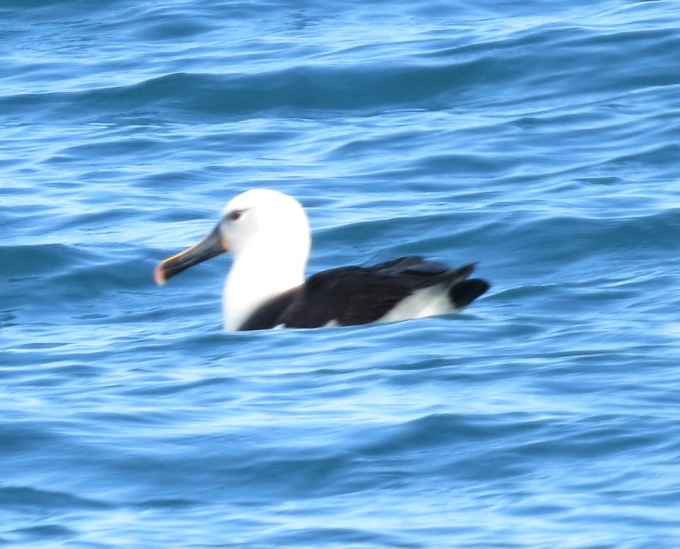
yellow nosed albatross

The day was long with constant wind changes in both direction and velocity. Out of nowhere fishing floats appeared and we had to pay close attention, so we didn't snag one. By afternoon, the sky was a cement-sidewalk gray and rain began just before dinnertime. It was cold and raw. We'd hoped to arrive in Mosselbaai before dark, but our fruitless excursion out to find the elusive current plus tacking and jibing exercises to accommodate the wind changes had us arriving very tired and closer to midnight than sunset.

fishing float

The yacht club anchorage is outside the harbor breakwater, but tucked in and quite protected. The rain had stopped and visibility has improved as we neared the shore. We could see the small city of Mosselbaai spreading up the hillside, lights twinkling in the darkness. With the mainsail down, the boat rocked violently from gunwale to gunwale with the southwest swell. The dish locker below flung open and the dishes all come out with a crash. We'd handle the aftermath later. We were hoping the anchorage in the lee of the breakwater would be calmer.

We expected a bunch of little moored boats, but there were none.  Instead, we found a wide open bay. It was, however, much calmer. We selected a reasonable place to drop the hook outside the breakwater. All systems shut down quickly, including ours. As David tidied up the topsides and set the anchor alarm, I cleaned up the mess below. Nothing major … a couple of dinner plates that had thoroughly smashed in a million bits. The rest of the plates had scattered, but were intact. It was easily swept up and by 0130, we were happy to crawl into our bunk for a good night's sleep.
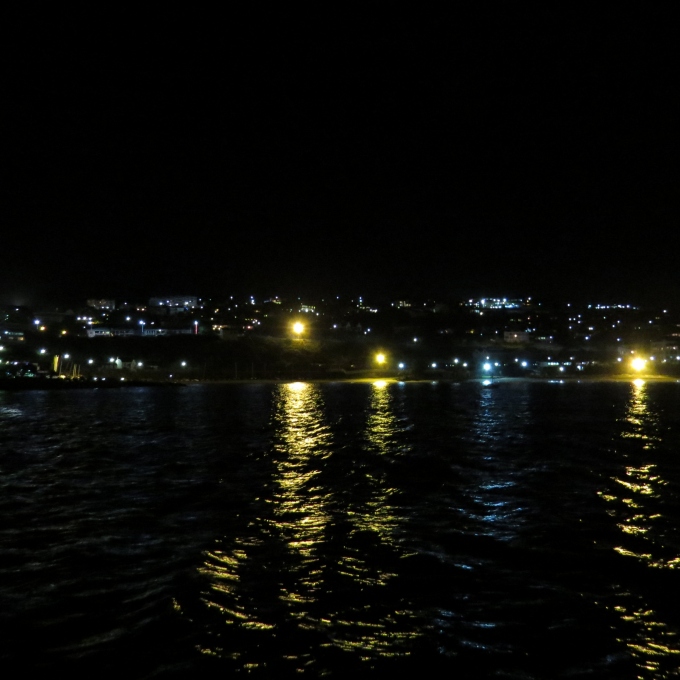
twinkling ligths of mosselbaai

Entertainment En Route

Bird Island to Mosselbaai

We left the Bird Island anchorage well before dawn. We hauled anchor in the pitch black, starless night, and not even the silhouette of the lighthouse shone. Only the endless cycle of the brilliant beacon split the darkness. We could hear the surf pounding on the shore and the reefs beside us, but the birds were still quiet and asleep as we slipped away.

mossel bay

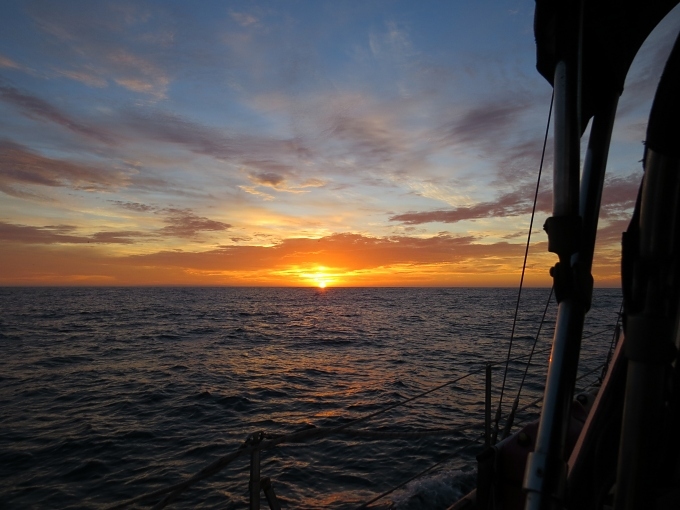
Variable winds had us motor-sailing on tranquil seas. What a change from the washing machine we'd experienced just yesterday. Within an hour, the sun peeked over the horizon and the morning sky was painted in bright hues of pinks and oranges and reds.

sunrise

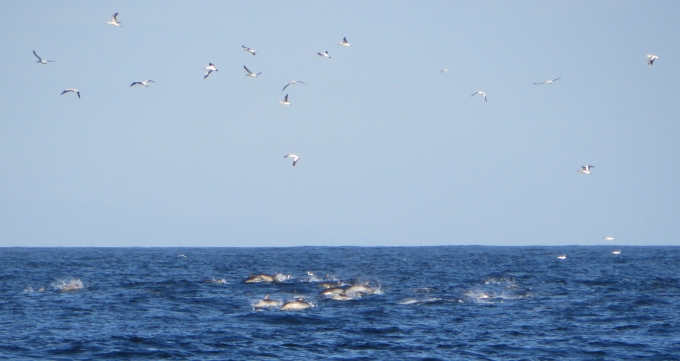
There was no lack of entertainment during this day. Sky and sea teemed with hungry gannets, gulls and terns. We watched as pods of dolphins herded fish and took turns feeding. The water roiled and thrashed in the frenzy. Fish jumped. The gannets hovered opportunistically overhead, waiting to benefit from the spoils of the dolphins' work.

dolphins and gannets

Awhile later, David spotted a seal flipper poking out of the water. They always appear to waving hello. Soon two seals were swimming along side us, jumping gracefully out of the water, performing any number of aquatic acrobatics to our amusement. They swam along until they were obviously bored with us or thought of something better to do, and headed abruptly back towards shore.

seal jumping

During an afternoon cockpit chat, I spied a spout to port. Sure enough, a whale, presumably a southern right whale in this area, spouted twice and then breached. To our disappointment, he never came closer and we lost sight of him as he sounded and never re-surfaced in our view.

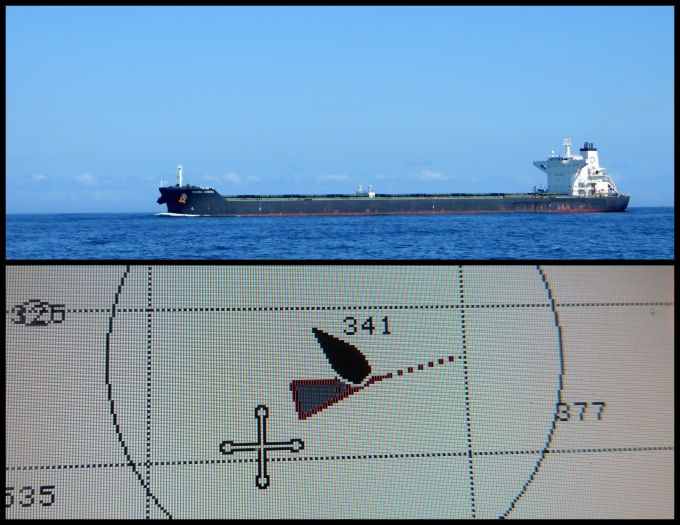
Then, of course, there are the endless line of ships that ply these waters. The AIS was kept busy with 4-6 ships on the radar screen at all times. Some were far off; some were a bit too close for comfort. It was a clear, bright day and there were no close-calls. Looking at the AIS, however, which does not represent ships to scale, it looked as if we were having a run-in with a the freighter, Densa Cobra, that was more than ½ mile to port.

ais vs ship

Towards late afternoon, we were disappointed when the promised easterlies never materialized. We had  headed out to the 200m contour, now much further offshore, in hopes of catching some of the Agulhas Current as well as sailing a bit off the light west winds, but never saw more than ½ knot and the west winds continued. We tacked towards shore again, frustrated with our slow progress, but overall pleased with the day.

We settled into our watch schedule, taking two hour naps rather than the usual three. Once the sun went down, it was cold and raw with intermittent showers. Two hours was adequate chilling time and it felt good to snuggle into a warm bunk. Conversely, climbing into the cold cockpit was … exhilarating!

Windows Open - Windows Close

East London to Algoa Bay

We were up at 0400 checking out the weather and deciding whether to leave East London or not. The next port of call, Port Elizabeth (PE), is an overnight of about 134nm and reputed to be less stressful than the Durban to East London leg. The weather window was short, but afforded us enough time to make port, so we decided to haul anchor and head out.

port elizabeth 134 nm

As we were preparing to leave, one of the local tugs, all dressed in colorful flags, passed by. We figured the nautical display definitely wasn't for our benefit and wondered what occasion or dignitary's visit was responsible for being all decked out.

dressed out tug

The day was upon us as we maneuvered our way out of the Buffalo River, through the breakwater and back into the Indian Ocean. The view was lovely and reminded us that two of a sailor's favorite days are when he arrives in port … and when he leaves again.

leaving east london

We sailed with light breezes under a clear, pale blue sky. Fringing low clouds clung to the horizon. Pods of dolphins worked hard for their breakfast all around us. Gulls and terns circled in the sky above and gannets, their heads golden in the morning sun, dove at breakneck speeds into the sea. The day was as pleasant as it gets along this coast.

We found the 200m contour line and with it the Agulhas Current once more. The current is less strong as it widens and dilutes after East London, but we were still enjoying a 2 to 3-knot push. The winds increased in the afternoon and the combination of a southeast swell, leftover southwest waves and building following seas had us bouncing around akin to a washing machine at times. The forecast called for E/NE winds till the morning. We prefer to arrive at a new, unfamiliar port during daylight hours and so slowed down a bit, heading out of the current a bit closer to shore. With the staysail alone, we were still tooling along at 7 knots.

We were doing well with the easterly winds with an ETA of 0630 in Port Elizabeth. Just after 0200, the wind god flipped a switch and the wind changed to west. Bah! We could either motor the rest of the way to Port Elizabeth (about 6 hours), beat against the westerly winds for 8-10 hours, or seek an anchorage at Bird Island, one we'd read about in the Tony Herrick's cruising guide about 35 nm from PE. We hove-to for a couple of hours, planning to make the anchorage in Bird Island at first light. We could hear the breath sounds of either seals or dolphins, swimming nearby. Closer to shore, the ride was more tenable. The night was cold and windy, but the sky was clear and star-studded.

At first light, we were motoring the 7nm to Bird Island. We could see the beacon of its distinctive red and white lighthouse flashing in the distance. Penguins popped up, curious about the visitors, then dove shyly as we neared. A seal flipper, then a nose, peeked out of the water. The cacophony of bird cries increased as we neared the island. A flotilla of gannets took flight as we dropped the hook just in front of the lighthouse. It was a bit rolly, but we could deal with it. We tidied up quickly, set the anchor alarm and headed for a nap. Birdwatching could wait.

bird island light