Rounding the 5 Great Southern Capes

...plus one

In addition to finishing our circumnavigation when we arrived in Cape Town, we also completed the rounding of the Five Great Southern Capes plus Cape Agulhas, the most southern point in Africa.

5 southern capes
5 southern capes

It was never our intent to round all the southern capes. Heck, it was never really our intent to circumnavigate the world, come to think of it. It's our “just a little further” philosophy that got us around. We like sailing. We enjoy the cruising life. We love travel. We just got carried away, always going just a little further and here we are writing a recap of the five great southern capes.

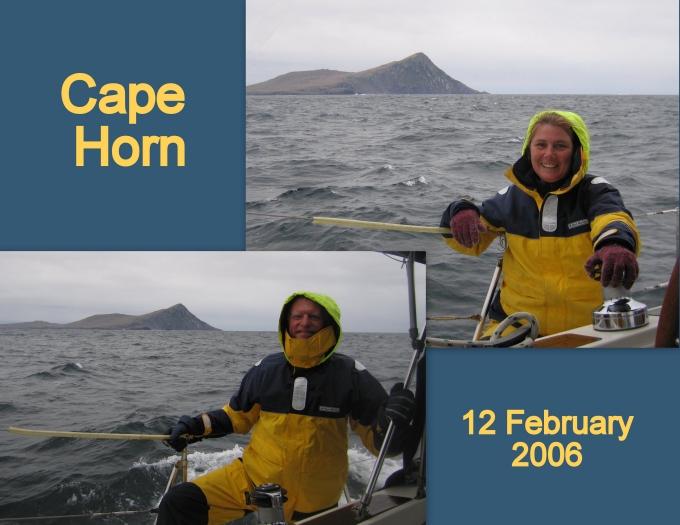
Cape Horn, Tierra del Fuego, Chile

12 February 2006

Probably the most memorable cape of all the capes was Cabo de Horno … Cape Horn, at the tip of South America. It was our first great cape and we approached it with healthy mix of temerity and trepidation. Rounding Cape Horn these days on a yacht isn't quite like the clipper ships of yesteryear who had no weather forecasts and took whatever Neptune was handing out when they arrived. No, we had the luxury of waiting  for a reasonable weather window … and we did. We had to request a special zarpe (permit) from the Chilean Armada to make the trip from Puerto Williams. We knew there were safe anchorages along the way in case we needed them. Despite all this, we were still apprehensive. It's the most southern of the southern capes dipping down to 56ºS, well into the furious 50s.
Cape Horn

Cape Horn

There were several fellow cruisers who were planning the same trip, but we were alone for our rounding. With extra crew aboard and on a calm day, it's possible to stop at the lighthouse, sign the log and visit the little museum at Cabo de Horno. We were short-crewed, just us and Jelly, and by the time we spotted the lighthouse, it was anything but calm. What started out as a tranquil, quiet rounding, ended up with 50 knot winds and we sought out a hidey-hole and hunkered down in Caleta Martial for three subsequent days. It was exhilarating and a bit scary all at the same time.

South West Cape, New Zealand

10 February 2011

Almost five years later to the day, we rounded South West Cape in New Zealand at the tip of Stewart Island. We'd left from Opua on the northeast coast of the North Island with the intent of circumnavigating the country. It seemed like a good idea at the time. New Zealand's wild and rugged west coast offers little in the way of protected ports until Fiordland on the South Island. In Fiordland, there are lots of little nooks and crannies to tuck into, but other than Milford Sound, there's not much in the way of amenities. In fact, it's a pretty desolate area, abounding in untouched beauty.  It was an overcast, gray day as we doubled South West Cape with enough wind to sail and more birds in the sky than we'd ever seen before. Stewart Island remains one of our most pleasant cruising experiences. It is the second most southern cape at 47ºS, high in the Roaring 40s.

South West Cape

South West Cape

South East Cape, Tasmania, Australia

9 March 2012

Once we had South West Cape under our belts, the urge to round the other three capes started gnawing at us. We'd done the hardest two, what's three more? So when we arrived in Australia and most of the other cruisers were heading north towards Asia, we sailed south across the Bass Strait  to Tasmania, and back into the Roaring 40s. Tassie was one of the those destinations on our bucket list that we weren't sure we'd ever get to … never mind circumnavigate. Crossing the strait is tough enough, but tackling Tassie's west coast was a challenge. We found respite in Strahan and up the Gordon River in Macquarie Harbour and then further down the coast at Port Davey. Again, desolate, hard-to-get-to places that were supremely beautiful and all the more special because of their inaccessibility.
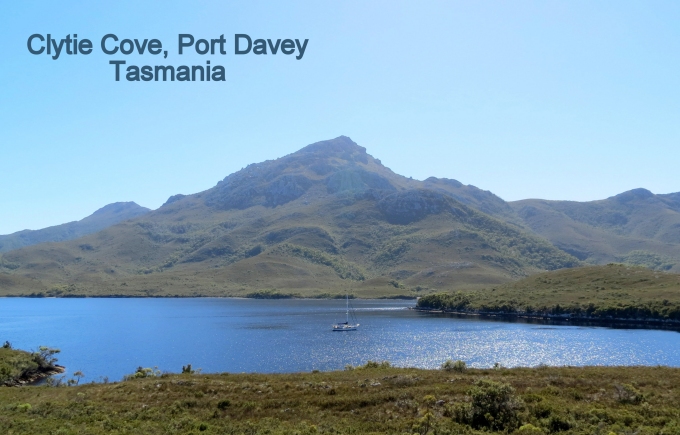
Port Davey

Port Davey

Once again, we chose an appropriate weather window of light southwesterly winds for rounding South East Cape on the southern tip of Tasmania. It was calm enough to enjoy, but not a particularly scenic or distinguishable cape. On cue, the wind picked up late in the doubling and we sought refuge in the Pigsties of Recherche Bay for a few days.
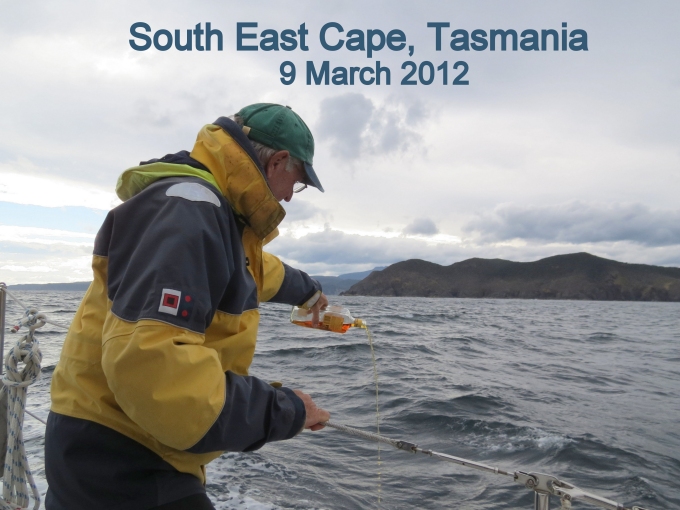
South East Cape

South East Cape

Cape Leeuwin, Western Australia

21 April 2014

We were late in the season for rounding Cape Leeuwin and feeling quite anxious about it. We were moored in Albany and cast off the moorings at first light on Easter morning. The winds were light southwesterly as we motored across King George Sound back into the Southern Ocean. With 166 nm to go, we were hoping the fickle winds of the south Western Australia coast would hold true to forecast. It was a two day, one night trip with few options for refuge if the weather changed. Neptune smiled on us with 15-20 knot winds for the entire passage, including the rounding of Cape Leeuwin. With mild weather and calm winds, we anchored in Port Hamelin for the night before heading out early the next morning for the fine anchorages of Geographe Bay.
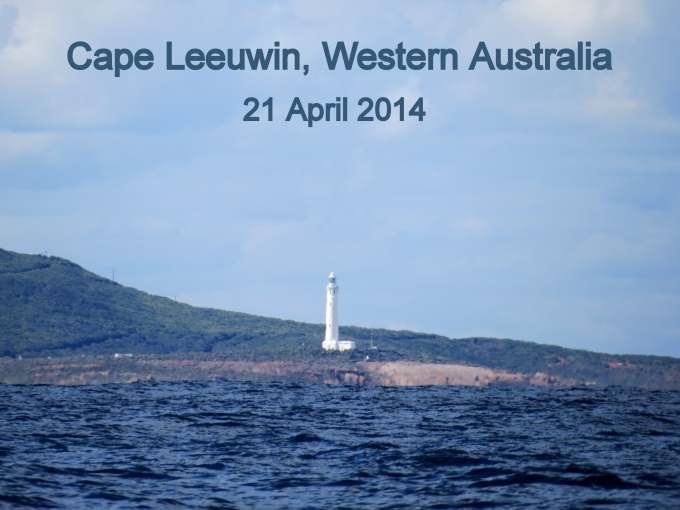
Cape Leeuwin

Cape Leeuwin

Cape Agulhas, South Africa

29 March 2015

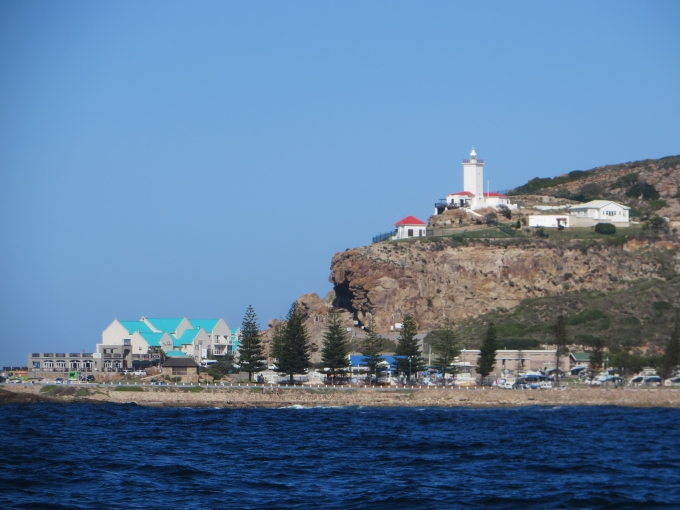
Though it's not considered one of the “great” southern capes, Cape Agulhas happens to be the most southern point on the continent of Africa and the dividing point between the Indian and Atlantic Oceans.
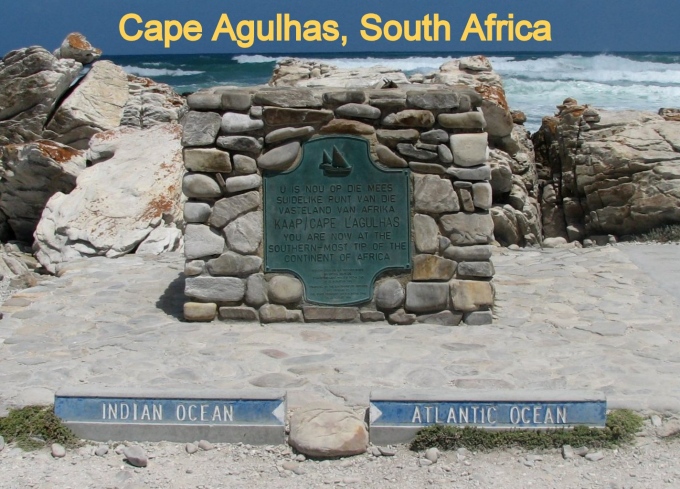
Cape Agulhas by day

Cape Agulhas by day

We had to pass it en route from Mosselbaai to Cape Town, and it deserves its own mention. We rounded Cape Agulhas in the middle of the night, and thus, the only picture was of the tot of rum that David offered Neptune as we rounded. As capes go, Agulhas was benign and a non-event … our favorite.
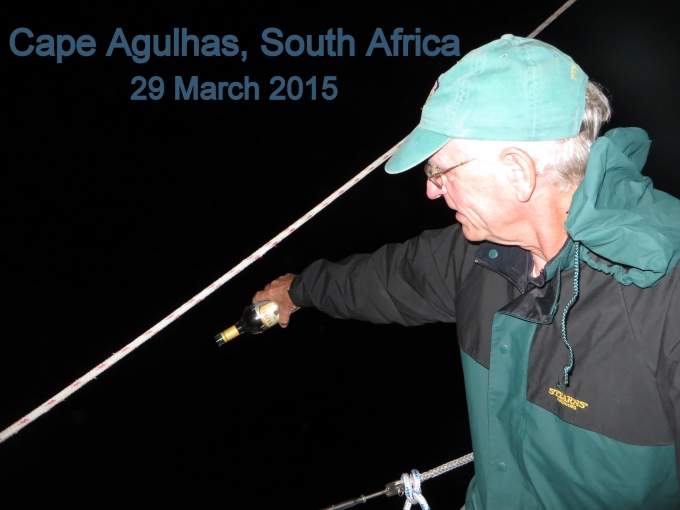
Cape Agulhas at night

Cape Agulhas at night

Cape of Good Hope, South Africa

1 April 2015

We had stood on the Cape of Good Hope, but never rounded it in Nine of Cups. Waiting for a weather window on the South African coast is a test of patience and belief in weather forecasts. The marine weather forecast changes not only daily, but sometimes by the minute. We were positioned in Simon's Bay with only a 60-mile daytrip necessary to round the Cape of Good Hope, the last of the five great capes. We motor-sailed out of False Bay under overcast skies and headed for Cape Point, the Cape of Good Hope. We couldn't have asked for calmer, flatter seas en route. We relaxed and enjoyed the rounding, having ample time for pictures and posing. The west side of the Cape had us reefing down and hanging on to our hats in 30-40 knot winds.

Cape of Good Hope

Cape of Good Hope

As is our tradition for rounding all the capes and at the beginning and end of all passages, we toasted Neptune. He got a double tot on our arrival in Cape Town. We were feeling pretty pleased with ourselves … downright chuffed. Completion of our circumnavigation and rounding the last of the five great southern capes … not bad for a day's work.
Tying the Knot

Arrival in Cape Town … at last

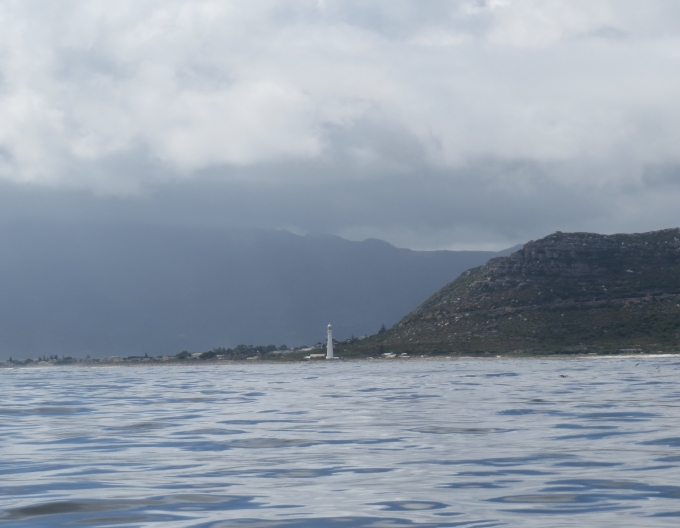
Once we rounded the Cape of Good Hope, the wind freshened from the southeast. At 25 knots, we reefed the mainsail. At a sustained 30 knots with gusts to 40, we decided to triple-reef. Then it increased a bit more, till it was directly on the stern at 35 knots as we headed past the Slangkop Light in the late afternoon. Foam blew off the whitecaps and the tranquil, flat seas of just a few hours before seemed a figment of our imaginations. We were definitely nearing windy Cape Town …  we remembered it well.

slangkop light cape town south africa

The Twelve Apostles, sandstone cliffs that form the backdrop for Camps Bay, were regal. We tried counting all twelve, but the cloud cover was too thick. According to Wiki, however, Cape Governor Donkin who named these distinctive rock formations in 1820, was either math or visually challenged, as there are in actuality 18, not 12, distinct sandstone Apostles (buttresses).

twelve apostles cape town south africa

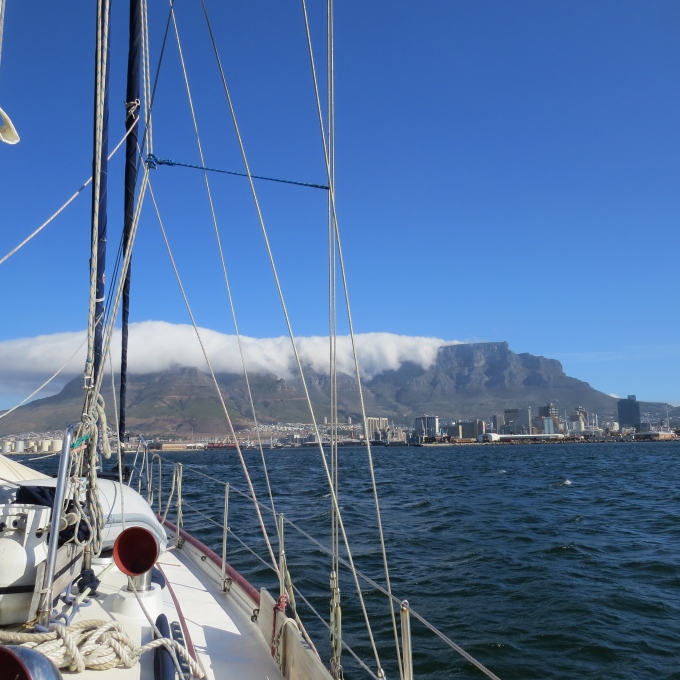
Then the Cape Town city skyline popped into view with Lion's Head. It was so beautiful, it was almost surreal.

heading into table bay cape town south africa

With Table Bay in our sights, we passed the candy cane stripes of Greenpoint Light and waited for a big fishing boat to depart the channel before we made our turn and headed into the Duncan Dock.

greenpoint light cape town south africa

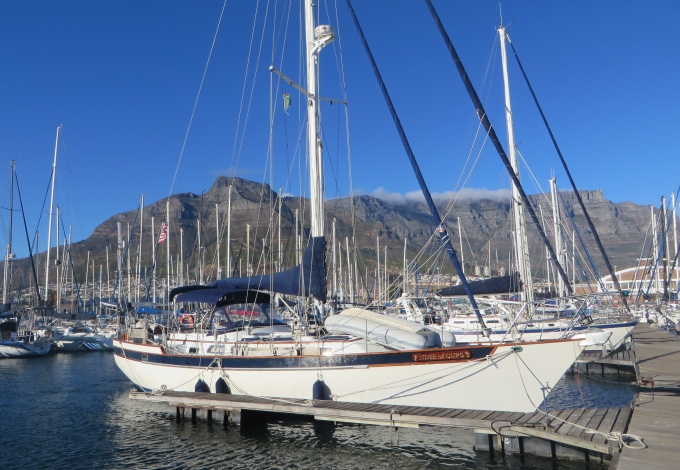
As David maneuvered the boat in the wind, I rigged the docklines and fenders, trying to maintain my balance in the wind and rocking of the boat. We had our berth assignment at Royal Cape Yacht Club and, despite the 30 knots of wind, pulled in with no difficulties other than our own anticipatory angst. We tied up, tidied up and shouted Yahoo.

all tied up at cape town south africa

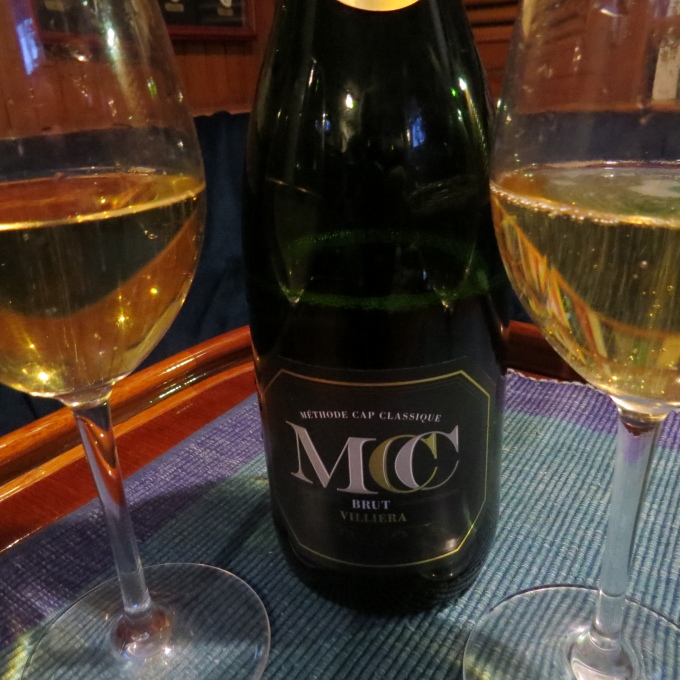
Circumnavigation complete! David popped the champagne, and after a celebratory tribute to Neptune, we toasted and sat back to relax. It's been quite a trip. We'll celebrate more later.

champers at cape town south africa

Where to next?

Beware the Notch - Pringle Bay

Mosselbaai to Simon's Town

Yes, I know we're supposed to be heading to CAPE Town and we are, but SIMON'S Town is on the way … kind of … and we've heard such good things about this little seaside town and … you know how we are about making plans and sticking to them. We're easily distracted.

simons town 210 nm

We stayed an extra night in Mosselbaai because the promised easterlies were really southeasterlies and very light which would have meant motoring for most of the day. Plus, (this is the real reason) it was rainy and drizzly and raw, and let's face it … we're wimps. Sun was promised for a few days and the weatherman was good on his word. It's always easier leaving port on a sunny day after a good night's sleep. We rigged the whisker pole to port, hauled anchor, hoisted the mainsail and set off mid-morning under a glorious blue sky with a cold easterly wind.

leaving mossel bay

Dolphins jumped. A seal poked his head out of the water. White-breasted cormorants dove for their breakfasts. We were a bit miffed at the local fishermen who had laid out fishing floats in our path, requiring us to slalom through the maze. Then, one of the floats flew off and we realized it was pairs of gannets strategically resting along our route. Oops … never mind, fishermen.

cormorants not floats

The day was mostly uneventful. We were anxious about rounding Cape Agulhas and, as you already know, other than the tot of rum to Neptune at 0400, it, too was quite uneventful. That is in no way a complaint! We hailed the rising of the sun, portending another sunny day ahead. The sun never seemed so big.

big african sunrise

We knew we couldn't make Simon's Town before dark, though we were making 7 knots. Rather than spending another night at sea and wait until light to enter the marina, we opted to tuck into Pringle Bay about 25 nm away. David had noticed it on the charts, a little indentation on the coast on the west side of Cape Hangklip  and it  looked as if it would protect us from the building southeasterlies. The forecast was calling for 15-20 knots, but by late afternoon, we were seeing sustained 30-35 knot winds and gusts near 50. We have two cruising guides aboard and both agreed that in case of strong southeasterlies, little Pringle was the choice of local fishermen.

Rounding Cape Hangklip proved to be more difficult than Cape Agulhas. With a double-reefed main, we were motor-sailing with only a few miles to go. Though we anticipated some cape effect as we rounded Hangklip, we weren't expecting quite as much as we got … near 50 knots. We could see little Pringle Bay, but getting there was another story. We clawed our way at 1.5-2 knots up the coast, eased our way in and doused the main. As we headed into the bay, the waves subsided and we noticed the notch in the mountains, just above the quaint little town of Pringle. Not a good sign.

cape hangklip

We'd seen notches like this before at Erith Island in the Bass Strait and many times in the Patagonian canals. Our experience was that a notch like this tends to funnel the wind through like a locomotive. Yet both guides seemed to indicate the fishermen found it a safe heaven in southeasterlies. Maybe something about this particular anchorage and notch was different. NOT! We noted there were NO fishermen in this bay at the moment.

erith island notch

Our alternatives were to set an anchor alarm and tough it out for the night, or heave-to in the middle of False Bay and wait overnight for light to enter the marina. The weather forecast, by the way, was still calling for strong southeasterlies throughout the area, just not quite as strong as we were seeing. We opted to drop the hook in Pringle. That in itself proved to be a challenge. With all the bouncing around, the anchor chain had fallen on top of itself in the anchor locker and fouled, so that when David gave me the sign to drop anchor, the chain jammed. We worked for five minutes or so unjamming it, the gale force winds pommeling us as we worked. Finally, it was free. David re-positioned us for anchoring and thankfully the hook caught and held almost immediately. There was no need to back down on it with a 40-knot wind blowing. The chain was out straight and taut in seconds and Cups was swinging around and pitching gently at its end.

Yes, we did tidy up the decks and stow the whisker pole, but nearly blew off deck in the process. No, we did not launch the dinghy and go ashore. We went below and had a cuppa. Whew! The wind howled the whole night long, “shivered our timbers”, shrieked through the rigging like a banshee. No anchor alarm went off, but we checked regularly, just to make sure we were still in the same spot … and we were.

pringle notch

We waited till dawn to up-anchor. We checked the local AcuWeather and found that Simon's Town was experiencing 9-12 knots of wind, while the notch was till providing us with 30 knots and all the noise we could we handle. Moral of the story: Beware the notch.