A Round versus Around

After arriving in Cape Town, we had to review our track and actually convince ourselves that we had indeed completed a bona fide circumnavigation … and we had. Rounding of the Capes, however, required more review than we'd previously given it. It might be a question of semantics, but we're embarrassed to say that we may not have rounded all of the five great capes after all. We have rounded four of them, but we sailed “around” Cape Horn like most yachties do. We were unaware of the “rules” regarding a rounding of the world's southernmost cape. cape horn

Upon researching "rounding the Horn", I found some conflicting  information. Wikipedia, for instance indicates that a rounding of the Horn “is traditionally understood to involve sailing from 50 degrees south on one coast of South America to 50 degrees south on the other coast, the two benchmark latitudes of a Horn run...”. Though it's not perfectly clear, we think this means crossing the latitudes at 50 degrees in both the Atlantic and Pacific. Well, we'd been at 50 south on the west coast (Gulfo de Trinidad, Chile in the Patagonian Archipelagos) and 50 south on the east coast (heading north up the Argentine coast from Ushuaia to Mar del Plata), perhaps we had rounded the Horn.

Around Cape 50DegreeMap

Then I stumbled upon the  IACH website (International Association of Cape Horners) and their eligibility criteria. “The Horn rounding shall be part of a non-stop passage of at least 3000nm and shall pass through fifty degrees south in both Pacific (or Indian) and Atlantic Oceans … under sail.”  They also added that that Cape Horners must “have rounded Cape Horn in a commercial sailing ship in trade.” Well, we definitely didn't qualify in this regard. Obviously, these rules are not for yachties and we don't qualify to be Cape Horners.

Looking at the websites of several commercial passenger boats that ply the Cape Horn waters, many mention “rounding the Horn”, but can you trust an advertisement for adventure seekers? Are they really “rounding the Horn”? Certainly, our trip around Cape Horn was a bit more dramatic than being on a cruise ship or a crewed passenger vessel, but the question remained … was it a round or around?

We think the true criteria for rounding Cape Horn is probably sailing from 50 degrees south from the Atlantic to 50 south in the  Pacific (or vice versa) … non-stop and outside the protection of the Patagonia and Tierra del Fuego archipelagos. With this criteria in mind, Joshua Slocum never rounded the Horn aboard “Spray” (though he did manage it twice sailing on a commercial vessel). Nor did Magellan in 1520 make it nor did Sir Francis Drake round the Horn in 1578, for that matter. They both took the shortcut through the Straits of Magellan  … and still they named the Drake Passage after Sir Francis. Go figure. It wasn't until 1616, when Dutch explorer and navigator Willem Schouten rounded and named Kaap Hoorn that the Cape was rounded for the first time. Our hero, Captain James Cook, managed it from both directions. What a guy! Nine of Cups and crew, however, did not.

Around Cape Horn

So, readers and fellow sailors, we didn't mean to lead you astray or boast about accomplishing something that we'd really not done. Nostra culpa … but sailing “around” Cape Horn will have to suffice.

A few notes about what we're NOT entitled to...

A sailor that rounds the Horn can wear a gold loop earring. Tradition has it that the earring should be worn in the ear that faced the Horn as it was rounded. I actually bought a gold earring for David at the time which he never wore. Good thing, huh?

Another amenity offered to sailors who've rounded the Horn is being allowed to put one foot on the table. If they'd rounded the Cape of Good Hope, too, they were allowed to put both feet on the table. I don't see this as a big privilege, but that's just me.

We're also missing out in the tattoo department because true Cape Horners can have a fully rigged ship tattooed somewhere on their body parts. Just as well we didn't do this because at our ages, our tattoos would  probably look like sinking ships.

A Bona Fide Circumnavigation

CircumDef NOCMap It seems there are some strict criteria for actually completing a bona fide circumnavigation … and we thought it just entailed sailing around the world and “tying the knot”, i.e. crossing your track. It seems it's much more complicated than that.

For example, Guiness states that:

A true circumnavigation of the Earth must:

  • Start and finish at the same point, traveling in one general direction
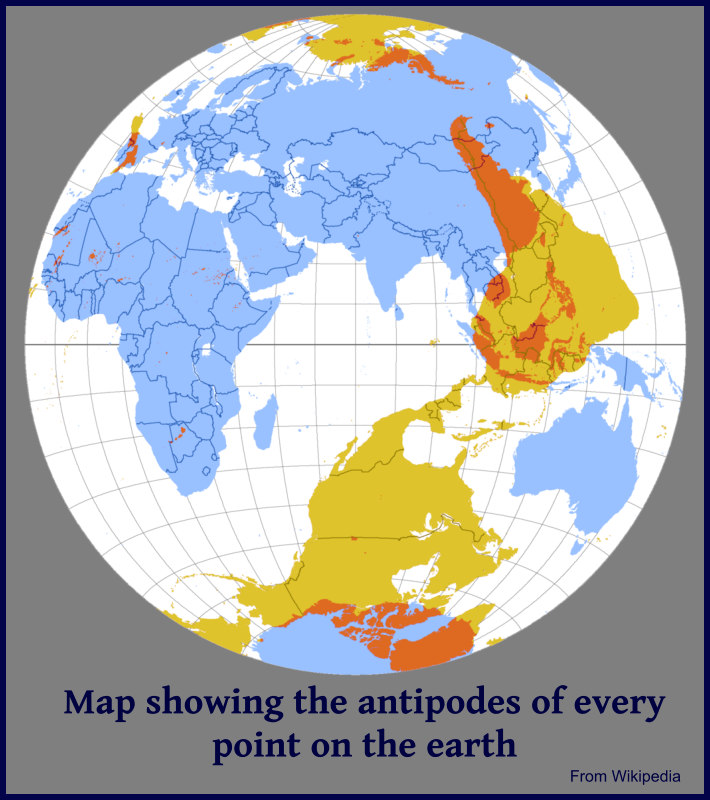
  • Reach two antipodes (antipodes are two points on the Earth that are diametrically opposite each other, i.e. a straight line drawn between the two points would pass through the center of the Earth)

From the above, it follows that a true circumnavigation must:

  • Cross the equator a minimum of two times
  • Cross all longitudes
  • Cover a minimum of 40,000km or 21,600nm (a great circle)

Francis Chichester, the famous British sailor who completed a solo circumnavigation on Gypsy Moth in the 1960s, the Explorers Web Adventure Stats, and many others use the same criteria. The World Sailing Speed Record Council uses a slightly different criteria, however. They state that the vessel must start from and finish at the same port, cross all meridians of longitude, cross the equator, and travel at least 21,600 nautical miles. Each leg must commence at the exact point where the previous finished off (meaning the legs cannot be completed out of order). They have no requirement to reach antipodal points.

CircumDef AntipodesGlobe

I know – this is way too much trivia, and why do we care anyway? We care because a circumnavigation is an achievement, and it is human nature to attempt to set records accomplishing it. Who was the fastest? the youngest? the oldest to circumnavigate the globe? And to set a record circumnavigating the globe, there must be a definition of what constitutes a circumnavigation. While sailing around the world via a route entirely in the Southern Ocean would be an admirable feat, the distance traveled would be well under 10,000 nautical miles, less than half the distance of a great circle of the Earth, and it is not reasonable to call this a true circumnavigation.

Some interesting circumnavigations:

First circumnavigation: Juan Sebastián Elcano and the remaining members of Magellan's crew. They set out with 5 ships and 200 men in 1519, and returned to Spain after a west-about circumnavigation with 1 ship and 18 men who were barely alive. Maybe this was also a record for the highest crew attrition rate for a circumnavigation?

First solo circumnavigation: Joshua Slocum on Spray in 1898. He actually had four sets of antipodal points on his trip.

First nonstop solo circumnavigation: Bernard Moitessier. He was a participant in the 1968 Golden Globe Race, but dropped out of the race, deciding to continue on to Tahiti and not return to the finish line in England. While he didn't finish the race, he circled the globe 1-1/2 times, and actually closed the loop for a circumnavigation before the race winner, Robin Knox-Johnson.

Most amazing: Jon Sanders who completed a non-stop, solo, unassisted triple circumnavigation in 1988. He was alone at sea for 658 days. Wow!

So how did we stack up? Was our trip around the world a bona fide circumnavigation? Here are our particulars:

  • Starting and ending port: Cape Town, South Africa
  • Distance required: 21,600 nm; Distance sailed: 47,409 nm
  • Equator crossings: 2
  • All longitudes traversed
  • Antipodes: Florida to Panama 12 Jan 2008 – 0820   14 degrees 43 min N/ 80 degrees 05 min W Fremantle to Cape Town 21 Sept 2014 – 0300  14 degrees 43minutes S / 99 degrees 55 min E
  • Direction: Generally west-about

noc circumnavigation

It took us eight years and we certainly didn't set any records (although if it took us much longer, we might have qualified as either the slowest or the oldest circumnavigators). While our meandering route encompassed more than double the distance required, I didn't find a record for the longest sail around the world, but probably no record there either. By any definition, however, it was a bona fide circumnavigation … accomplished by sailing just a little further.

Rounding the 5 Great Southern Capes

...plus one

In addition to finishing our circumnavigation when we arrived in Cape Town, we also completed the rounding of the Five Great Southern Capes plus Cape Agulhas, the most southern point in Africa.

5 southern capes
5 southern capes

It was never our intent to round all the southern capes. Heck, it was never really our intent to circumnavigate the world, come to think of it. It's our “just a little further” philosophy that got us around. We like sailing. We enjoy the cruising life. We love travel. We just got carried away, always going just a little further and here we are writing a recap of the five great southern capes.

Cape Horn, Tierra del Fuego, Chile

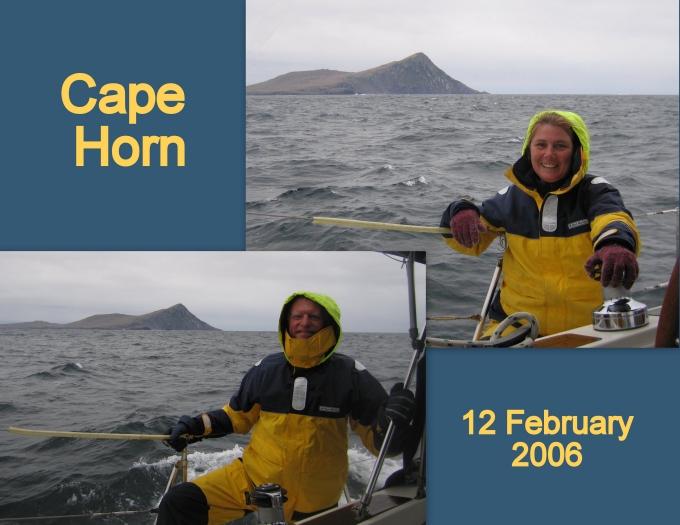
12 February 2006

Probably the most memorable cape of all the capes was Cabo de Horno … Cape Horn, at the tip of South America. It was our first great cape and we approached it with healthy mix of temerity and trepidation. Rounding Cape Horn these days on a yacht isn't quite like the clipper ships of yesteryear who had no weather forecasts and took whatever Neptune was handing out when they arrived. No, we had the luxury of waiting  for a reasonable weather window … and we did. We had to request a special zarpe (permit) from the Chilean Armada to make the trip from Puerto Williams. We knew there were safe anchorages along the way in case we needed them. Despite all this, we were still apprehensive. It's the most southern of the southern capes dipping down to 56ºS, well into the furious 50s.

Cape Horn

Cape Horn

There were several fellow cruisers who were planning the same trip, but we were alone for our rounding. With extra crew aboard and on a calm day, it's possible to stop at the lighthouse, sign the log and visit the little museum at Cabo de Horno. We were short-crewed, just us and Jelly, and by the time we spotted the lighthouse, it was anything but calm. What started out as a tranquil, quiet rounding, ended up with 50 knot winds and we sought out a hidey-hole and hunkered down in Caleta Martial for three subsequent days. It was exhilarating and a bit scary all at the same time.

South West Cape, New Zealand

10 February 2011

Almost five years later to the day, we rounded South West Cape in New Zealand at the tip of Stewart Island. We'd left from Opua on the northeast coast of the North Island with the intent of circumnavigating the country. It seemed like a good idea at the time. New Zealand's wild and rugged west coast offers little in the way of protected ports until Fiordland on the South Island. In Fiordland, there are lots of little nooks and crannies to tuck into, but other than Milford Sound, there's not much in the way of amenities. In fact, it's a pretty desolate area, abounding in untouched beauty.  It was an overcast, gray day as we doubled South West Cape with enough wind to sail and more birds in the sky than we'd ever seen before. Stewart Island remains one of our most pleasant cruising experiences. It is the second most southern cape at 47ºS, high in the Roaring 40s.

South West Cape

South West Cape

South East Cape, Tasmania, Australia

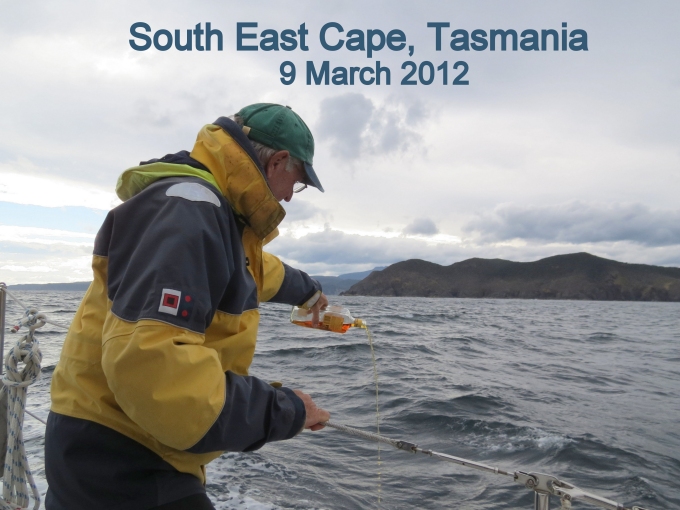
9 March 2012

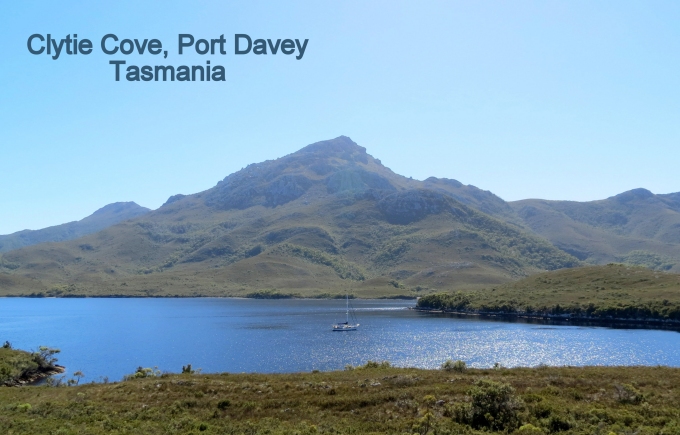
Once we had South West Cape under our belts, the urge to round the other three capes started gnawing at us. We'd done the hardest two, what's three more? So when we arrived in Australia and most of the other cruisers were heading north towards Asia, we sailed south across the Bass Strait  to Tasmania, and back into the Roaring 40s. Tassie was one of the those destinations on our bucket list that we weren't sure we'd ever get to … never mind circumnavigate. Crossing the strait is tough enough, but tackling Tassie's west coast was a challenge. We found respite in Strahan and up the Gordon River in Macquarie Harbour and then further down the coast at Port Davey. Again, desolate, hard-to-get-to places that were supremely beautiful and all the more special because of their inaccessibility.

Port Davey

Port Davey

Once again, we chose an appropriate weather window of light southwesterly winds for rounding South East Cape on the southern tip of Tasmania. It was calm enough to enjoy, but not a particularly scenic or distinguishable cape. On cue, the wind picked up late in the doubling and we sought refuge in the Pigsties of Recherche Bay for a few days.

South East Cape

South East Cape

Cape Leeuwin, Western Australia

21 April 2014

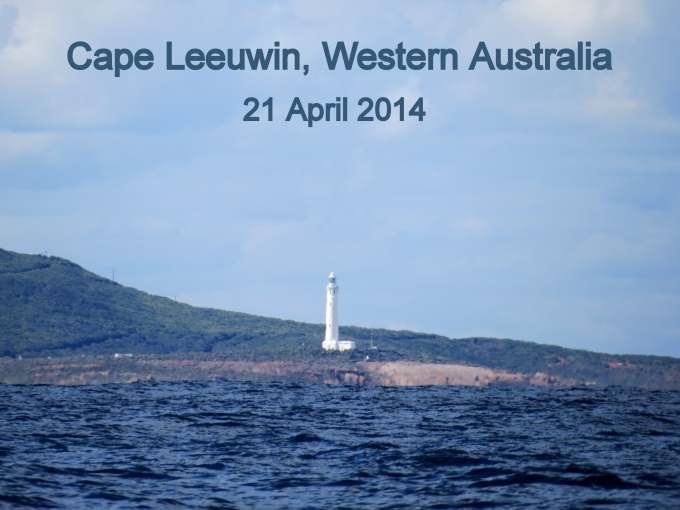
We were late in the season for rounding Cape Leeuwin and feeling quite anxious about it. We were moored in Albany and cast off the moorings at first light on Easter morning. The winds were light southwesterly as we motored across King George Sound back into the Southern Ocean. With 166 nm to go, we were hoping the fickle winds of the south Western Australia coast would hold true to forecast. It was a two day, one night trip with few options for refuge if the weather changed. Neptune smiled on us with 15-20 knot winds for the entire passage, including the rounding of Cape Leeuwin. With mild weather and calm winds, we anchored in Port Hamelin for the night before heading out early the next morning for the fine anchorages of Geographe Bay.

Cape Leeuwin

Cape Leeuwin

Cape Agulhas, South Africa

29 March 2015

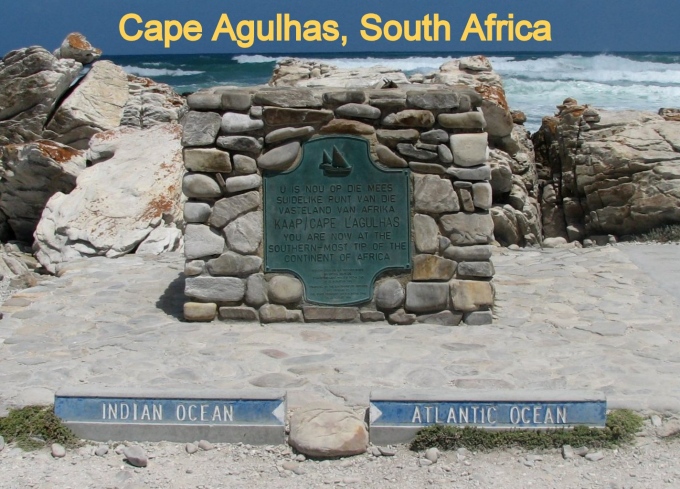
Though it's not considered one of the “great” southern capes, Cape Agulhas happens to be the most southern point on the continent of Africa and the dividing point between the Indian and Atlantic Oceans.

Cape Agulhas by day

Cape Agulhas by day

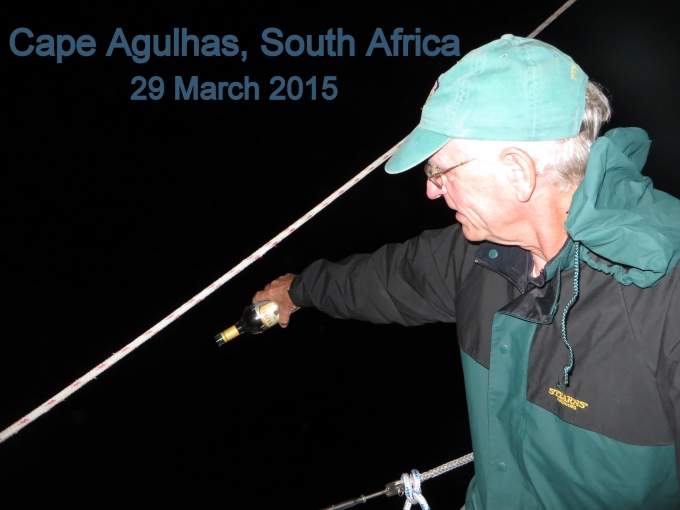
We had to pass it en route from Mosselbaai to Cape Town, and it deserves its own mention. We rounded Cape Agulhas in the middle of the night, and thus, the only picture was of the tot of rum that David offered Neptune as we rounded. As capes go, Agulhas was benign and a non-event … our favorite.

Cape Agulhas at night

Cape Agulhas at night

Cape of Good Hope, South Africa

1 April 2015

We had stood on the Cape of Good Hope, but never rounded it in Nine of Cups. Waiting for a weather window on the South African coast is a test of patience and belief in weather forecasts. The marine weather forecast changes not only daily, but sometimes by the minute. We were positioned in Simon's Bay with only a 60-mile daytrip necessary to round the Cape of Good Hope, the last of the five great capes. We motor-sailed out of False Bay under overcast skies and headed for Cape Point, the Cape of Good Hope. We couldn't have asked for calmer, flatter seas en route. We relaxed and enjoyed the rounding, having ample time for pictures and posing. The west side of the Cape had us reefing down and hanging on to our hats in 30-40 knot winds.

Cape of Good Hope

Cape of Good Hope

As is our tradition for rounding all the capes and at the beginning and end of all passages, we toasted Neptune. He got a double tot on our arrival in Cape Town. We were feeling pretty pleased with ourselves … downright chuffed. Completion of our circumnavigation and rounding the last of the five great southern capes … not bad for a day's work.