Day 5
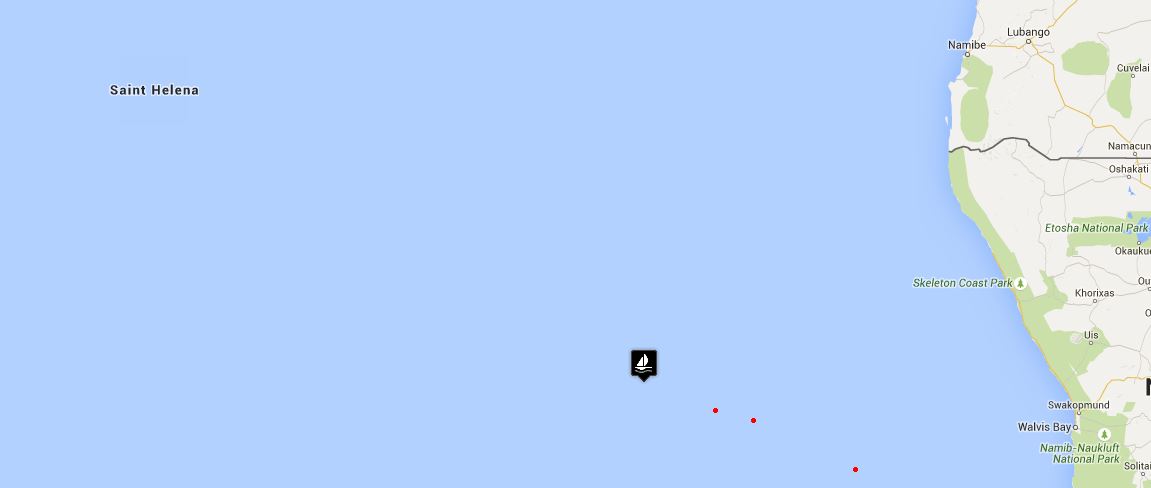
Miles to go: 840
Yet another gloomy, raw morning after a moonless, starless night. What's up with that? The sky is grey. The sea is grey. Blah, blah, blah! A maniacal wind god got his kicks playing with the wind velocity during the night. First it was 20 knots of wind, then 4 knots, then 20, then 7, then 25 ... all in quick succession, over and over and over. We'd wonder if we should think about reefing, then we wondered if we should get out the oars and help move us along. We're now about 20 degrees off course and thinking about poling out as the wind shifts more southeasterly. I'm sure as soon as we set out the pole, the wind will shift back again. And this was supposed to be a fast trip. Hmmm...no matter, I guess. We'll get there when we get there.
We've met only a few ships, mostly several miles off. A few Chinese fishing vessels were in our path hauling nets, but they were well clear before we passed on through.
We've settled into a routine. Three hours on, three hours off. During the days, we spend a few hours together, eating meals, chatting, talking about new book ideas and where we'll head after the Guianas. Otherwise, we nap and read and write and prepare meals and clean up. On passages, I cook and David cleans up. I consider this a vacation. We have our little daily rituals. David makes his tour of the deck each morning. So far, no major issues to report (thank, Neptune) which is somewhat incredible. I've packed away the Namibian courtesy flag and dug out the St. Helena and Q flags. I try to wipe down the cockpit daily...residual Luderitz sand, salt, and errant crew crumbs mount up if I don't stay on top of it.
We're ready for St. Helena, but still 840 miles to go. And just in case I haven't stressed it enough, it's still cold!
Day 6
Miles to go: 745
What in Neptune's name was I thinking? No major issues, I said. Doing well with power because of solar, wind and prop, I bragged. Am I freakin' crazy to have said that out loud? Written it down and actually shared it with you? Even thought the thought it in the first place?
Shortly after posting that last blog, we rigged the pole ... which promptly collapsed and bent into a very neat 90 degree angle rendering it much less useable. It's currently lashed, rather artistically, to the mast pulpit, awaiting the captain's verdict as to what will be done. No matter, there is no wind anyway. The erratic S/SE winds calmed to a constant 5-7 knots max. Overcast skies (no solar), no wind gen output and minimal prop gen output, have all contributed to "load shedding" aboard. Bah!
We're eating lots of oranges this trip. On my last shop at OK Grocery ( it's not great, but it's OK?) in Luderitz, they had a special on oranges ... 6 kg (that's about 13# worth) for less than $3! What a deal! But that's quite a crop of oranges and it required a separate trip to the dinghy to haul them (and hanging a separate hammock to contain them all aboard). David was surprised at the volume purchase. "Scurvy", I replied ...enough said.
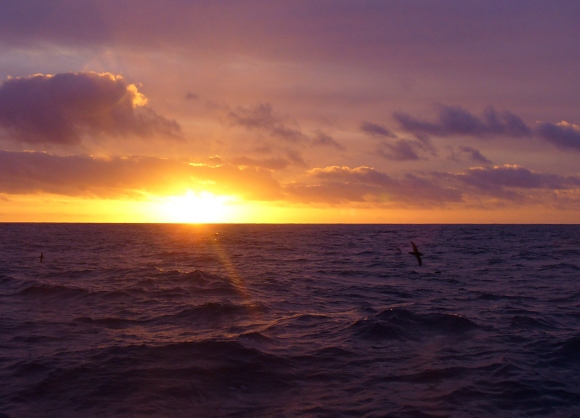
Now, why did that topic come up today? Well, eating oranges, at the moment, is the bright spot of the day! The skies are still grey. We've seen no whales, dolphins or Krakens. The only sea life we've seen are two stiff, dried-out, smelly squid on deck. There have been no gorgeous sunrises or sunsets ...nary a one. There is no wind to speak of and we're moving at glacial speed...not even fast enough to fish. There's no extra power, so laptop usage has been curtailed. Quite honestly, I'm getting a bit cranky. David woke from his off-watch nap and could smell the foul humor in the air. It was that palpable.
David has been pondering the pole situation. This is not a new problem. He's worked on the whisker pole several times since Australia, usually resulting in the pole becoming useful, albeit shorter, for some indeterminate period of time, and then breaking again. We need a new pole, and it's on the wish list, but was not in the budget in Cape Town after all of our other repairs and purchases. This time he aims to remove the extension altogether (it's the weakest point) and we'll use it as a mini-whisker with a reefed foresail...better than no pole at all. That was his project this afternoon and he worked assiduously at it with good results. I marvel at his sure-footedness as he works on the deck while the boat is rocking and rolling. I'm always amazed at his solutions and how well they work out. We now have a mini-whisker, about 5m long and it seems to be working just fine.
Miracle of miracles, the sun appeared late this afternoon, as did a pod of whales. It wasn't actually warm, but it was warm-er. I soaked it up and my blue funk evaporated. David saw a green flash. Things are looking up.
Passage Days 7 & 8 coming up1