En Route to Trinidad - Day 3

Day 3 Miles to go: 61

In the early morning hours, we threaded the needle through Galleons Passage between the islands of Trinidad and Tobago. It was still dark, and the horizon was lit up like a sprawling city … oil platforms, tankers, cargo ships, bulk carriers, car carriers, fishing boats, tugs … an endless stream coming and going through the channel. On watch, our eyes were glued to the AIS. We radioed at least a half dozen ships that seemed to be either bearing down on us or heading straight at us. All answered their hails promptly, found us on radar and managed to avoid colliding with us or running us down. It made for a high stress, less than peaceful night, but overall, we were pleased to remain unscathed.
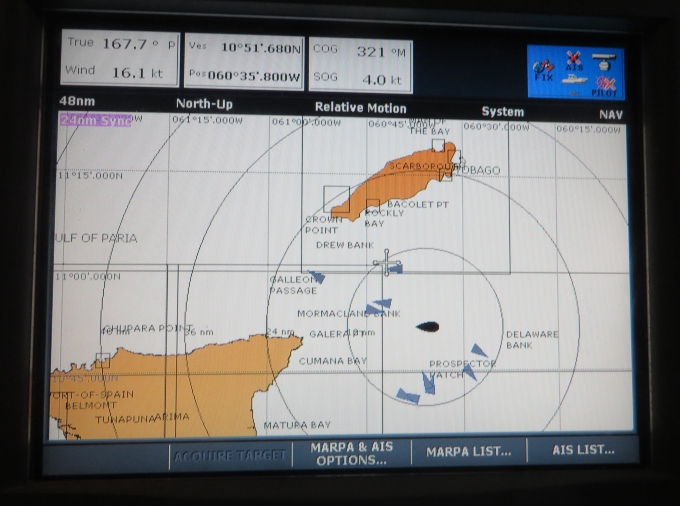
chartplotter with ships all around

As we rounded the northwest corner of Trinidad, we left the North Atlantic Ocean and entered the Caribbean Sea. Hallelujah! Unfortunately, when we turned the corner, we also lost our good angle on the wind. We slowed to 4 knots … too slow for a “business hours arrival”. We couldn't make it by 4 pm, and we were reluctant to pay an extra $100 for arriving outside business hours. The only other alternative was to slow down even more, spend another night enroute, and try to arrive after 8 am tomorrow. We reduced sail to the staysail only. Through the morning mist, Trinidad came into view. By 10 am, with 61 nm to go, with little wind, we were moving along at 2.5- 3 knots with the help of a favorable current.
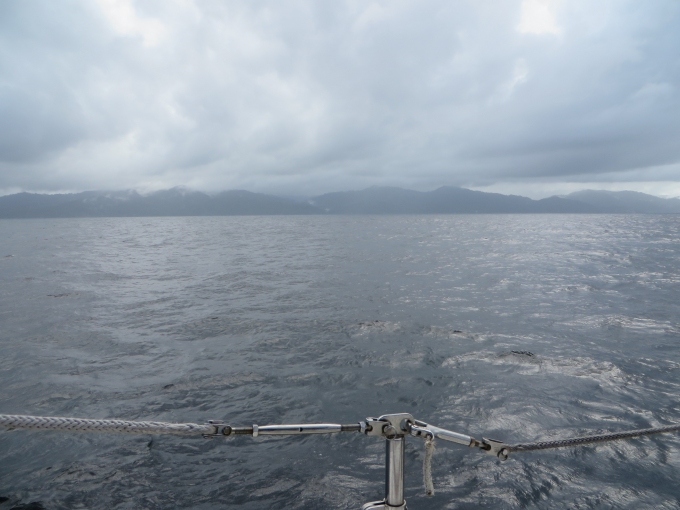
mistry trinidad

It rained and remained misty for most of the day with alternating squalls and calms. We dawdled along, resigned to spending another night at sea in order to arrive at the Customs dock at the proper time. As if to provide entertainment as we plodded along, a pod of dolphins appeared out of nowhere.
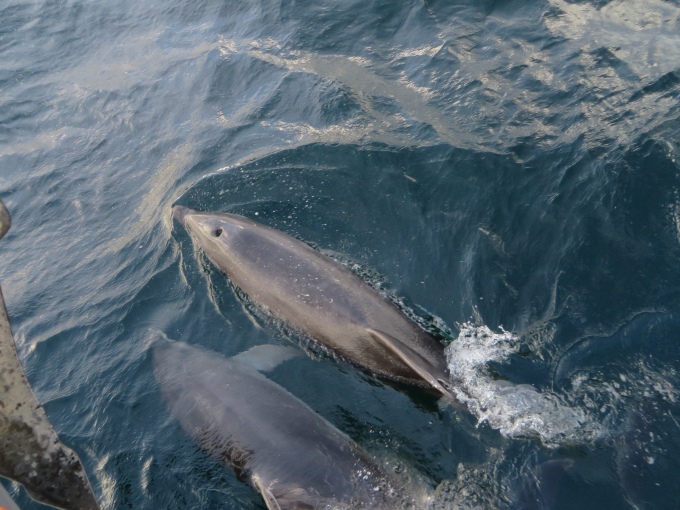
dolphin escort to trinidad

I heard the familiar dolphin breath sounds and ducked below quickly for my camera and the dolphin ID book.

These were big guys … 8 feet or more (2.5m+), with distinctively tall dorsal fins, blotchy coloring and lots of scars. We identified them as rough-toothed dolphins. This was a playful lot and in no particular hurry, it seemed. They played with us for nearly two hours, diving under the boat and riding the bow wake. When I stood at the bow to take pictures, the dolphins turned on their sides to look directly up at me. I thought it was my imagination at first, but the eye to eye contact was repeated several times.
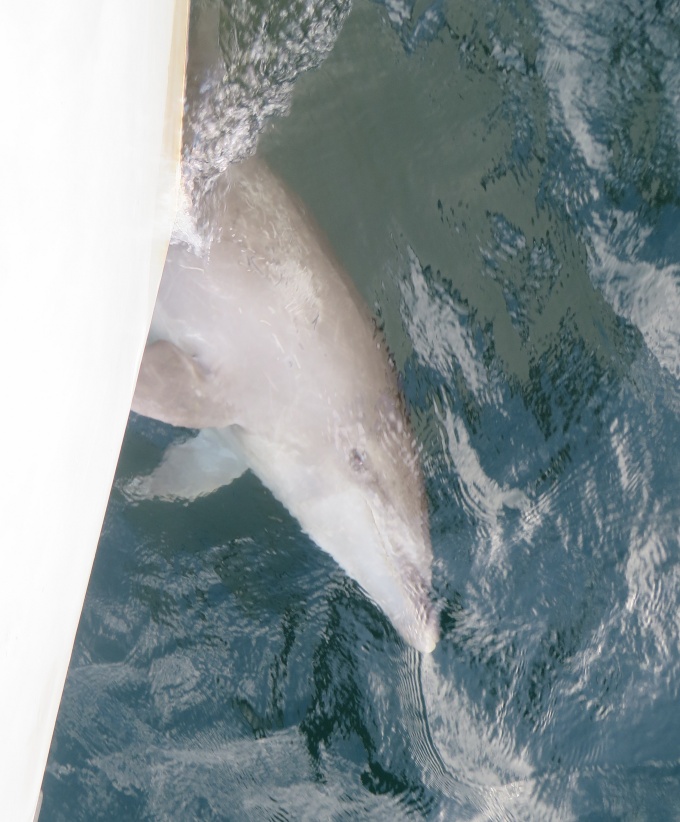
dolphin giving me the eye on the way to trinidad

I sat at the bow for nearly an hour, my feet hanging over the rail, the dolphins nearly close enough to touch. Though entertained, I finally returned to the cockpit. I heard a sharp slap sound, then a thud and then another slap, and another thud. David watched as one dolphin slapped his tail on the water, another slapped against the hull, and yet another jumped into the air. He walked to the bow and the dolphins followed. He returned to the cockpit and the slap/thud began again. These guys liked an audience. No matter how many times we've seen dolphins, they never cease to amaze us. Not to mention, dolphins are good luck for sailors and we considered their visit an auspicious welcome to Trinidad.
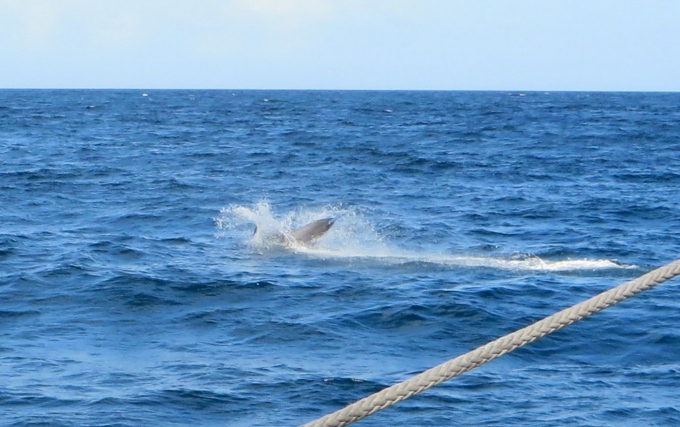
dolphin jumping and slapping

Night came and with it a calm and loss of current. We were two miles offshore and bobbed and rolled gently. For all intents and purposes, we were hove-to and remained so till 0630. We estimated two hours to the Customs dock, cranked up the engine and headed for Boca de Monos (Monkey's Mouth), a narrow channel between mainland Trinidad and Monos Island.
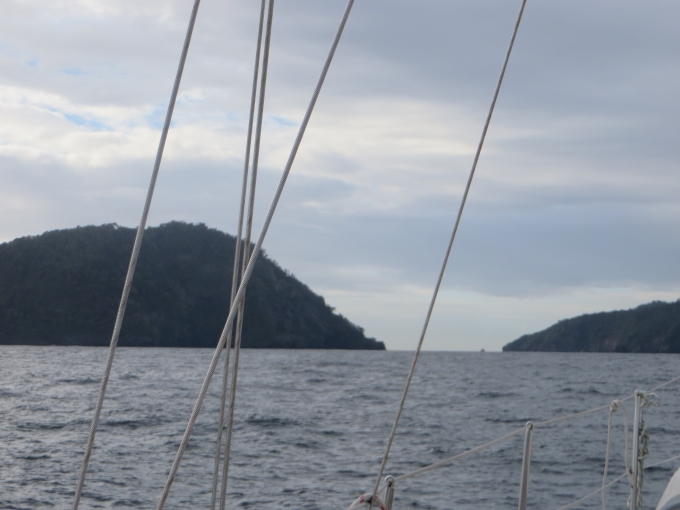
boca de monos in trinidad

We altered course to allow the fast ferry between Trinidad and Tobago, T&T Spirit, to pass and then entered the channel.
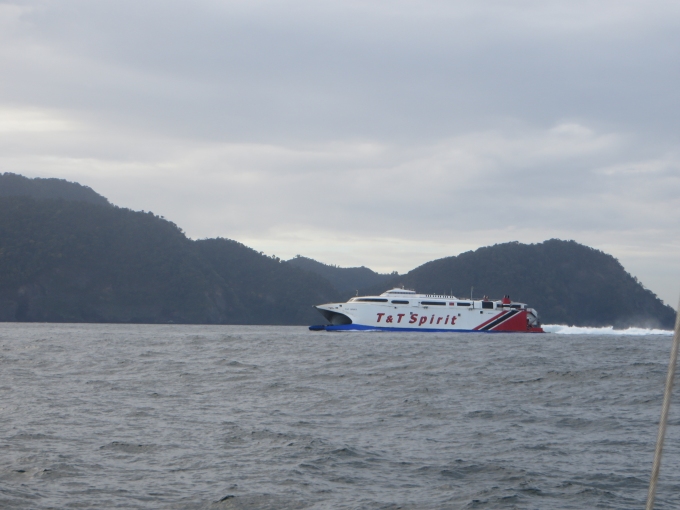
t and t spirit in trinidad

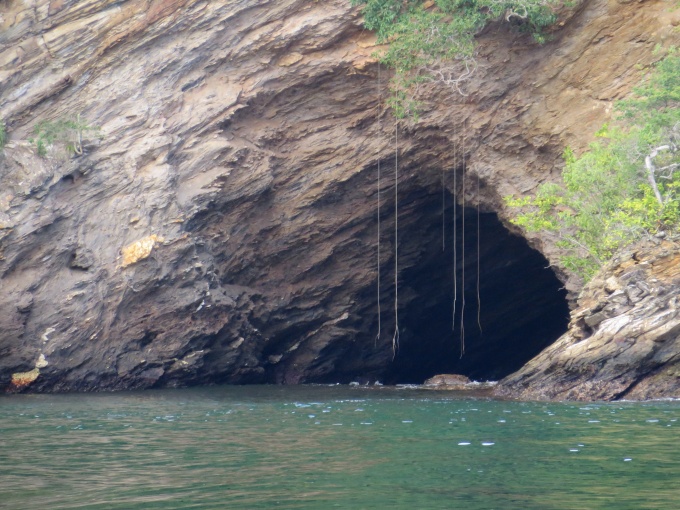
The channel was picturesque with interesting caves carved into Monos Island and large, craggy offshore rocks covered in greenery. Scotland Bay, on the opposite side of the channel, looked serene and inviting with two sailboats peacefully at anchor.
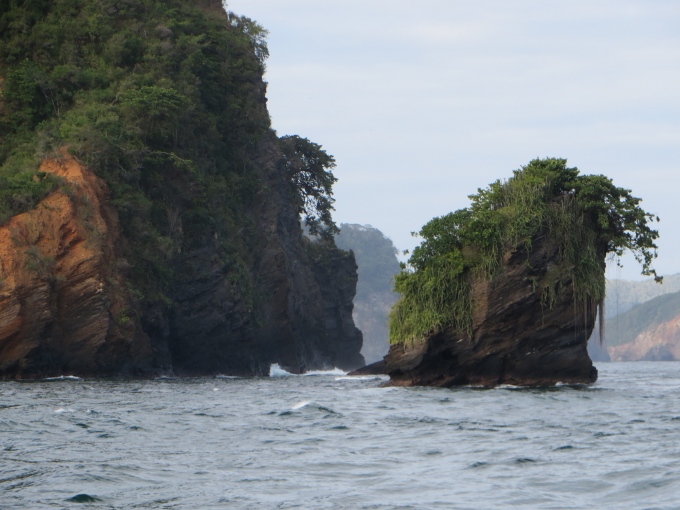
boca de monos trinidad


caves at boca de monos trinidad

We turned the corner heading into Chaguaramas Bay. Gasparillo Island came into view and beyond it, the congestion and frenzy we associate with this port.
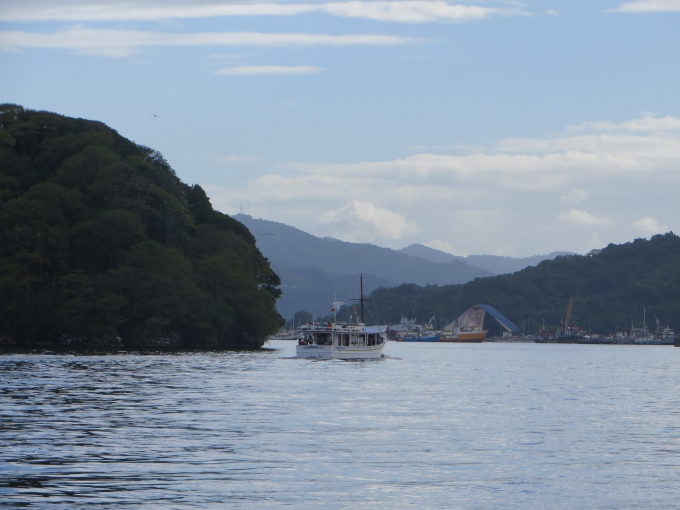
entering chaguaramas trinidad

Freighters, fishing boats and ferries, tankers, tenders and tugs … all competing for space. David threaded his way carefully past anchored ships, fast boats and through the mooring field of sailboats. We passed Power Boats and noted the location of the haul-out pen for future reference. We finally found a fairway to the Customs dock, tied up and sighed ... 0830 … perfect timing. Whew … we're in Trinidad.
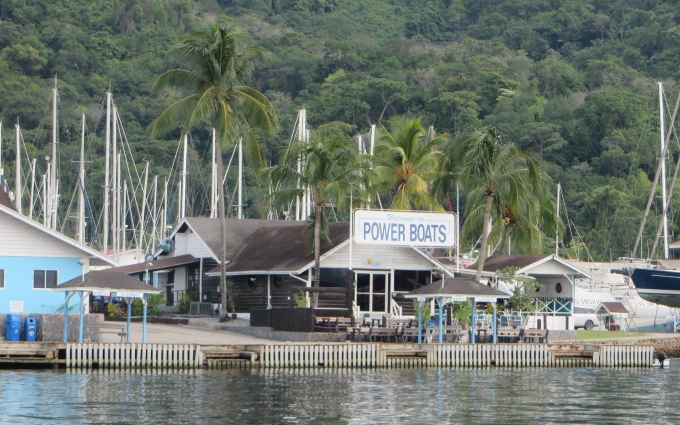
power boats in trinidad

En Route to Trinidad - Days 1 & 2

Day 1 Miles to go: 349 

We  maneuvered past the lines of fishing stakes at the mouth of the river to the GPS waypoint that marked the location of the missing Essequibo sea buoy, then raised the sails and pointed Nine of Cups towards Trinidad. We skirted around numerous fishing boats with their mile-long nets. The depths remained in the 3-5 fathom (18-30 feet) (2-10m) range for miles and miles. It took hours before the brown of the Essequibo finally gave way to the blue-green of the Atlantic.

to trinidad

Our route would take us northwest off the Guyana coast and then well off the Venezuelan coast. Piracy off Venezuela has been an issue for yachties in the past few years, so our course kept us further east and offshore to avoid any unpleasant encounters, as well as avoiding the mass of oil platforms off Trinidad's western shores.

The blazing sun, scattered-cloud sky and fine breeze stayed with us. We beam-reached the day away and the night, too. Fishing boats were out in great numbers through the night, but none closer than bright pinpoints of light on the horizon. One ship passed … miles away. Had it not been for the AIS, we might not have noticed it at all.

We took turns napping. The first couple of days at sea are always the worst for fatigue. No seasickness (thank all the sea gods!) despite constant 6-10 (2-3m), short-period waves knocking us on the aft starboard quarter.  Solar, wind and the prop generator kept the batteries topped up. A fine first day for the last leg of our Cape Town to Trinidad passage and the last sail of 2015.

Day 2

Miles to go: 200 

The ENE tradewinds held true and we coasted along in the 6s and 7s with all sails full all day long. We saw a few ships and a few fishing boats, but nothing very close. We idled away the day with chat about the to-do list for Trinidad, the to-buy list for the USA and all the activities we had planned once we were back in the States. We'd be flying home in a week's time and there were considerable chores to accomplish, including getting Cups hauled and settled in Chaguaramas before we left.

The weather was beautiful until nightfall. It always seems the night is the time Neptune chooses for squalls and challenges. We had determined that we were going too fast to arrive at a decent hour in Chaguaramas. Trinidad Customs and Immigration is notorious for charging overtime rates when a yacht arrives outside of business hours (8am-4pm). We wanted to arrive mid-morning. At our current speed, we'd arrive around 11pm. We chose to double-reef the main and the jib … that only slowed us down to 7 knots. It rained off and on with gusts to 30 knots.

Beyond squalls, a harried night was punctuated with heavy ship traffic, oil rigs/platforms, Venezuelan fishing boats constantly yacking on Channel 16 and flying fish landing on the deck including two in the cockpit. Ralph and Joe were distant relatives of Bob the Stink, it seems, and stopped by quickly to say hello. David promptly chucked them overboard. A small bird perched on the lifelines and bummed a ride for about an hour, then took off without a peep.

Not so far to go now. One more night and we'll be in Trinidad.

In Search of Internet in Guyana

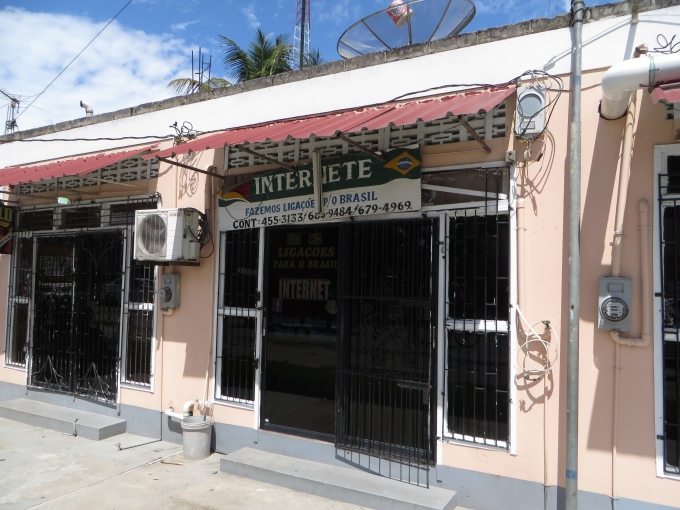
Once again, we are Internet-challenged. Sad to say, we used to survive admirably well without Internet in our early days of cruising. But now that we do a daily blog, it seems a hardship to do without it. Internet access aboard, via digital modem, has been on our agenda since we arrived here in Bartica. Typically, in other countries, we've purchased a dongle/digital modem, a SIM card and a prepaid data package and though there were hiccups, we (read that David) usually succeeded in getting Internet aboard. It's been a struggle here, however, to access the Internet at all. As you'll recall, we visited the Digicel office on our first day ashore. We couldn't purchase a digital modem here in Bartica (maybe in Georgetown...hours away downriver), but if we unlocked our iPad, we could purchase a SIM and a prepaid data package. Not the best solution, but better than nothing. But Carl, the “unlock” guy, wasn't in his office that day or the next, so we needed to find another alternative … an Internet kiosk. Really? We haven't done that in nearly a decade.

internet in guyana

We found two places offering Internet … one was locked up tight; the other was just opening at 10:15. Internet was G$500/hour … fair enough. David had his iPad and, with a little help from our kiosk friend, was able to get on line immediately. I had a USB memory stick with me loaded with pics and blog posts for Gentry and I planned to use the kiosk's computer. I had problems getting on-line. First, the keyboard letters were missing entirely. Second, all the screen commands were in Portuguese … I forgot to mention, it was a Brazilian Internet place.

I finally accessed Yahoo only to be blocked from the account. “It appears you have not accessed your account from this computer before. For security reasons, we'll send you a code to verify your identity.” They offered to send it to my Yahoo mail (which I couldn't access) or our SailMail email address. Well, we weren't on the boat and I didn't have my computer, so SailMail was out of the question. Luckily, David was already on line, so we opted to have the code sent to the Yahoo address.

We waited and waited. Internet was painfully slow, but not this slow. I asked for the code to be resent. It popped up on the iPad screen a few minutes later. Unfortunately, the message “Downloading this message is taking longer than usual” also appeared. We waited and waited some more. Finally, the Yahoo code appeared … just about the same time that the electricity went out. “Black-out”, murmured our Internet guy. “How long?” we queried. A shrug of the shoulders indicated anywhere between 10 minutes and 10 hours. He told us to return in 30 minutes.

We checked out the flea market alley and a few other shops … Christmas decorations were on sale … and dutifully returned to the Internet shop in 30 minutes. Still no power. We had lunch and returned in another hour … still no power. We picked up some Demarara sugar from the grocery store and returned an hour after that to find the shop closed. A neighboring vendor indicated 6pm was the ETA for power resumption. We gave up and headed back to the boat.

En route, David noted that the generators for the power station, right on the main street, were housed in a semi-trailer in front of the Bartica Power & Light Company. A service truck was parked in front of the trailer.

guyana power and light

Looking up at the bird's nest of wires surrounding each utility pole along the street, we could begin to understand the power issues in Bartica.

birds nest of power wires in guyana

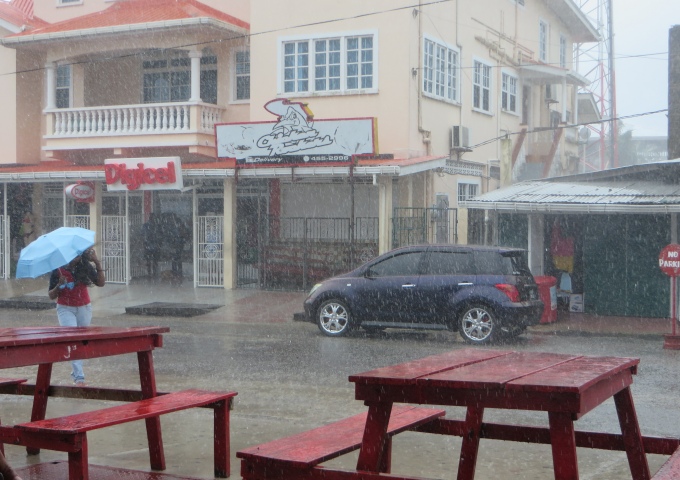
And then it was Sunday … everything was closed. On Monday morning, bright and early, we headed back into town. We found Keevan who handled our iPad unlocking problem. We waited out a torrential downpour then headed to Digicel to purchase a SIM card and 1GB of prepaid data for a whopping G$5000. Ouch!

waiting out the rain in guyana

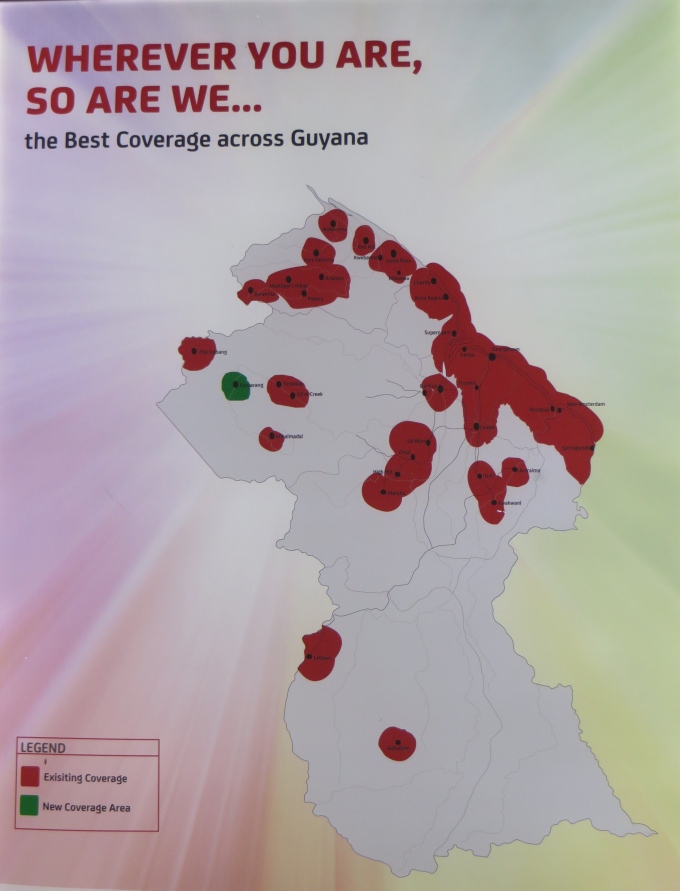
Looking at the Digicel coverage map in Guyana tells the story of where the population centers are … and aren't.

digicel coverage map

While David waited for the Digicel service to be activated (anywhere between 10 minutes and 2 hours, we were told), I headed back over to the Internet kiosk. We had never paid the fellow for our previous visit (though we'd accomplished nothing) and I was anxious to send blogs and photos to Gentry. This time we lugged my laptop ashore and I could get into Yahoo without delay. The Internet was slow, but at least I got through. Hallelujah! Just as I was finishing up, David arrived with a smile on his face and working Internet on his iPad.

at the internet kiosk in guyana

Do we sound disgruntled and frustrated? Well, we were a bit frustrated, but honestly, the rustic, vibrant feel of Bartica has been enough to overcome the Internet malaise. Life is good, especially now that we're in touch with the world once again.