Cruising Fashion - It Ain't Pretty

I happened to come upon a blog the other day which discussed fashion for cruising women. It was a serious discourse on what fabrics didn't wrinkle and how to keep whites really white and what clothing was most versatile for sundowners and dinners ashore and what shoes to wear and how to accessorize. She encouraged people to share their fashion tips with others. Oh, my … was I ever left out. Fashion tips from the Nine of Cups' crew? Perish the thought. nautical fashion

Twenty years ago, I thrived on fine worsted wool suits, silk blouses and scarves, fine accessories and high heels in every color of the rainbow. That was then, this is now. I've been shopping in thrift stores and opp shops since I've returned to the States, trying to upgrade my dwindling wardrobe. If you've only paid $1 for a shirt, it's okay if diesel gets splattered on it or you rub against a rust stain. My sister gave me her last year's exercise shoes which have become my walking shoes. Sometimes I splurge on a pair of earrings ... if they're on sale. Underwear, whenever I buy it, is always new. There are limits to my frugality.

I'm always impressed by women who step off their yachts well-coiffed, with starched blouses and freshly ironed slacks with creases (no rust stains noticeable) and head for the local malls to replenish their wardrobes. Most of the full-time live-aboard cruising women I know, however, are pretty much like me, I think. We have limited clothes aboard … mostly because after all those spare boat parts and extra provisions, there's no room to store lots of clothes. What clothes we do have are practical and versatile … shorts, t-shirts, a couple of sundresses maybe, a bathing suit or two, a pair of jeans, sweatpants, sweatshirts, foul weather gear. I do have one old navy blue blazer aboard (from 1999) which I wear with a reasonably good pair of slacks (also from 1999), so I look somewhat presentable whenever I head back to the States. The neat, pressed look is always a challenge. We have no iron aboard.

High heels? NOT! Deck shoes, a pair or two of flip-flops, reef shoes, a good pair of walking shoes (usually with the soles re-glued in place), maybe a pair of Crocs (usually wannabe Crocs). While on passage, we rarely wear shoes at all.

no heels

While on passage, fashion never comes to mind. Truth be told, we don't change clothes very often on a passage. It's the same old t-shirt and shorts or sweatpants. They're not color-coordinated because who can tell with all the stains and wrinkles? We wear the same clothes over and over again, day after day, until they either get too crusty to wear or they get doused by a wave and are soaked. Sometimes we don't wear clothes at all actually … depending how hot or cool it is. Less laundry that way, no tan lines (as if?) and definitely no worry about fashion. Come to think about it, sailing naked at our age is an advantage … it keeps the pirates (as well as everyone else) away!

sail naked

Searching for a Land Anchor

Land anchors … those things that keep you tied to the land when you're at sea. David didn't include them in his anchor book, but they're very real. When we decided to sell up and sail off back in 2000, we sold our home, furniture, cars … all those material things that kept us tied to land. We wanted no mortgages, no property taxes, no cars, no storage pods with furniture… and we were quite successful. Our family has been wonderful for nearly two decades, offering bed, board and storage whenever we show up … for a week or a month or sometimes longer. Now, we're thinking we'd like a place of our own to nest once in awhile. Yup, we're looking to buy a land anchor. After 16 years afloat, we need a place to store our souvenirs. anchor and house

We've been out of the market for a long time and things have changed. Duh! For instance, getting pre-qualified and/or pre-approved for a mortgage loan ...you can do it on-line. In fact, they almost insist you do. You just spill your guts, including all your financial intestines, to a loan specialist via “chat”, whom you've never met and could never hope to meet. Before you know it, you're pre-qualified. We felt uncomfortable with that process and asked for a face-to-face sit-down with a loan officer at a bank we've dealt with for a couple decades. The bank, too, preferred an on-line or telephone interview, but we insisted and they acquiesced. We're definitely old-fashioned that way, I guess. It was a waste of time. We were on time and he was late and unprepared. No problems getting the approval, but we knew more than the “loan specialist” did … plus he forgot we were the customers. Grrr!

Searching for a place to live? Easy enough … whether we're interested in a house, condo, mobile home or desert property, we can shop on-line for that, too. That process, though exhausting, we've kind of liked. We don't have to deal with aggressive realtors too early in the game. We've decided that Las Vegas would be a good place to have a condo. David's mum and sisters live here. There's no state income tax. It's easy and relatively inexpensive to travel here. And, at the moment, property values are reasonable and mortgage rates are low. We figure it's better to invest in real estate than let our savings stagnate in a next-to-no-interest bank account or lose its value in the volatile market.

anchor sign

It turned out that once we found a place we wanted to look at, however, we couldn't get a realtor to call us back. Must be too many realty sales in Nevada to bother with us. Mary finally contacted a fellow she knew and, by default, he became our agent. The place we liked was not available, but he had more to show us. We provided our general criteria: location somewhere near Mary, bargain price, lots of square footage, no yard to maintain, but a private patio for a grill, beautiful grounds and views, facing east (morning sun, you know), several self-cleaning bathrooms, all top-of-the-line appliances included, low taxes and low or no HOA fees. We didn't think we were asking for much. He wasn't able to find one to show us until we compromised on our criteria a bit.

We've seen a couple of properties now, but we think this will be a slow process which is okay because we're used to traveling on a sailboat. Of course, once we buy a place, we'll want to buy a car and furniture and “stuff”. It's almost depressing! And if we don't find a place we like, what then? Well, life will go on and we'll look again another time or another place, maybe. The big question you ask … do we intend to swallow the sea anchor once we acquire a land anchor? NO! We figure we've still got quite a few good sailing years left in us and there's still lots to see out there. Stay tuned and we'll all see how it all turns out.

US Customs & Border Protection & Us

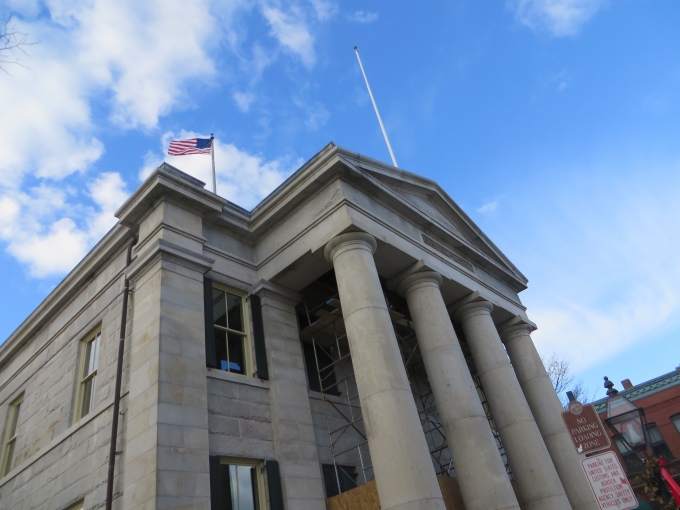
historic custom house in new bedford The last time Nine of Cups entered US territorial waters was in 2007. It was a non-event. We tied up at the Charleston Maritime Center. The marina called Customs/Immigration for us and two officers came to the boat within an hour, chatted with us for a few minutes and we were good to go. The rules have changed, however, and since we intend to sail back to the States sometime in the near future, we thought we should be prepared.
Pursuant to 19 CFR 4.2, “The master of a pleasure boat must report to U.S. Customs and Border Protection (CBP) immediately upon arriving into the United States from a foreign port or place and must provide a formal vessel entry on CF 1300 within 48 hours. He will also need to … result in civil penalties as defined … to include a penalty of $5,000 for the first violation and $10,000 for each subsequent violation with the conveyance subject to seizure and forfeiture. In addition to being liable for a civil penalty, the master ... is liable for a fine of not more than $2,000 or imprisonment for one year, or both.” CBP … formal entry … CF1300 … fines … penalties … seizures … forfeitures … jail? This sounds serious.

On our list of to-do's while in Boston was to check out the new rules and regulations for Cups and her crew to re-enter the United States in the hope that we won't be fined, get Cups seized or go to jail. First, we needed to buy a Customs Decal (US$27.50 ...cha-ching). In the past, we bought them at the local Customs House, but now it's only done on-line, costs more and the processing time can be up to three weeks. We applied on-line, paid our fees and got a response and decal number within a week. Awesome! No decal yet, but we know it's on the way.

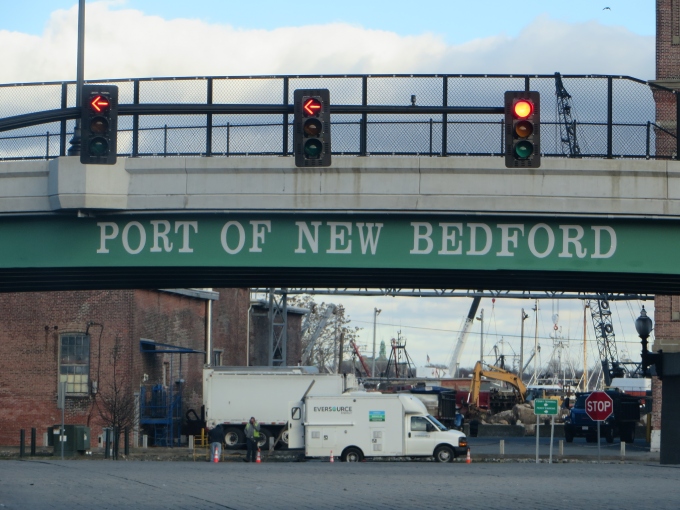
port of new bedford

Then we needed to schedule an in-person interview with a US Customs and Border Protection office. We opted for New Bedford … easier than Boston … and set up an appointment for the interview on-line. Easy...peasy. We made the hour trek to New Bedford, parked on Johnny Cake Hill in New Bedford's wonderful historic district and walked the cobblestone streets to the old Customs House. They're doing all sorts of renovations and restoration on the building and finding our way to the actual Customs Office was a bit of a hunt, but we prevailed.

The Customs Officer was surprised to see us. The Customs office in New Bedford wasn't aware we'd made the on-line appointment … a tiny glitch in the system, but she was very accommodating. The interview took ten minutes. Verification of our valid boat registration and passports (plus we look like really honest folks) and we were good to go. We are now signed up for the SVRS (Small Vessel Reporting System) with the CBP (Customs and Border Protection). We got our SVRS validation numbers via e-mail ASAP and we can now clear in PDQ as long as we file our float plan which “will satisfy the boat operator’s legal requirement to report to a POE (port of entry) for face-to-face inspection in accordance with 8 CFR 235.1 ... but boaters must still phone in their arrival to satisfy 19 USC 1433.” Once you wade through the alphabet soup, it seems reasonable enough.

A couple of little glitches we noted … the specified “float plan” which must be filed at least 24 hours prior to leaving the last port before arriving in USA territorial waters is actually not available as a .pdf on-line as advertised in neither our approval letter nor on the CBP website. Instead, it can only be filled in online via a “wizard”, and filed electronically – which may be an issue when internet access is iffy and expensive or simply not available. In addition, part of the information provided on the float plan is the date and time of arrival, which is purely guesswork for a passage of any length on a sailboat. They encourage the boater to update the float plan en route, but this won't be possible once we are at sea. Another blank to be filled in is the address of the arrival location, and the only alternatives are Public Boat Launch, Marina and Residence. Anchorage in a POE is evidently not an option. We'll see how convenient the new program really is when we try to use it. Stay tuned … we'll let you know.