Stuff your eyes with wonder!

best2015_kalkbay_crashing wave

Ray Bradbury, sci-fi and fantasy writer extraordinaire, really had the right idea. For more than seven decades, he inspired his readers to think outside the box, color outside the lines, run with scissors … dream, think and create. He published a book of essays entitled “Bradbury Speaks”and wrote “In my later years I have looked in the mirror each day and found a happy person staring back. Occasionally I wonder why I can be so happy. The answer is that every day of my life I've worked only for myself and for the joy that comes from writing and creating. The image in my mirror is not optimistic, but the result of optimal behavior.”

What he was saying was “Don't delay. Throw off the lines and leave the dock!”. Despite his vivid imagination and prolific creative writing, he still understood that reading and fantasizing about the world never takes the place of actually experiencing it firsthand. We are the sum of our experiences. He encouraged us to explore. There's so much world to see, so much to do and so little time, grab every second. Live and explore. Don't sit and knit mittens or whittle wood in your rocking chair. Don't sleep away your life … there's plenty of time for that later.

Walk on the edge of a volcano and feel the earth tremble beneath your feet. Stretch yourself. Get scared a little. Walk midst the ferns of New Zealand. Feel warm rain on your face. Watch sunsets and sunrises. Swim with penguins and dolphins. Climb mountains. Take long walks. Bask in the history of those that traveled the same path before you and left their mark. It's all out there just waiting to be discovered … all over again for the first time. Wake up in the morning, look in the mirror and say “I'm happy because I've lived my life to the fullest.” That's our plan!
FAQ - Do you ever take crew aboard?

We know lots of cruisers who like having extra crew aboard, especially when they're facing a long trip ahead. For sure, having an extra mate to stand watches and help with chores during an ocean passage can be a great benefit. We know of several boats that have had excellent experiences taking on crew in local ports. We also know several that have had nightmare crews and regretted taking crew aboard. FAQ-No crew

We have only taken on crew once. It was a long passage from Ecuador to Chile via the Galapagos and Easter Island. John is a good friend and we couldn't have asked for an easier crew mate to get along with nor a more knowledgeable or helpful sailor. It was a long passage, however, with lots of days at sea and after a particularly big storm, he was ready to call it quits when we arrived in Easter Island. He was very honest about it. “This is your life and for me, it's just a one-time adventure and I'm ready to go home.” He'd had enough.

Talking with other cruisers and from our limited experience, here's some basics we'd suggest if you are considering taking on crew…

  1. Finding crew.Consider asking friends whom you know are good sailors and whom you trust to accompany you on the passage. Check out bulletin boards in local marinas … there are always ads for crew seeking passages or experience. If you're “interviewing” on line, be sure to speak to the person in advance, get a feel for them. Obviously, in person interviews are best. Get references from other captains. Are they capable and trustworthy? Remember if you're sharing your “home” and watches, you've got to be able to trust the crew, so you can sleep. There are lots of on-line crew/passage finding websites. Here's a few …crewseekers.net, www.cruisersforum.com/forum/f30, floatplan.com
  2. Personalities in sync.The best qualified person may not mesh with you and the personalities of the resident crew. A very experienced crew person may want to take over and feel it beneath him/her to do menial chores, while a more inexperienced crew member may be excited to pitch in and learn as much as possible. Weighing the pros and cons of how the new crew member will fit in with life aboard is crucial to harmony at sea.
  3. Set house rules in advance.No smoking aboard. No drinking alcohol during passages. No friends with benefits aboard, etc. Whatever your rules, state them in advance and make sure they're understood.
  4. Outline crew financial obligations.Crew usually pay for some boat expenses like their share of food, sometimes part of the fuel, etc. plus their own personal expenses as well as immigration entry fees at new ports. Who pays to get them to the next port or back home? Make sure they understand the costs involved and, more importantly, have enough money to pay.
  5. Delineate your expectations regarding duties.Do you expect them to stand night watches? What are their responsibilities regarding maintenance, repairs, cooking, sharing cleaning chores, etc. Be specific.
  6. Be aware of the immigration/maritime laws of countries you plan to visit. Taking on and letting off crew can be tricky in some countries. Some require that a bond be posted in case a crew member jumps ship. The captain is required to pay their airfare back to their country of citizenship. We know a captain who paid a hefty fare to repatriate a Russian crew member from French Polynesia to Moscow. The French weren't interested in having an indigent Russian hanging out in their paradise.


That said, the biggest problem with crew for us is that we lose our privacy. We don't usually bother to close the head doors when we go to the bathroom. We don't necessarily get dressed when we head into the galley for morning coffee. We aren't beyond skinny-dipping in tiny, secluded anchorages. I reckon we enjoy our intimacy, personal freedoms, and “us” too much to share with others for any length of time.

Have you ever taken on crew? What were your criteria and how did it turn out?

Name That Wind

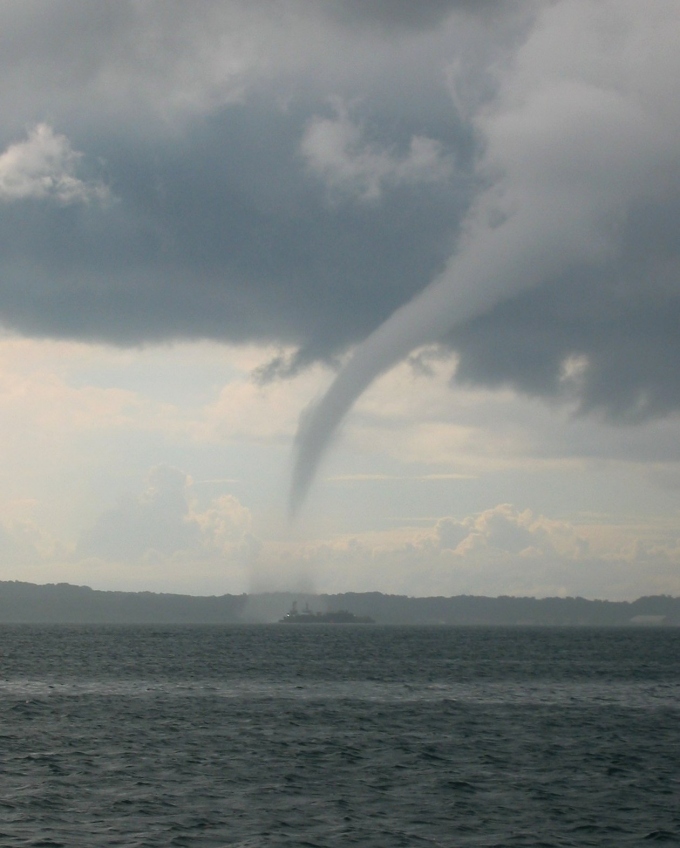
People complain about the wind in Las Vegas all the time. It does get windy here. In fact, the highest recorded wind gust here was in March 1984 – 82mph/70+ knot winds. That's a lot of wind wherever you are. Wind, however, is an essential part of a sailor's life, especially on a sailboat. People have many names for the wind depending on where they're from and the intensity with which the wind blows. There are gentle winds and breezes and zephyrs. There are destructive winds like tornadoes and twisters, waterspouts, cyclones, typhoons and diablos. There are icy blasts, gusts and gales ... siroccos, pamperos, foehns and mistrals. waterspout in panama

The Greeks named the winds based on direction from which they came. Boreas was the god of the north wind and winter. Eurus was the unlucky east or southeast wind. Notus was god of the warm, south winds and Zephyrus was the god of gentle west winds. The ruler of the winds, Aeolus, was venerated and respected as much as Poseidon, the Greek's equivalent to the Roman god of the sea, Neptune.

aeolus god of the wind

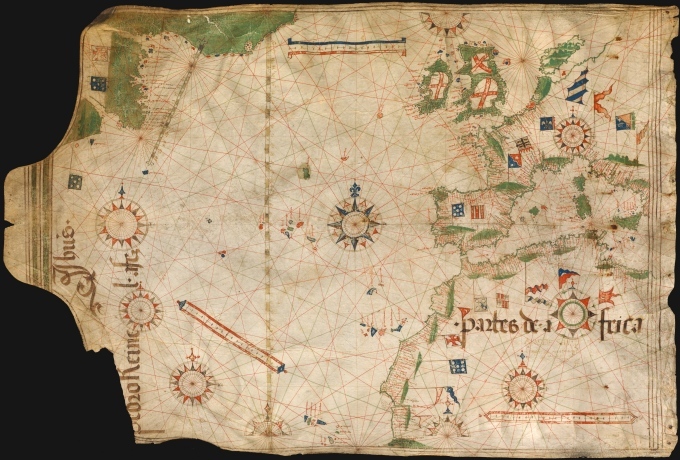
Pedro Reinel, a 15th-16th century Portuguese cartographer, is the author of the oldest signed nautical chart in existence. In 1504, he was also the first cartographer to depict a wind rose on his Atlantic Chart. Reinel showed not only a scale of latitudes for the first time, but an ornate fleur-de-lys wind rose.

reinels wind rose

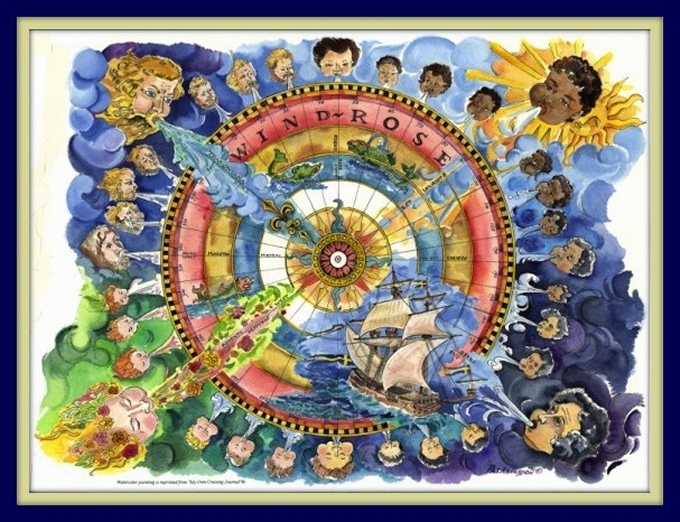
If you're a sailor and have ever used paper charts, you've very familiar with the compass rose. When plotting a course on a paper chart, we still use the compass rose with a parallel rule and dividers to determine our heading. Before the development of the compass rose, “a wind rose was included on maps in order to show sailors from which directions the eight major winds blew within the plan view.” North was always depicted with a fleur-de-lys, while east was shown as a Christian cross to indicate the direction of Jerusalem from Europe. Later charts sometimes included half winds (8) and quarter winds (16).

ornate wind rose

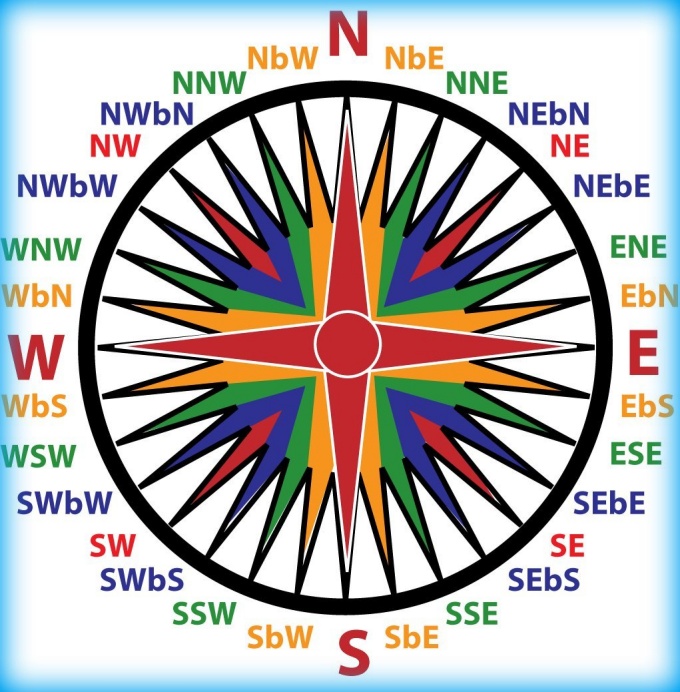
Eight points on the compass rose delineated the eight principal winds (N, S, E, W) at 90º intervals plus the ordinal directions (NE, SE, SW, NW) at 45 intervalsº. When the angles were bisected again (22.5º), the half-winds were shown, e.g. SSE, ESE, SSW, WSW, etc. Some were pretty elaborate, showing quarter-winds as well. When all 32 points on the rose are shown, it's called “boxing the compass”.

boxing the compass

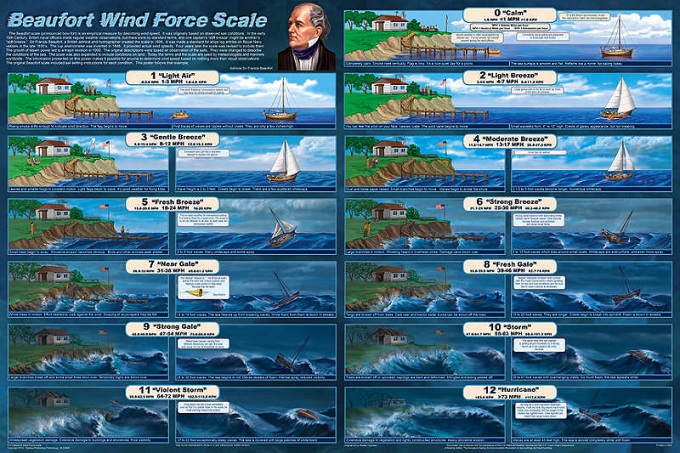
In 1805, Francis Beaufort devised the Beaufort Scale which measured wind speed based upon observed conditions on land or sea and standardized an objective reporting of wind speeds.

beaufort scale

As we've traveled around the world, we've heard the wind called by many names. The strong southeasterly Cape Doctor in Cape Town and the Fremantle Doctor in Perth. The southwest busters on Africa's wild west coast and the willywaws and rachas that thundered through like freight trains in Patagonia and Tierra del Fuego. I grew up with nor'easters in New England. The Santa Anas are well known in southern California. The warm chinooks of the Rockies are also known as “snow eaters”.

And, of course, if you've ever seen “Paint Your Wagon”, They Call the Wind Maria.