Intracoastal Waterway - Day 8

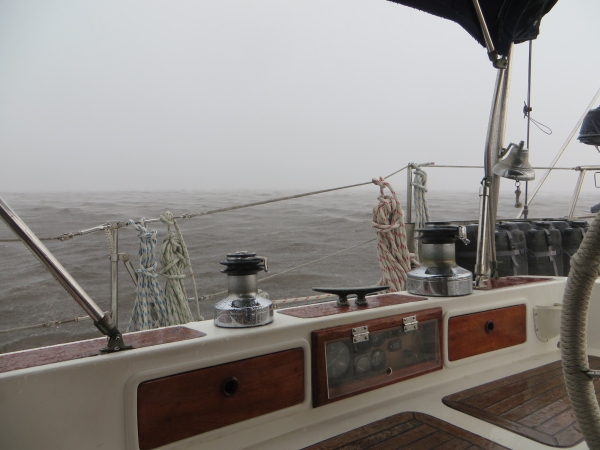
Day 8 – 274 nm to go Today was one of the more challenging days on the ICW. The lengthening days have been working to our advantage. We're up at 0515 and anchor up by 0545. We witness spectacular sunrise after sunrise. The rising tide gave us a good push this morning up the Cape Fear River. All was calm and we were on our way. Despite the shining sun, a long, compact, cigar-shaped roll cloud came into view in front of us, reminiscent of the roll cloud we experienced for the first time in the Great Australian Bight. Within seconds, nearly 30 knots of wind barreled through the rigging and pommeled us for 3-4 minutes, then departed as quickly as it had arrived, apparently planning to harass some other unsuspecting sailor down the river. A good morning, adrenaline rush of a wake-up call to start our day.

roll cloud on the intracoastal waterway

From the Cape Fear River, we transited Snow's Cut to the New River. One of the main bugaboos of today's passage was the number of opening bridges we had to deal with, all with differing schedules. Two bridges opened only on the hour and two opened on the hour and half hour. There wasn't time to coordinate openings from bridge to bridge, so there was a lot of waiting involved. We wasted a significant amount of time treading water waiting at one bridge, then we'd speed up to get to the next, only to be disappointed by missing the opening by a few minutes and waiting until the next opening. Boats don't stop. They float and drift around with the wind, current, wakes and waves and constant maneuvering is required to keep them in place. Staying put for a boat is akin to keeping an impatient toddler in place.

bridge on the intracoastal waterway

There was also constant shoaling along our route today, especially at inlets from the sea. Despite having foreknowledge from the Active Captain comments, we went aground at Masonboro Inlet. We were in the middle of the channel, but obviously got too close to the green side. (For non-sailors, red is the port (left) side and green is the starboard (right) side … at least when we're heading north up the ICW. Red and green markers indicate the position of the channel.) The sand was soft and David worked us free in a matter of minutes and we were on our way.

The second grounding came about an hour later and again at an inlet. This time the Mason Inlet was the culprit and getting off this sand was not as easy, especially since we were on a falling tide. It took us over 30 minutes of working back and forth and side to side before we found enough water to get off the grounding, out of the shallow area and back on track. Again, we were in the channel, but obviously just not in the right spot. Though challenging, time-wasting and frustrating, going aground in sand and mud is not that big a deal. The sand tends to scrape the barnacles off the keel, but not much more than that. If worse came to worse, we could have called Towboat US to which we subscribe. Many folks do, but the captain preferred to hone his “going aground extrication” techniques and this was a good opportunity. Again, no kedging off, no launching of the dinghy, but those ideas were ready if we needed them. We watched a young fellow poling his john boat through the shallows a little while later and we didn't feel so bad. They say “ it's not IF you go aground, it's just WHEN you go aground.”

poling a john boat on the intracoastal waterway

The last of the bridges for the day was the Onslow Beach Swing Bridge. We timed it well for a change and passed through at 5:30pm. The US Marine training facility, Camp LeJeune, is in this area and from time to time live firing exercises are under way. At those times, the bridge is closed until the exercises are completed, usually several hours.

live firing on the intracoastal waterway

Lucky for us, all was calm at Camp LeJeune, though we did see some marines and military equipment on the shore.

military on the intracoastal waterway

The winds increased throughout the day. We saw a steady 20 knots by late afternoon. The forecast is calling for strong north/northeast winds along the coast and inland coastal waters, so we were looking for a protected anchorage in which to hunker down for a day or two, if necessary. At sea, 20-25 knot winds aren't a problem, but inland on narrow waterways with significant shoaling, the wind makes maneuvering a bit trickier.

Swansboro Village was our anchorage of choice. Literally just a few hundred feet off the ICW, we found a 15' spot with good holding just opposite the town dock. By the time we were settled in, the rigging was rattling and the wind was howling in the high 20s from the north. The temperature plummeted nearly 20 degrees to a wonderfully comfortable level. We were in need of a day off to catch up on writing and just relax a bit. We'll take advantage of this opportunity and blame it on the weather.

swansboro village

Intracoastal Waterway - Day 7

Day 7 – 365 nm to go We were up with the sun once again and plying our way up the Waccamaw River. We were under the fixed Ocean Highway Bridge by just after 0630. Yes, there was another beautiful sunrise. Yes, I took a photo or two … and yes, I'm sharing the best one. Some things (and people) are very predictable.

sunrise on the intracoastal waterway

We passed by the entrance to Georgetown, noting that it would make a fine stop on our southern transit next season. The area was known in the past for “Carolina gold”, i.e. rice fields, and indigo plantations … and, also, alligators. No swimming. The rice fields still stretch for acres and acres, but more noticeable is the acrid smell of paper mills and the smokestacks on the horizon.

rice fields along the intracoastal waterway

The Waccamaw River is wide and deep and it was a pleasure to be on it so early in the morning. The landscape has changed once again. The Waccamaw National Wildlife Refuge, a 55,000 acre reserve, borders the rugged eastern bank of the ICW. Forested wetlands, tidal marshes and pine forests are home to a wide variety of native bird, fish and mammal species including red fox and black bear. Having a canoe to paddle around in the tiny inlets and streams would be perfect. Spanish moss aka Old Man's Beard, hangs from the trees and provided a lasting image of this picturesque area in my mind.

spanish moss along the intracoastal waterway

The water here is the color of iced tea … tannic from the heavy tree growth on and near the riverbanks. We could see the brown water lapping against the shore. Tannin is a naturally occurring substance and isn't usually harmful, just not very appealing. Cruisers who travel the ICW regularly refer to it as the “ICW mustache” because it leaves a brown stain on white boat hulls.

intracoastal waterway mustache

By 0930 the bright sunny day had disappeared, leaving a dull, gray, overcast sky in its wake. Motoring as we're doing requires fuel, a rather unusual occurrence for us. We'd passed up several fuel stops along the way in favor of the highly recommended Osprey Marina ... “cheapest fuel on the ICW”. The entry channel was narrow and a bit dicey for Nine of Cups, but we arrived unscathed at the fuel dock where a friendly and efficient dockhand helped with lines, a fill-up (at a bargain price), some ice and an uneventful send-off back down the channel. We were back on the ICW in less than an hour. Interestingly enough, marina signs and fuel prices are advertised along the ICW and reminded us of the old billboards on US highways in days gone by.

osprey marina along the intracoastal waterway

Ospreys are absolutely everywhere along the ICW waterways. We saw them in trees, on docks and flying above us. They particularly like building their huge, terribly untidy nests on the post markers. It was unusual to see a marker without an occupied osprey nest.

osprey nest on the intracoastal waterway

We left the quiet, solitude of the wildlife refuge and headed towards Myrtle Beach. The river traffic increased significantly. We now shared the river with barges and tugs, pontoon boats and speedboats. coast gaurd barge on the intracoastal waterway

We knew we'd arrived at the most congested area when the jet skis, like a swarm of gnats, descended upon us. They travel fast, swerve and spray, make wakes, are noisy and annoy us significantly. We have little tolerance for them, but of course, each to his own and they have as much right on the rivers as we do. We just wish they were a bit more aware of the nuisance they cause.

jet skier on the intracoastal waterway

The adrenaline rush of the day, not counting the 13 bridges we had to pass through, was transiting “the Rockpile”, an infamous stretch of the ICW with rock ledges at the narrow river's edge that jut out precariously into the channel. We managed to get through without harm or foul and continued on across the Little River Inlet into North Carolina and up the Cape Fear River. Our anchorage for the evening is known as Tina's Pocket, a little spot just behind the channel leading light towers to drop the hook off the Cape Fear River.

danger rocks

IMG_0008

It had been a long, 14-hour day. After charting and dinner, we attempted to watch Nick Nolte and Robert DeNiro in Cape Fear. We were highly unsuccessful in this endeavor. We woke each other up half way through and called it a night.

Along the Intracoastal Waterway - Day 6

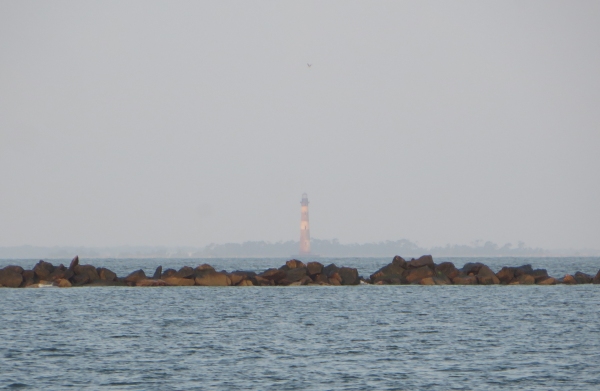
Day 6 – 420 nm to go With regret, we departed from Charleston as the sun rose. Our intent was to continue along the ICW, but the winds were favorable, and the tides and bridge schedules weren't, at least for the day, and so we decided we'd head outside for a change. We traveled down the Cooper, met the Ashley and found the Atlantic Ocean once again. The Charleston Light appeared hazy in the distance behind the rock jetty that lines the channel to the sea.

charleston lighthouse

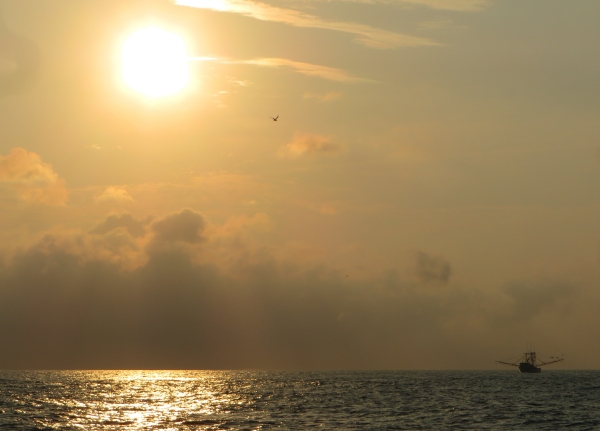
Shrimp boats with dolphins and gulls following their trail, were out in full force as a hot, rising sun melted away the morning haze and we prepared for another sizzling day, but at least we'd have a sea breeze to cool us.

shrimp boat at dawn

We headed out of the Charleston Channel, cleared Rattlesnake Shoals and observed no anchoring or dredging warnings on the charts due to unexploded mines, a remnant of WWI and WWII harbor protection programs. We rounded Cape Romain and headed for the Georgetown Inlet. We only had a one day forecast of favorable winds but had yet to find them. We saw 5-8 knots with gusts of 10-11, but not much more. We were motor-sailing, moving along smartly in the 7s and 8s.

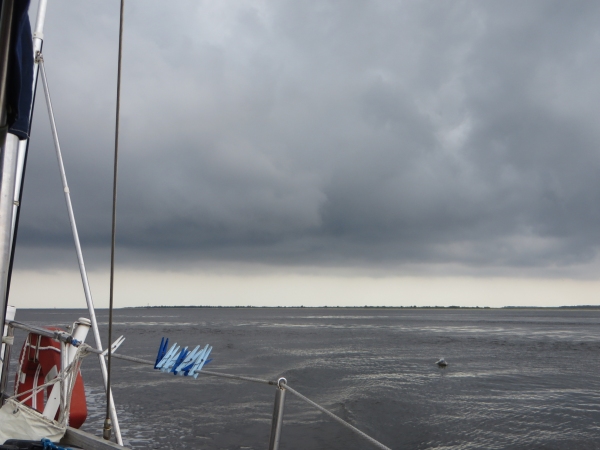
As we headed up the Georgetown Inlet, a long 15nm channel, we began to hear distant rumbles of thunder above the engine roar and the sky began to cloud up. The VHF wailed a weather alert … thunder and lightning cells moving fast and furiously in our area. We could see lightning bolts piercing the blackened sky to the west. The extra iPad and GPS went into the microwave immediately.

blackened sky

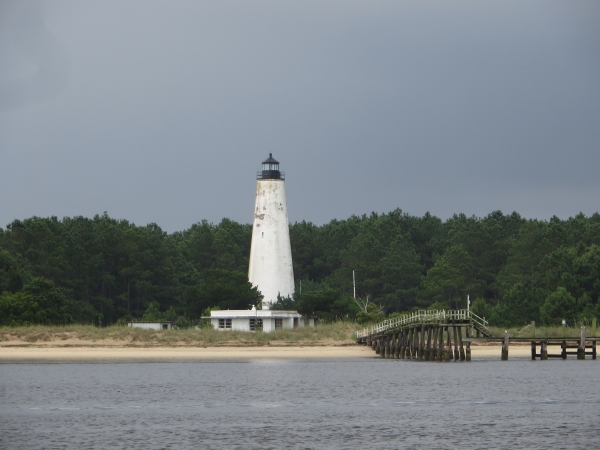
We passed South Carolina's oldest lighthouse, the scenic Georgetown Light, but our minds were concentrated on getting to a secure anchorage before the heavens broke loose.

georgetown lighthouse

We anchored just before the Ocean Highway Bridge in a perfect little spot just off the ICW. We'd no sooner got the anchor down and snubbed than the heavens opened and the decks were washed clean. The thunder and lightning provided a good visual and audio show, but nothing came close enough to be of concern. It blew away in an hour or so, leaving us with a cool sleeping night for a change.

squall

Dinner, a movie and plotting the next day's route took up the rest of the evening and we zonked out shortly after the sun went down. It's amazing how just sitting in the cockpit and steering for 12 hours can tire out a body.