Intracoastal Waterway - Days 11 & 12

Day 11 - 182 nm to go The full moon was bright as the sun rose to meet the day. The sun, not to be outdone by her nocturnal counterpart, splashed on the scene with flashy color and brilliance and soon diminished all thoughts of the previous night. It was duck pond calm and still quite cool . We had on our long-sleeved shirts once again to ward off the early morning chill.

sunrise on the intracoastal waterway

As we entered Core Creek, shafts of sunlight highlighted the rising mist from the river, giving it a mystic kind of look.

rising mist on the intracoastal waterway

It was a working day on the river. Shrimpers and trawlers were plying the local waters. Gulls crowded around them like gnats looking for an easy breakfast bite. Crabbers checked their pots. Men netted bait fish on the river's edge.

shrimper on the intracoastal waterway

We moved from tiny waterway to waterway, one eye on the depth meter and one on the channel, but there were no adrenaline rushes today. The creeks were narrow, but easy enough to negotiate. The riverbanks were heavily forested wetlands. Big stumps and dead trees crowded into the creeks.

intracoastal waterway

We crossed the wide, deep Neuse River, then worked our way along Goose Creek, across the Pamlico and headed up the Pungo River. We found a fine anchorage, midst crab pots, 20 miles up the Pungo River. There were no ATT bars, no houses, no nothing. We were in the backwoods of Nowheresville, North Carolina. David kept whistling “Dueling Banjos” as if someone hidden on shore might join in.  We had no visitors, however, and by nightfall, five other cruising boats heading north up the ICW were anchored around us. We'd circled the wagons just in case the natives got restless.

Day 12 – ICW Mile marker 128 - 115 nm to go

There was no brilliant sunrise this morning. A cool, lackluster sun made its appearance without fanfare. The wind had picked up during the night and it was tending towards blustery on a grey, grey day. We were stuck good in mud and the chain and anchor needed a washdown. The nozzle on the hose popped off and headed directly for the drink. Darn … I made do with a thumb over the end of the hose, but put a new nozzle on the buy-list.

We extricated ourselves on a slalom course around anchored boats and crab pots and set out up the Pungo-Alligator Canal. A bald eagle flew by, too quick for a photo, but easy enough to recognize. I spotted another high up in a tree, looking stern and serious the way eagles do. There's something exhilarating about seeing an eagle in the wild.

bald eagle on the intracoastal waterway

There were lots of birds flitting about and their morning songs were vibrant in the early morning quiet. The evergreens were thick on the north side of the channel contrasting with the grassy wetlands to the south. Old tree trunks stood rotting along the riverside and encroached into the channel … or were we encroaching upon them? The smell was musty and acrid, like a damp, mildewed closet.

grassy wetlands on the intracoastal waterway

A very friendly butterfly flew into the cockpit and lighted on the captain's shoulder, then proceeded to hitch a ride with us for the next few miles riding on a fuel jug on the aft deck.

butterfly hitches a ride

For some reason, dragonflies were out in great numbers today and as the wind increased, they hopped aboard and hung on for dear life. There were black ones the size of hummingbirds, yellow ones and green ones. They clung to lines and sheets and shrouds and one bright blue one found its way into the cockpit and lit on my finger for awhile, then my leg and then in the shelter of the windscreen. This one stuck around for several hours until we anchored, then left without a fare-thee-well.

dragonflies of the intracoastal waterway

We had the jib up as we crossed the Abermarle Sound … we were sailing! Well, at least motor-sailing. The wind was 15-20 knots and the Sound was rough and choppy with nasty square waves spaced only a couple seconds apart. We bounced along, avoided the ever-present crab pots and finally anchored in one of the few spots that afforded us the depth we needed. It wasn't the best spot for protection from the southwest winds, but it was the best we could find at the end of the day.

Intracoastal Waterway - Day 10

Still  206 nm to go- that's what happens when you don't move! I never thought I'd say this after the heat of the last few months but … BRRRR! With the strong northerlies came a significant drop in temperature and it's been downright chilly. This morning we rose to 64F/18C, 93% humidity. The winds had calmed during the night, but there was still a brisk 15+ knot winds blowing. Despite the sun, in the cockpit as the wind whistled through, it was cold and raw. I dug out long-sleeved shirts to keep us warm, but we just couldn't face long pants or shoes. Even though it was cool, the high humidity kept everything dewy and sticky. We had to squeegee the windscreen so we could see through it. No defrosters or windshield wipers on the boat!

As we departed Swansboro, we passed local shrimp boats tied up at the dock and weathered houses along the shore … very scenic and maritime-esque.

IMG_0019

We had planned this as a very short day ... for two reasons. First, planning evening anchorages for the next couples of legs was difficult. There weren't many anchorages that would accommodate our 7'2” draft (2.1m), so we chose a closer anchorage for tonight and two anchorages further up the ICW that were about 60 nm apart. The second reason for the short day?  As you know, we are lazy sailors and we can easily rationalize short days. Enough said. Unfortunately, though it was a short day, we still left before 0600 in order to time the rising tide for passing shoal areas.

We headed up the ICW, under the Emerald Isle Bridge and across the wide, flat expanse of the Bogue Sound. The wind whipped up the waves and there were whitecaps until we reached the relative shelter of Morehead City. We smelled wood and sawdust as the huge bulk container vessels unloaded their wood pulp into the waiting barges.

intracoastal waterway

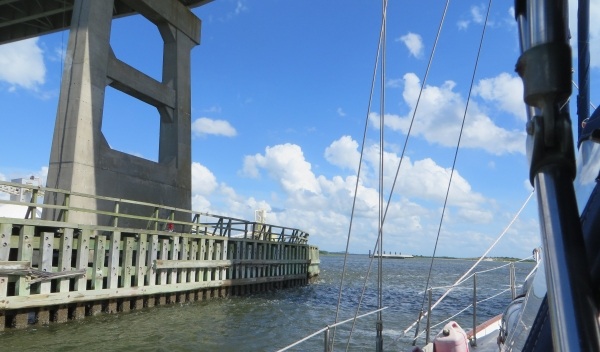
As we turned the corner at the end of the commercial docks, we were exposed to the Morehead City Inlet. The current was in direct conflict with the wind and the waters roiled. We passed through the open, bascule Carolina Coastal Railroad Bridge and then immediately under the fixed Morehead City-Newport River Bridge. Eddies and whirlpools pulled and pushed the boat as it glided through.

intracoastal waterway

Just up the way, we spotted Chimney Island, which by the way, is for sale. Though I'm not sure of its history, its name is obvious.

intracoastal waterway

By mid-morning, it was warming up and comfortable again and we were ready to anchor. Newport Marshes is a tiny little spot just off the ICW that can accommodate about one boat the size of Nine of Cups. We found a fine little 15' pocket, dropped the hook and settled in for the rest of the day and night.

By the light of the full moon, everything looks beautiful.

full moon on the intracoastal waterway

Some new ICW info … We picked up a new navigation app by Navimatics called Charts and Tides, as recommended by Bob423 (aka Bob Sherer), a frequent and trusted contributor to Active Captain. This app overlays the Active Captain info on NOAA charts and it's pretty slick. It has lots of nifty features that we haven't even discovered yet. Though we're still learning about it, so far it's terrific. It's not just for the ICW, however, it also includes charts for the entire USA including Alaska, Hawaii and the US Caribbean islands. We're impressed!

Intracoastal Waterway - Day 9

Stuck in Swansboro

Day 9 – 206 nm to go

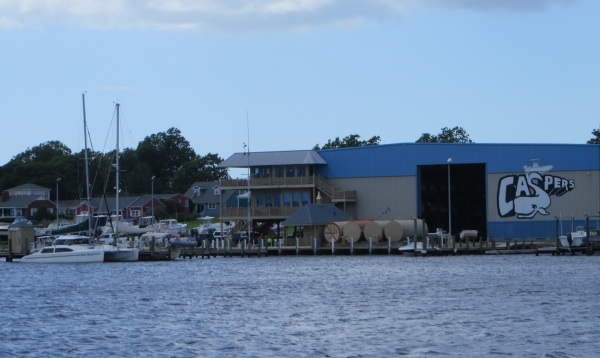
With a forecast of gale force winds offshore and high winds and rainy weather inland, we decided we'd take a day off and stay put in our pleasant little anchorage just off Swansboro Village. Launching the dinghy would have been akin to flying a kite, so we happily stayed aboard for the day. Thanks to nearby Caspers Marina, we enjoyed free wifi all day. Though we didn't get into the village at all, we think it's probably a hopping place as the music went on both nights we were anchored here till well into the wee hours of the morning.

caspers marina on the intracoastal waterway

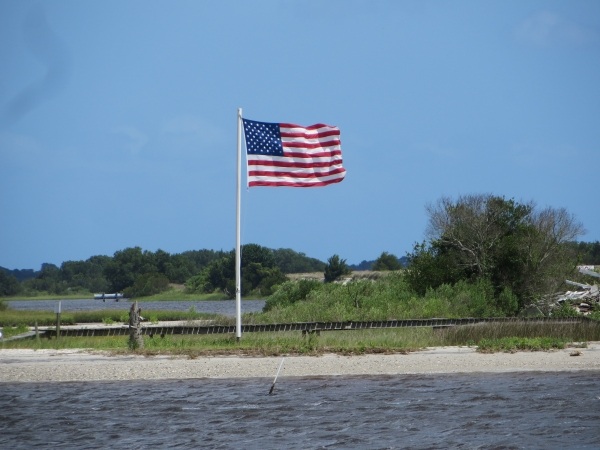
As it turned out, the day was sunny, but blustery. Not a drop of rain fell, but the wind howled. With good internet, we spent the day writing, catching up on articles and blogs, photo editing, doing some minor chores and just hanging out. It's quite pleasant to just “be” in a place some days with no agenda.

wind blown flag on the intracoastal waterway

This is probably a good day to talk about what we've learned … and re-learned/remembered … while traveling on the  ICW. Granted, our previous experience on the ICW has been extremely limited, but usual navigation skills and rules of the road apply, as well as boating etiquette. It's just that when we're at sea, we don't have the opportunity to use some of these skills much, so this has been a welcome refresher course for us.

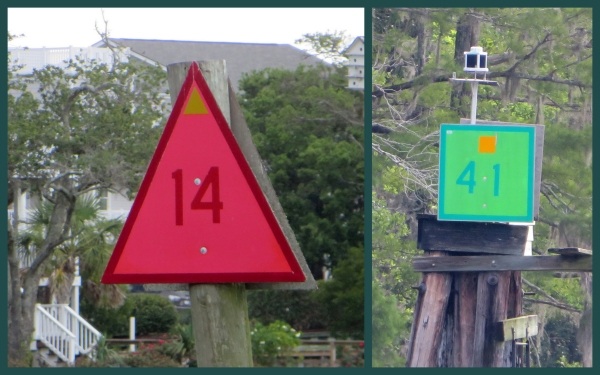
Something new we learned … all ICW navigation markers are marked with a either a yellow rectangle (for green markers) or a yellow triangle (for red markers), so at a waterway intersection, sailors always know which direction the ICW is going. Clever, huh?

markers along the intracoastal waterway

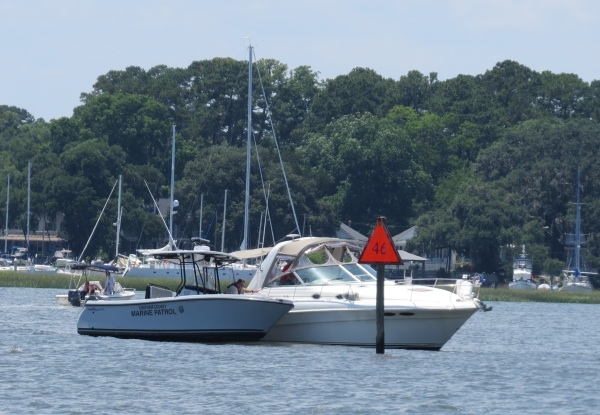
Something we remembered … there are still lots of courteous cruisers out there. Larger motor vessels will hail their intentions to pass us and give us a “slow pass” to minimize their wake as they're going by. If motor vessels are going too fast, especially in no-wake zones in towns, the local marine police stop and ticket them.

marine police on the intracoastal waterway

Something we're remembering/relearning … the timing for negotiating transit through opening bridges. We don't pass under or through bridges very frequently on ocean passages. How long does it take the bridge keeper to stop traffic, ring his bell and siren and activate the bridge opening. And then, just how long does it take the bascule leaves to raise or the swing bridge to swing? How does passing under a fixed bridge affect the control of the boat? There is usually a loss of wind, then a gust on the other side and then there's the current and numerous little eddies to contend with. We were a bit rusty, but with  ~70 bridges to transit during this passage, we got it figured out once again. Bridge tenders, by the way, have been courteous, friendly and efficient which has been most appreciated.

a bridge on the intracoastal waterway

Something we forgot … when out of the USA, we rarely have help with lines or docking and tipping is not the usual protocol, nor expected ... even in restaurants. So to the young man at Osprey Marina who was so helpful and accommodating … we didn't mean to stiff you on your tip, we really did forget.

Something I noted … taking pictures from a moving boat is pretty tricky. Taking pictures of moving things from a moving boat … pretty marginal results. That's my story and I'm sticking to it.