L'Aventure du Sucre - A Sweet Experience

We'd read about L'Aventure du Sucre and heard reviews from other cruisers, so we had it on our “must see” list. It was only a mile's walk from the Botanic Gardens and we arrived late morning with plenty of time to explore.  

laventure de sucre signs


Located in the original Beau Plan Sugar Estate, the site was chosen because Beau Plan exemplified a family business which, with many others like it, expanded into a huge industry. Indigo and sugar cane were the main crops grown and processed on the island.


arriving at laventure


Originally discovered by the Dutch in 1598 and named Mauritius after the Dutch Prince Maurits, the Dutch introduced deer and sugar cane and then abandoned the island for more lucrative interests in Java. The French took over in 1715, renamed the island Ile de France and developed both the infrastructure of the island and the sugar industry, importing thousands of slaves to work the sugar fields. Sugar quickly became the mainstay and the island flourished. The British invaded with an overwhelming force and took control of the island in a most courteous way in 1810 and renamed it Mauritius once again. The development of the sugar industry spurred the development of the culture of the island.


gallery view 2


We wandered through the cavernous mill where gallery after gallery of photos, exhibits and artifacts were interspersed with the huge sugar producing equipment … crushers, boilers, blenders, centrifuges and more. The experience was reading-intensive … multitudes of placards and signs explained the island's history in detail and the sugar industry from its early beginnings to its current production. Sugar production isn't what it used to be, but it still contributes about 20% to the country's export economy.


gallery view


We even walked inside some of the equipment.
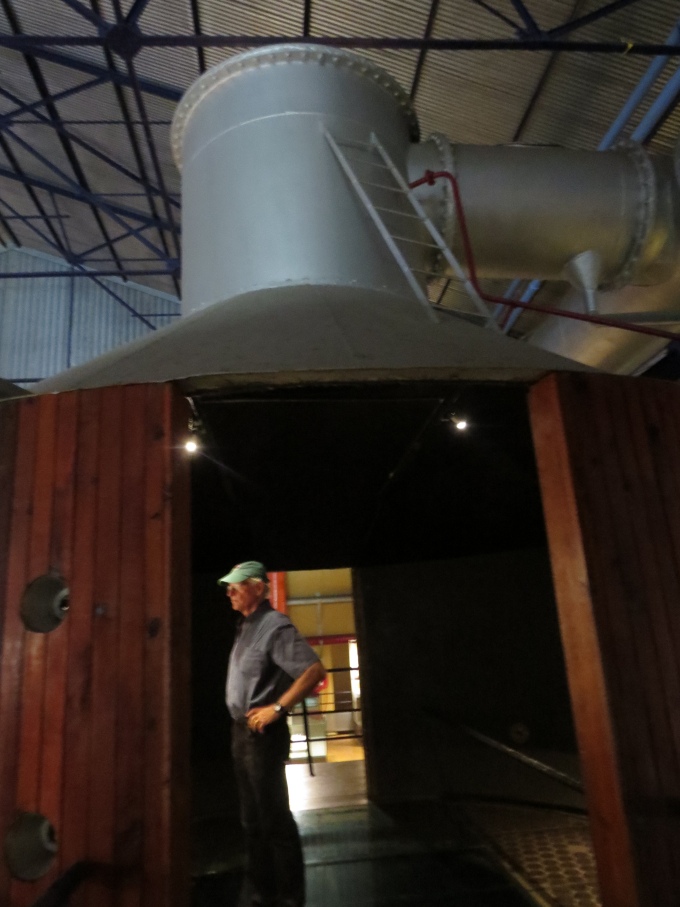
 

inside vacuum vat


We wandered and read and wandered and read and finally ended up in a small boutique area with sugar and rum tastings. Who knew there were so many types of sugar out there? We certainly didn't. We were offered twelve different types of unrefined cane sugars to taste … from fine golden caster, to demerara, to dark muscavado and molasses sugars to coffee crystals and raw sugar. We chewed some sugar cane. We tasted several types of rum and felt unbelievably mellow afterward.

It was mid-afternoon when we emerged from the museum and tastings, and the estate's restaurant, Le Fangourin, looked very appealing. We settled at a small cafe table under an umbrella with the sugar mill behind us and lawns, gardens and mountain views in front. Birds chirped and flitted about. Light jazz was playing in the background. Lunch was wonderful, but the dessert that followed was to die for … a bananas flambe with a rum sauce made from the local rum and a caramelized sugar decoration on top. Good enough to eat!


dessert


As we walked back down the entry avenue to the bus stop, we noted sugar cane fields on both sides of the road.


cane fields


While waiting for the bus, cane trucks, loaded to capacity, emerged from the fields and chugged up the highway. This was a sweet, sweet day.


cane truck

Botanic Gardens, Birds and Captain Cook

It was a play day today. There were numerous possibilities for heading out of Port Louis. The bus system takes you everywhere on the island. We could venture to Riviere des Anguilles (River of Eels), or Flic en Flac (??), Cap Malheureux (Cape Unhappy), Trois Mamelles (Three Udders) or Poudre d'Or (Gold Dust). In the end, we chose Pamplemousses (Grapefruits) because there were two places we wanted to visit there … the Botanic Gardens and L'Aventure du Sucre, a sugar museum.  

garden entrance gates


We walked to the North Bus Terminal and asked for a bus to Pamplemousses. A friendly fellow pointed to a bus that was leaving and we jumped aboard. We told the conductor where we were going, paid our fare (50Rps = $1.66 US for both of us) and asked him to let us know when to get off the bus. It wasn't far away, less than 10 miles, but this wasn't an express bus and it took us about 40 minutes to get there. The bus dropped us off about 1km (.6 miles) from the entrance to the Sir Seewoosagur Ramgoolam Botanic Garden and we arrived just as the gates were opening.


garden view


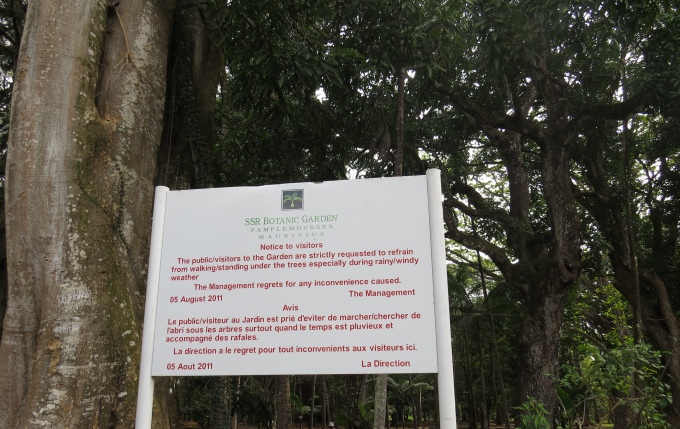
The local guides were waiting and were very persuasive, but we managed to say no and extricate ourselves from their grasp and get on with our own self-tour. I photographed the map of the park and we chose the highlights we wanted to see. Ambling through the garden's forests, we got a kick out of the sign that asked us to refrain from walking under trees, especially when the weather was windy or rainy.


don't walk under the trees


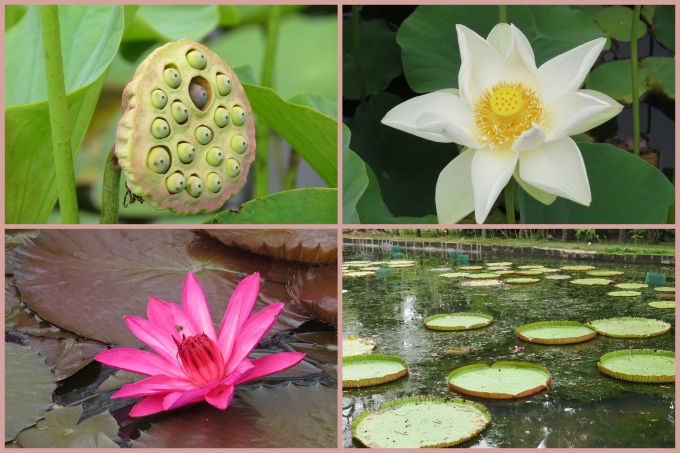
These gardens are certainly not the largest or most elaborate we've seen, and not much was in bloom though it's springtime here. Still, we enjoyed the peace and quiet as we walked along the garden paths. There was a pool of giant Amazon lily pads, but the delicate lotus blossoms stole the show.


lilies and lotus


There were lots of birds around, as you can imagine. We could hear the chorus of song all around us. Not many of them are endemic species or even native, but several were new to us, so we were content with what we saw. We'd love to see a pink pigeon, endangered and endemic to Mauritius, but we haven't figured out if we can get a bus to the area in which they're located. We think not.


garden birds


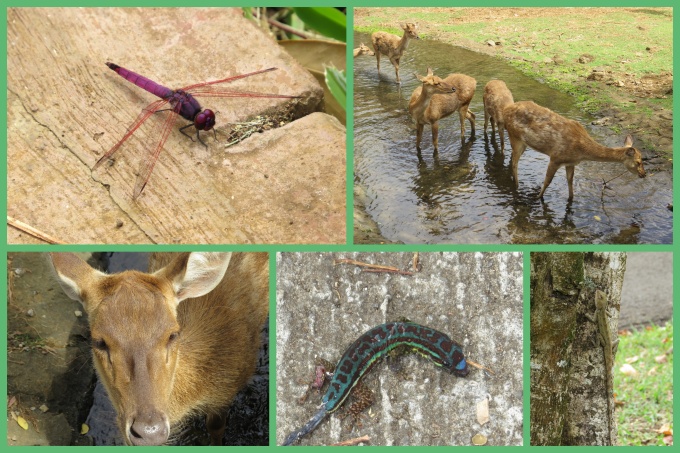
The park has a small display of giant tortoises, but it wasn't very appealing after our Rodrigues adventure. The Dutch introduced deer back in the 18th century and there's a small captive deer herd in the park. Beyond caged animals, we saw a colorful skink and the most beautiful iridescent dragonfly. I'd hoped to see lots of butterflies, but there weren't many around.


collage


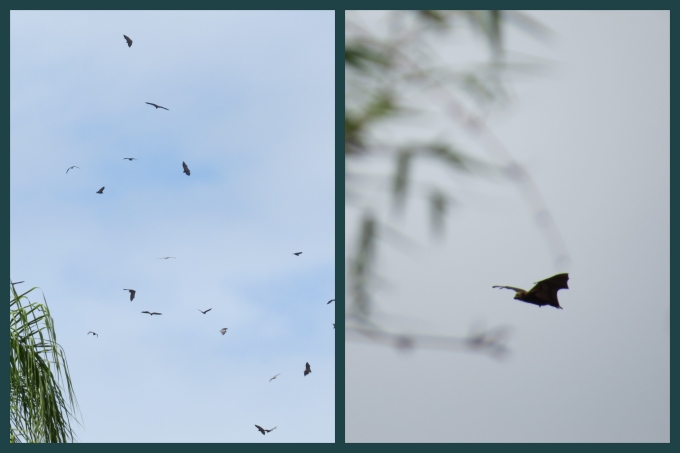
I looked up at one point, trying to figure out the type of birds circling above us in a huge flock. Turns out, they were Mauritian flying fox, aka Mauritian fruit bats, and not birds at all. We were surprised to see them out in such great numbers during the day, but evidently these guys work during the day and the night when there's fruit to be “harvested”.


bats


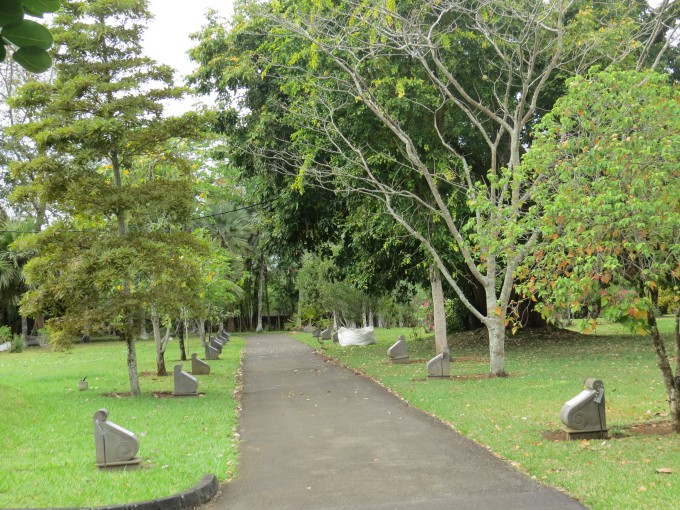
We walked down the lovely Avenue Belle Eau lined with trees planted by visiting dignitaries including Nelson Mandela, Indira Gandhi and Francois Mitterand.


avenue belle eau


At Chateau de mon Plaisir, an original sugar plantation manor house, there was an historic photo display dedicated to Sir Seewoosagur Ramgoolam, a Mauritian politician, statesman and philanthropist, who led the movement for Mauritius independence and served as its first Prime Minister.


chateau


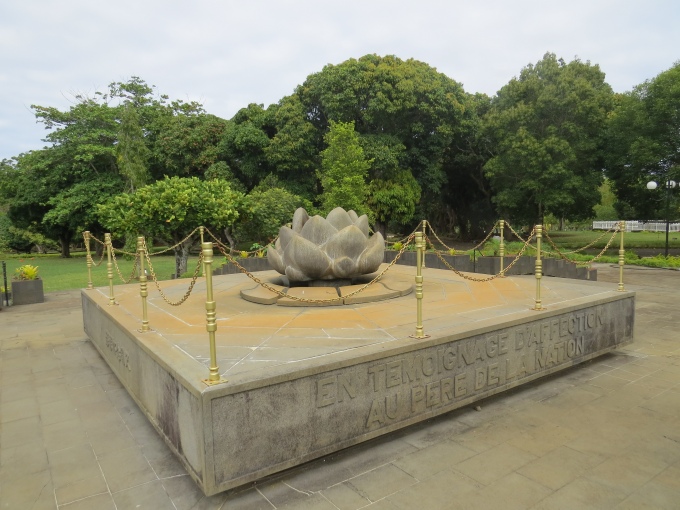
Nearby was a lovely monument dedicated to Ramgoolam's memory as the “Father of the Nation”.


tribute to the father of the nation


We stopped at a little gazebo and just took in the cool, peaceful ambiance while sipping some water and eating snacks we'd brought along … a lovely way to start the day. The walk to L'Aventure du Sucre is about 1.5 km (1 mile) away. Put on some comfy shoes and come along.


laventure sign


Lest we forget, it's Captain James Cook's 286th birthday today … November 7, 1728. He's one of our favorite explorers and navigators. Read more about him here.

Un Promenade in Port Louis, Mauritius

Our first day in any port is usually spent getting our bearings and walking around. Port Louis, the capital city of Mauritius, is vibrant, high energy and offers lots to see and do. There's eye candy everywhere you turn. After small, laid-back places like the Cocos and Rodrigues, mooring in the heart of the city is a fun, pleasant change. They say the best view of the city is from the sea and we'd have to admit, it was a lovely first view.  

waterfront view


We set out on foot mid-morning, walking down the Caudan Waterfront, a huge, modern esplanade lined with upscale eateries and boutiques. A rainbow of parasols hung above the walkway, providing both shade from the sun and a riot of color to pedestrians.


parasols


The days have been warm and sunny and walking was a pleasure after being captive aboard Cups for a few days. The pace in the city is frenetic. Heavy, fast-moving cars, motorbikes, trucks and bicycles whiz along streets crowded with pedestrian traffic that overflows the narrow sidewalks. Wherever there is a bit of space, a vendor has spread his wares or offers street food or hawks his services.


congested streets


We walked through the Central Market … it's absolutely huge. Fresh veggies and fruits galore, spices and teas, are all artfully displayed inside the market building, originally built in 1844. Upstairs on a mezzanine level, there are “crafts” vendors (souvenirs) and outside the perimeter of the market building, there are vendors set up under tents and tarps with narrow paths between them selling everything from hubcaps to clothing to pots and pans to batteries. It's crazy and frenzied. Everyone is shouting their prices and promotions. People are darting in and out and around. A good place for a pickpocket and we were very mindful of our valuables. Saturday is the “big” market and we can't imagine how it could be bigger or more crowded, but we're game to find out.


market


We stopped in the Natural History Museum. The entry is free and though small, it does provide a pretty good overview of the flora and fauna of the island with an emphasis on extinct animals, especially the dodo bird.


natural history museum


We wandered through the Company Gardens, a park originally established by the French East India Company for growing produce for the colony. Huge ficus trees shade the area. There are fountains and lots of benches and statues spread around for visitors to enjoy. We caught a fine view of Le Pouce, the thumb-shaped mountain that sits high above the city and a beautiful flamboyant tree blooming in the foreground and a shadowed statue of Leoville L'Homme, a premiere 19th century Mauritian poet .


le pouce


There's an old wind mill that sits on a hill above the port that was originally used to mill flour for the dockworkers. Built in 1736, it has survived all the more modern construction around it (unlike the dodo bird) and now houses a small museum which, we were told, never seems to be open during its posted hours.


windmill


Just across the street, we noticed the main post office which had a postal museum attached. We were here, we thought, why not? I love it when we discover some new pieces of trivia. The first postal services in Mauritius date back to 1772 when the island was a major sugar-producer for Great Britain. Mauritius was the first British colony in the world to issue a stamp, thus establishing a prepaid postal delivery service. The famous Penny Black is on display, the world's first adhesive stamp.


postal museum and penny black


China Town was easy to find. We spotted the paifang, the traditional Chinese gateway, and headed that way. Business was brisk in the myriad of little shops that lined the narrow streets. We noted the Chinese signs and tiny grocery stores offering unidentifiable foods. Street vendors sold everything from artificial flowers to lychees to flip-flops. We made a note to return for lunch at one of the tiny 4-table restaurants before we leave.


paifang


We spotted a beautifully ornate green and white building and tried to figure out what it was. After further investigation, we determined it was a mosque. We weren't sure if it was permissible for us to go inside, but a man on his way in beckoned us to follow him. “Is it okay for us to go inside?”, we queried. “Yes, yes … come.” We'd never been inside a mosque before. It was beautiful and peaceful. We watched silently as men entered, put down their prayer rugs and began to worship. The Jummah-Masjid mosque dates from the 1850s and covers nearly a block. We are reminded of our visit now, each time we hear the muezzin's call to prayer, especially in the quiet of the morning just before dawn.


mosque


We walked for hours checking out nooks and crannies of the city and planning our upcoming days for other places to visit on the island. Today was only a tiny taste of what Mauritius holds in store for us and we can't wait to see more.