Welcome to South Africa

flag of south africa It dawned on me that it was probably time to tell you a bit more about South Africa, our current country of residence. I try to research every country we visit to learn more about it and its people. Located at the very southern tip of the African continent, South Africa's land area is equal to just under twice the size of Texas and the current population is estimated at about 53 million people.

map of south africa

South Africa is probably one of the most culturally diverse countries we've ever visited. There are 11 official national languages! Luckily, English is one of them. Most signs are in at least three languages: English, Afrikaans and isiZulu. Walking along the streets, we hear voices speaking so many unrecognizable languages, including a noticeable click inherent in so many of the native languages here.

Bartolomu Dias first rounded the Cape of Good Hope in 1488 establishing the first ocean route from Europe to India. In 1652, the Dutch founded the city of Cape Town, a re-provisioning station and stopover point on the “Spice Route” to the Far East. The Brits seized Cape Town in 1802  and the Dutch settlers, known as Boers and subsequently Afrikaners, moved north. After years of dissension and wars, the Afrikaners and Brits ruled jointly for a time. It was in 1948, that “apartheid” was legalized and not until 1994, that it was abolished and Nelson Mandela was voted into power. One of my favorite historic novels is James Michener's The Covenant which deals with the founding and settling of South Africa. Nelson Mandela's book Long Walk to Freedom is a life lesson in strife, patience and humanity.

symbols of south africa

South Africa is rich in minerals, unique flora and fauna and can boast many superlatives and firsts. Here are a few …

  • South Africa has the longest wine route in the world. (I'll drink to that!)
  • The deepest mine in the world is a gold mine in South Africa. In 1977 the Western Deep Levels Mine reached a depth of 11,749 feet. Most mines descend to about 3,300 feet.
  • The Tugela Falls is the second highest waterfall in the world, where the water tumbles down 2,789 feet. First place goes to the Angel Falls in Venezuela at 3,212 feet.
  • South Africa is the world's largest producer of macadamia nuts.
  • South Africa is the world's leader in mining and minerals. It has nearly 90% of the platinum metals on earth, 80% of the manganese, 73% of the chrome, 45% of the vanadium and 41% of the gold.
  • Dr. Christiaan Barnard, at Groote Schuur Hospital in Cape Town, performed the first human heart transplant in the world in 1967. He was also the first to do a "piggyback" transplant in 1971, and he was the first to do a heart-lung transplant.
  • The world's largest diamond was the Cullinan Diamond, found in South Africa in 1905. It weighed 3,106.75 carats uncut. It was cut into the Great Star of Africa, weighing 530.2 carats, the Lesser Star of Africa, which weighs 317.40 carats, and 104 other diamonds of nearly flawless color and clarity. They now form part of the British crown jewels.

cullinan diamond south africa

  • There are about 280,000 windmills on farms across South Africa.
  • There are more than 2,000 shipwrecks, dating back at least 500 years, off the South African coast. Some simply vanished without a trace.
  • Although Pretoria is considered to be the capital of South Africa, the country actually has three capitals: Pretoria (executive), Cape Town (legislative), and Bloemfontein (judicial).

There's so much more to learn and discover. Stick around. This is going to be a great adventure.

This post contains affiliate links to books through Amazon.com. These books might make a great gift this Holiday season. Thank You!
First Impressions - Durban, South Africa

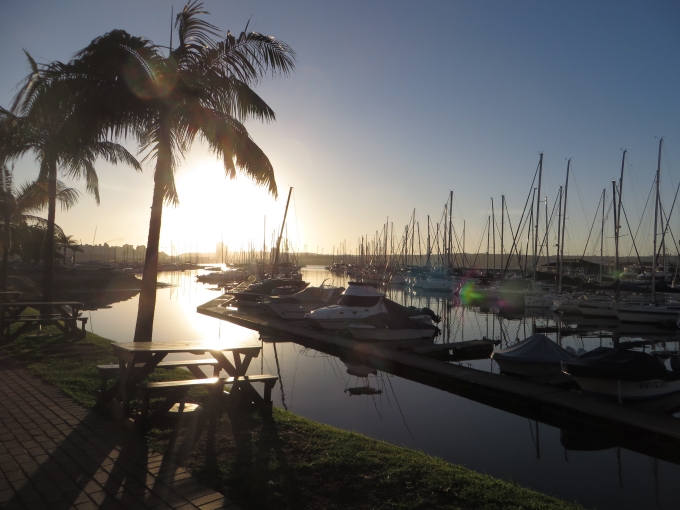
Our first impressions of Durban have been positive ones. The marina is rather old and needs some attention, but it's got character. As always, visitors are berthed wherever possible and our berth happens to be near the end of a very, very long pier which requires pre-planning when scheduling the morning bathroom run. Interestingly, the marina itself does not offer any shore side amenities. Hot showers and toilets, a club house, wifi, restaurants, bar, etc. are all offered by the friendly Point Yacht Club which is adjacent to the marina office. We received two weeks free membership at the PYC and can use all their facilities and then there's a small weekly fee per person after that. durban marina at sunrise

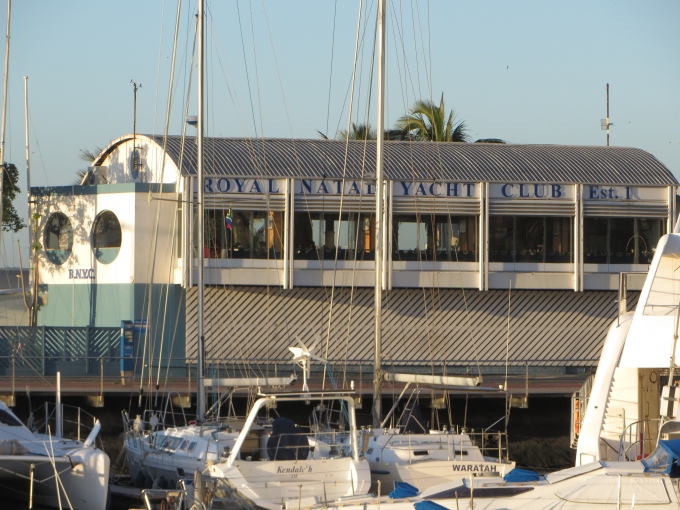
Just across the way is the Royal Natal Yacht Club which has a large clubhouse and restaurant … and free wifi. Established in 1858, it's the oldest yacht club in Africa and the fifth oldest in the southern hemisphere. It's yesteryear classy, like a lodge in the Catskills, and the restaurant is more upscale.

port natal yacht club durban south africa

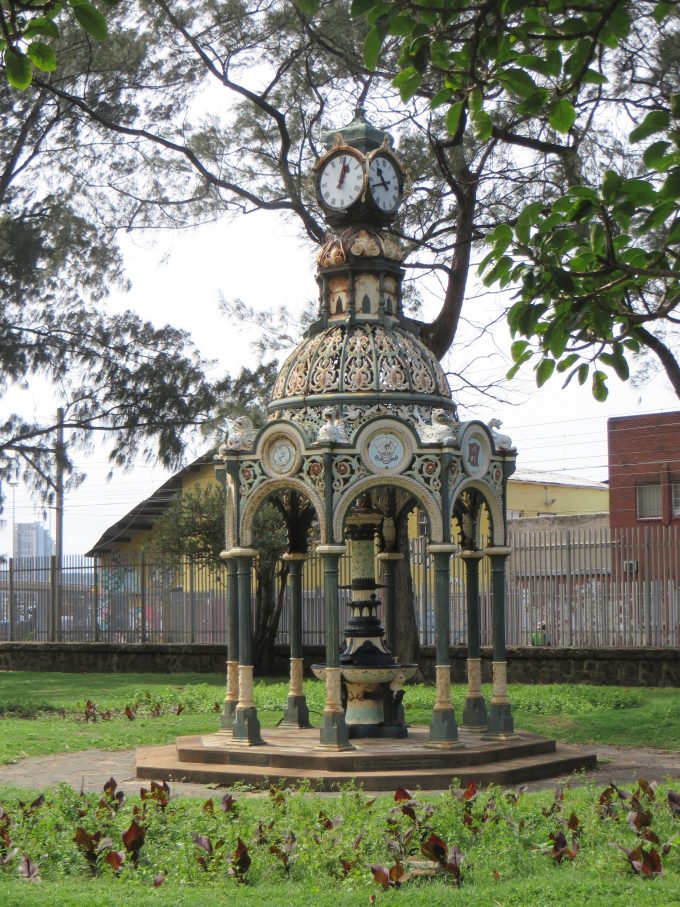
Portugese explorer, Vasco de Gama sighted Durban's natural harbor on Christmas Eve 1497 and named it Rio de Natal (Christmas River). When the British colonized the area in 1835, they renamed it in honor of the governor, Sir Benjamin d'Urban. The Zulu call this area eThekwini, from “itheku”, meaning bay or lagoon – a reference to the harbor and the lagoon formed where the Umsundusi River meets the Indian Ocean. In 1898, the Portugese sent Durban a gift of a Victorian baroque style pavilion to commemorate the 400th anniversary of de Gama's discovery. We walked by it on the Victoria Embankment and probably would have missed it altogether had I not been on the lookout for it.

de gama clock memorial durban south africa

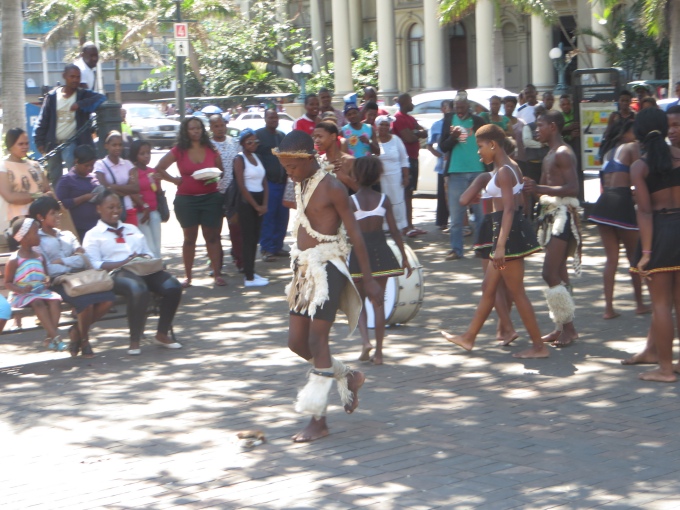
Durban is South Africa's third largest city, located in the province of Kwa-Zulu Natal (cool name, huh?). Its Port Natal is the busiest container port in Africa and considered one of the top 10 busiest container ports in the world. Based on the ship traffic we saw on our early morning approach, that's easy to believe. The city itself is a hustling, bustling city of 3.5 million, with lots of traffic, both vehicular and human. The streets are crowded. Shops are busy. Hawkers, street vendors and buskers all compete for attention. We were entertained by some Zulu street dancers on our way to finding a new mobile phone.

zulu street dancers durban south africa

We're enthralled by the way women carry big parcels on their heads. They walk along casually chatting with huge bundles balanced on their heads. It's obviously an acquired skill, but they make it look so easy.

woman carrying bundle on her head durban south africa

We're told that street crime is high here. Locals have all advised us to be particularly careful. Muggings, pickpocketing, and petty theft are common, so we're a bit leery of straying too far afield. Truth be told, I haven't ventured out by myself without David. But, as always in any urban environment, common sense is a must. There's exploring to do … we'll do it cautiously!

Tea for Two - Bois Cheri Tea Factory

Before we headed off on our accidental tour of the national park, we had intended to visit the Bois Chéri Tea Factory, the first tea plantation in Mauritius, dating back to 1892. We were obviously sidetracked, but we decided to make the one-hour bus trip again, now that we had the route figured out. We were advised to visit early in the day as most of the “action” takes place in the morning when freshly picked tea is brought in, machines are in operation and the workers are busy doing tea processing things.

bpis cheri tea factory

We arrived around 0930 and joined a tour immediately. The entry fee of 500 Rps ($17 ea) seemed a bit steep, in our estimation. The guided tour lasted about 20 minutes and provided information about tea processing from picking to withering to cutting, fermentation, sorting and packaging. It's a small operation and although machines are used, the processing is still extremely labor intensive.

processing tea at bois cheri

There was a small one-room “museum” which offered a bit about the history of tea and its arrival in Mauritius. There used to be several plantations, but now only a couple. Mauritius can't compete with world markets. What they grow now is primarily for domestic use and small export quantities to Reunion Island and France.

tea museum at bois cheri

We always learn something new though. For instance, the Chinese are credited with discovering and developing tea as a beverage as early as 3000BC. Originally used as a medicinal drink, tea later evolved into a culture all its own. Lu Yu, is considered the Sage of Tea, having written The Classic of Tea (in Chinese Ch'a Ching – really?), around 760 AD, the first definitive work on cultivating, making and drinking tea. The Portuguese picked it up while visiting China and they brought it to the UK. Tea is the second most consumed beverage in the world next to water and the Irish are the biggest tea consumers per capita in the world. An Irish-American, Thomas Sullivan, is credited with inventing and patenting the first tea bag.

lu yu

The highlight of the tour was supposedly the tea tasting in the tea room which happened to be about 2km from the factory along a beautiful country road, lined with trees and flowers. The tour guides were rather perplexed that we arrived by bus instead of with a tour group or taxi and were on foot. We happily walked to the tea room. We passed by several tea fields. Tea pickers, women stooped over and intent, were still at work, choosing only the tiny, tender tea leaves for picking.

bois cheri tea picker

The tea bushes were so close to the side of the road, it was easy to examine them pretty closely. We observed the flowers and the seeds as well as the lush, shiny green leaves themselves.

tea leaves and flower at bois cheri

We always see so much more when we walk. Waxy red, pink and white anthurium bloomed in the damp glades. Ornamental pineapple, pandanus palms and fern trees lined the road as we got closer to the tea house. We saw a herd of deer, lazing and grazing in a meadow. The smell of gardenias and jasmine perfumed the morning air. It was delightful.

deer herd at bois cheri

We turned a corner and the lake and the tea house came into view, a lovely sight despite the overcast sky. They claim in ancient times, this was a volcanic crater.

view of bois cheri

Once we reached the tea house, our vantage point from the top of the hill allowed us to see for miles in all directions.

view from bois cheri

The tea tasting was great. Twelve teas were set out on the table and hot water was brought in a tea pot to our table along with sweet biscuits (cookies), milk and raw sugar. It was a lovely presentation. We tried plain black tea, then vanilla flavored, coconut flavored, tropical fruit (yuck), bergamot (Earl Grey) and a myriad of green teas. We sampled most of them and paid later on in the day when we needed to pee every half hour. Not good when you're traveling on a local bus.

tea tasting at bois cheri

The restaurant at Bois Cheri is just lovely. The food is gourmet and they utilize local produce including tea as inspiration for their culinary creations. I had crevettes (shrimp) in a traditional Mauritian red sauce served with a hearts of palm salad and saffron rice with pine nuts. Delish! David had medallions of roast duck with a honey tea sauce, salad and a potato puree that was out of this world. We tried the specialty ti punch made with local rum, cane sugar syrup and limes. For dessert, we had bananas flambee again with local vanilla bean ice cream. The waiter brought us a sample of the local vanilla rum as a complimentary after-dinner drink. A most memorable meal.

great meal at bois cheri

After such a great meal, the 2km walk back was most welcome. We chatted amiably, holding hands as we sauntered along the road, taking in the views and watching the world go by.