Peperpot Nature Park

We had intended to book a rain forest tour while here in Suriname, but it just didn't work out. Most tours must be booked for a minimum of three days. Everything must be paid in advance in cash and the sleeping accommodations are usually hammocks unless you book a jungle resort. The activities listed did not appeal to us, so we sought alternatives. A new friend we met at the American Embassy suggested a day trip to Peperpot Nature Reserve. It's just over the Suriname River Bridge about 30 minutes from Paramaribo and it seemed like a good alternative. We hired a car for the day and off we went. peperpot nature park suriname

Peperpot, an early 18th century coffee/cacao plantation, is being transformed into a nature reserve with walking tracks and a new discovery center. There's still construction under way … it's a work in progress. We planned on an early morning visit. Peperpot is considered a birding “hotspot”. More than 300 species of birds have been identified in the park, and morning is the best time to see them. We were told monkeys and other critters roam there as well, plus an amazing array of flora. We arrived early enough, but the admission folks didn't quite have it together and it was after 0830 before we paid our fees (SR$18/pp) and hit the trail. There were no trail maps nor other information available, but we were told the trail was 2.5km one way.

flowers at peperpot nature park suriname

The beginning of the trail was muddy after yesterday's showers, but soon opened and dried out into sand, gravel and trampled leaves. Bamboo and palms provided lots of shade. Banana trees and old coffee (kofimama) and cacao trees, remnants of the plantation days, still intersperse with rain forest foliage.

trail at peperpot nature park suriname

Signs in both Dutch and English provided information about both fauna and flora in the park.

signs at peperpot nature park in suriname

We could hear birds, lots of them, but could see none. Other than the kiskadees whose song we easily recognized, we had no idea of what birds were serenading us. When we did spot a few, they were always high in the canopy or deep in foliage preventing any clear photos. Sigh!

kiskadee at peperpot nature park suriname

A worker on a moped went up and down the trail several times. Men with machetes were clearing bamboo and chatting loudly between machete thwacks. A backhoe was working on clearing a muddy area. We were hoping for quiet, but it was hard to find. We reminded ourselves … this park is a work in progress!

Insects abounded. We saw termites nests and long trails of red and leafcutter ants. Butterflies and dragonflies were in abundance, too … brilliantly colored and patient enough to pose for photos.

butterflies and dragonflies at peperpot

The trail was measured out with small signs at .5km intervals. At 2.5 km, the trail continued with no end in sight. We continued walking to 3km and 3.5km. Still no end in sight. We didn't actually know what was at the end of the trail, but we had hoped to get there. Disappointed, we finally turned around and retraced our steps. We had allotted the entire morning to Peperpot, but the late start had robbed us of an hour or more.

On our return to the entrance building, they asked if we enjoyed the plantation house. “What plantation house?”, we asked. “Oh, you didn't see it? Well, you can drive there. It's only 1 km down the dirt road.”

Hmmm … we got back in the car and started down the designated rutted, dirt road only to be further stymied by deep ditches and holes filled with water which we thought our low-slung Toyota would have problems negotiating. I nicked a photo of the plantation house off the Internet to see what we'd missed.

plantation house at peperpot

Though feeling a bit let down, we did, however, see wattled jacanas in the irrigation ditches alongside the road, as well as an unidentified raptor, which was some comfort. Probably common birds in the area, but uncommon to us.

wattled jacana at peperpot nature park suriname

We'd heard people rave about the birds and monkeys and other fauna they'd seen … like anteaters, so we were feeling that our timing was off. And we'd missed the plantation house altogether through naivete on our part and a bit of misinformation. All in all, not our best nature park experience, but the walk itself through the forest was lovely and we can see the potential for good things at Peperpot. Maybe next time?

Dutch word for the day - Drempel …. speed bump

There are many drempels on the roads in Suriname, even on “highways”. Most times they are marked, but sometimes they are not. We hit several that jarred out teeth.

drempel

A Hindu Cremation at Road to the Sea

Henri Fernandesweg is the official name of a side street off Kwattaweg, about 15km (10mi) northwest of Paramaribo city. It's popularly called Weg naar Zee, “The Road to the Sea” and it leads to the shores of the Atlantic. It's a popular birding site because it passes through agricultural lands, mudflats and mangroves. We did see herons and sandpipers, but it wasn't the birds we'd come for. The road also leads to a Hindu sanctuary, and nearby, is the oldest open-air cremation site in Suriname. herons in suriname

Births, weddings and deaths are key events in every culture. We had learned from several local sources attending a Hindu cremation was possible. We were interested. Hopefully, this doesn't sound too morbid or ghoulish to you … any more than visiting old graveyards. We read that strangers are welcome at the ceremony and photography is allowed, as some of the mourners would be photographing as well. The only rules … be respectful, stand up when the coffin arrives and do not hinder the proceedings.

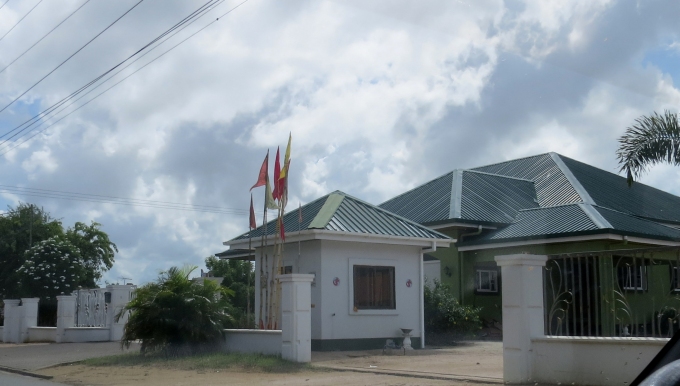
The Road to the Sea was the best maintained, smoothest road we had driven on in all of Suriname. We drove past well-maintained homes. Hindu prayer flags mounted on bamboo poles adorned most yards.


nice neighborhood in suriname

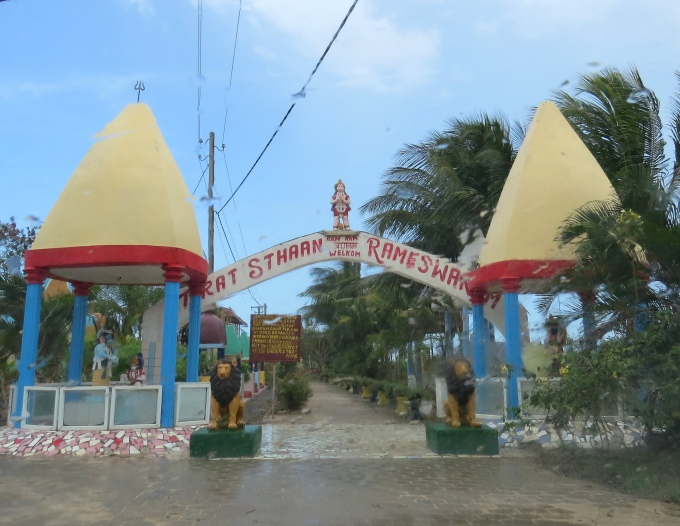
We followed the road to the very end and found the Hindu sanctuary. It seemed totally deserted. Perhaps after the recent Diwali celebration (Hindu Festival of Lights), people didn't feel the need for sanctuary. It was spitting rain as we drove through the entrance.

entrance to hindu sanctuary in suriname

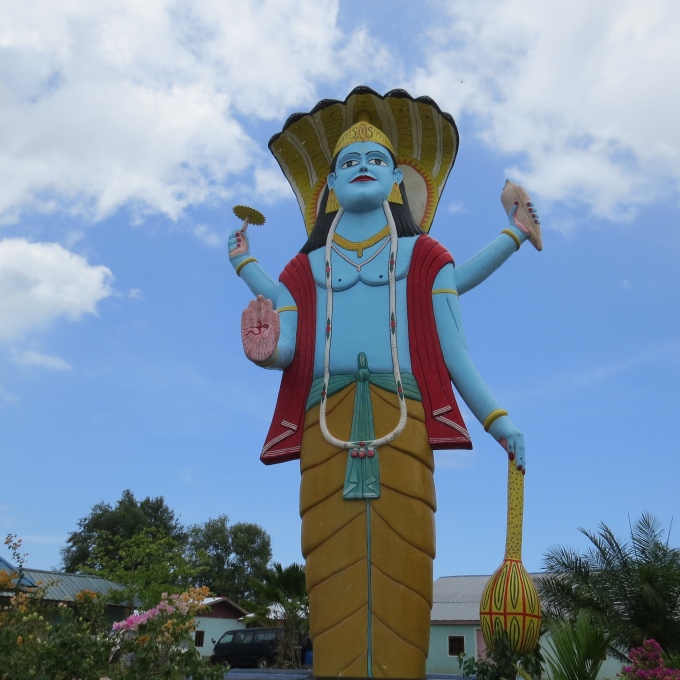
We didn't stay long. We admired the colossal, colorful statues of the many Hindu gods and goddesses.

hindu god in suriname

The grounds were beautifully kept. We could see that on another day, there would probably be many visitors, just not today. We felt as if we were trespassing upon a sacred place and we left.

hindu garden in suriname

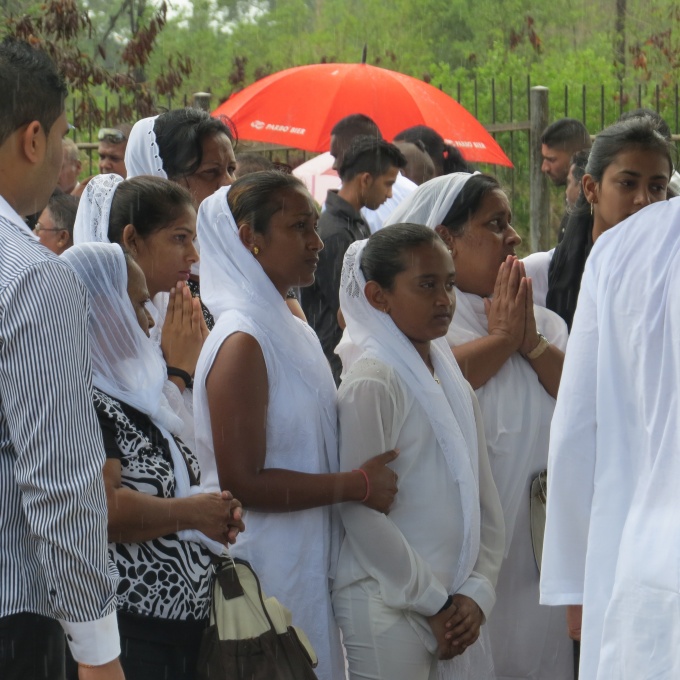
We weren't sure of the exact location of the cremation site, but we noticed a continuous line of cars heading along another road which might lead to the sea. We followed like sheep. About 2 km away, we knew we were in the right spot. Cars had lined up and were parked on both sides of the road. We parked and once again, followed the crowd. We were told that cremations take place almost every weekday and usually begin at 2pm. It was 1pm as we wandered in the direction of crowd. We could see funeral pyres and then we saw a large covered area with people milling around … mostly dressed in white, the color worn by Hindus for mourning.

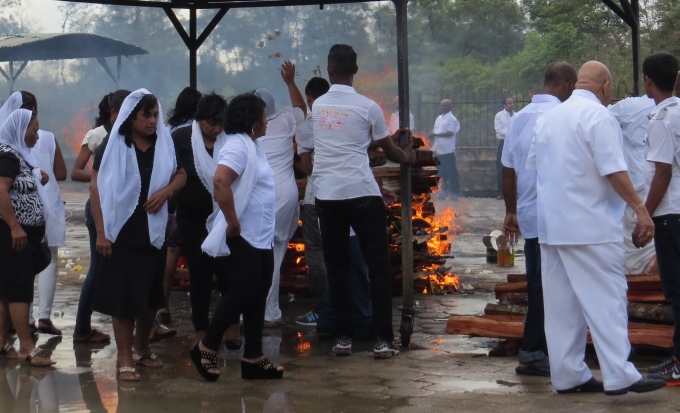
people in white at a hindu cremation in suriname

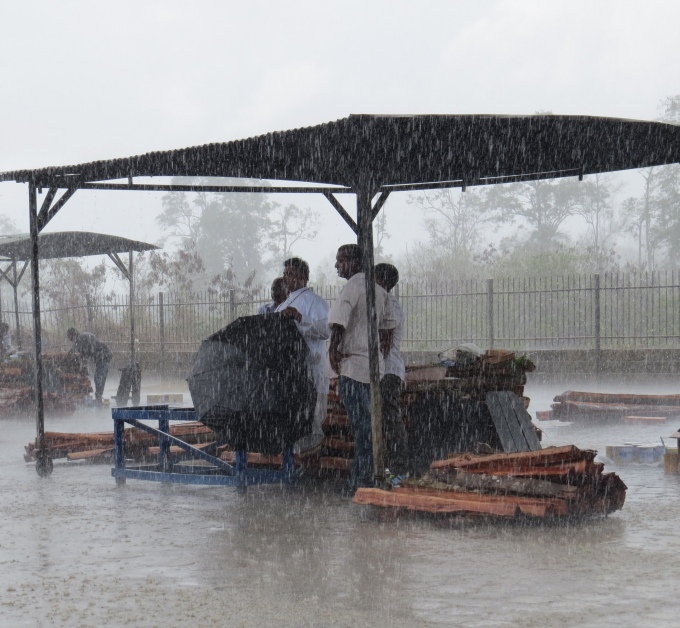
A large covered area with wooden benches at one end was filled with people. We saw a white coffin with family and friends crowded around it. Then, we saw two more coffins. Three separate wooden pyres had been constructed in an open area under small protective metal awnings. Men were waiting solemnly beside each. The rain came down in torrents.

preparing a hindu cremation site in suriname


waiting on the rain

Within minutes, men in white bearing one of the coffins, brought it to a cremation site, removed the lid and placed the coffin on the wooden pyre. Mourners followed. Shortly after, another coffin was brought to the second cremation site and finally the third coffin was brought out and laid carefully on its funeral pyre and the lid removed. Family and family led by a Hindu officiant dressed in white, followed and then gathered around.

bringing the coffin to the pyre in suriname

We rose, bowed our heads and waited for the proceedings to begin. From our vantage point, we watched as large tins of ghee (clarified butter) were poured over the body. The lid was replaced on the coffin and then men carefully stacked wood high around the coffin. The fire was lit. The white-clad, pallbearers, their heads shaven (perhaps acolytes ?), walked around the coffin, stopping to light the pyre at strategic places.

lighting the fire at a hindu cremation in suriname

The crowd stayed close. Some threw flower petals...a final farewell to a loved one or friend.

throwing flowers

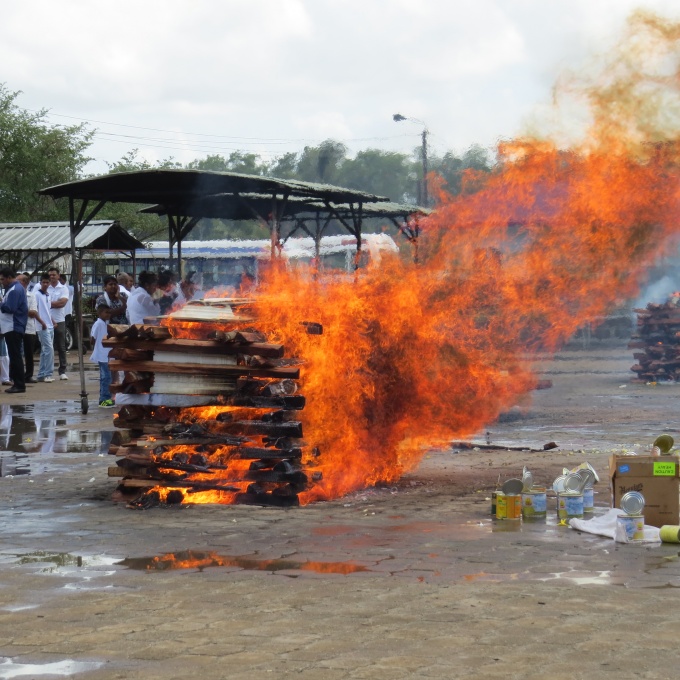
As the flames grew in intensity, the awning was removed and the family withdrew. We could feel the heat from where we stood and hear the sound of the roaring blaze as it devoured the pyre.


blazing pyre

All three coffins now stood ablaze. The families had retreated under the large covered area. Food and drink had been set out. There was chatting and talking. Children ran around. In this aspect, not so different from Christian funerals we'd attended.

blazing pyre

We didn't understand much of the ritual and wish we had known more, but we found the ceremony to be solemn, respectful, and beautiful. The public, open air aspect of the Hundu cremation with family present seemed very personal. We thought it was a better farewell than the impersonal method with which we are familiar... a mortician delivering the body to a crematorium and collecting an urn of ashes a few days later. We're told that in the Hindu ceremony, the ashes would be gathered the next day by the family and scattered on the sea in a separate ritual. We considered this an unusual cultural experience and felt we were fortunate to be able to witness it.

New word for the day is Hindi – jhandi – prayer flag

hindu prayer flags in suriname


Shopping in Suriname

Shopping in Suriname, for groceries, souvenirs or whatever, is quite an experience. First of all, every little shop that carries any food products at all calls itself a supermarket. So there are lots of supermarkets listed that are no more than your typical mom and pop corner store. If the floor space is large, they call it a warehouse, even if the shelves are not stocked. It took us awhile to find Tulip, a bona fide first-world kind of supermarket for stocking the larder. The prices are relatively high here since most everything is imported from the States or Europe (Holland). I was amazed at the number of American products on the shelves … from Celestial Seasonings teas to Skippy peanut butter to Campbell's Chunky Soups and Velveeta cheese (really?). There was a rather large display of Old El Paso Mexican products and Pillsbury dominated the cake mix section. Even Newman's Own products have made it to Suriname. Lay's potato chips were available in mouth-watering flavors such as bolognese and paprika.

american products in suriname

We were shopping for basics … canned tuna, rice, pasta and looking for exotics like Surinamese coffee or local specialty items. The only Surinamese products we saw were Parbo beer, Borgoe rum and Paloma rice. Rice is obviously a starch staple here, available in sizes from 1 kg to 50 kg. We'd already tried Parbo beer, but bought some rum and rice to support the local economy.

The selection of fresh produce was not impressive. The lettuce and grapes looked pitiful. Of course, they'd come all the way from California, so what can you expect? Nothing looked appealing. We'd rely on the Central market and roadside stands for our freshies.

paloma rice

We were a bit surprised at the check-out when we found that credit cards were not accepted here either. Once again, only cash. We had enough on hand, but really, trading in cash is mighty cumbersome.

We headed back downtown to the Central Market area. Along the road, several vendors had set up shop and were offering crops from their gardens. Melons seemed to be in season.

melons in suriname

There were also several flea markets going on and business was brisk.

flea market in suriname

The Central Market was a bit of a disappointment. Not because of the quality, but rather the selection. The locals obviously sell what they grow and root vegetables and leaf vegetables seemed to be the prevalent offerings. Manioc and starchy tubers are not on our best buy veggies list. We gave them a pass. Little Surinam bananas were tasty and we picked up a watermelon. Hardly enough for a couple of days.

central market in suriname

We wandered through a couple of souvenir shops that offered local Maroon carvings, baskets and all-things-marked-Surinam imported from China.

suriname souvinir stalls

Fashion ranges from fancy Indian saris to high end men's shops to sportswear in Suriname's national colors of green, red, yellow and white.

fashion in suriname

The American influence is so noticeable, it's embarrassing ... from Angry Bird and Mickey Mouse to neon lighted Coke signs. We heard American music (old stuff, not current … think Herb Alpert and the Tijuana Brass). We saw old sit-coms and soaps and sports events on the flat screen TVs in restaurants.

angry birds and mickey mouse in suriname

coke in suriname

Walking in Paramaribo is challenge. Where there are sidewalks, there are usually cars parked unless the sidewalks are in too bad a shape in which case they're left to the pedestrians.

sidewalks

We managed to get what we needed other than freshies. We'll ferret out some other options or settle short term for the tinned veggies we have aboard. As always, shopping is an adventure in and of itself.

Dutch word for the day - winkel - shop or store