Burning of the Tree

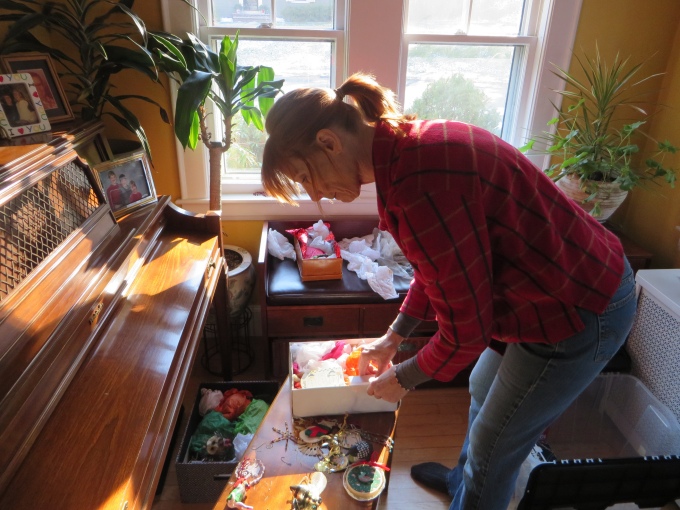
Though January 1st was officially the first day of 2015, Lin never considers the previous year truly ended until she “de-decorates” the house and burns the Christmas tree. We spent a morning lugging boxes from the basement, taking all the Xmas decorations down and ornaments off the tree and packing them carefully till next year...then lugging all the boxes back down to the basement. (In New England, we refer to the basement as the “cellah”.) After the ornaments were all stowed, we cleaned and vacuumed and straightened up. The vacuum cleaner always smells good after it has sucked up all those dry pine needles. The house, which usually looks elegant, always looks stark when the decorations go away. packing away the ornaments

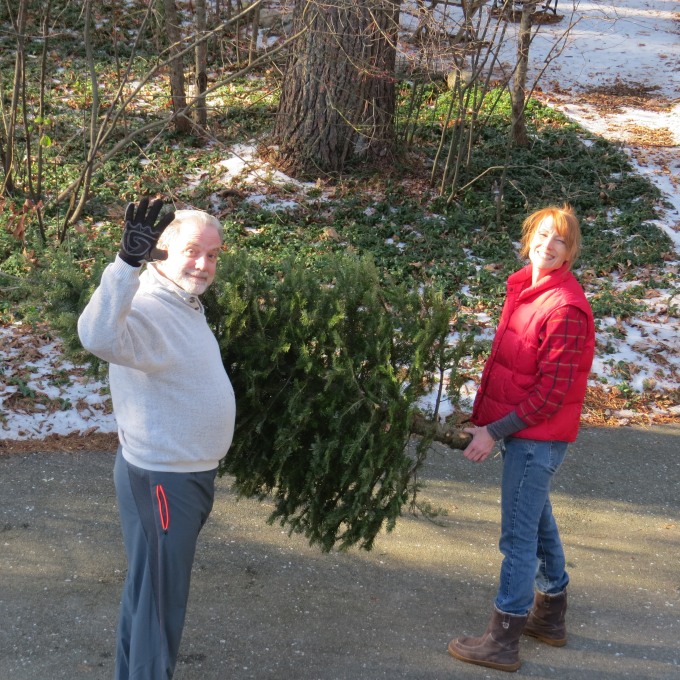
Lin and Matt lugged the tree out to the chiminaria and cut it into burnable pieces to get the fire blazing.

lugging the tree outside

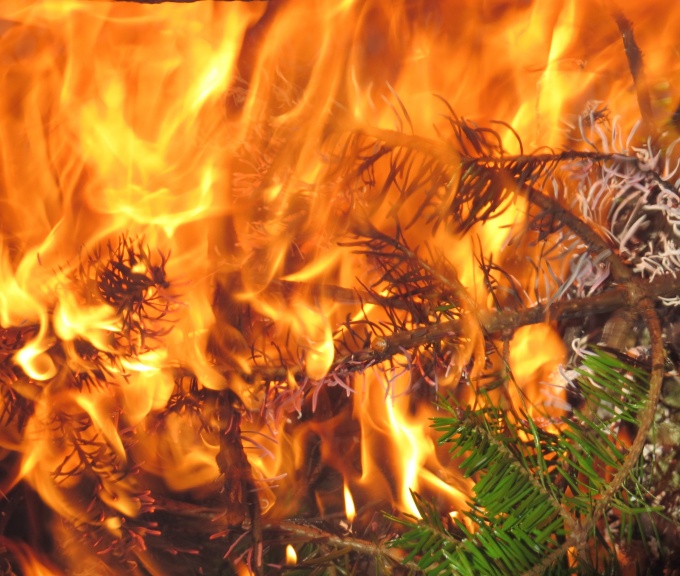
Anything bad that's happened during the year or is currently going on gets written down on a piece of paper and thrown into the fire with the tree and promptly gets burned away. It's a cleansing of the old year and a clean start to the new … kind of an extension of the Yule celebration.

blazing fire

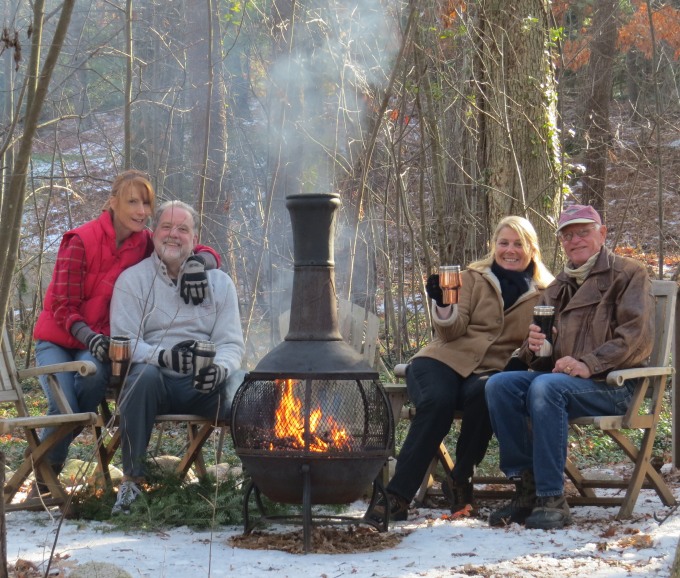
Of course, there is drinking involved. After all, it's cold outside and hot, mulled cider with rum does wonders to keeping a body warm … both physically and spiritually.

hot cider around the fire

There were football games to watch afterward and a huge pot of Lemay Special was simmering on the stove. How can the year ahead be anything but wonderful?

Celebrating Yule

Yule on the pagan calendar is the observance of the winter solstice in the northern hemisphere. Lin's earth-centered group usually gets together at this time of year to celebrate the rebirth of the sun and the beginning of the winter season. It is one of the oldest winter celebrations known. The group couldn't find a time to get together on the actual solstice date, so they celebrated late and we joined them. merry yule

David rarely attends these type of functions, but he thought it might be interesting to participate this time and came along. We brought food and wine to share and gifts to exchange. David had made an ocean plait mat for the occasion with an old halyard from Cups and that was our exchange gift. The attendance was small this year (only 10 of us), but quite enjoyable.

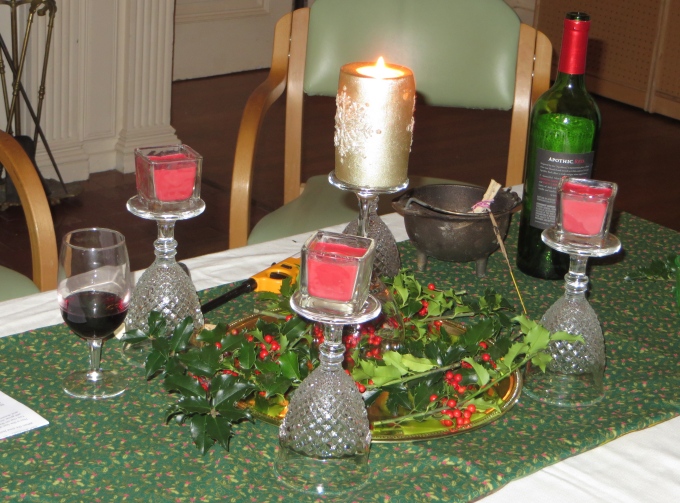
Pam officiated at a small altar decorated with candles and fresh holly and food for a small feast … bread (in this case, gluten-free ginger cookies) and wine. Lin cast the circle signifying the forming of a sacred, safe, magical place that would contain the positive energy we would be generating. The candles were lit with deference to north, south, east and west. Everyone read parts in the simple ceremony which acknowledged the winter months ahead with the promise of the return of the sun and the Spring that would follow. It's a time of contemplation, reflection and opportunity.

altar

Pagan rituals, upon which many modern religions draw their holiday celebrations, date back millennia, and coincide with the change of seasons and the cycle of life in acknowledgment of and in accordance with nature's strength and harmony. Incidentally, this group is called Covenant of Unitarian Universalist Pagans … CUUPS, for short.

I know … it seems weird if you're not into it, aren't familiar with pagan ideas or never attended a ceremony. We found it enjoyable to spend an evening with interesting, genuinely warm people and a good opportunity to reflect upon the year past and the year ahead. No small animal sacrifices were involved.

The Blue View - Keeping Busy

Marcie and her sister Lin have a very enviable relationship. Although they are 11 years apart, they are as close as twins. They don't look alike, but do share many of the same mannerisms and have very similar personalities. They're inseparable when we visit Boston, and their farewells are always tearful when it's time to return to Nine of Cups. They also sound alike on the phone. In our early days together, if I was out and about and called the home phone, I sometimes thought I was talking to Marcie when, in fact, it was Lin I was talking to. Lin was all too happy to play along, and it sometimes led to some embarrassing conversations. Now I've caught on, and if I'm not sure which sister I'm talking to, I use my own set of 'security questions' – “Where do we keep the UHT milk on Cups?” or “What unusual anatomical feature do I have on my backside?”.

We aren't in Boston all that frequently, so when we are, the sisters spend a lot of time with each other catching up, and I've found that it's best if I find a project to immerse myself in. Sometimes it's a household project that Lin has been saving for me from her to-do list – install some motion-activated lights on the back steps or clean out and reorganize the garden shed. This time, however, there were no pressing household projects, and I have time to complete the design of our new wireless windlass controller.

The design will consist of two modules – the handheld, battery- powered module and the controller module located in the forepeak locker, close to the windlass. The controller starts and stops the windlass and keeps track of windlass revolutions. The handheld module monitors the Up and Down buttons and displays the amount of rode deployed. The two modules communicate using matching RF transmit/receive radio modules.

controller

I've been working on the handheld module, and it's coming along nicely. It is quite small and incorporates a sunlight readable, graphics display (one of the shortcomings of the previous design was that it was hard to read in the bright tropical sun). The wireless range (500 meters) should be more than adequate for our use – we rarely try to lower or raise the anchor from shore.
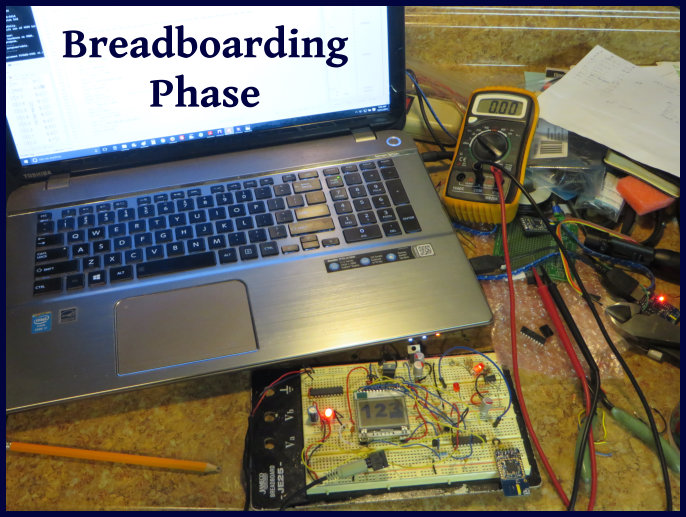
breadboard

I've finished most of the breadboarding phase. I am using a prototyping breadboard to connect all the components, get everything functional and working, and to work out any hardware issues. As of today, the display is functioning and I'm able to communicate wirelessly between it and a wireless transceiver connected to my laptop. I'll start the fabrication phase next. Lin provides me a place to work, a few handy tools like a drill press, and all the power I can use, so I want to take advantage of it while I'm here. It's much more convenient than using the Nav desk aboard Cups as a workbench and having to rely on solar and wind to power my soldering iron.
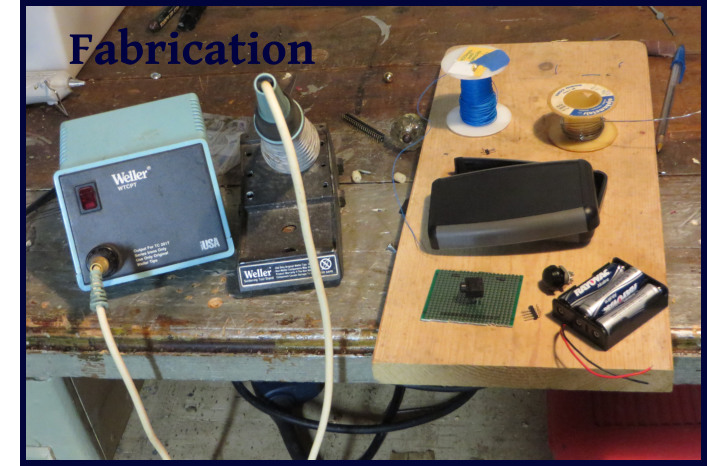
fabrication

After the handheld module is built and functional, I will build the control module. This part of the design, other than the wireless communication, will be similar, to the previous design. The old design had a tendency to occasionally reset with the large electrical spikes that are generated by the windlass motor, so I will enhance its noise immunity in this version. The last phase will be to perfect the communications protocol between the two modules and complete the user interface software.

When it is finally complete and tested, I'll provide the design details to anyone who's interested.