
Things We Miss on Land

We've written so many times about things we miss when we're at sea, I thought it was about time to write about the things we miss when we're on land because despite all the things we tend to grouse and whinge about, now that we're on land, we really miss living aboard Nine of Cups. No, we don't miss anchor watch or the fear of dragging or worrying about wind gusts and nasty weather, but there's so much more to living aboard. Basic, snug and homey

Probably the #1 thing I miss when we're on land is the simple, compact life of living aboard Nine of Cups. Space is good in a house, I guess, but I like the snug feel of Cups. I can sit at the saloon table and clear the dishes into the sink. There's no wasted space, no furniture; everything is built-in and every nook and cranny is used. It's the tiny house movement ... afloat.

inside nine of cups

Energy awareness

I miss being more attuned to energy usage. I find myself wasting energy and water when we're on land. We leave the water running, so that it gets hot for a shower or until we finish brushing our teeth. We don't recycle water for washing the decks or the floors. We leave the fridge door open while making decisions on what to eat. We leave lights on and things plugged in that really don't need to be on when we're not using them, e.g. our computers. We don't plan our driving trips efficiently, so we waste fuel. We ride to the supermarket when it's less than a mile away. The worst part? We become oblivious to the waste until we return to Cups and have to start monitoring and conserving again.
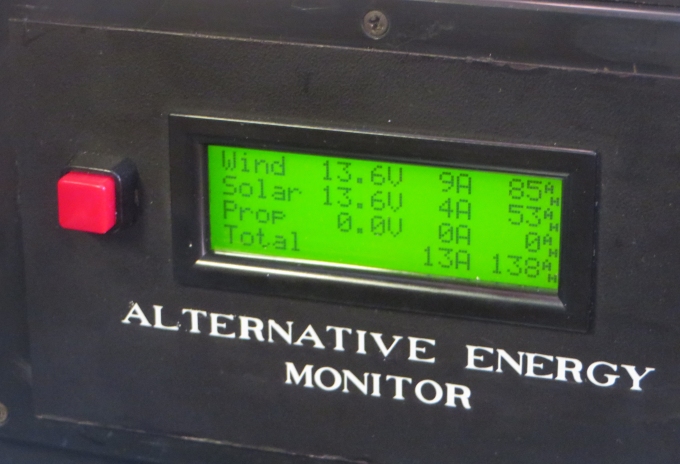
alt energy monitor

Regular, Unplanned Exercise

We tend to drive everywhere because we can and it's more convenient and takes less time. We don't do much walking or exercise unless we make a concerted effort to do so. There's no winching or hauling or toting laundry or getting on and off boats. There's no ½ mile walk to the marina bathrooms. We keep busy, but there's nowhere near the activity we're used to.
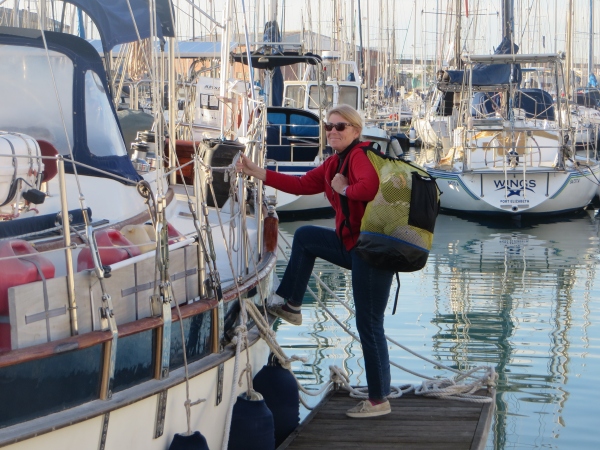
toting laundry

Slower pace

We miss the slower pace of living on a sailboat and traveling slowly. If we're doing 7 knot (that equates to ~8 mph), we think we're really tooling along. More frequently, we're doing 5 knots or less and it's fine. We like watching the world go by. No rush, no hustle, no bustle.

Being on the move

We really love arriving in new ports … and leaving them. We enjoy being on the move, planning itineraries and exploring. On land, we find ourselves visiting the same places over and over because that's where family lives. Though we work at exploring all the nooks and crannies (and Las Vegas and Boston certainly have lots of them), we find ourselves being less adventurous and returning to places we've already visited.
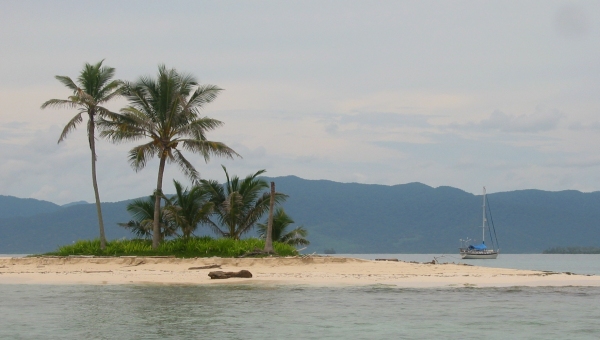
idyllic anchorage

Sea Senses

We miss the rock of the boat and the lap of the water against the hull when we're falling asleep at night. We miss the breath sounds of dolphins swimming past during night watches and day sails. We miss the snapping sound of shrimp beneath the boat in quiet anchorages. We miss the peace and quiet of being alone in an anchorage. We haven't gotten used to traffic sounds and sirens yet.
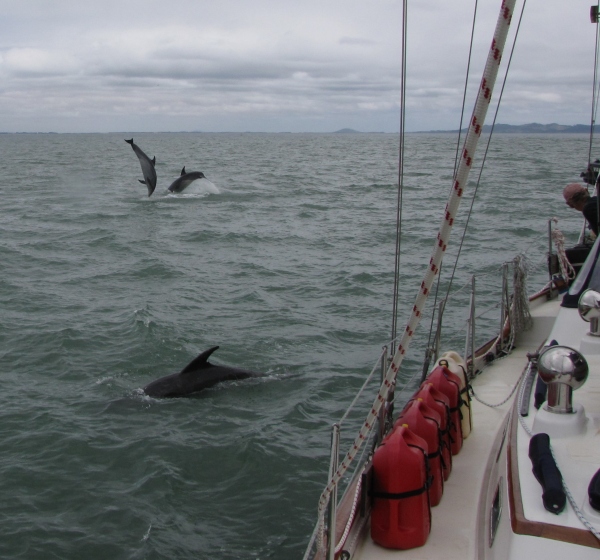
bottlenose dolphins

Sunrises and sunsets

Of course there are sunrises and sunsets where we are, but they're not events like they are on the boat. We miss sundowners in the evenings in the cockpit and morning cuppas watching the sunrise.

whatwemissonland__sunset

When we're on land we miss the boat. When we're on the boat, we miss land. I guess the moral of this story is … we're never satisfied. Fortunately, we have the chance to experience and appreciate both!
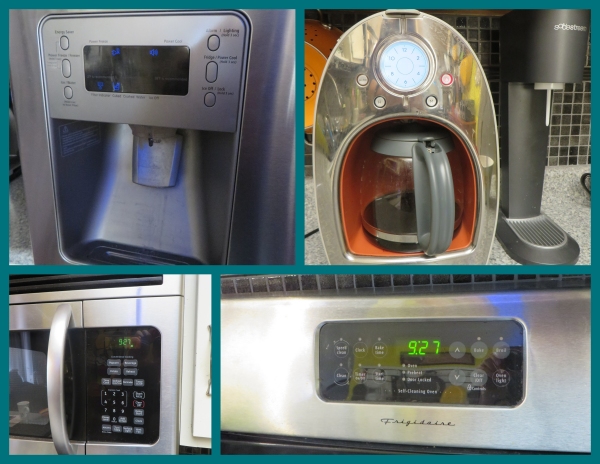
Kitchen Lessons

Being out of the loop of modern galleys, I mean kitchens, for long periods, leaves us at a disadvantage when we come back. We just don't know how to operate in the kitchen. Add together the trendy, high-tech, non-intuitive appliances, the different venues (Boston and Las Vegas) and our bad memories and we are challenged daily to perform basic tasks. I've already outlined the issues just trying to learn how to use our iPhone, but it just gets worse and worse. I don't think we're techno-phobes, just techno-ignorants. kitchen collage

Here's what I mean …

Many times I'm the first one up in the morning and want to get the coffee started. Well, both Lin and Mary have high tech coffee makers which not only make coffee (which is really all I want to do), as well as set the time to start the coffee, when to shut it off, how to make it bold or regular, feed the dog/cat, etc., etc., etc. How many scoops do you put in? ( 6 at Lin's; 3 heaping at Mary's). How do you keep the water from spilling all over the place when you're filling up the reservoir? (No one knows) Oh, yes, and use the reverse osmosis water only. When making the coffee, hold in one button till the BOLD icon lights up, then press it again to start brewing the coffee. Now I realize, there are much more complicated coffee makers than this, but you're talking to a girl who typically adds boiling water from her whistling kettle to instant Nescafe or an Earl Grey tea bag and calls it done.

Or how about the microwave? Yes, we have one aboard. We bought it in 2000 when we started sailing and we think it still works. We can only use it when we have shore power, which is rare. Even when we're in a marina, we forget we have it. We use it primarily as a Faraday cage for the electronic instruments during electrical storms. So figuring out how to use Lin's was tricky. We finally managed and then hers broke and she bought a new one and we started all over again. Then we came to Mary's and hers was a whole new beast. Reading a manual to figure out how to heat leftovers seems counter-productive somehow. I've always preferred cold leftovers.

The fridge-freezer? You couldn't be expected to open the door to get water or ice and no, there are no ice cube trays to refill. You have to select which you want, however, (cold water, cubes, crushed, etc) and try not to change the fridge temperature or set off any alarms while you're doing it. We have no ice cubes aboard … mostly because we have no freezer. We open the fridge lid, take out cold stuff, close the lid. That's it. No technology involved. Cold water comes from the faucet; hot water comes from the tea kettle.

Lin's stove allows two timers to operate at once (although I use my analog wristwatch since I haven't learned to set even one timer yet) and there are all sorts of options for top-of-stove burner use and setting oven functions. Mary's stove is more user-friendly. It's gas (I'm used to that) and as long as I don't have to use the oven, I'm good as.

Play a DVD or watch TV while cooking? I can't even contemplate this. It's like walking and chewing gum at the same time. After dinner, I'm happy to hand the TV remote(s) to someone who cares and seems responsible and head to my computer or iPad where I can watch a YouTube about correct and proper refrigerator use.

There are blenders, mixers, and food processors, pasta makers and rice cookers, popcorn makers, slow cookers, fast cookers, electric griddles, egg steamers and SodaStreams. Oh, we'll eventually catch up once we have a house and have to use all the gadgets every day, but in the meantime, it's nearly overwhelming. Give me a GPS, chartplotter, AIS, radar, Navionics charts on an iPad … now we're talking easy to use.

10 Unexpectedly Cool Ports of Call

10 cool ports of call We rarely find a port we don't like, but some are such pleasant surprises, we're amazed we hadn't heard more about them before we visited. What's our criteria for “unexpectedly cool”? Well, it's usually a small port that's welcoming and cruiser-friendly and offers some interesting things to see and do that we were just not anticipating.

Mosselbaai (Mossel Bay), South Africa

We anchored just off the friendly Mossel Bay Yacht and Boat Club, located on South Africa's south coast. Everything is close and within walking distance. There are pleasant walks to the point and great views from the Cape St. Blaize Lighthouse. The best part of Mosselbaai, however, is the Bartolomeu Dias Museum Complex, just a stone's throw from the anchorage. This maritime museum is excellent and thoroughly enjoyable.

mosselbaai dias museum

Deshaies, Guadeloupe

The small Caribbean port of Deshaies (Day-hay), Guadeloupe is wonderfully French. The aromas of coffee, freshly baked croissants and baguettes waft into the anchorage each morning and beg the crew to come ashore. The surprise was the pleasant, 15-acre Jardin Botanique (Botanical Garden) within walking distance from the dinghy dock.

guadeloupe botanical garden

Streaky Bay, South Australia

Streaky Bay is a little coastal town on the western side of the Eyre Peninsula in South Australia. The anchorage is idyllic, well protected from the winds and weather of the Great Australian Bight. Again, there are all the basic cruiser amenities, but beyond checking out the great white shark replica at the Streaky Bay Roadhouse, we enjoyed one of the finest dinners we've ever had at Mocean (pronounced Motion … like ocean with an M).

mocean restaurant at streaky bay

Neiafu, Tonga

If you've ever imagined a tiny South Pacific port where old-time trading ships pulled up to the docks and offloaded their cargoes, this is the place. The myriad of islands and islets to visit within this protected area seem limitless. The culture, the high quality Tongan carvings at colorful markets, the warmth and generosity of the Tongan people made this South Pacific nirvana.

nieafu tonga

Eden, New South Wales, Australia

A small, protected coastal port along the southeast Australian coast, Eden is a lovely place to catch your breath. The Killer Whale Museum is a highlight, but the town is so pleasant, friendly, and walkable, we could have stayed for months.

eden killer whale museum

Strahan, Tasmania

After bashing down the wild west coast of Tasmania and entering through Hell's Gate into Macquarie Harbour, we weren't prepared for the beauty and calm of Strahan. The town is picturesque and lively and the anchorage is calm … a lovely surprise for weary sailors.

strahan waterfront

Dunedin, South Island, New Zealand

Dunedin is a gem of a city on New Zealand's south island. It's definitely not small, but it was a surprise nonetheless. A university town, it's vibrant and culturally engaging with museums and parks and everything's within walking distance. It's a great base for exploring the Otago peninsula or heading inland on the Taieri Gorge Railway.

dunedin new zealand train station

Port Louis, Mauritius

In the middle of the Indian Ocean, we just didn't expect St. Louis, Mauritius to be as cosmopolitan and welcoming as it was. From the colorful, historic foreshore to the traditional Saturday afternoon horse races to the inland tea and sugar cane plantation tours, we were kept busy and entertained throughout our stay.

port louis waterfront

Lüderitz, Namibia

We chose to stop in Lüderitz, Namibia because it was a convenient stop between Cape Town, South Africa and St. Helena Island. We didn't anticipate enjoying our stay as much as we did. A neat and tidy German colonial town, the town is isolated from the rest of the country by the diamond fields that surround it. The diamond-mining ghost town of Kolmanskop is highly recommended as a tourist stop, but walks around town, out to Shark Island and along the rugged coast are outstanding.

luderitz namibia

Searsport, Maine

It's been a long time since we visited the little seacoast town of Searsport, Maine, but the hospitality of the town is indelibly imprinted in our memories. The town is dubbed "the home of the famous sea captains" and the "Antique Capital of Maine" and we enjoyed the nautical spirit of the place and the people. Wayne Hamilton, owner of Hamilton Marine, a stellar chandlery, greeted us himself and showed us to a free visitor's mooring, then offered a ride to the chandlery and the classy Penobscot Marine Museum.

welcome to searsport maine