Getting Our Stuff Together

When a plan comes together, it's always a surprise for us … mostly because it's rare. There always seems to be a “monkey wrench in the works” or a “fly in the ointment”. Murphy's Law always prevails and it still may get us yet, but so far (fingers crossed and knock on wood), our house buying experience has been mostly positive and it all seems to be coming together. We had a few moments of angst when we were at odds with the seller during the negotiations. There have been some minor hiccups in the paperwork stream though it's all digital. Inspections and appraisals have been duly performed. The mortgage company has been quite demanding, but patient David has muddled through it all and all seems be on track … at least at the time of this blog post. We're waiting for the other shoe to drop, but hoping it won't.

Whilst we've been in the process of buying a house, David's sister, Mary, was selling hers and, of course, that's where we live at the moment. She was concerned it would take awhile to sell in the current Las Vegas housing market. We helped her to spiff it up, then she put it on the market. The first person who saw it, made an offer which she accepted. Whew … that was fast! A kind of controlled bedlam has ensued … if bedlam can ever be controlled.
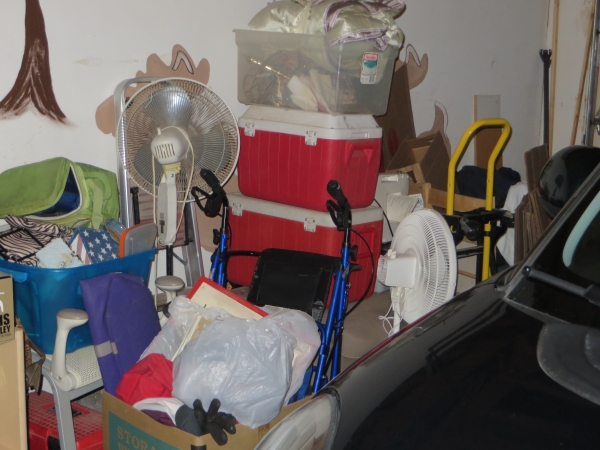
crammed garage

How to dispose of what won't fit into the new house and how to purchase what will be needed? We've scheduled two yard sales on back-to-back weekends to unload all the undesirables which we know other folks will consider treasures. We've made several forays to local thrift shops, used furniture shops and scoured Craigslist for treasures (other people's undesirables) which we want or need.
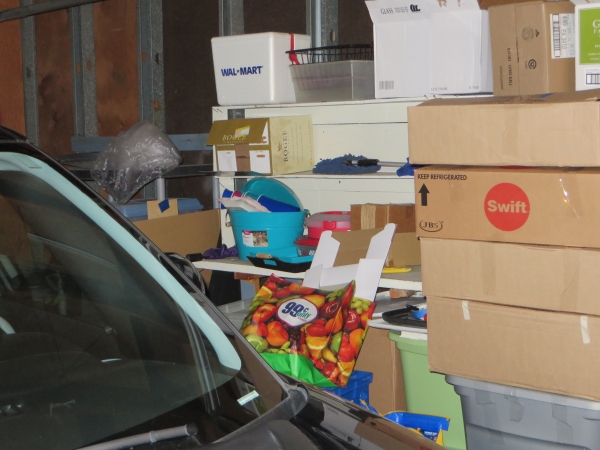
crammed garage

David just bought an old beater of a pick-up truck (1997 Isuzu) to begin hauling unsaleable, undesirable things away … to make room for the new treasures we've purchased. The new house is larger and we've determined that not only do we need more furniture, we also need different furniture and, of course, different accessories. This reminds me of George Carlin's hilarious old routine about “stuff”. The pick-up seems to run just fine and is definitely suitable for running around town buying, transporting and generally moving “stuff” from one location to another.
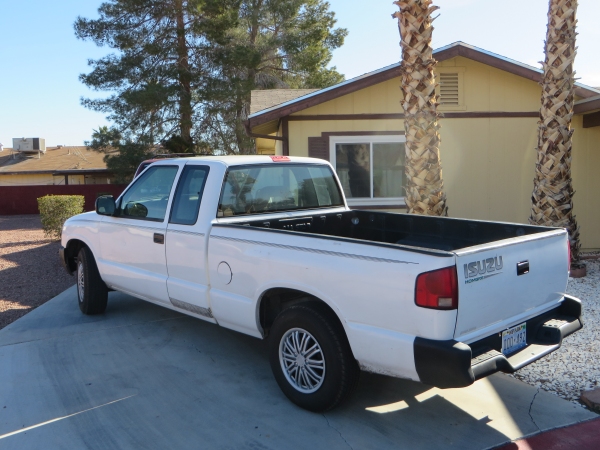
new pickup


The garage is chock-a-block full with labeled packing boxes and furniture on one side, yard sale stuff on the other with barely enough room for Mary's little Fiat to burrow in the middle of it all. There's been subdued excitement over the move. You can only pack so much stuff before it becomes a hassle to unpack it because you need it before it gets moved. The closing dates on the purchase and the sale are roughly two weeks apart allowing us plenty of time to move into the new place and clean out the old. We're patiently waiting for everything to be finalized so we can get settled, but it seems to be taking forever. Good thing there's lots of stuff to buy.
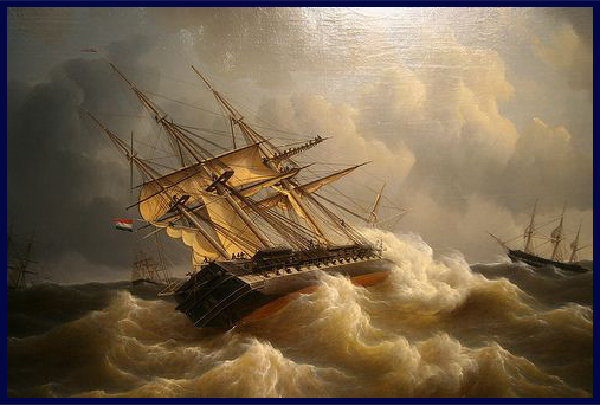
The Blue View - Series Drogue DIY Pt. 1

storm at sea

Nothing seems to generate a more lively discussion among offshore sailors than the question “What is the best tactic for heavy weather at sea?” Is it heaving-to, lying a-hull, running before the storm, deploying a sea anchor, laying warps or setting a drogue? When I was searching for the right answer, I discovered a number of differing opinions. The Pardeys advise heaving to with the help of a sea anchor deployed from the bow. Robin Knox-Johnson handled storms in the southern oceans by streaming a 600 foot warp from the stern. Bernard Moitessier and Vito Dumas found warps unsatisfactory, preferring to run before the storm. Many experienced seamen feel that lying a-hull and letting the boat look after itself is the best tactic. As evidence, they point out the many stories of abandoned vessels found safe and sound with the hatches open after the storm passed.

Perhaps there is no one answer for all conditions and all boat designs, but some tactics are better than others. Our experience with gales and storms has all been in the southern oceans. Our strategy in the past has been to run before the wind, reducing sail, until the weather increased to force 8 or so, and then heave-to for the duration. This strategy has served us well, but the gales and storms we weathered did not include breaking waves.

A boat can survive huge waves unless they are breaking. The inherent force and extremely steep face of even a relatively small breaking wave, however, will capsize and possibly roll a sailboat if it is caught beam-on. Researchers have found that the size of a wave required to capsize a sailboat depends in part on the boat design and ranges from 30% to 60% of the boat length. This means that some 40 foot sailboats will capsize if a 12 foot breaking wave is encountered beam-on, and virtually all 40 foot sailboats will capsize if a 24 foot breaking wave is encountered beam-on.

Likewise, a breaking wave taken on the bow or stern will cause the boat to slalom down the face of the wave until it reaches the bottom of the trough. If the wave is big enough, the boat will either broach and capsize, or worse, pitchpole. Fortunately, most storms do not produce breaking waves.

So how do the various tactics fare in a storm with breaking waves? Let’s look at the options.

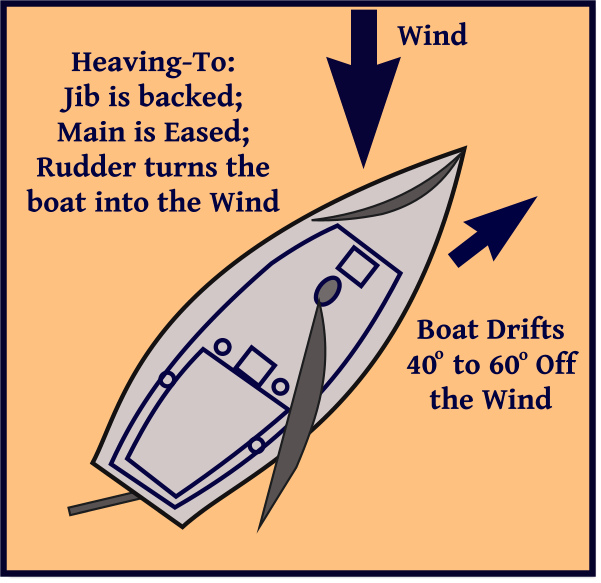
  • Heaving-to. This is a good tactic to employ up to moderately severe conditions. This is not a comfortable or safe tactic for winds and seas beyond about Force 8 or 9, or when the waves are breaking. In addition, some fin keeled boats cannot heave-to.

hove to

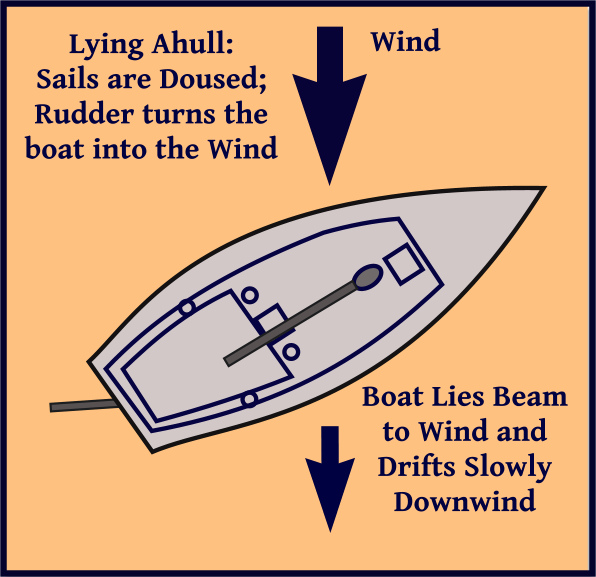
  • Lying a-hull. This was the most popular tactic in the 1979 Fastnet storm, and is traditionally the next step when heaving-to is no longer feasible. When the waves are breaking, however, the boat is quite susceptible to capsize and rolling, with a high likelihood of injury to the crew and loss of rigging and mast.

lying ahull

  • Running before the storm. With a fresh, skilled crew and a maneuverable boat, running is a reasonable tactic, even with breaking seas. It is important to keep the boat at an optimum angle to the waves. Too much angle and you risk broaching. Too little angle and you risk pitchpoling. It is a less viable tactic in a typical shorthanded cruising boat as the crew becomes fatigued.

  • Warps. Deploying warps from the stern when running before a storm has as many deterrents as proponents. Some sailors, such as Robin Knox-Johnson have reported good success with warps, and many others have had unsatisfactory results. The usefulness of a warp may vary with the length of the warp as well as with the height and period of the waves.
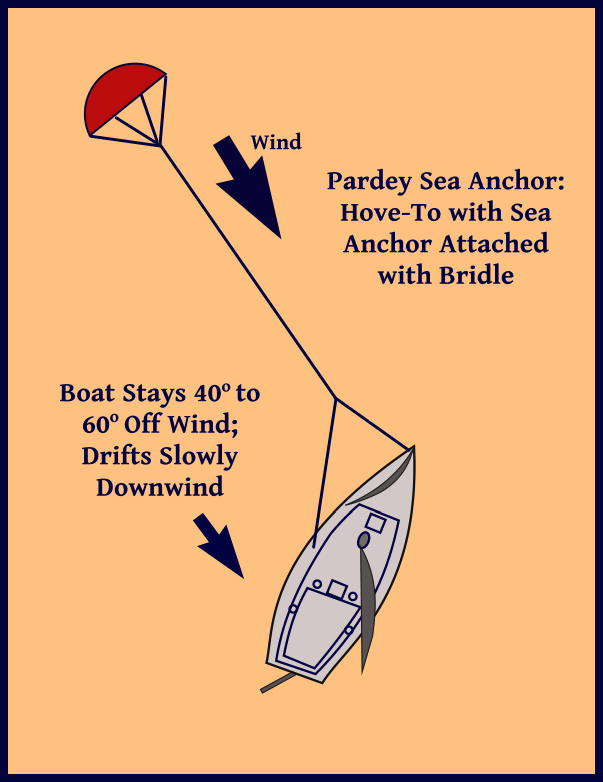
  • Sea anchors. Deployed from the bow, a sea anchor or parachute keeps the bow into the wind. The Pardeys use this technique to keep their boat hove-to in severe conditions. Critics say that sailboats, especially high windage vessels, tend to yaw as the boat passes into the trough of the wave. If a wave hits it when it is off the wind, it is susceptible to high stresses on the rode, damage to the rudder and possible knockdowns.

sea anchor

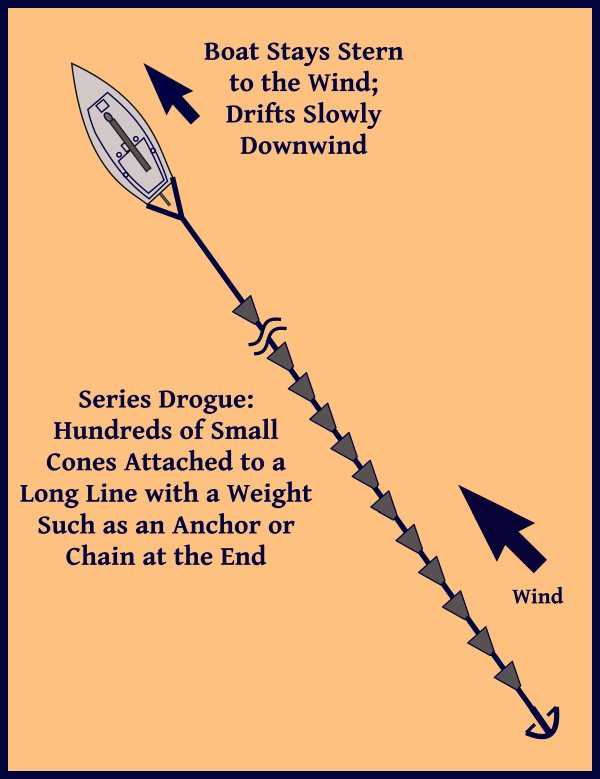
  • Drogues. Deployed from the stern, a drogue slows the forward speed of the boat and keeps the stern pointed to the wind. Its drawbacks are that it is difficult to recover, and the boat is susceptible to being pooped.

series drogue

What is clear is that there does not appear to be a universally acceptable solution for all vessels and all conditions. Sailors who survive storms with no breaking waves often conclude that the tactics they employ such as heaving-to, lying a-hull or running with the storm are adequate to prevent capsizing. After our research and experience, we concluded that a drogue trailed from the stern seems the best tactic for severe conditions with breaking waves. The conclusions drawn from a multi-year study by Donald Jordon in cooperation with the US Coast Guard convinced us that a drogue was the right approach. The study incorporated computer simulations, model testing and actual testing on full size boats and concluded that a suitable drogue deployed from the stern of the boat was the best method to avoid being capsized in breaking waves. An independent study by the prestigious Wolfson Unit of the University of Southampton had similar findings.

Once the conclusion was reached that the drogue was the best tactic, the study attempted to determine which drogue design was the best. In their estimation, a line with a series of small cones attached had several advantages over a single large cone or parachute type drogue.

  • The series drogue is simple and safe to deploy under difficult storm conditions. Assuming the boat is either running or lying a-hull under bare poles, the drogue can be payed out over the stern, building up load gradually.

  • It is unlikely to foul or entangle enough to make it ineffective.

  • The series drogue rides below the waves and is not affected by a following sea. There are known cases where a parachute or large cone has been pulled out of the water and even catapulted ahead of the boat.

  • The series drogue can be weighted whereas the parachute or single large cone cannot. When the boat is in the trough of a large wave, the towline tends to go slack. With the series drogue, the weight sinks, pulling the towline backwards and taking some of the unwanted slack out of towline.

  • The load and stress on any one cone is small, making each less susceptible to fatigue-related failure. Since the number of cones is large, the failure of one or even several cones has little effect on the performance of the drogue.

  • When a breaking wave strikes, the drogue must catch the boat quickly to prevent a broach. The series drogue, since some of the cones are near the boat where towline stretch is low, will build up load faster than a conventional cone or chute at the end of the towline. Similarly, if the breaking wave strikes at an angle to the towline rather than directly astern, the series drogue will build up load much faster than other types.

  • It can be modified for any size boat by increasing the number of cones, as well as the line length and size.

As with all drogues, however, the two biggest drawbacks are that it will not be easy to retrieve until the storm has abated, and if the breaking seas are large, you can expect to be pooped. Larger center cockpit boats would be less susceptible to being pooped. Assuming you have reasonably sized cockpit drains, there is little to be done topsides. It is usually best to batten down everything in the cockpit, latch all hatches and washboards, and go below and get whatever rest you can.

Once we made the decision that we wanted a series drogue, we explored our options. It is possible to purchase a complete series drogue from at least two sources. You can also purchase a kit from Sailrite and save considerable money by doing the labor yourself. All the design information is available, so another option is to make your own. Since we were in South America at the time, making it difficult and expensive to obtain parts, we decided to make our own.

In the next Blue View, I'll cover the design details of a series drogue and how to go about making your own.

Our 12 Most Exotic Sailing Destinations

exotic locations In the past 15 years of rounding the globe, certain destinations were high on our “exotic” scale. We define an exotic place as one that's beckoned to us, maybe because of its historical significance, maybe for its tropical, faraway appeal, maybe because it always seemed alluring, out of reach and fascinating with that we've-read-about-it-in-books-and-now-we're-really-here quality.
San Blas Islands, Panama

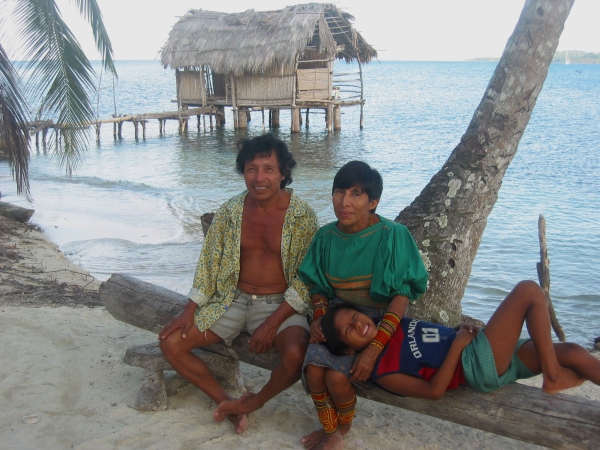
The San Blas Islands, known by the locals as Kuna Yala (Land of Kunas) is the home of museum-worthy molas, women who wear gold rings in their noses and beads on their arms and legs, and proud, independent people who live in thatch huts and get married and buried in hammocks. This was our first really unusual, exotic adventure into a totally different culture and we relished it.

san blas island

Galapagos Islands

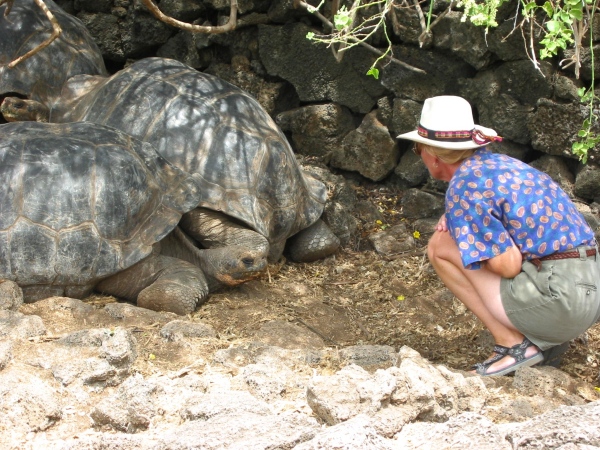
Charles Darwin and his discoveries in the Galapagos Islands … something we'd read about since grade school and here we were, visiting the Galapagos just like the HMS Beagle. The animal life was incredible with Galapagos penguins swimming around the boat, marine iguanas sunning on rocks, sea lions sleeping in dinghies and giant century-old tortoises munching on greens.

galapagos island

Juan Fernandez Islands, Chile

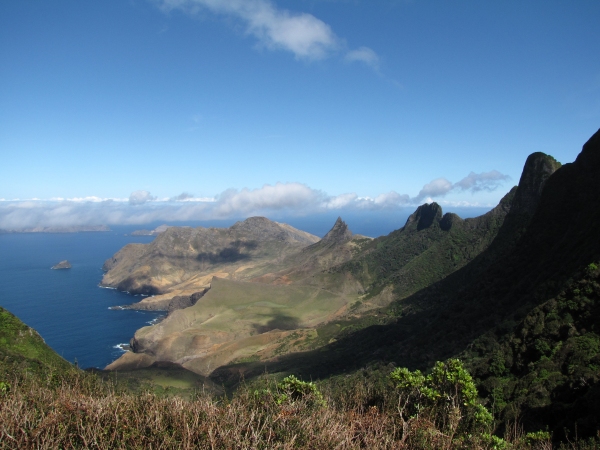
If you've ever read Defoe's Robinson Crusoe, this was the island upon which the real Alexander Selkirk was marooned. We scrambled to the top of the lookout that Selkirk climbed daily watching for a ship. We saw endemic Juan Fernandez hummingbirds (picafloras) feeding on cabbage trees. We took in the history and legends of a place few will ever visit.

juan fernandez islands

Easter Island, Chile

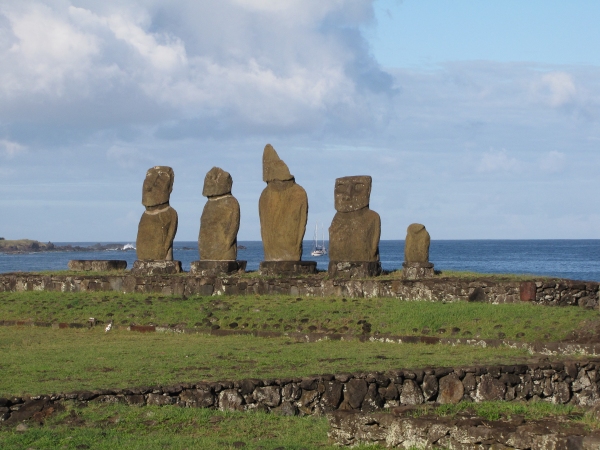
Rapa Nui, Isla Pascua or Easter Island … whatever you call it, it's an exotic place to visit. Moai statues stand sentry, facing inland to the island and its people, not facing out to sea. Wandering around these giant monoliths was incredible.

easter island

Pitcairn Island, Pacific Ocean (British Territory)

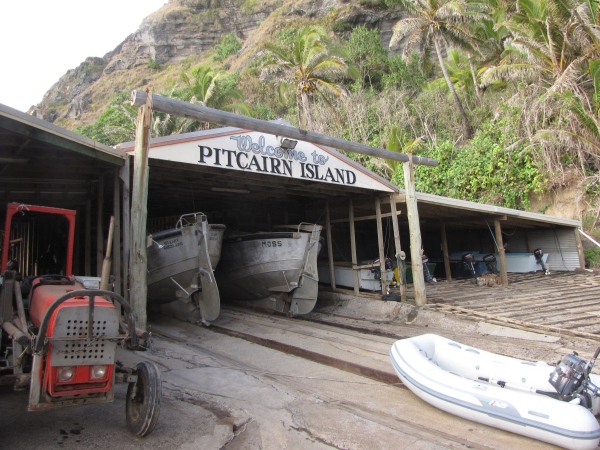
Anchoring off Pitcairn Island, we tried to imagine what the mutinous crew of the HMS Bounty must have thought as they chose this isolated island for their new home. Brenda Christian, great-great-granddaughter of the infamous Fletcher Christian, and her husband, Mike, provided hospitality and tours of the island that stretched up, up, up out of the sea.

pitcairn island

Chatham Islands, New Zealand

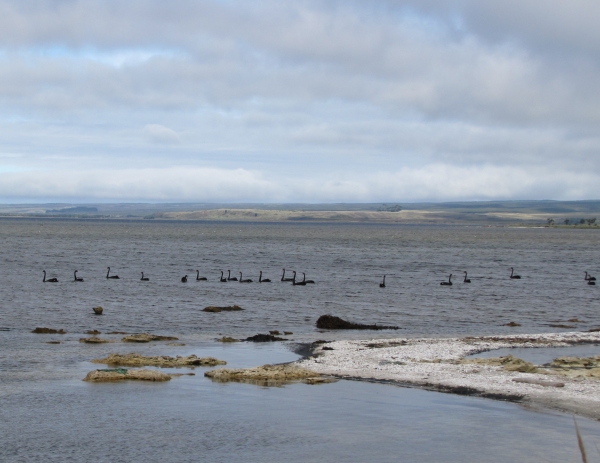
We'd never even heard of the Chatham Islands until someone happened to mention them to us as a potentially interesting place to visit. Located 500 miles east off the coast of New Zealand's South Island, we found the inhabitants of the “first island to greet each new day” warm and welcoming though the wild and windy Chatham Islands weather was not. The expanse of the Te Whanga Lagoon abounded with graceful native black swans, fossilized shark's teeth and endemic flora and fauna.

chatham islands

Tristan da Cunha, Atlantic Ocean (British Territory)

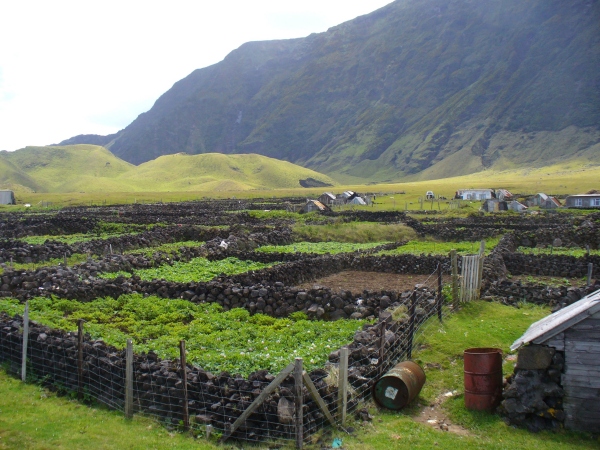
Touted as the most isolated island in the world, Tristan da Cunha's 300 self-reliant inhabitants are a hardy lot clinging to a volcano top in the middle of the South Atlantic Ocean. We know several sailors who passed by because of bad weather. We were fortunate enough to have settled conditions to call at this seldom-visited island for a taste of Tristanian hospitality.

tristan de cuna

Chesterfield Reef, New Caledonia (France)

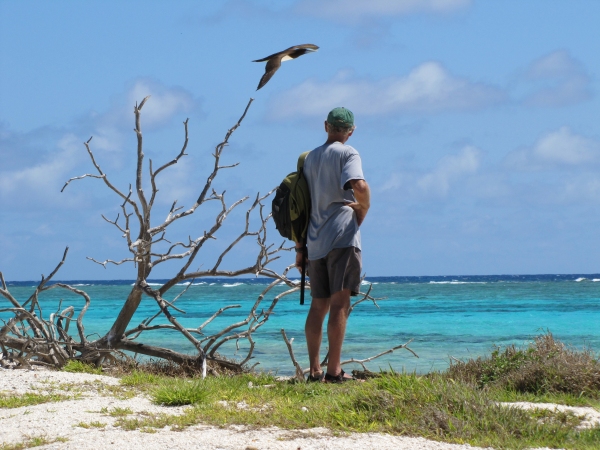
Located in the Coral Sea on the route between Australia and Vanuatu, we thought we'd stop overnight and a week later found it difficult to leave this uninhabited reef teeming with birdlife, sea turtles, whales and dolphins.

chesterfield reef

Suwarrow Atoll, Cook Islands

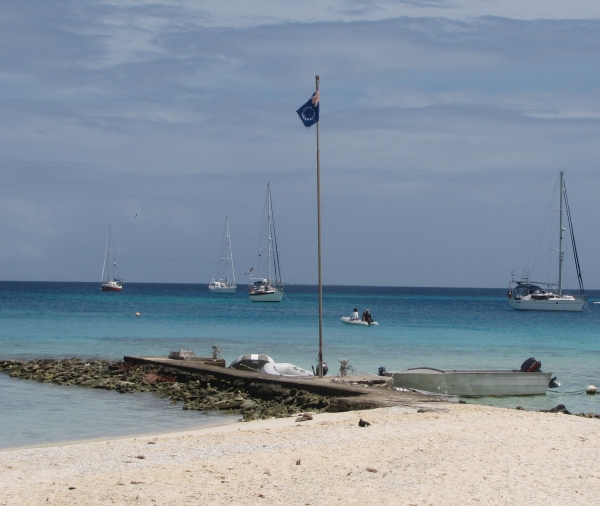
The protected anchorage inside this atoll allowed us to enjoy the Cook Island's only national park and it was absolute magic. We visited several islands and islets within the atoll, amazed at the bird life, the beauty and the number of other cruisers in the middle of nowhere with whom we had to share it.

suwarrow atoll

Tierra del Fuego, Chile

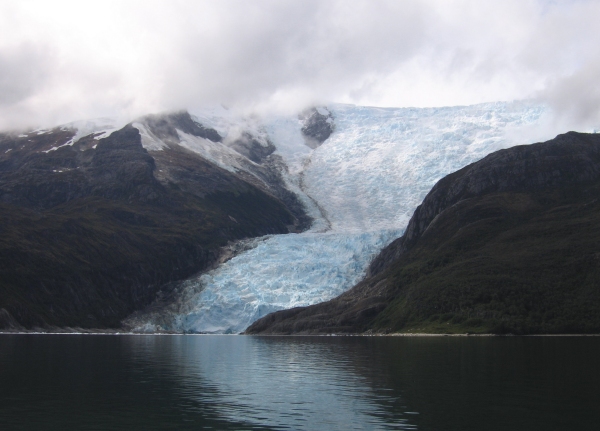
The Land of Fire at the bottom of the world was cold and remote and beautiful beyond belief. Sailing alongside the magnificent glaciers that swirled down the mountainsides and kissed the water below; wending our way through a labyrinth of channels in the Straits of Magellan and along the Beagle Channel; anchoring in tiny coves in the century-old wake of Joshua Slocum. This was beyond exotic … it was surreal.

tierra del fuego

Tasmania, Australia

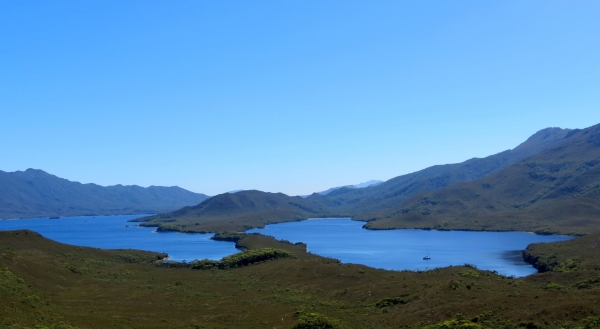
Taswegians refer to Tasmania as “Down Under, Down Under”. The endemic flora and fauna was a delight, but mostly we reveled in the natural beauty and ruggedness of the place. In particular, Port Davey, accessed only by boat, was sheer eye candy.

tasmania

Tahiti, French Polynesia

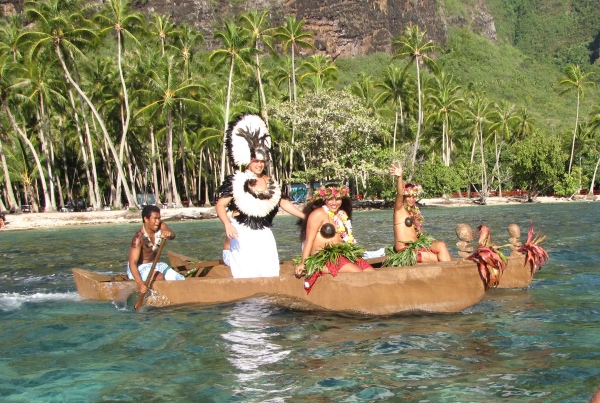
Waking up at the marina located in the middle of downtown Pape'ete, Tahiti, smelling the coffee and fresh croissants in the morning and hearing the market buzz was nothing short of fantastic. This is the stuff dreams are made of and it rates right up there with the most exotic ports of call there are, especially with such a warm Polynesian welcome.

tahiti

If you'd like to taste more of these exotic destinations, check out the Nine of Cups website pages with the highlighted links above.