FAQ - Do you worry about tropical diseases?

In light of the current Zika pandemic scare, we've been asked frequently about whether we worry about catching exotic diseases that are more prevalent in tropical areas and third world countries and the answer is yes and no. Yes, it's a concern, but we take all reasonable precautions. And, no, we don't worry so much that it prevents us from sailing in the tropics or to third world countries. When we were at Pitcairn Island in 2007, the bird flu was the big scare. The Pitcairners held an island meeting (all 46 of them) and decided to “close the island” until it was prudent to allow visitors again. We were already there and had previously been at sea for more than 14 days when we arrived, so they figured we were safe enough. They did, however, have the island health officer give us a once-over.

We were in South Africa and Namibia when the Ebola virus hysteria was at its peak. We were more concerned that we wouldn't be able to fly out of Africa to the USA for the holidays than we were about actually catching the disease. As it turned out, we had our temperatures taken while waiting in the ticket line at the airport terminal. If there was no temperature, we were allowed to board. We had no problems.

And, now, of course, it's the Zika virus that's the concern. The big difference with the Zika virus is that it's transmitted not by birds or other mammals, but by mosquitoes, much like yellow fever, malaria, dengue or the West Nile viruses. One major difference, however, is that the carrier culprit (female Aedes aegypti) is a daytime-active mosquito. In case you didn't know, the Zika virus was first identified back in 1947 in the Zika Forest of Uganda, hence its name.
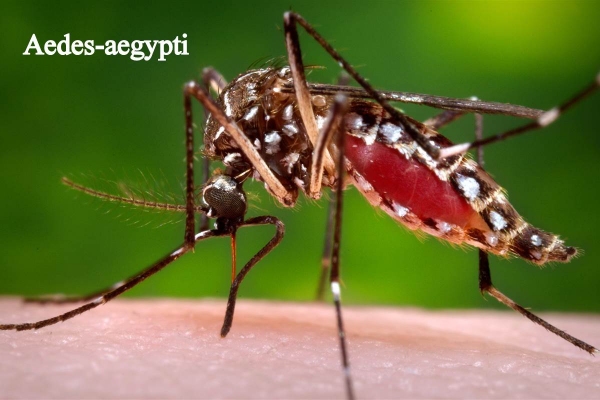
zika_aedes-aegypti-mosquito

I found a map which shows the current probability of Zika distribution and occurrence worldwide, and obviously the more tropical areas are the most likely.
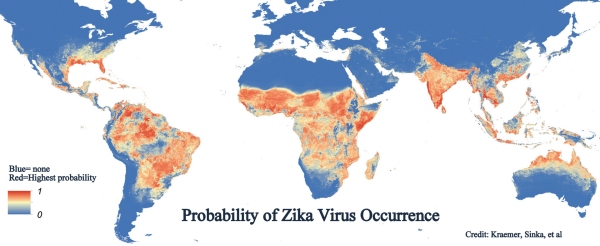
probability of zika occurance

As of this month, there have been 16 confirmed cases of the Zika virus in Trinidad. The Minister of Health, Terrence Deyalsingh, has cautioned the population not to panic. Regarding concerns that Zika could be a life threatening public health issue, he said “what you do not want from Zika is panic. Please keep it in perspective. Please let us keep our heads on to eliminate this”. He said that the virus needs to be attacked on the ground level, with a public education and clean up campaign. He said “if you have 100 people in a room, eighty per cent will not show symptoms”. Deyalsingh said: “I am appeal to everyone. Do not create unnecessary panic. The comment of Zika take you, you going to die, is absolutely not true”.

I wasn't sure I'd trust the Trinidadian Minister of Health's comments, but the CDC had the same type of information. “People usually don’t get sick enough to go to the hospital, and they very rarely die of Zika. For this reason, many people might not realize they have been infected.” Obviously though, the concern of pregnant women for birth defects in unborn children and the possible tie of Zika with Guillain-Barré Syndrome is very real.

So what precautions do we take in general? We have had yellow fever shots in the past and had a booster before we left South Africa for the Guianas. The most prudent precaution, other than not visiting the areas at all, is to cover up and use insect repellent religiously, which we try to do. In the past, we were especially careful about the dawn and dusk hours when mosquitoes are most active, but with the Zika, it's an issue all day long. Fortunately, mosquitoes are less of a problem along the coast and we've not been bothered by them. We did get bites while touring the Caroni Swamp despite the insect repellent we applied. So far, no problems. Considering there are only 16 identified cases in Trinidad, we think the chances of contracting Zika are pretty remote.

That said, we're thinking of stopping in Puerto Rico on our way north which already has 475 reported cases of Zika, most acquired locally, i.e. bitten by an infected mosquito versus travel-related or sexually transmitted. We'll take extra precautions when we stop there, e.g. mosquito netting, care with insect repellent, covering up during the day, etc. Being aware and prepared is part of the battle.
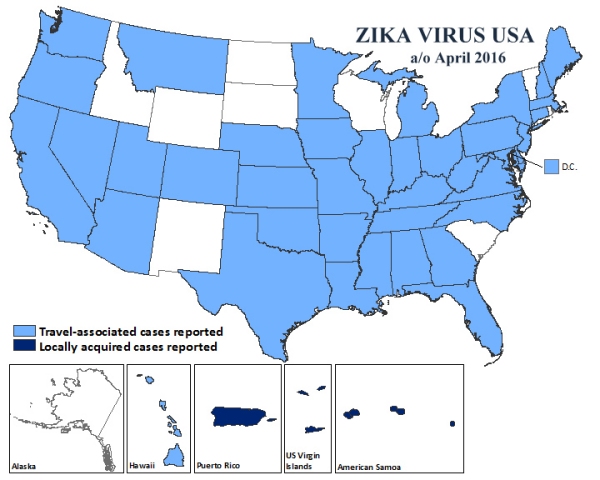
zika in the us

Splashed!

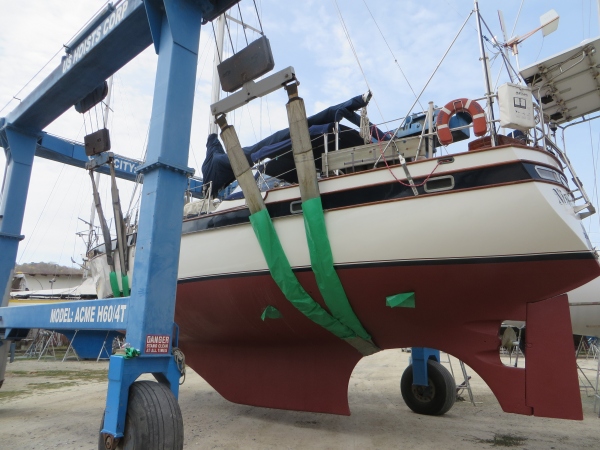
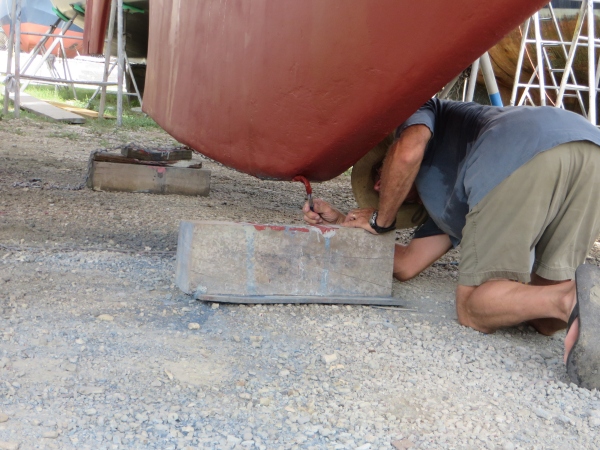
A great word … “splash”. It's a figure of speech called onomatopoeia … when a word mimics the sound it actually makes. There's always a little trepidation when we hear the TraveLift rumble up and get into position to lift Cups for her trip back to the water. They hitched up the straps, lifted her a little and then removed the stands. David snuck underneath to paint the small patches at the bottom of the keel that we hadn't been able to paint. david paints under the keel

Will those straps hold our 20-ton girl? Of course, they will, but there's always a hitch in our breaths as they pull the stands away.

straps in place

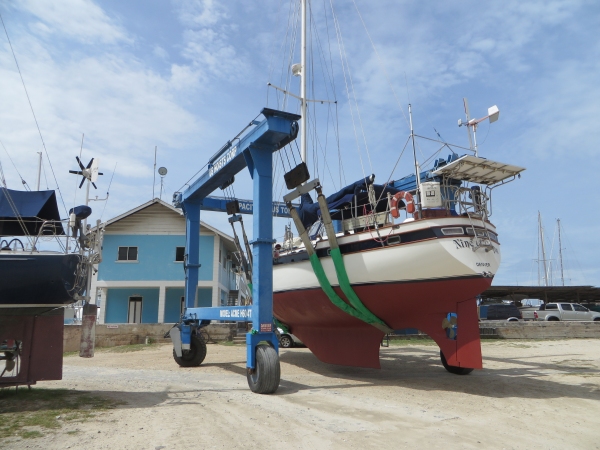
We followed her down the dirt road to the haul-out/launch bay. The TraveLift moves about 2 miles/hour and Cups swayed ever so slightly as they rolled along. It wasn't hard to keep up.

rounding the corner

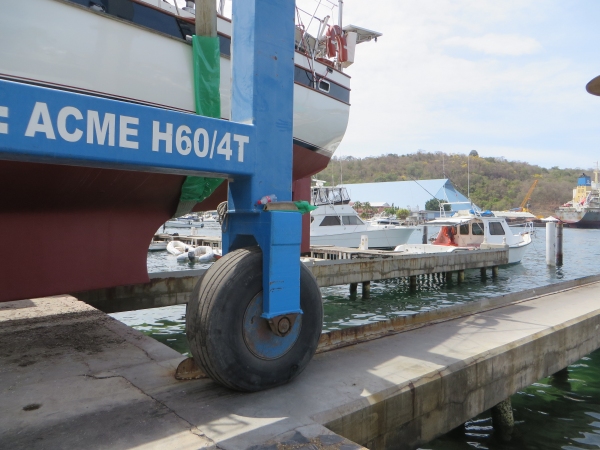
The driver aligned the TraveLift wheels with the narrow tracks and they moved Cups over the water. Slowly, slowly, slowly they lowered her and then in slow-mo, her keel touched the water. There's no actual loud splash … at least there shouldn't be. It's a gentle reunion with the water and she was once again floating, the straps still in place till we boarded her and made ready to go.

coming on to the track

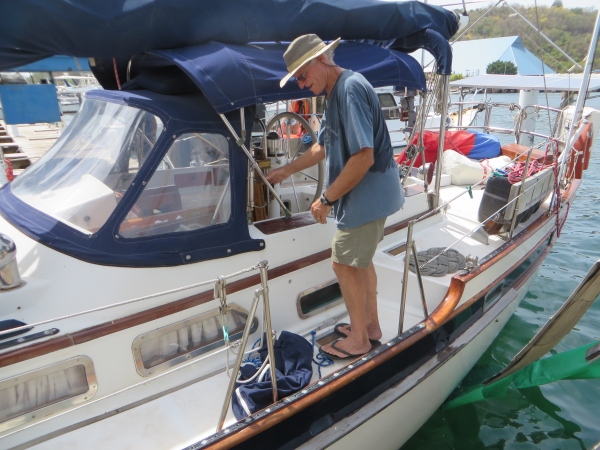
We clambered aboard, a long step from the TraveLift track onto the port side deck. David checked the new seacock and thru-hull for leaks and made sure the engine seacock was open. He started the engine and burped the new shaft seal. We checked there was water coming out the exhaust. He gave forward and reverse gears a try to make sure we were ready. We'd already rigged lines and the dock guys were holding the lines as the TraveLift lowered and released the straps and Cups was on her own. We backed slowly out of the launch slip into the waters of Chaguaramas Harbour.

jumping aboard

As luck would have it, Zephyr, a sister ship to Nine of Cups, had been hauled the day before. Bill stopped by just before we splashed to ask if we were interested in the mooring they'd just left which was all paid up for another week. How sweet is that? David maneuvered us to the mooring field, I hauled in the docklines and prepared to pick up the mooring. Two tries before I lassoed the sucker … I'm out of practice. But we're back in the water and making plans for finally putting some miles under the keel in 2016.

mooring

Dash & Cash Before We Splash

Even though we reserve our splash date and time just a couple days in advance, the last minute dash to get everything done just before we splash is always hectic. There always seems so much to do and so little time to accomplish it even though it's a planned event. Because the antifouling is always done at the last minute, we applied the last coat the day before we splashed which meant removing the masking tape and doing several other odd chores like replacing the hull zinc on splash morning. We were up with the sun. I waited till the very end to get the laundry done (just one more load) in hopes of limiting the amount of sweaty old t-shirts and painting clothes we'd have aboard before I had the chance to do laundry again. Our bunk had clean sheets. David filled the water tanks to capacity. He washed down the decks which were filthy with soot and bushfire debris along with gravel and boatyard grime. Since we have no refrigeration for this trip, the last minute provisioning of freshies would have to wait till we were in the water and ready to head out.

replacing hull zinc

removing masking tape

I cleaned and vacuumed below while we had fresh water and power available and stowed anything that might jar loose with the move and the splash. We disposed of last minute trash while a trash bin was handy. David had downloaded all of our Yahoo emails into a new folder, so that we could sync with SailMail and get shadow mail up and running again for our upcoming passage. He'd also renewed our BuoyWeather subscription. We had plugged in every possible electronic device and battery to charge them up while we still had land AC power. We'd sent as many blogs and pix to Gentry as we could in advance because the odds of having wifi aboard while out in the mooring field were pretty slim. I paid our boatyard bill (No cash … no splash). Ouch … that hurt the old bank account!

no cash no splash

We removed the covers from the windscreens and instruments and rigged docklines. A forklift drove up ...they removed the A/C unit from the coach roof hatch. All the scaffolding was cleared away. A last minute cuppa before the ladder was taken away … the last thing to go as soon as the TraveLift arrived.

travel lift arrives

We're ready … let the splash begin.