Well, we've not been on the water since last December and it's definitely noticeable. Cups seems to be enjoying it just fine. She's bobbing in the bay water, rocking and rolling with the waves and wakes. She strains on her mooring like a horse at the starting gate, rearing to go. We, on the other and, are finding it necessary to make a few adjustments to living on the water again.

We can't just climb down the ladder and head to the store or chandlery any more. It requires a dinghy ride. Because of security issues here, the dinghy and engine are hauled each night, so it's a bit of extra work getting ashore. On the other hand, we do not have climb down the ladder to empty the pee bucket or to go pee. I'll vote for launching the dink any time. Dropping something from the deck no longer results in “thud” and descending the ladder to retrieve the screwdriver or whatever. Now we just hear “splash” and whatever dropped is gone forever. Not that we've ever dropped anything into the water ...
On the other hand, there's no need for the long, hot, dusty walk to the Massy's Express Supermarket at Crew's Inn for our daily provisions. Instead, we can just dinghy across the harbor, tie up at the Crew's Inn dinghy dock, do our shopping and dinghy back. Much faster, more convenient and definitely less sweaty.
We haven't been taking it easy though. Before we can leave, there's still lots to do now that Cups is in her element. David reattached the jib furler, tensioned the shrouds and tuned the rig. He reassembled the furler and ran the furling lines.

Early on a calm, windless morning, we hanked on the foresails and re-rigged the sheets. I've been working on polishing the stainless, filling up the easy-access lockers from the larder, and stowing stuff we won't be needing and what seems like a million other little chores I can't seem to think of now. I'm also still researching possible ports-of-call along the way north, though time is short and there won't be much time for stopping if we're to be north of Cape Hatteras by June 1. David just completed an oil change on the engine and has begun stowing his tools and supplies.

It's the welcome sound of gulls and terns crying as they fly over that wakes us in the morning now rather than the melodic sound of kiskadees sitting on our solar panels. Frigate birds soar gracefully high above us and pelicans swoop low, just over the water's surface, looking for breakfast. The whir of the wind gen spinning is almost comforting.
The mooring field is quite full and there are anchored boats as well. Chaguaramas Harbour is anything but calm and quiet. There's a certain amount of fetch that comes into the bay when it's windy (and it has been) which can make it a bit rocky aboard. Most of the rock'n'roll however is from the never ending boat traffic around us … fishing boats, ferries, pilots, pleasure boats … all with a penchant to go fast and as close to the moored boats as possible.

One motor boat came so close to a small, anchored sailboat that its propeller clipped the sailboat's anchor rode, cutting it loose. The folks on the sailboat were off the boat at the time and another diligent cruiser noticed what happened and rescued the boat. Earlier today, we were “nudged” by a large sport fishing boat. He just wasn't paying attention. There was quite a racket as he detangled himself from our big anchor sitting on the bow, but thankfully, no harm done.
It's crazy out here … and noisy. Locals enjoy loud music and there are lots of party boats that go back and forth all night long, music blaring. Around 5am, it tapers off. Time for us to get up and start our day. Since our mooring is only ~200' from shore, we're entertained non-stop. In fact, many times it sounds as if the DJ is on our deck!

I think of the rock'n'rollin' ride as a good chance to recover our sea legs a bit and staying up all night with the local music is good practice for night watch. Now if we can only remember how to sail!


 Yes, I'm a mom. I'm also a step-mom, a grandmother, a mother-in-law and a godmother (not the fairy variety). I'm a sister, a sister-in-law, an aunt, a great aunt and a great-great aunt (yikes, that really sounds old), a cousin, and oh yes, how could I forget? I'm a wife and a First Mate. I'm called Marcie, Sis, Auntie, Nana and sometimes, sweetheart. With all those relationship titles and monikers, how could I be anything but happy that I'm such a fortunate woman?
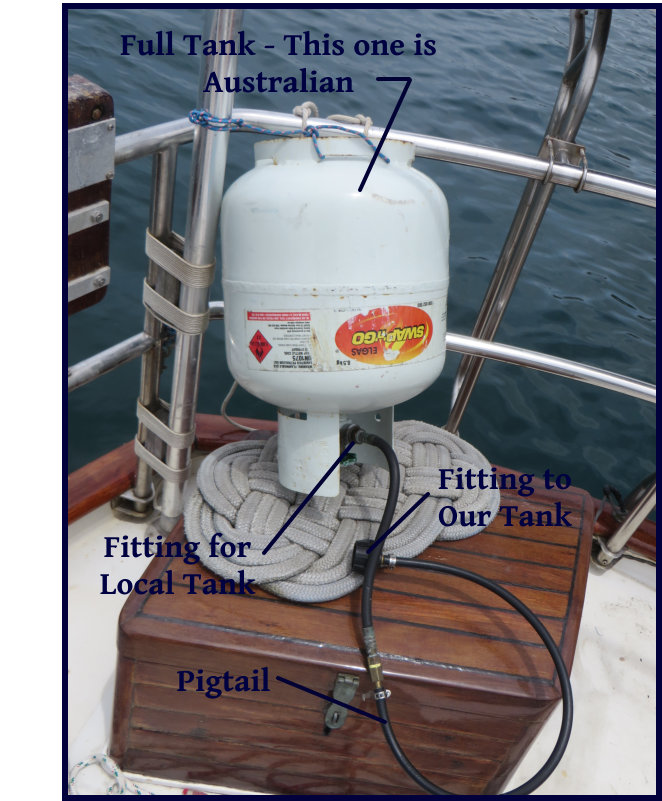
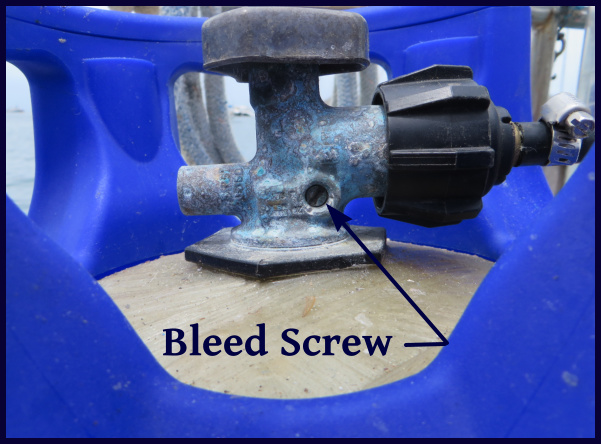
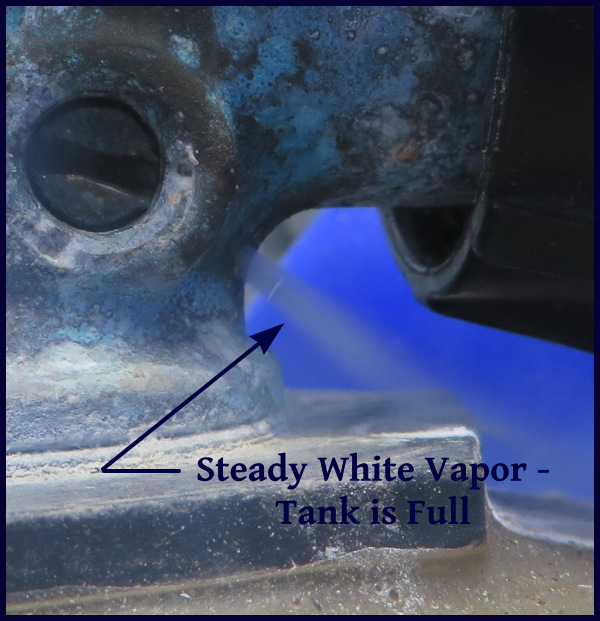
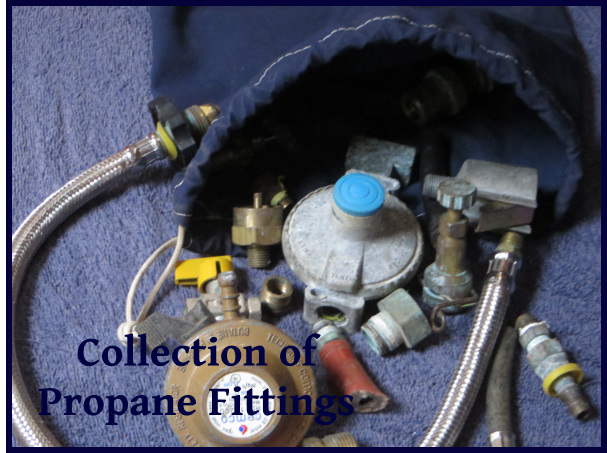
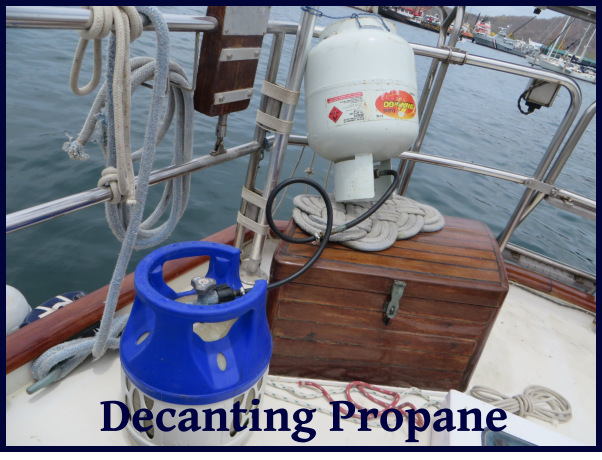 One of the chores to complete before leaving Trinidad was to fill our propane tanks. Running out of propane on a passage, while not exactly life threatening, would certainly be a hardship. Actually, if I went a few days without my morning coffee, the first mate might be ready to jump overboard - or throw me to the sharks – so, truth be told, it might very well be a life threatening situation.