Lions, Lighthouses and Lager

Nine of Cups was sitting comfortably on her mooring and it was time for the crew to take a good walk, stretch their passage-cramped legs and see some of the sights. The Bridge of Lions seemed a good place to start. bridge of lions st. augustine florida
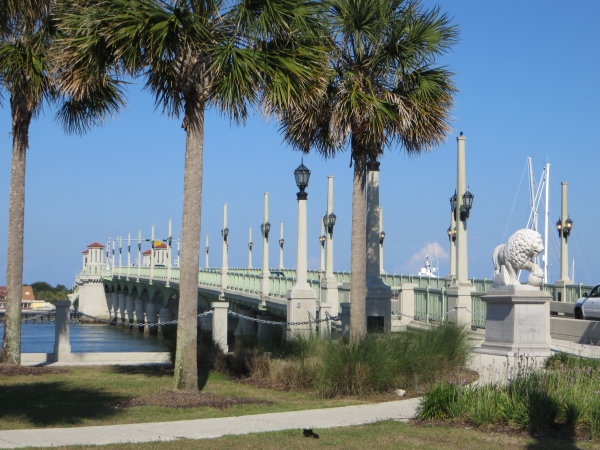
From its earliest days, the Bridge of Lions has been hailed as "The Most Beautiful Bridge in Dixie" and has long been a symbol of St. Augustine. Listed on the National Register of Historic Places, the double-leaf bascule bridge spans the Matanzas River/Intracoastal Waterway and connects the city of St. Augustine with Anastasia Island. Originally completed in 1927, it recently underwent a 4-year restoration. (2006-2010) and it is, indeed, a beauty.
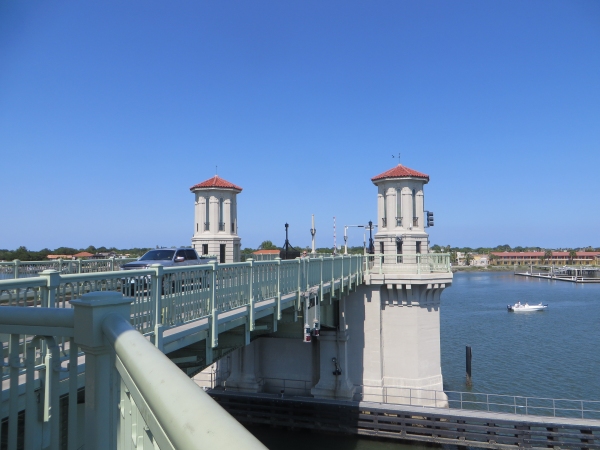
bridge of lions st. augustine florida

The bridge gets its name from a pair of impressive marble Medici lions that guard the entrance to the bridge from the city. Copies of the originals found in the Loggia dei Lanzi in Florence, Italy, these lions were faithfully sculpted at the Romanelli Studios in Florence and were a gift to the city from Dr. Andrew Anderson (1839-1924).
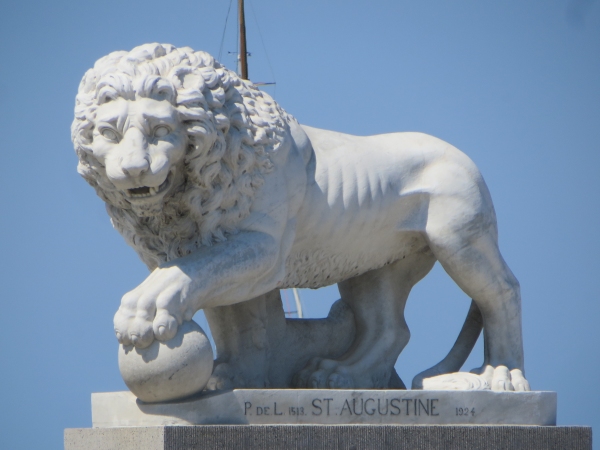
bridge of lions st. augustine florida

We walked over the bridge, stopping to take in the views and click a few photos. It was near the half hour and we wondered if it would open while we were there, but there was no waterway traffic and we ambled across without interruption. As we continued on to Anastasia Island, we noticed yet another pair of lions. In July 2015 to commemorate St. Augustine's 450th birthday, a local couple donated another pair of lions which sit at the eastern end of the bridge in Davis Shores Park.
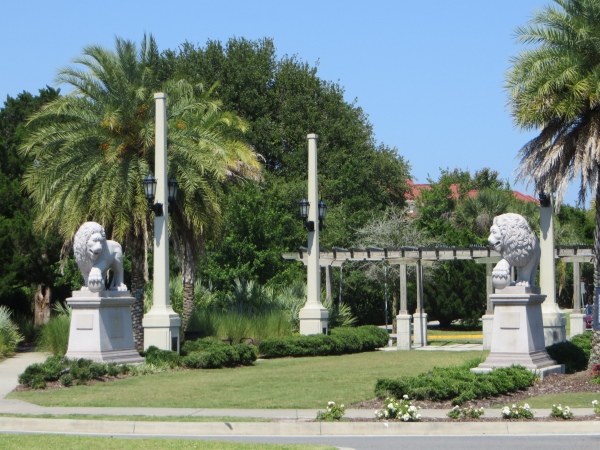
bridgel of lions st. augustine florida

We sauntered along Anastasia Boulevard (aka Rte A1A South), on the lookout for a road that led to the historic black and white, conical-striped St. Augustine Lighthouse which we'd seen from the seaside of the inlet on our approach.
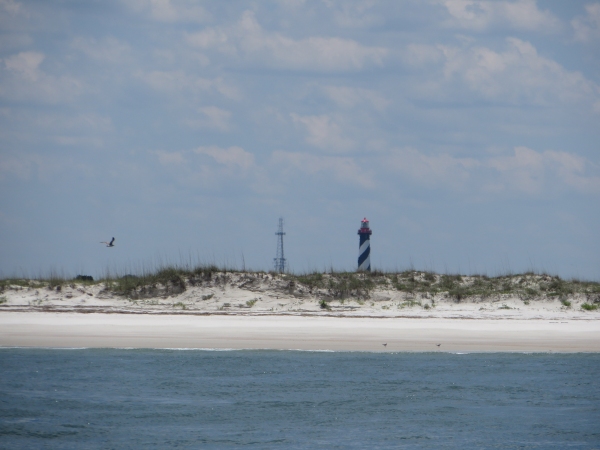
light from the sea st. augustine florida

We could also view the lighthouse from the deck of Nine of Cups while on the mooring, rising above the buildings on Anastasia Island during the day and flashing at us every 30 seconds throughout the night. We were interested in a close-up view.
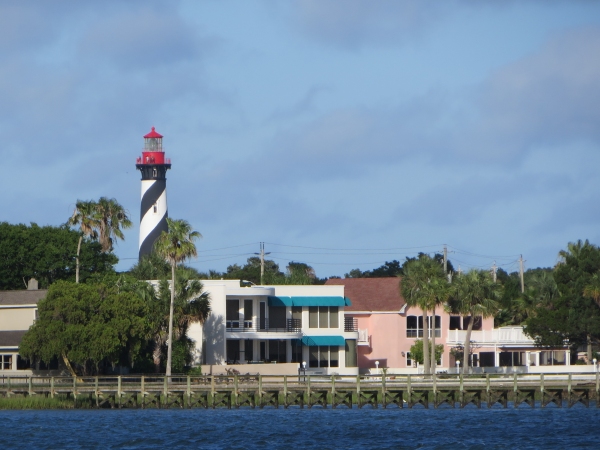
light view from noc st. augustine florida

Anastasia Island is a long, skinny barrier island (14 mi long x 1 mi wide) and the “boulevard” is lined with restaurants, shops and all things touristy. We asked directions several times since we had no view of the lighthouse and there were no signs. We figured we couldn't go too far wrong since the island was only a mile wide, but we didn't want to have to walk its length to reach our goal. We hung a left onto shady Busam Street which connected to Lighthouse Avenue … a clue. Lighthouse Park was in view, and the stately, well-kept lighthouse peeked out above the trees.
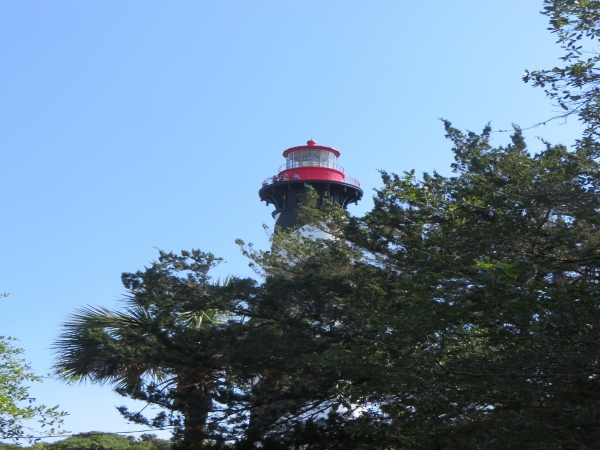
st. augustine florida lighthouse

An active lighthouse, the current St. Augustine Light Station was built in 1874 and now is privately owned by the St. Augustine Lighthouse and Museum, a not-for-profit maritime museum and private aid-to-navigation. At 165' (50m), it can be seen for 17 nm out to sea.
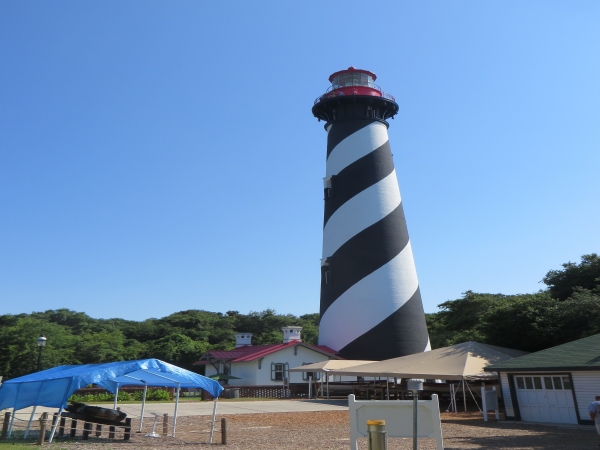
st. augustine florida lighthouse

We weren't actually interested in climbing to the top nor paying the admission fee, but took the opportunity to check out the Visitor's Center displays and view the lighthouse keeper's house … pretty nice digs!
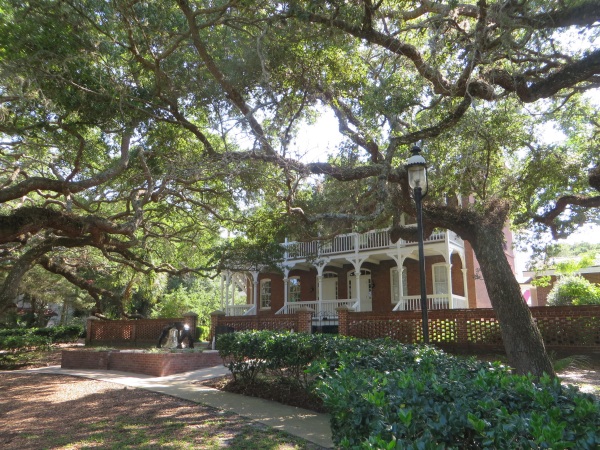
lighthouse keepers house st. augustine florida

Old clapboard houses in the Lighthouse Park neighborhood were lovely with thick, verdant foliage and flowering bougainvillea and hibiscus adorning the yards. Gardenias and magnolias were in bloom, too, and the tree-lined walk was as pleasant to the nose as it was to the eyes.
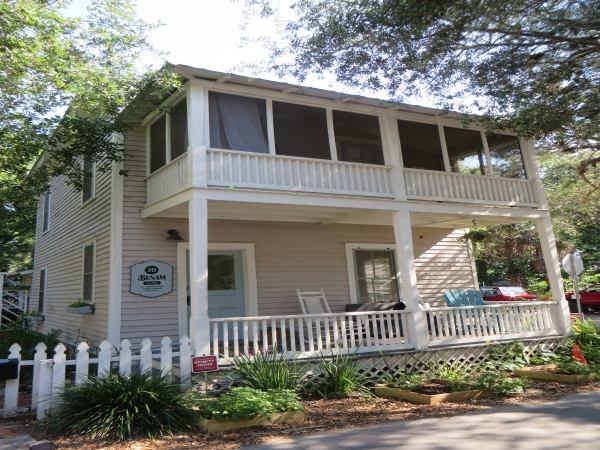
old clapboard houses st. augustine florida

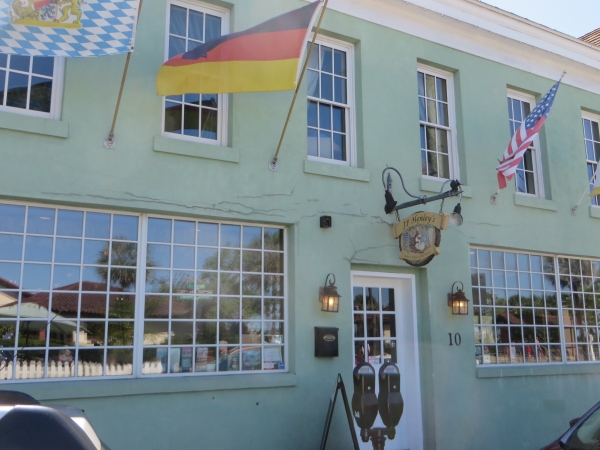
Back on A1A, we were hot and sweaty as we trudged back along the road and across the bridge. J. P Henley's waited for us on the other side, promising cold beer and a great place to cool down after a most enjoyable 3-mile walk.
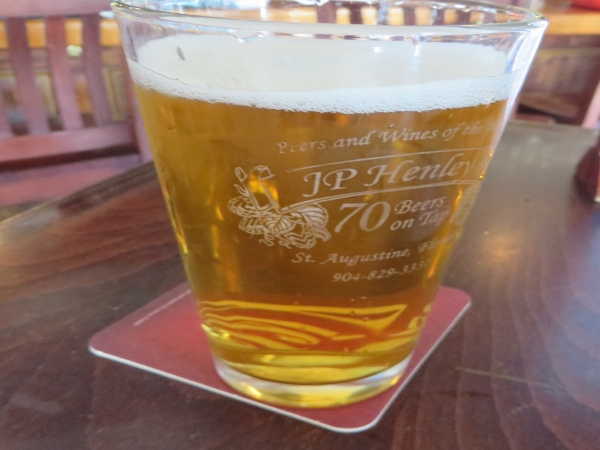
cold beer at jp henleys st. augustine florida

Oh yeah … Rabbits, rabbits, rabbits!

Checking out the 'hood - St. Augustine

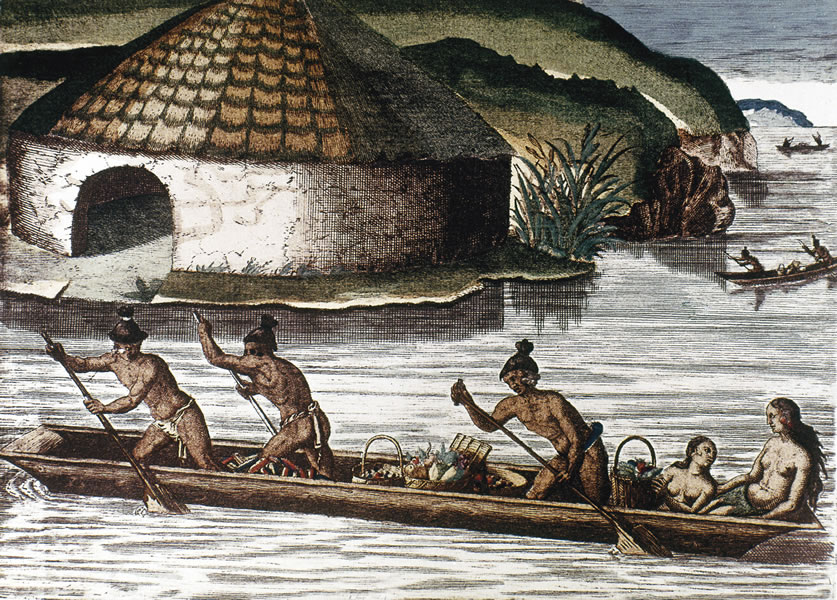
According to the St. Augustine city website, “Historians credit Juan Ponce de Leon, the first governor of the Island of Puerto Rico, with the discovery of Florida in 1513. [Although the native Timucua knew it was here long before that!] While on an exploratory trip in search of the fabled Bimini he sighted the eastern coast of Florida on Easter Sunday … and claimed Florida for the Spanish Crown, naming it Florida after Pascua Florida”, Spain's "Feast of the Flowers" Easter celebration. timucua engraving

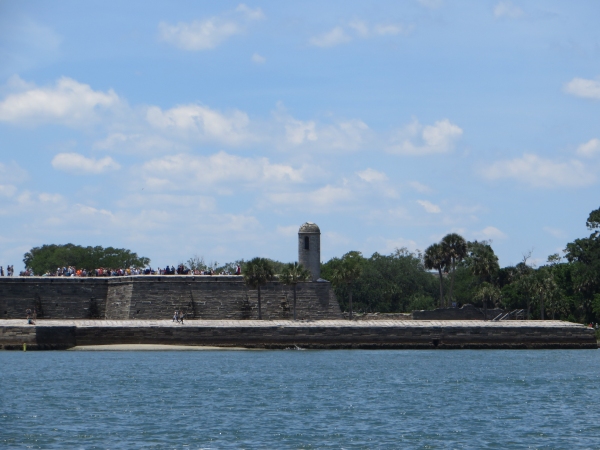
Founded in 1565, St. Augustine is the oldest continuously occupied European settlement in the United States. About 42 years before the English colonized Jamestown and 55 years before the Pilgrims landed at Plymouth Rock, the Spanish established St. Augustine … and here we are! All that's left of the original buildings is the fort, Castillo de San Marcos, completed in the late 17th century. Dubbed as the Ancient City, it's hard not to fall in love with St. Augustine as soon as you sail past the historic fort and pass through the beautiful Bridge of Lions.

castillo san marcos fort

As usual, the first day or two, we didn't wander too far from Cups as we recuperated from our passage, tidied up, caught up and began repairs. We managed a bus trip to the local Winn Dixie supermarket, found the West Marine and bought some boat supplies. There's lots to do here and I'm compiling the “play list” as David works up the “to-do list” … with negotiations to follow. The plan is to stay about a week, then weather depending, we'll head north to the Chesapeake.

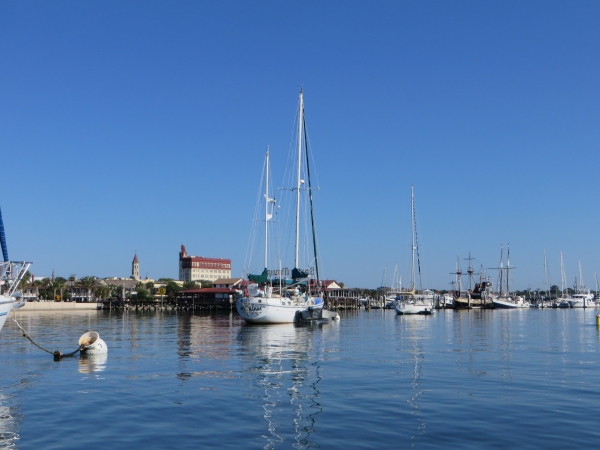
We've visited St. Augustine before … 2001 … but lots has changed since then. Instead of anchoring, we now have a mooring in the Matanzas River, just inside the Bridge of Lions. We have access to all the amenities offered by the St. Augustine Municipal City Marina including a convenient dinghy dock, beautiful showers (with hot and cold water), laundry, propane exchange, ice (!!), free pump-out at the mooring, free wifi and even a pleasant cruiser's lounge. Best of all, we're right downtown in the heart of this beautiful little city. We're talking cruiser's heaven!

marina in st. augustine

One of our first important discoveries was J.P. Henley's across the street from the marina. It's a small, friendly, neighborhood pub that offers 70 (cold) beers on tap, moderately priced meals, a happy hour and a chance to watch a little baseball … all part of the passage recuperation process. Needless to say, we've visited several times though we've barely made a dent in the extensive beer offerings.

jp henleys in st. augustine

There's a Cruiser's Net on the VHF every morning at 0800 which provides lots of info about happenings in the St. Augustine area. Since we're right in the downtown, most everything is accessible on foot or via the bright yellow buses of the Sunshine Bus Company.

It's sometimes hard to believe we're back in the USA. For the past nine years, whenever we've been aboard Cups, we've been in a foreign country or at sea. We see something in the grocery store and have the urge to scoff it up because it might not be there the next time we shop. When we ask if a shop accepts credit cards, they look at us as if we're from a different planet. Not thinking, I commented the other day that it was odd to see so many American flags on the moored boats. DUH! We're in America.

Stay tuned. We've got lots of exploring to do in the Ancient City and, of course, we plan to take you along with us.

Life Without Refrigeration

fridge-notes-cool  

There are some very big pluses to not having refrigeration aboard. Plus #1 is the amount of power we save, or rather have available for other things like computers, iPads and other electronic stuff.

We know of lots of veteran sailors who have sworn off fridges. Our friends Betty and Luis on Ave del Mar, are fridge-less. Beth Leonard and Evans Starzinger chose to give up refrigeration and felt all the better for it. It takes some planning and some adjustment, but it's really not all that bad.

It's not like we ever used our freezer as a freezer. Ice cubes and ice cream never existed aboard Nine of Cups. In the higher, colder latitudes, who needs ice? In the tropics, we chose to use the freezer as a cold box only, preferring to save the power for other uses. We don't have a generator aboard and starting the engine to keep the fridge cold seemed a waste, not to mention the noise factor.

David tried valiantly to get the fridge going before we left Trinidad. He soldered and brazed, evacuated the system, added dryers and filters, monitored pressures, blew out the system, added refrigerant, evacuated it again, added more refrigerant. You name it, he tried it. In the end, he figures he knows the problem .. .a blocked capillary. There just wasn't enough time to sort it out without delaying our departure. We agreed it wasn't worth the delay.

So … how have we fared? Actually, just fine. Some freshies, like carrots, cabbage, potatoes and even eggs never get refrigerated on Nine of Cups anyway. We miss yogurt for breakfast, but we've adjusted. We've determined an open carton of UHT milk lasts about 3 days unrefrigerated before souring … just long enough for us to use most of it up. We could use non-dairy creamer in a pinch, but hey, we need some luxuries. Margarine melts and cheese separates, but both are still usable, though perhaps a bit less appetizing.

We still have 30+ jars of canned chicken from our Atlantic passage plus canned tuna. The larder is full of canned veggies and fruit. We've not been ambitious enough to fish, but we could if we needed to.

Now that we're in port, refrigeration becomes even less important. Ice is easily accessible and lasts for a couple of days in the cooler. Groceries and freshies are easy to come by and cold beer is right across the street at J. P. Henleys.

So, will we eventually fix the fridge? I imagine “we” will if only to prove to the captain that he can fix it. But it's good to know we can choose to live without it, though I must admit, the biggest hardship … no cold beer once we leave port!