The Blue View - Keeping Bugs Out of the Fuel

clogged filter Fifteen years ago, when Marcie and I first started cruising, we met Doug and his wife Fay, aboard his sailboat, Nip and Tuck. Doug is probably the most laid back guy I know, and possesses an immense amount of knowledge about fuels, engines and boats in general. We immediately became fast friends, and we've connected in half a dozen exotic places around the world.

He lives in Florida now, and spent some time with us aboard Nine of Cups while were in St. Augustine. We had an opportunity to get caught up and talk about a host of subjects. One of our topics was the new low sulfur diesel fuels and its effect on marine engines. I asked whether he would be interested in doing a guest blog for us on the subject, and he graciously agreed. Here it is:

Just over a decade ago, the soot produced by the combustion of diesel fuel was one of the largest contributors to air pollution in the U.S. In 2006, in an effort to improve air quality, the government mandated reduction of sulfur in diesel fuel and petroleum refiners geared up to produce ULSD (Ultra Low Sulphur Diesel). ULSD fuel has less than 15 ppm (parts per million) sulfur as compared to 500 ppm sulfur of the previous diesel. ULSD was introduced slowly and by 2014, it was the only diesel fuel available to us in the USA. ULSD, in a nutshell, is a cleaner diesel fuel. There is little argument that the fuel available today reduces exhaust emissions and dramatically improves air quality. (As a side note, marine and off-road diesel fuel, as well as heating oil are all ULSD, and is dyed red.)

The new fuel has a few negatives associated with it, however. To produce ULSD, a new process called hydrocracking was added to the refining of the fuel. During the hydrocracking process the demulsibility, i.e. the diesel fuel's ability to allow water to fall to the bottom of the tank, has been reduced, so there exists a situation where some water is encapsulated or entrained into the fuel. Also the natural lubricant quality of the sulfur has been greatly reduced which causes additional wear on injector pumps and injectors.

clogged filter

In addition, sulfur was also a natural biocide which helped reduce bacterial and fungal growth in diesel fuel. Many mariners do not realize that hydrocarbon-eating bacteria exist and flourish in a wet environment and can clog filters, shutting down your engine - usually at the most inopportune time. The bacteria thrive in tank bottom water, as well as condensate and feed on the fuel, leaving behind a very black, slippery effluent.

Marine diesel tanks are particularly susceptible to water and moisture contamination. Boats are often used seasonally, so diesel fuel sits in the tanks gathering moisture and condensation in what is already a very moist environment. Fuel tank vents, which are usually vented outside the hull, easily gather moisture as the diesel fuel expands and contracts with temperature changes. Air is forced out of the tank as the air gets warmer during the day and the fuel expands, then is drawn back in at night as the fuel cools and contracts. In addition, as the engine is running and fuel is being used, moist air is constantly being drawn into the tanks.

One other issue associated with ULSD is that hydrocracking refineries can now convert residual grades of crude, e.g. asphalt and #4 and #6 bunker fuels, into #2 diesel fuel used in boats, trucks and locomotives. This technology became necessary as the demand for #2 diesel fuel became higher than the available supply. The petroleum companies needed a way to produce more #2 diesel fuel and found it through hydrocracking. Unfortunately, there is asphalt fallout in the #2 diesel fuel that is called asphaltene. Asphaltene shows up in #2 diesel fuel at times and looks very similar to the black slippery effluent created by bio-contamination. The only way to differentiate between the two types of contamination is by testing.

Here are some suggestions for long term care and maintenance of diesel fuel and tanks.

  1. Keep your diesel tanks full if possible. This reduces the air space in the tank where moisture can form.
  2. Check deck fill pipes to insure the rubber “O” ring or gasket is in good condition. It does not hurt to apply Vasoline to the “O” ring or gasket to keep it pliable. Replace if cracked or hard.

fuel cleaning system

  1. Clean your tanks regularly to insure there is no water or sludge on the bottom for your pump to pick up and carry to filters. You can hire a service to do this or make your own fuel polishing system.
  2. Check to see if you have a water separating system on your vessel. RACOR makes a great water separator/filter. Check the micron size of your filter. Finding a filter with a 5 to 10 micron absolute rating is best. Always keep extra filters on your vessel. Service your fuel system regularly. Some of the microscopic encapsulated or entrained water in ULSD will pass through a fuel filter, which is why tighter filtration is always better.
  3. The primary issue today with ULSD is water. Using an additive to help reduce water in your fuel is very important. Power Service “Fuel Power” is a very good product that I have experience with and is readily available at most auto parts stores. There are a lot of products available that tout they are excellent. Read reviews and check them out before purchasing.
  4. Test your diesel fuel annually to see if you have any microbial contamination. This is a simple process that anyone can do. I use “Liqui-Cult” test kits. They are inexpensive and will tell you if you have any “bugs” in your fuel. Liqui-Cult test kits are available from several sources on the internet.

biobar stabil

  1. If your fuel tests positive for microbial contamination, make sure any water in your tanks is removed. Treat your fuel with a biocide. Sta-Bil and BioBor are both good biocides. They are dual phase, meaning they work in water, as well as the fuel.

foreign fuel

  1. Some of the fuel purchased out of the USA is not filtered and can create an issue to a sailor in a foreign port. It is easy to pick up a small 12 volt pump and a filter housing so you can filter fuel carried in deck tanks or, with the right fittings, connect to the supplier's fuel hose and filter the fuel going into your tanks. It might slow down the fuel delivery process but I would rather do that than be sitting on the water somewhere with clogged fuel filters.

Prevention through active maintenance is always better than sitting with a dead engine waiting on a tow boat.

W. Douglas Grimm STLE CLS OMA-1 was formally an ASE mechanic and Hazmat Supervisor. He has spent more than four decades in the petroleum industry testing fuel and lubricants as well as managing a large tank cleaning crew – generally ensuring that the fuel tanks of his hundreds of corporate customers were tested and cleaned and any sediment was properly disposed of according to EPA regulations. He's also been a boat owner for 30 years doing all his own maintenance.

Doug can be contacted at Capt.grimsley@yahoo.com

Below are Amazon links provided for your convenience. These are affiliate links, so if you buy these products or anything else from Amazon through these links we get a little cash back at no extra cost to you. Thank You!
11 Best Improvements to Nine of Cups

When we bought Nine of Cups in February 2000, we bought her because (1) she was a blue water boat and (2) it was love at first sight, but she'd really only done coastal sailing, so she wasn't equipped for ocean passages. As our experience and confidence grew, we added improvements that would make Cups and us safer, more self-reliant and more energy efficient. Here's our list of the 11 best improvements we've added to Cups over the years. Wind generators

It didn't take us long to realize that taking advantage of the wind to generate energy was as important as filling the sails. We initially bought two Four Winds wind generators and David built stainless steel “goal posts” on the stern to mount them. The salesman sold us some extra gear, like a brake, that we used once or twice and then ignored. After 15 years, we're down to one wind generator. Four Winds has gone out of business and we have cannibalized the second wind gen to keep one functioning and producing. Newer wind gens are certainly more efficient and when our current one finally bites the dust, we'll most probably replace it.

Solar Panels

At the same time we purchased our wind generators, we also purchased and mounted three 80 w solar panels. Though not as efficient as newer models, these solar panels continually produce significant energy. It's nice to watch a movie or use our computers without worrying about starting the engine.

Watermaker

In the USA, obtaining potable, drinkable water at any fuel stop or marina along the coast is easy. In many countries, however, water is either expensive or not drinkable. We've both suffered from some type of “Montezuma's Revenge” over the years and don't relish the thought. Additionally, carrying enough fresh water aboard for an ocean passage takes some planning and significant water tank storage. We purchased our Pur watermaker more than a decade ago, but it's still pumping good water and filling our tanks. Though Pur is now owned by Katadyn, parts are still available. Good investment.

HF Radio/SailMail

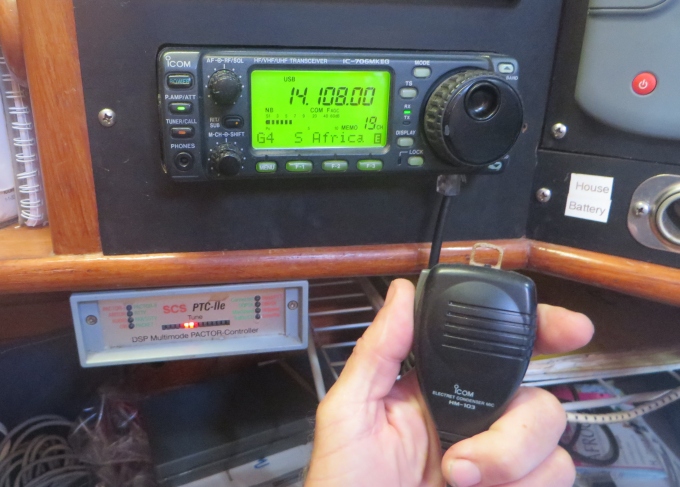
Sat phones, as we know them today, were not economically feasible when we first started out. Instead, we purchased an HF radio/SSB and subscribed first to WinLink and later on to SailMail. Having the ability to send and receive weather transmissions and emails while at sea was and is a wonderful way to stay in touch … especially on those long, long trans-ocean passages. With the new sat phone systems available, like the GO, I think we'd consider going that route versus the HF radio, but since we already have the SSB aboard, we'll stick with it.

ssb hf radio

Chartplotter

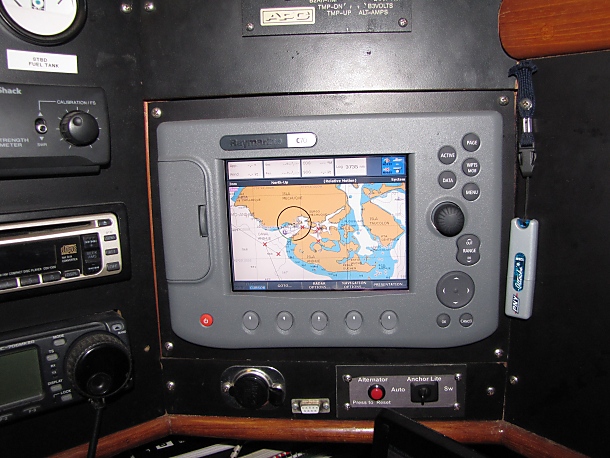
In 2007, we moved our friend's boat from Ushuaia, Argentina to a marina in Uruguay. We were accustomed to plotting our course manually on paper charts which takes up considerable time and space. Noel had a chartplotter aboard and we found it to be absolutely wonderful. When we returned to Cups, we purchased a Raymarine chartplotter and still use it. It's installed at the nav station down below, however, which made it convenient for plotting a course, but very inconvenient to see where we actually were and where we were heading. Since we were traveling around the world, we also found the cost of the Navionics regional marine chart cards at $300-350 each were quite expensive. We purchased an iPad a couple of years ago and then appropriate Navionics chart apps. We now have a portable repeater in the cockpit and the cost of the charts is 20% of the CF cards for the chartplotter. We've also purchased an extra iPad … just in case. Plotting and navigating was never so easy.

chartplotter

AIS (Automatic Identification System)

The Automatic Identification System (AIS) is an automatic tracking system used on ships for identifying and locating vessels. We use it primarily to see what ships are nearby and to contact them to make sure they see us and avoid running us over. The AIS has saved our bacon many times and also made us more aware of just how much ship traffic is really out there. We have a passive system incorporated into our VHF radio, i.e. we can see the ships, but Nine of Cups sends no identifying signal to them. An active system is on the wish list whereby nearby ships would see us as well.

ais

Cockpit VHF Repeater

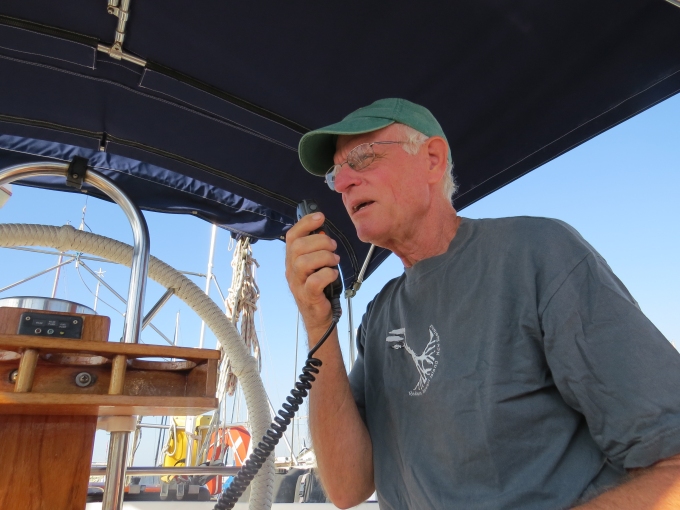
We always had a VHF radio aboard for contacting other boats, authorities and marinas, but it was always below at the nav station and we many times missed hails and found it inconvenient to hail others. We used a handheld VHF, but it has a limited range. A few years ago, we bought a Raymarine repeater for the cockpit. It is convenient to use and we can easily hear radio traffic, warnings and listen to weather while we're topside.

vhf receiver in the cockpit

Heavy duty anchor

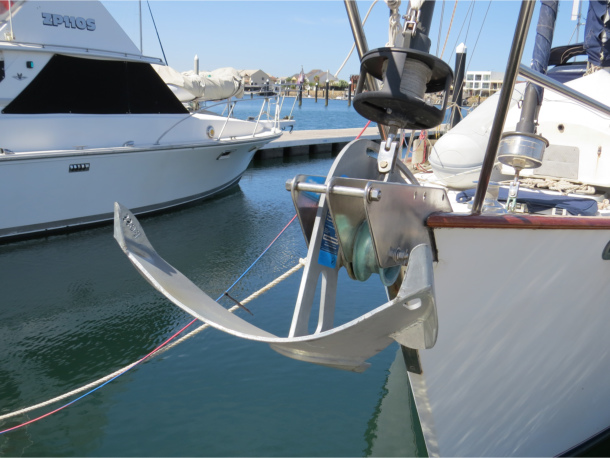
One form of insurance on a boat is heavy-duty ground tackle. We agreed from the beginning that we needed a big, heavy, solid anchor. We initially bought a Bruce claw and then switched to a Manson Boss over a decade later when we had problems in the hard sandy, grassy bottoms of southern Australia. We still have four anchors aboard for different types of situations, but we rely on the 80# Boss as a primary insurance for keeping Cups put.

manson boss anchor

Lazy Jacks

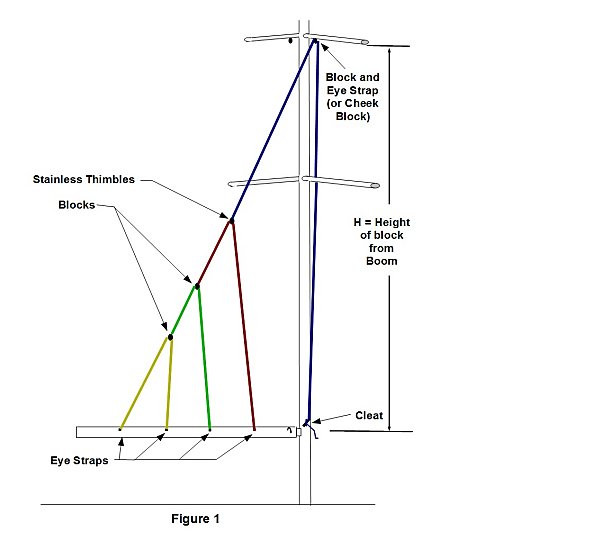
As we've aged over the past 15 years, we found it helpful to add conveniences to Cups. We added lazy jacks few years ago and it's been a great help. The lazy jacks “contain” the mainsail when we're taking it down, allowing us to just drop it and tidy up and add the sail ties later. There are lots of different lazy jack and stack-pack options out there, but David devised his own economical approach which works just fine for us.

lazy jack

Prop Shaft Generator

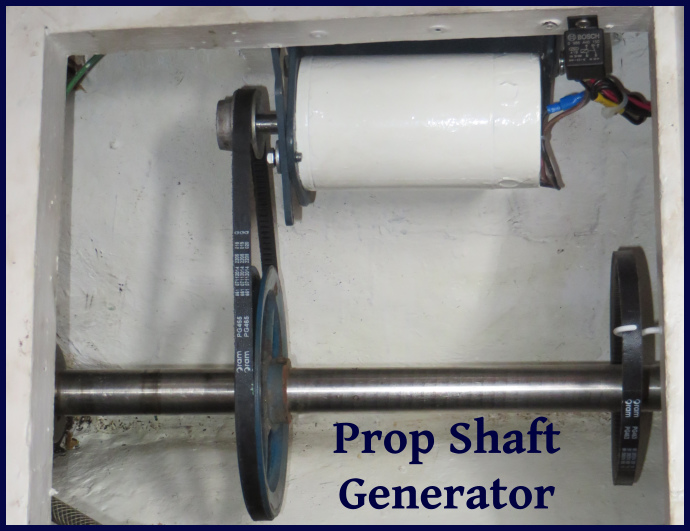
David has been working on the prop shaft generator in stages since we left New Zealand in 2011. He discussed the concept initially with our friend Eric Forsyth on Fiona. More discussions were conducted with our Canadian mechanical engineer friend, Claude on Azzar. Calculations were made, parts were fabricated and/or purchased and installed. Finally, when we were leaving Cape Town, Africa, the generator was ready to go. I was a doubting Thomas, I admit, but what a difference it made in our overall energy production. We could go weeks without turning on the engine. Great improvement!!

shaft gen


Alternate energy monitor

Having several ways to generate power aboard is great, but it's also good to know just what system … solar, wind or prop shaft … is doing its job and generating the most power. David's Alternate Energy Monitor was a great project to keep the captain amused on an ocean passage, but proved to be an outstanding addition to Cups.

alt energy monitor

What sort of improvements have you made to your boat that you're glad you made? Why?

What's on your wish list?

Celebrating Birthdays

One of the reasons for returning to Las Vegas in August (are you kidding me … the desert in the height of summer???), was to celebrate David's older sister Karen's 75th birthday. It's been giving us food for thought … 75 years old. That's how old your grandmother is or maybe your mother, but not your sister. Her daughter, Jill, our niece, flew up from Florida to help us celebrate … she's in her 50s. Really? When did all this happen? Where did the years go? “When did she grow to be a beauty? When did he grow to be so tall? Wasn't it yesterday that they were small?” Oh, our parents realized it and told us, but who listens to parents? karen and jill

The sibs (David, his brother and two sisters and me) have decided that each birthday should count now. Who knows how long we'll all be around and together and have David's mom with us to top it off? The 5-year birthdays are especially important and any year after age 90 is major cause for celebration.

98 and looking good

Karen chose grilled salmon and veggies for her birthday meal with an ice cream cake (not big enough to accommodate all the candles, I'm afraid) for dessert … and enough wine to keep the spirits high. The celebration was lively with nine of us around the dining room table. Rebecca (our 98-year-old mum) and her friend, Darrell, escaped their assisted living digs and spent the day with us, too. Everyone seemed to enjoy the festivities. Just all being together was a reason to celebrate.

family get together

As we grow older, the togetherness and the family unit seem to be more and more important. We help each other. We cherish the times we spend together and hope for many more. Perhaps it's part of the aging process that we recognize our own mortality and that we want to grasp it all for as long as possible. We get up early each morning … let no minutes escape. Let the hard times and harsh words go with the years. Carpe diem, carpe diem!