
Chores Galore Aboard Nine of Cups
/Surprise! Surprise! We have chores to accomplish on Nine of Cups before we can leave the Atlantic Yacht Basin. We've certainly been in more exotic places, but the chore list remains pretty much the same no matter where we are. The to-do list is always LONG! Some chores can wait, like polishing the stainless, but it just makes sense to do some of them before we leave while we have access to shore power and a chandlery. With several days of rain due to the hurricane passing through, we're already behind. Really … some things don't change. One easy task was to replace the clockworks in our lovely ship's clock and to have both the barometer and the clock polished and lacquered. Both are solid brass and were showing considerable tarnish and weathering after 16 years aboard. The clockworks part was easy although we did go through a reputable clockworks dealer, Clockworks, rather than picking up a cheapie movement in a hobby shop. We'd tried our usual polish on the cases, as well as a host of other products designed for brass, but to no avail. We ended up sending the cases out to Refinishing and Plating Company in Milwaukee. What a great company to work with and the results were outstanding. David replaced the quartz movement and hands on the clock, reassembled the barometer, and hung them on the first day we were back. What an improvement, not to mention we have a clock that's right more than twice a day.

The manual galley foot pump for fresh water had quit working in St. Augustine, but we didn't have a chance to find a replacement before we left. David ordered one on-line and we brought it back. The installation should have been easy, but then “nothing's ever easy on a boat”. He couldn't find the exact replacement, but that wasn't the biggest bugaboo. Once under the galley sink, he found the plywood floor beneath the sink had deteriorated and needed replacement. A 2-hour project has become a 4-day ( 2-3 hours/day) project as he's gathered marine plywood, measured and cut replacement plywood pieces, installed the wood and epoxied. There's still painting and then finally installing the foot pump left to do. In the meantime, all his tools and the contents of the undersink locker are piled up and stacked in the galley, aft cabin and the saloon.

One other bigger project on the to-do list is enlarging the thru-hull/drain from the propane locker. David has modified the drain in the past by adding a screen to keep debris from clogging it, but the drain itself is just too small. Whenever there are hard rains, the locker fills and eventually the tanks are floating around and we have leaks into the locker below. He ordered the parts and we've been waiting for some sunny days to get the job done … after the galley pump is installed.
There are several niggly items on the list like replacing all the watermaker hoses (it's time) and fixing the lamp over the aft sink. With Hurricane Hermine's torrential downpours, we discovered three new leaks, all from hatches, which need to be addressed. And, of course, there's always varnishing to be done … both interior and exterior.
Because David's brother Paul is coming aboard soon, we've had to make room on the forward bunk, so he'd have a place to sleep. Actually, we had to find the forward bunk first; it's been loaded to capacity for more than a decade with “stuff”. We unloaded lots of gear before we left last July, but there was more to do to make it habitable for crew. I cleaned and found places to re-stow most of the gear elsewhere. We found that neither the fan nor the berth light worked, so we ordered replacements and the installation crept onto David's list.
Before we left Vegas, we ordered more “stuff” to replace some of the old “stuff” we had aboard. Our shore power cordset, for instance, had seen better days, so we ordered a new one. The gear hammocks were pretty sad, too. We'd mended them a few times, but figured perhaps new wasn't a bad idea. Now that we're back in the States, we can take advantage of Amazon Prime. Instant gratification!
Since we've been here, we also ordered some new 5-gallon gas cans to replace the old weather-worn ones we keep on deck. We use gasoline for the dinghy engine and the gas generator we have aboard. We'll eventually need to replace all the diesel cans, too, but this is a good start.
One new item aboard arrived as a surprise. Our Simplex tea kettle was 20 years old and had quite a few dents and bruises, having suffered from weather and rough seas over the years. It was looking pretty sad. The president of Simplex, Graham Tweed, is a sailor and has followed our travels for some time. He obviously enjoyed the comments about our Simplex kettle over the years because to celebrate our circumnavigation, he sent us a new one. It was sent to Lin in Boston to make shipping instructions easy, but we only got to see and use it recently. What a lovely addition to the galley. Quite an extravagant and wonderful gift! Thanks, Graham!

So … with all there is to be done, when will we leave? Well, the Captain is working hard to complete as many projects as possible, but none of them seem to be on the “A-must complete before departure” list. We'll complete what we can until Paul arrives and then head out as soon as he gets settled aboard.
Where to? Out of the ICW and into the Chesapeake Bay and then … ???
This post contains affiliate links for your convenience. If you make a purchase from Amazon through any of these links then we get a small commission at no extra cost to you. Thank You!


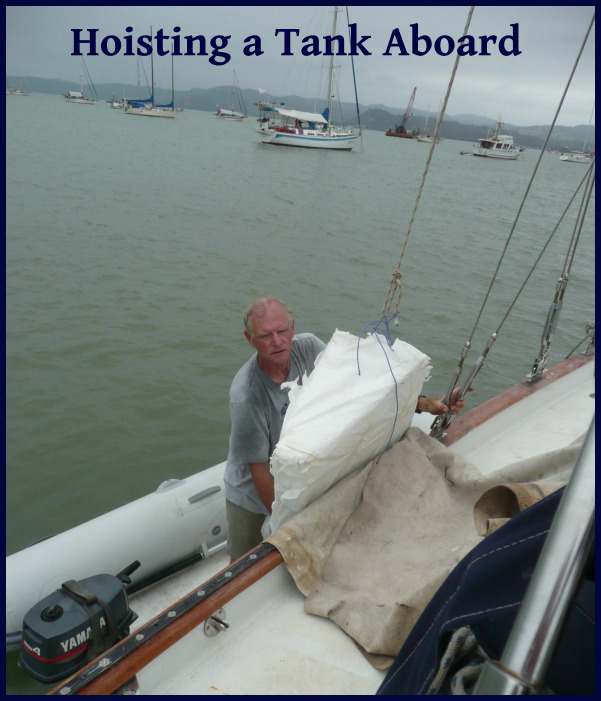
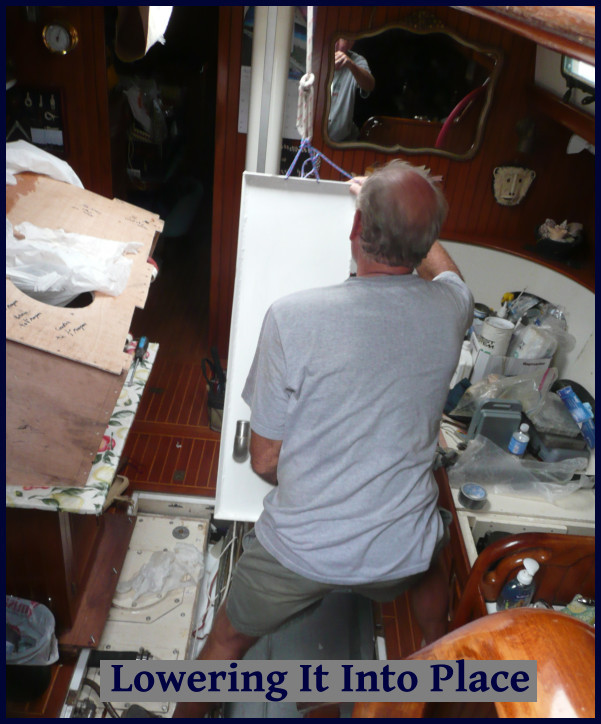
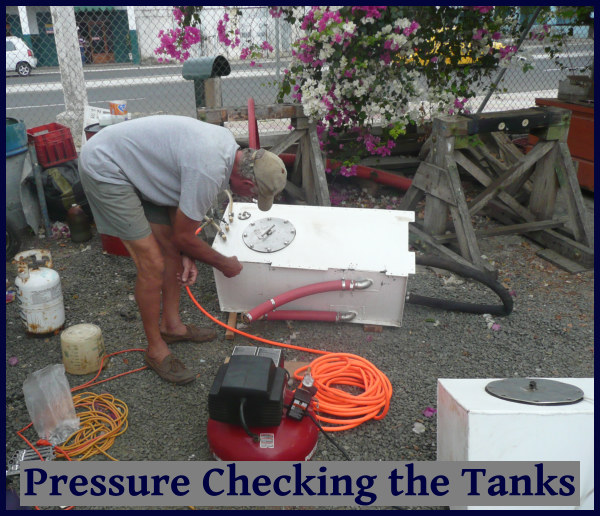
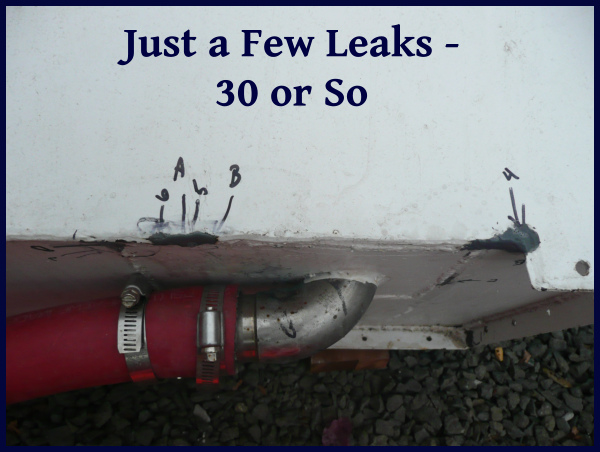
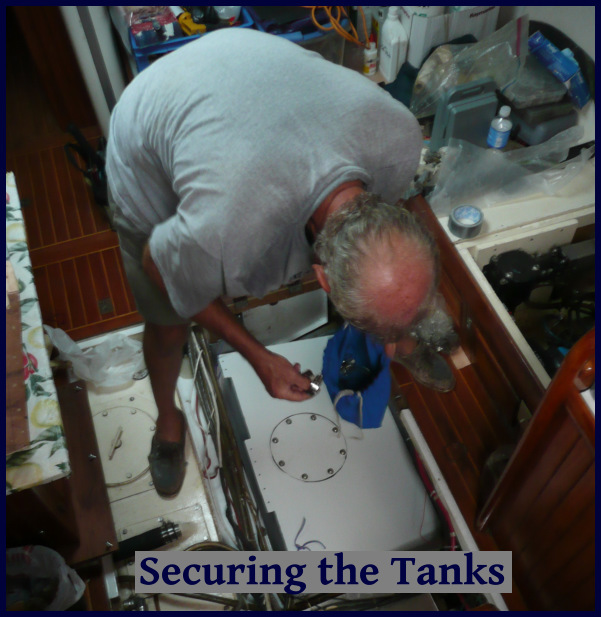
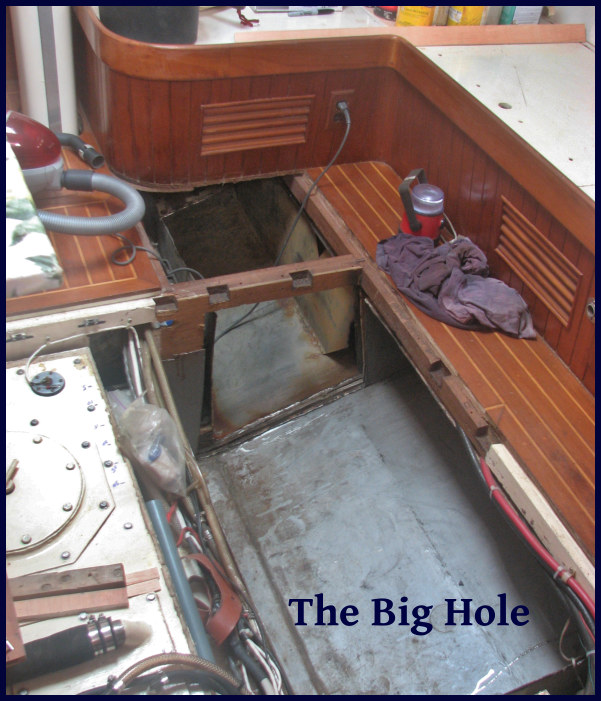 In last week's Blue View, I talked about removing the tops from the old fuel tanks, making the drawings for the new tanks, then building mock-ups out of plywood. Once I was happy with the fit and the drawings, I hired a “flete”, sort of a combination small truck and taxi driver, and made the trip to the metal fabricator. After a lengthy discussion that required Marcie's reasonable Spanish, my crappy Spanish enhanced with a great deal of hand gestures, the drawings and the mock-ups, the fabricator assured us he understood what was needed. He gave us a quote and promised delivery in about a week.