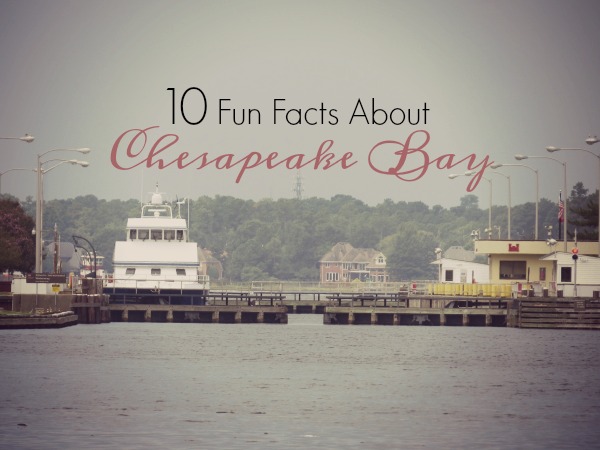
10 Fun Facts About Chesapeake Bay

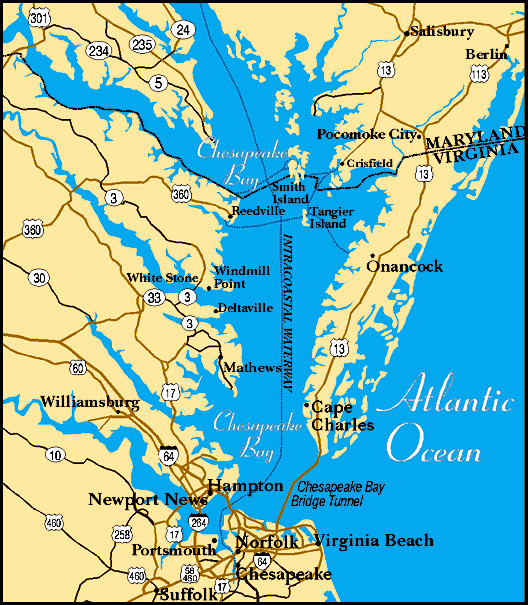
As we start exploring the Chesapeake, I thought I'd share some facts and trivia with you. chesapeake map
  1. Chesapeake Bay is the largest estuary in the USA. An “estuary” is an area of brackish water where fresh water, from rivers and streams, meet with the ocean. Chesapeake Bay and its network of streams, creeks, and rivers, encompasses over 64,000 square miles throughout Pennsylvania, Maryland, New York, Virginia, Delaware, and Washington DC. According to internet sources, it is the third largest estuary in the world. The St. Lawrence River is the largest and the Rio de la Plata in Uruguay/Argentina is number two.
  2. According to NOAA, “more than 250 fish species use the Bay and tributaries for some portion of their life cycles, including American and hickory shad, river herring, striped bass, eel, weakfish, bluefish, flounder, oysters, and blue crabs. More than 300 migratory bird species can also be found in the watershed. During the fall, the skies come alive as one million ducks, geese, and swans return to overwinter on the Chesapeake.
  3. The Bay itself is about 200 miles long, stretching from Havre de Grace, Maryland, to Virginia Beach, Virginia. Its width ranges from four miles near Aberdeen, Maryland, to 30 miles near cape Charles, Virginia. The mouth of the Chesapeake Bay is about 12 miles wide between its northern point near Cape Charles, Virginia, and its southern point close to Cape Henry, Virginia. The Bay and its tidal tributaries have 11,684 miles of shoreline—more than the entire U.S. west coast. The Chesapeake Bay watershed has 150 major rivers and streams, but contains more than 100,000 smaller tributaries.
  4. The Bay is surprisingly shallow. Its average depth, including all tidal tributaries, is about 21 feet. A person who is six feet tall could wade through more than 700,000 acres of the Bay and never get his or her hat wet.
  5. The Chesapeake Bay holds more than 18 trillion gallons of water. Approximately 51 billion gallons of water flow into the Bay each day from its freshwater tributaries. The Bay receives about half its water volume from the Atlantic Ocean in the form of saltwater. The other half (freshwater) drains into the Bay from the enormous 64,000-square-mile watershed, the Susquehanna River being the largest tributary, and contributing about 19 million gallons per minute.
  6. The Bay supports more than 3,600 species of plants and animals, including 348 species of finfish, 173 species of shellfish, over 2,700 plant species and more than 16 species of underwater grasses.
  7. During the winter, the Bay supports 87 species of waterbirds. Nearly one million waterfowl winter on the Bay–approximately one-third of the Atlantic coast’s migratory population. The birds stop to feed and rest on the Bay during their annual migration along the Atlantic Migratory Bird Flyway including more than 500,000 Canada geese.
  8. The Bay produces about 500 million pounds of seafood per year. Since 1990, commercial watermen have harvested more than 1.6 billion pounds of blue crabs from the Bay. Data show commercial harvest has experienced a steady decline, and in 2014 hit the lowest level recorded in 25 years: 35 million pounds.10-fun-facts-graphic
  9. The word Chesepiooc is an Algonquian word referring to a village "at a big river." In 2005, Algonquin historian, Blair Rudes, helped dispel the widely-held belief that the name meant “great shellfish bay.”
  10. Historically, there were many different Native American tribes in the region before Europeans arrived, but the dominant group were Algonquin speakers known collectively as the Powhatan tribes. In 1524, Italian Captain Giovanni da Verrazano became the first recorded European to enter the Chesapeake Bay. In 1608, Captain John Smith set off on the first of two voyages where he charted the land and waterways, and later drew an elaborate and remarkably accurate map of the Chesapeake Bay.

And there you have it, more than you'll ever want or need to know about the Chesapeake Bay. Let's get on with the exploring.

Off the Dock and into Chesapeake Bay

Paul arrived in the late afternoon, exhausted, but exuberant. He'd driven 2,040 miles from Loma, CO to Chesapeake, VA in three days and finally he was here and aboard Nine of Cups. He was able to park and leave his car securely at the Atlantic Yacht Basin and after a day to recoup and provision (did I say he has a car?), we were off the dock around 11:45 just in time for the Noon opening of the Great Bridge Bridge. heading towards great bridge chesapeake bay

Only a half mile beyond the Great Bridge are the Great Bridge Locks and they work in sync with the bridge. There were four other boats transiting the bridge with us … more than we had seen since we'd arrived. The transit of the bridge was no drama, but the locks ended up being a bit of an adrenaline rush when a sailboat, two boats in front of us couldn't get lines ashore and swung out broadside into the locks. There are no brakes on a boat, so several boats swerved every which way to avoid any catastrophes. The lock tender was patient and capable and had everything handled within a few minutes, despite some cursing on the forward sailboat. We ended up facing the wrong way in the locks, but David did a torque turn with no problems and we were on our way.

great bridge locks

What we didn't realize until the lock tender mentioned it was that the Gilmerton Lift Bridge, just six miles up the river, had a restricted schedule and only opened four times per day. The next opening was scheduled at 3pm, so we puttered along at 1-2 knots.

As we neared the bridge with only 10 minutes to wait, David decided to check the transmission fluid. As you'll remember, we had transmission problems last June and David had addressed the issues before we left Cups at AYB. We had not, however, motored since that time and he was anxious to make sure the problem was resolved. Well, the transmission fluid was fine, however while checking he smelled coolant and sure enough there was a coolant leak. The culprit was a split coolant hose.

split coolant hose

We watched the temperature rise, but he found if he kept the RPMs low, though the temperature was considerably higher than normal, it remained stable. We made it through the bridge and anchored just off the channel on the other side. David did, of course, have a spare. He and Paul hightailed it below to change out the hose. Within 30 minutes, we were back in business. Anchor up, we made our way along the Elizabeth River towards Norfolk.

david replaces the coolant hose

We passed by the Norfolk Naval Shipyards and looked with interest at the battleships, destroyers and aircraft carriers, all in varying stages of production and/or repair. We saw an old light ship on display. Small Navy patrol boats whizzed back and forth along the shoreline, making sure no one strayed off the channel and into the restricted areas.

norfolk naval shipyard

We were hoping to reach Willoughby Bay for our night's anchorage, but with all the day's delays, we started looking for alternatives. As the sun waned and the day grew cooler and darker, we opted to anchor the night in a general anchorage just off the channel which proved to be just fine. Our first night on the hook since June. It's good to be back aboard!

Hunting for Herons - Chesapeake, VA

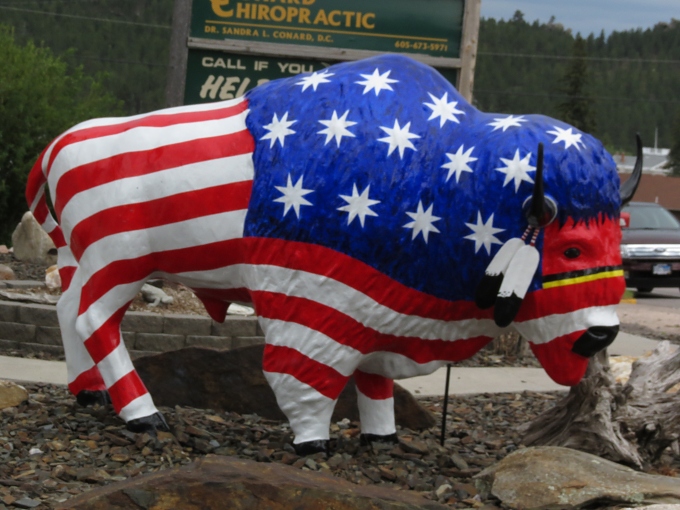
We originally saw the decorated, much celebrated Chicago cows in … well, Chicago, of course. That was eons ago and I never snapped a photo. In fact, there weren't digital cameras available then now that I think about it, nor phones that took photos. We thought the painted cows were cool, but hey, it was Chicago, what would you expect? Then we found painted lobster statues in Rockland, Maine. Well over a decade ago, we found a school of mermaids in Norfolk, Virginia. There were much adorned giant-sized boots in Wyoming, colorful buffalos in South Dakota and classy catamounts in Vermont. The list went on and in each place, we appreciated the local color. buffalo in custer south dakota

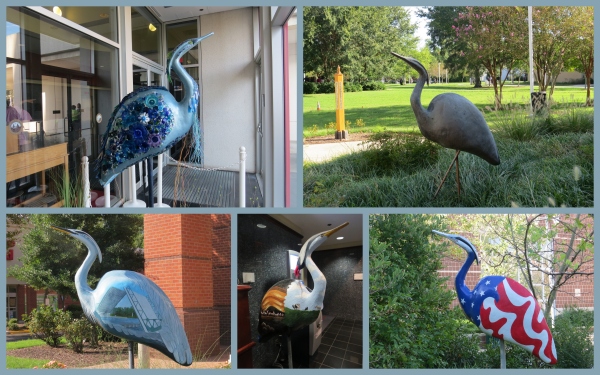
Well, now we're in Chesapeake, VA and it's blue herons that have stolen the show and are popping up all over town. The work of local artists makes each blue heron sculpture unique. Each proud-looking, cold-cast bronze sculpture stands 6' tall. The Blue Heron Project is a Chesapeake City community initiative that adorns the city with public art in the form of its icon, the blue heron. It not only beautifies the city, but its ambitious goal is to raise $1 million for education.

blue heron poster in chesapeake

We're limited by where our feet will take us, but we've found at least a half dozen within a few miles of the marina and it's been well worth the walk.

blue heron statues

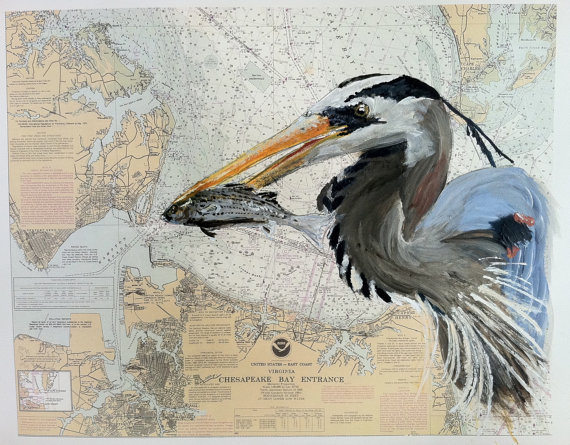
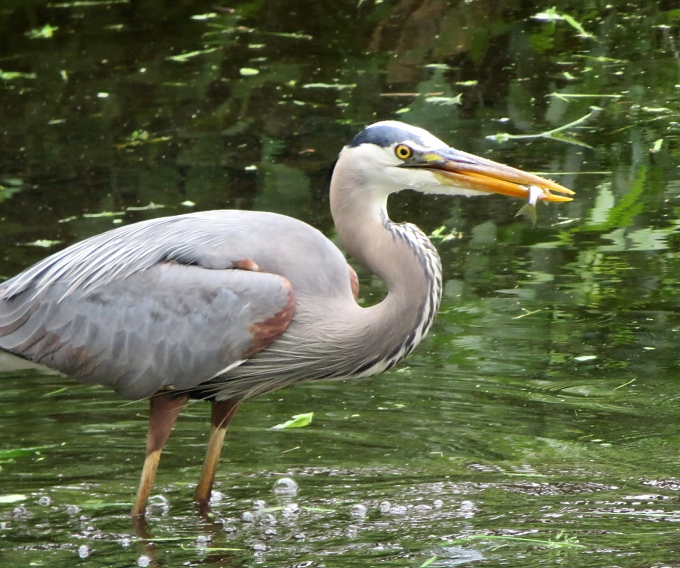
The blue heron seems to be an appropriate icon choice for Chesapeake City. We've seen blue herons a-plenty on our morning walks along the Elizabeth River.

blue heron with fish in chesapeake virginia

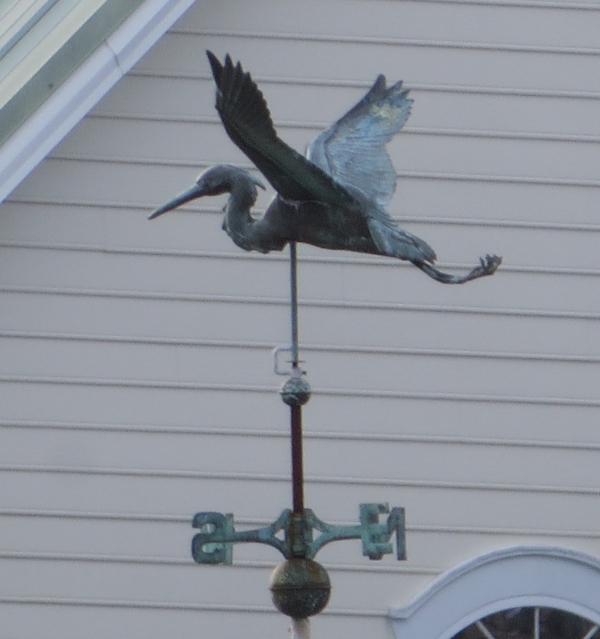
Even the local weather vanes tout this celebrated avian fellow.

blue heron weather vane in chesapeake virginia

Evidently there are many more locally decorated icons in the Chesapeake Bay area … the mermaids we spoke of in Norfolk, but also pigs in Smithfield, horses in the Outer Banks and dolphins in Virginia Beach, to name a few. We'll be on the look-out for more celebrated icons in our travels.