The Blue View - Anchor Snubbers

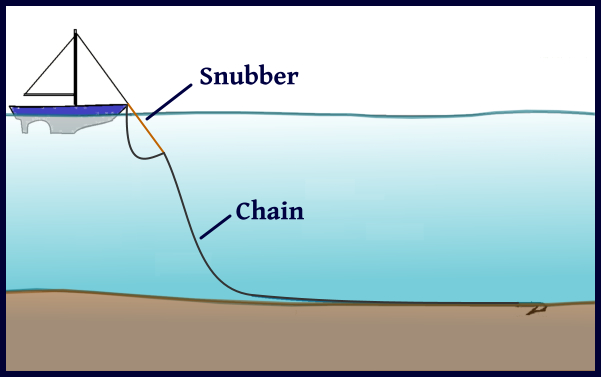
snubber Nine of Cups has all chain rode, and we never anchor without using a snubber. This is a stretchy nylon line attached between a strong point on the boat and the anchor chain. In strong winds, the anchor chain will stretch out almost straight, and as the wind and waves cause the boat to buck and jerk, there is no give in the chain, causing tremendous stress on the boat - not a good thing. Even worse, the sudden jerks on the anchor can cause it to break free from the bottom – even less of a good thing. The elasticity of the rope snubber reduces the sudden tugs on the anchor and the stress on the windlass and chain stopper.

Over the years, we've gone through dozens of snubbers. We tried smaller diameter line, but found that these would snap when the weather got rough. We tried heavier line, but this didn't have enough stretch. For Cups, the perfect size is 5/8” three strand line. Now we have two. One is about 25 feet long, and we use it in most conditions. The other is 60 feet long, and is our heavy-duty snubber for the “batten the hatches, lash everything down, take the seasick medicine” kind of weather.

When we anchor, we let out enough chain to give us the scope we want, usually five times the depth. If a blow is expected, and there is adequate swinging room, we increase this to at least seven times the depth. Then we set the anchor by backing down on it with a heavy hand on the throttle. Once I am sure it has set, I attach one end of the snubber to a forward cleat and the other end to the anchor chain, and let out enough extra chain so that the snubber is taking the load. Then I let out more chain until the it hangs at least 3-4 feet below the taut snubber. The goal is to make sure there is always slack in the chain no matter how much the nylon snubber stretches.

I use half hitches rather than a spliced eye to attach the snubber to the cleat. That way if I need to adjust the amount of snubber that is deployed or release it entirely, all that needs to be done is to undo the half hitches. If a spliced eye is used, the chain must be brought in enough to take the tension off the snubber, or the snubber must be cut before it can be released. Using half hitches also allows me to go forward periodically and let out a few more inches of snubber if there is any chance the snubber might be chafing – quite important if we are anchored in strong winds.

There are several different ways to attach the snubber to the chain. The methods we’ve used fall into three categories: hooks with no retainers, hooks with retainers and knots. I’ve talked about the knot I use for attaching the snubber to the chain in a previous blog, so I’ll focus on snubber hooks in this blog.

Hooks with No Retainers
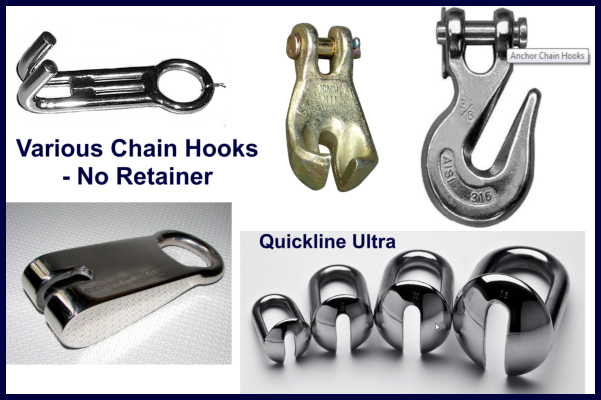
snubber hook with no retainer

There are several varieties of hooks without retainers. The biggest advantage of these types of hooks is that they are quick to attach and remove. One downside of this type hook is that the snubber line must be kept tight while deploying the chain to prevent the hook from falling off. Once the chain is deployed and the snubber is tensioned, however, the hook will usually stay in place as long as there is enough slack in the chain. Another downside is that if the snubber line ever breaks, the hook will be lost.

It is important to ensure the hook is strong enough - we’ve bent or deformed a few hooks when anchored in rough weather. Check the SWL before buying one.

snubber bridle

Another type of hook without a retainer is the chain grabber. It is intended to be used with a bridle, which many sailors prefer – especially catamaran skippers. The biggest advantage of using a bridle is that the boat yaws less when the wind picks up. I find it tricky to keep it in place while deploying the chain, however. As with any hook, make sure it is strong enough for your boat.

Hooks with Retainers
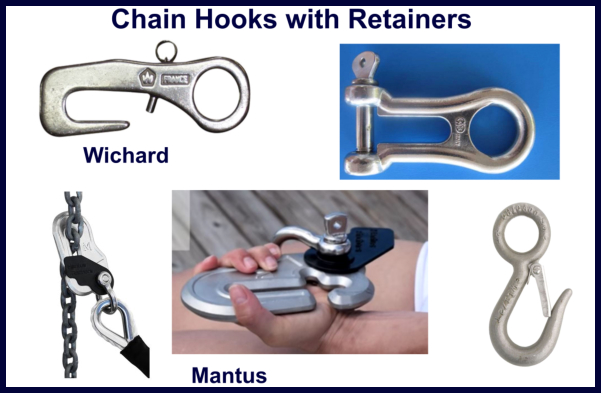
snubber hook with a retainer

There are also several varieties of hooks with retainers. Most of these take only a second or two to attach, and won’t fall off the chain once in place, even if the snubber line breaks. The only disadvantage is that on some versions, the retainer can become jammed. This happened to us with both the Lewmar version and with a simple hook that utilized a spring-loaded retainer. In one case, it required a hammer and pry-bar and more than a half hour to free the hook.

The shackle-type hook pictured in the upper right of the collage above looks like it would be quite strong and immune to jamming. On the other hand, it would not be quick to attach or remove.

The Mantus hook looks like it has potential, but a friend that has one reports the retainer didn’t last long and was removed after a few months’ use.

We’ve tried perhaps half a dozen different hooks over the years, some with good success and some that we would categorize as somewhat less than successful. In the end, I always end up going back to my old faithful rolling hitch. It is quick to tie, easy to remove, never fails to hold – and best of all – it’s free.

Farewell, Rebecca

Over the years, I've written many posts about David's Mom, Rebecca, including two recently which recounted celebrating her 99th birthday and our Hallowe'en celebration together. In high spirits, she spent a wonderful Thanksgiving with us just over a week ago and now … she is gone. rebecca at 99

It happened quickly and we are all stunned. She went into the hospital for a routine UTI, subsequently developed pneumonia and then we watched helplessly as her health quickly deteriorated, till finally her strong heart could beat no longer. All the sibs were there, gathered around her, holding her hand. We told stories and shared memories aloud. We whispered “I love yous” in her ear. We reassured her while all the while we were not so sure of anything ourselves.

She was a grand, grand woman … tough and strong, yet caring and compassionate. Who could have known looking at this frail 99-year-old woman that she'd been the first female sergeant in the Denver County Sheriff's Department, paving the way for other women to follow in her steps?

She raised four kids who provided her with 12 grandchildren, numerous great-grandchildren and even a few great-greats! What a legacy! She loved us and enriched us and now she is gone and our lives will never be quite the same. We are thankful for the many years we had with her and the sweet memories she leaves behind. Bye, Mom … know you're loved … and no more broccoli!

A Farm in Waroona (repost)

Today we are looking back to a visit to a farm in Waroona, Australia.  We met Laurie and John at our Just A Little Further presentation the other night at the Club and sat next to them at dinner that same evening. Laurie is an American who fell in love with Australia when she visited during her university years more than 50 years ago and subsequently emigrated, married John and raised her family here. John is a native South Australian whose family has farmed and raised cattle for export for generations. When they invited us out to their farm in Waroona, we couldn't believe our luck and jumped at the chance.

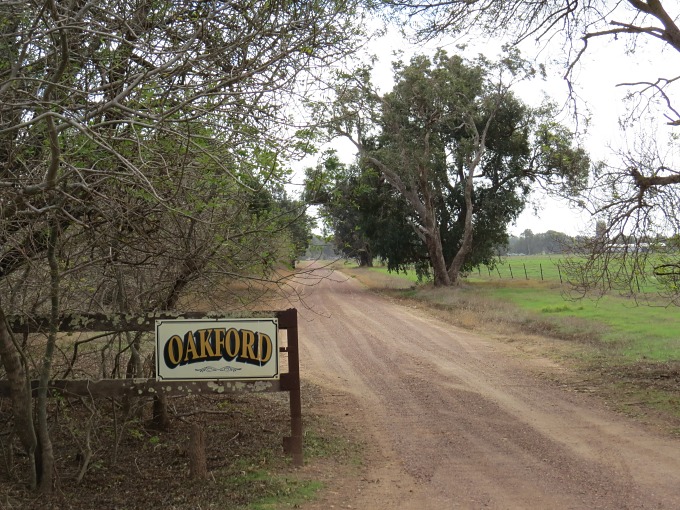
oakford farm, waroona australia

We took the 35-minute scenic route to the pleasant little town of Waroona (population ~2,000). Laurie remembers a time when the roads were all dirt and hand-dug irrigation ditches for watering the fields were the norm. She took us to the top of the Waroona Dam which supplies water for the farm, which now uses huge pieces of irrigation equipment. Laurie's knowledge of the area made all the difference. She's authored a book about the area, in fact, entitled Drakesbrook Days and Waroona Years: An Illustrated History of Waroona Shire.

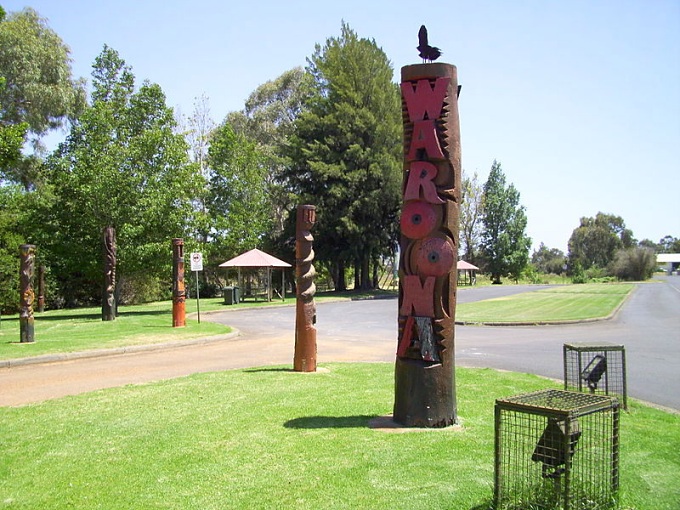
entering waroona australia

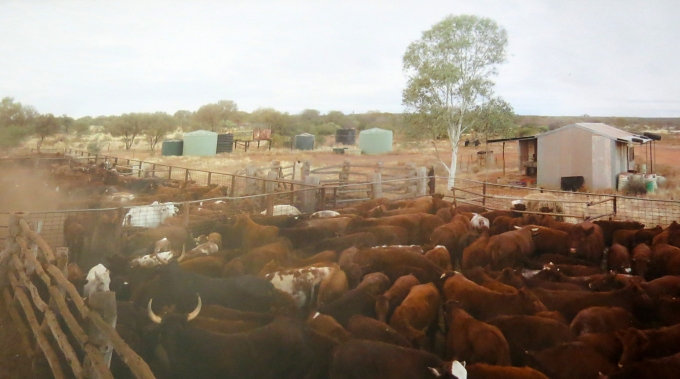
Their 2,000 acre farm is only one of three family farms in the area. Additionally, they lease over 3 million acres of government grazing lands in the Western Australia outback as cattle stations. The trek out to their stations, where the bulk of their beef cattle are kept, is an arduous 16+ hours over rough 4-wheel drive roads. Laurie showed us a panoramic picture taken from a few years back. John explained that the horses and camels originally used to muster (round-up) the cattle have been replaced by 4-wheel drive vehicles and helicopters.

cattle station in waroona australia

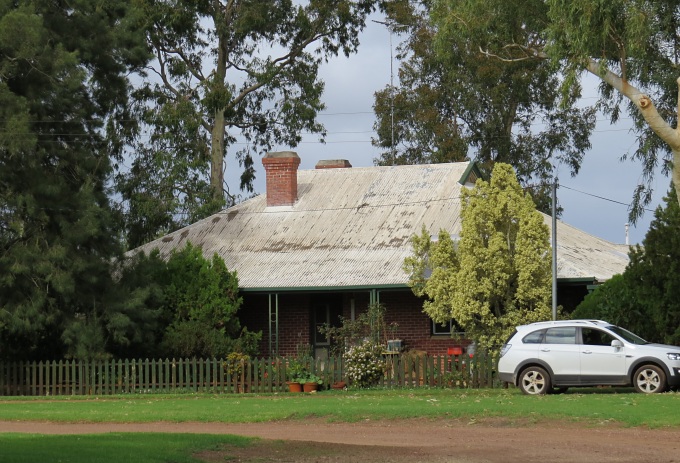
Laurie and John still live in the family homestead which has been added onto over the years. The first section of wooden clapboard was built in the late 1890's with a brick addition added in the 1920's. An enclosed breezeway connects the two and serves as a place for morning tea. A picket fence encloses the front yard where roses were still in bloom. A stately old Moreton Bay fig tree shades the yard. A major renovation is planned soon which will upgrade the house using modern materials including the addition of central heating.

waroona australia farm house

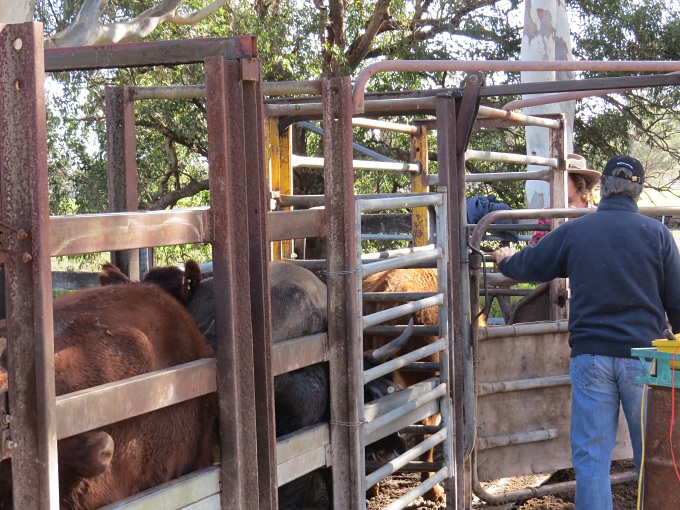
When we arrived, all hands were involved in “drafting”, the process of weighing and sorting the cattle, in this case heifers, which were bound for Israel as live export. The cattle are primarily Shorthorns with an occasional cream-colored Australian Droughtmaster in the mix.

drafting cattle in waroona australia

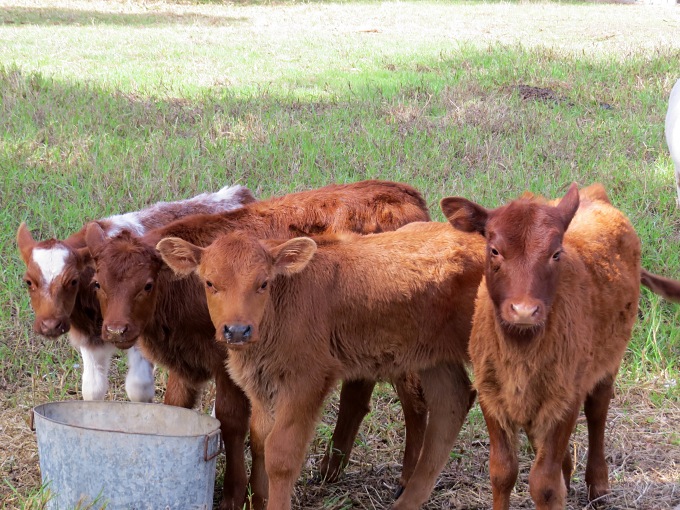
Closer to the house, we spotted four little calves frolicking around in a corral. These little guys were orphans and being raised by hand. I asked about feeding them and Laurie said it was done by a Calf-eteria, a system of feeding the calves when the mother was not around. Clever name, huh? There was also a lone alpaca in the corral, recently shorn … not sure how he got on with the calves, but it didn't seem to be a problem.

orphaned calves in waroona australia

It's not that David and I have never been on farms before. My aunt and uncle owned a huge poultry farm and I spent many weeks every summer as a kid feeding chickens and collecting eggs. Another aunt and uncle owned milking cows and we spent lots of time in the barn and worked hard during haying season bringing in the harvest. David participated in a couple of trail drives on horseback in Colorado bringing cattle from the summer to winter grazing grounds. Certainly, however, visiting a farm in another country is a novelty and seeing how things are done and what things are called made for an interesting day and a significant change from being on Nine of Cups.

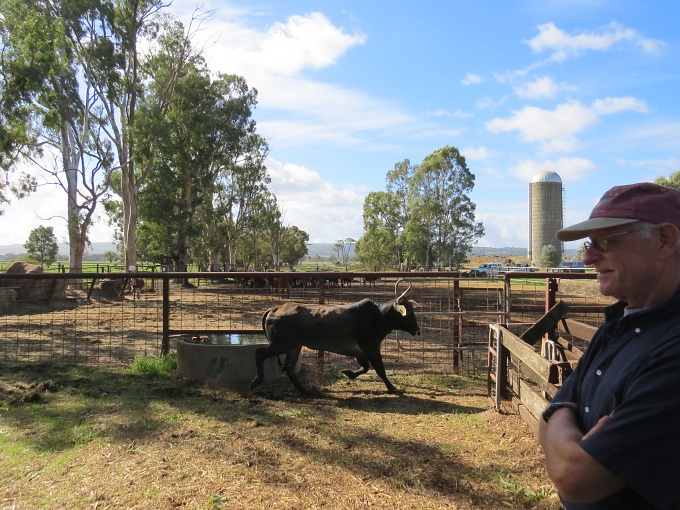
stockyard in waroona australia